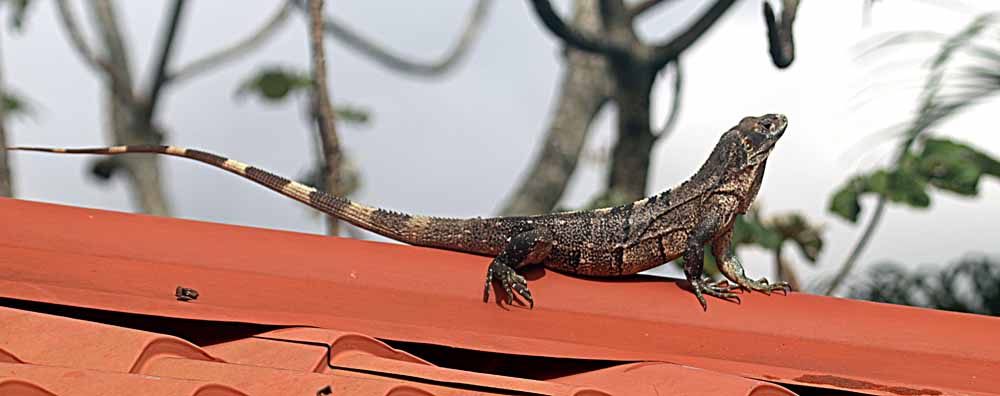
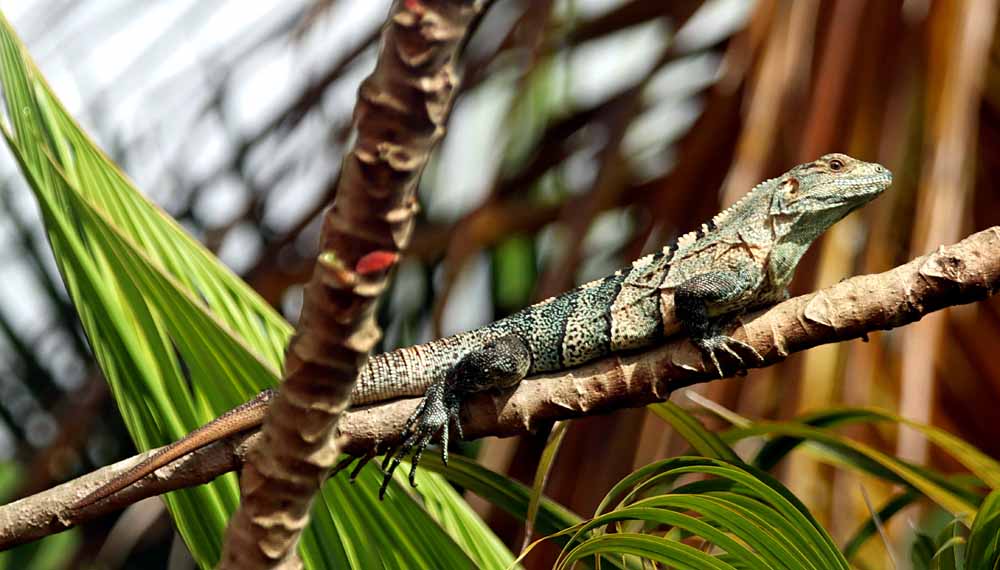
Though I haven’t noticed them as much recently, I think they are always around, maybe a family, as one of these looks younger than the other.
Black Spiny-tailed Iguana, Atenas, Costa Rica
The featured photo is of the older one on the roof, so email recipients have to go to the website by clicking the post title. 🙂 For more photos of this species, go to their gallery: Black Spiny-tailed Iguana.
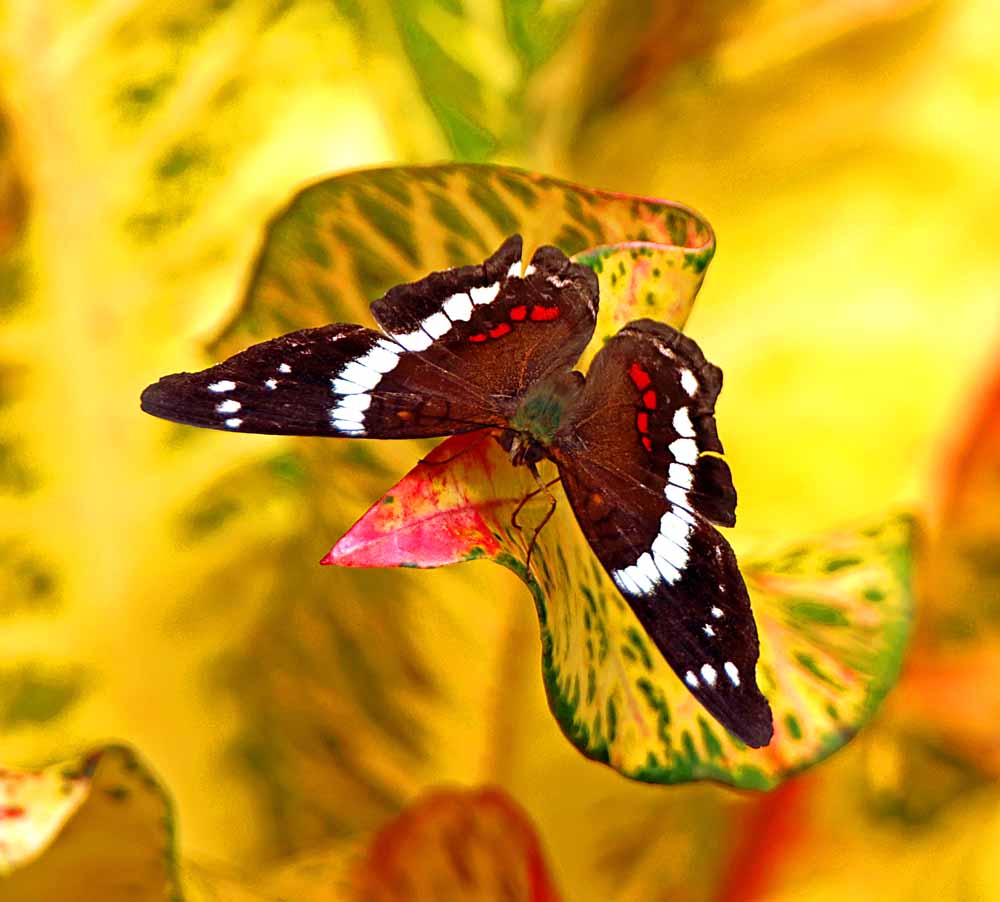
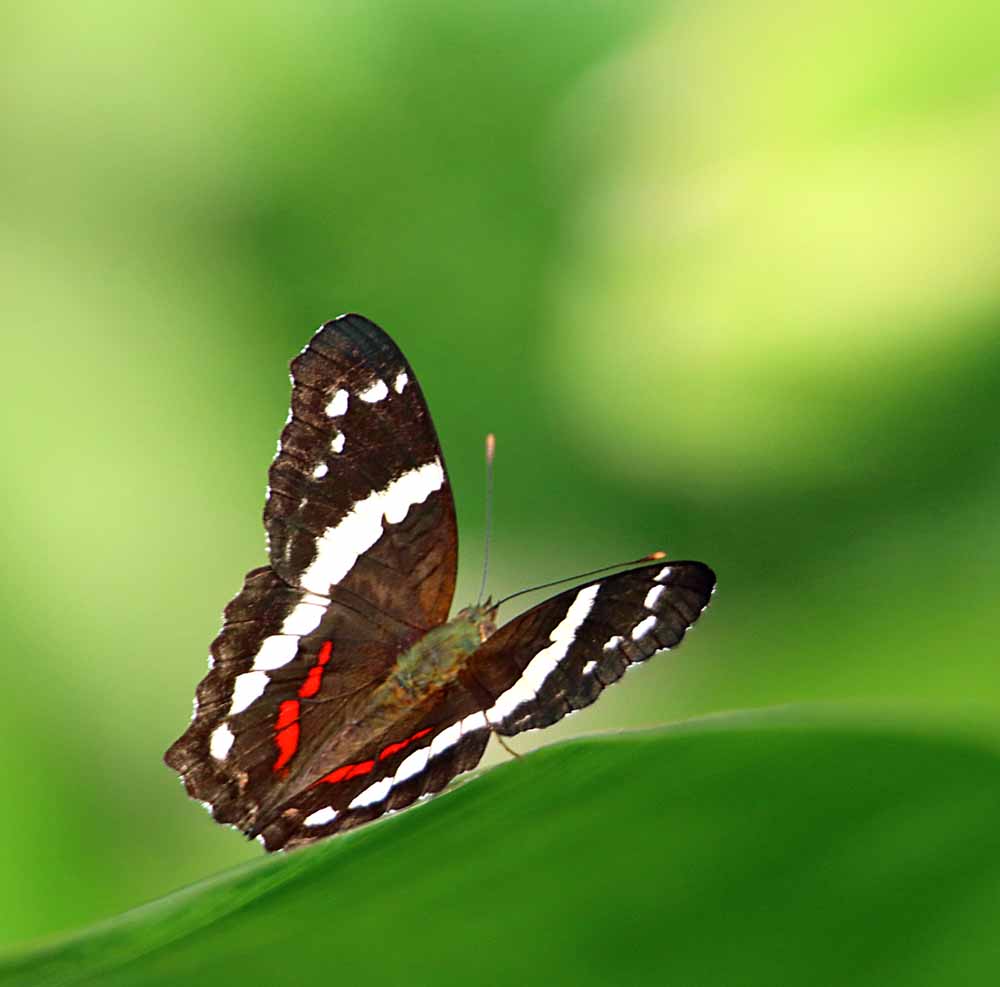
The Banded Peacock is one of those steady friends you can always expect to be here every year and in this strange weather year, he was again always here, even if in fewer numbers, continuing to add color to my gardens and other places I visited. These two photos were made just before I left for Macaw Lodge and I like how he contrasts with both the green and the yellow leaves as another butterfly with a rich brown color. There will be fewer butterflies now until next May, but fortunately a tropical country has some butterflies year around! And soon my copies of the Second Edition of Pura Vida Butterfliesbook will be here with 240+ species of butterflies, the most of any book available right now! Click that link to order your copy!
Banded Peacock Butterfly, Atenas, Costa RicaBanded Peacock Butterfly, Atenas, Costa Rica
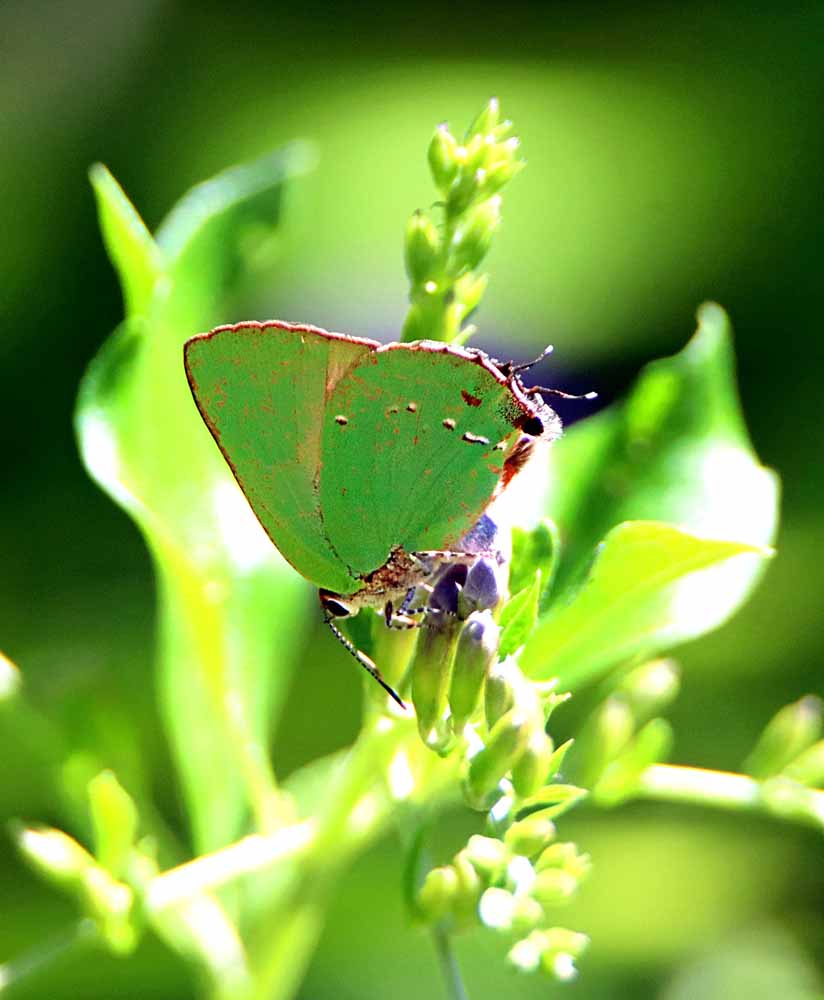
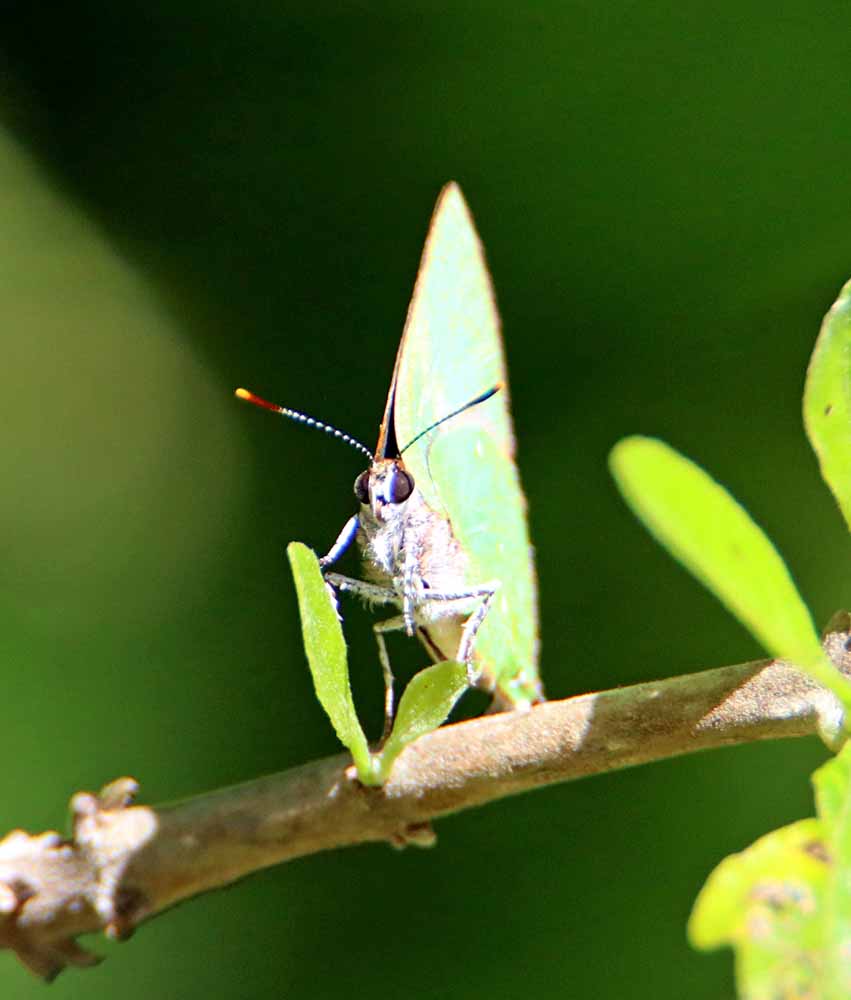
As I said in yesterday’s post, on the morning I published the second edition of my big butterfly book, I captured a photo of another new species that just barely made it into the book! 🙂 It is the Clench’s Greenstreak – Cyanophrys miserabilis and I adjusted the size of another Gossamer Wings butterfly in the book to make this last minute addition fit. Fun! And that is in addition to the other last minute addition of just 4 days before that when I got the Red-headed Firetip – Pyrrhopyge phidias at Macaw Lodge which I featured in an earlier blog post and also adjusted the size of another photo to make that Skipper butterfly fit in the book. 🙂 Here’s one shot of the Greenstreak for the email followed by a little gallery of 4 shots.
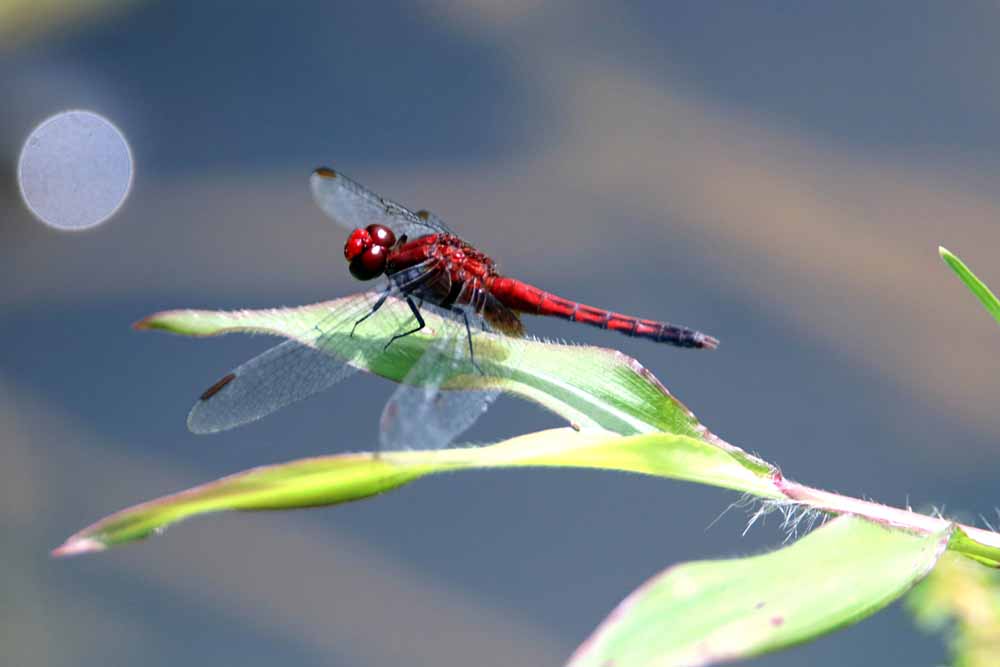
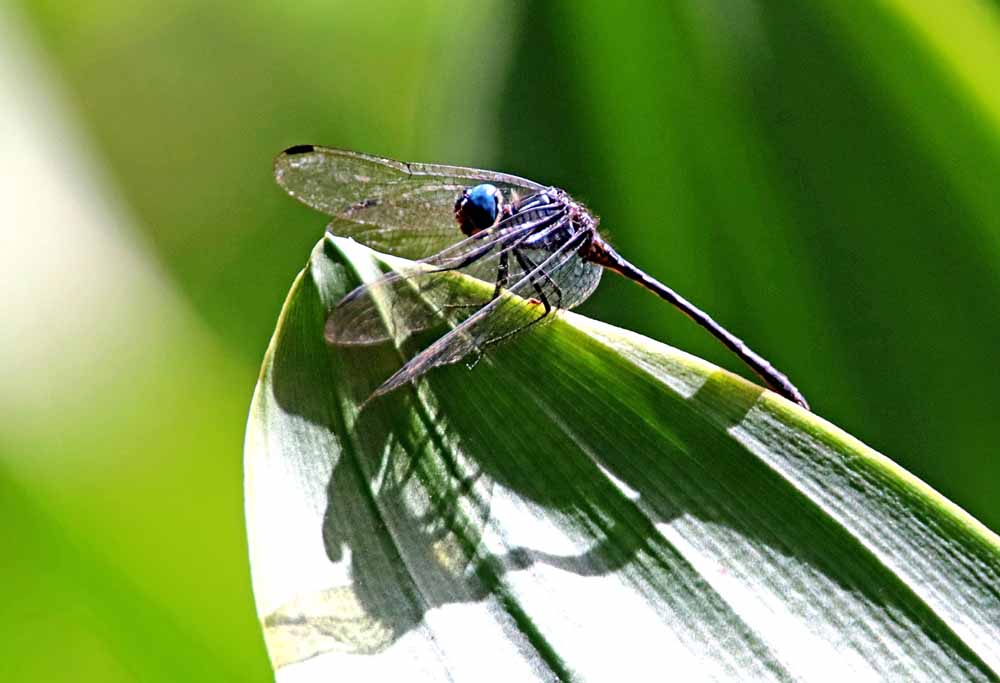
Macaw Lodge is, like the nearby national park, a “Transitional Forest” near the coast and lowland rainforests, yet at a higher elevation but not quite high enough for a cloud forest, and though sometimes drier than a rainforest, definitely not a tropical dry forest like those in nearby Guanacaste, thus the indication of “Transitional Forest.” Yet they have a lot of water (mountain streams they route portions through lily ponds) which helps attract frogs and dragonflies. Here’s 10 dragonflies I photographed and though I’ve identified a few, not most, I will not identify any of the photos here until I’m sure of the identity, which continues to be difficult with over 300 species and a great similarity of many of the species! 🙂 One photo for the email version and then a gallery with all 10.
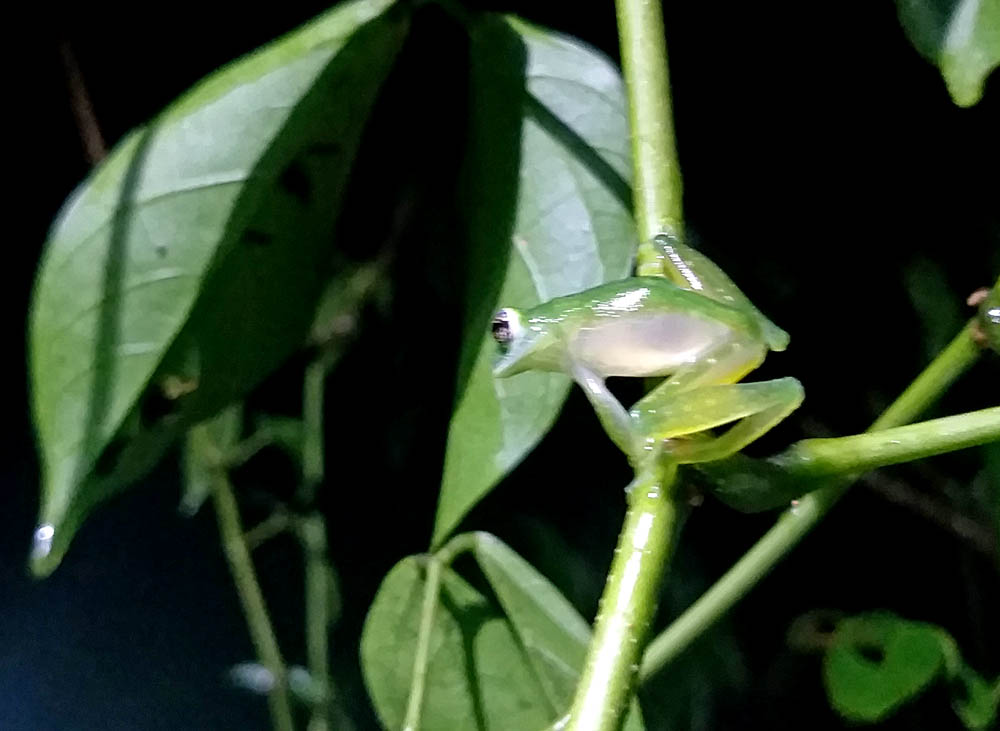
Macaw Lodge has many lily ponds which attract all kinds of frogs and dragonflies, but this particular glass frog is arboreal and was see on a vine growing over a little arbor over a bridge over a stream. They are called “glass” frogs because with some you can see inside their bodies and some of their organs. This one was tiny (as most glass frogs), maybe 1.5 inches at most. There are 154 identified glass frogs in Central and South America with 14 known species in Costa Rica. See my Amphibians Costa Rica GALLERY where I have 4 species of glass frogs among about 50 frogs! 🙂 And I am not certain with this particular identification of “Emerald,” but was the best match in my amphibians book! 🙂
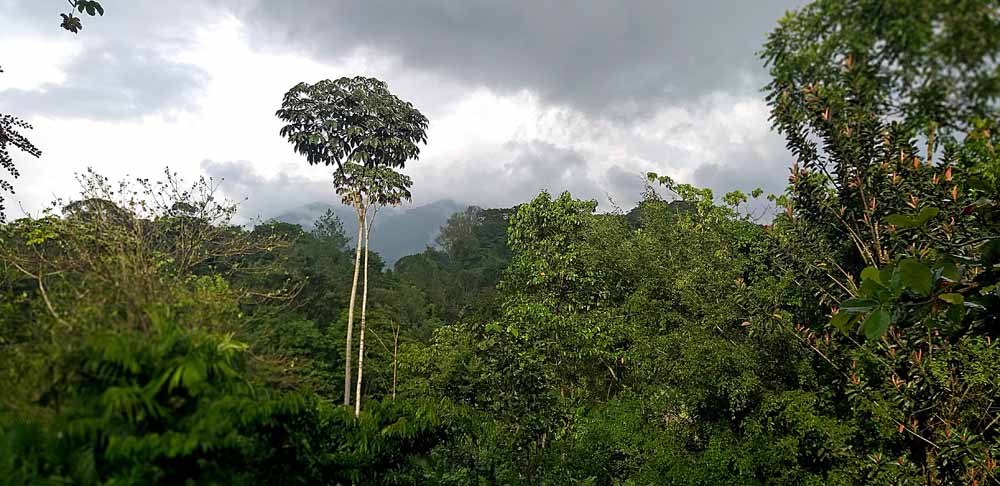
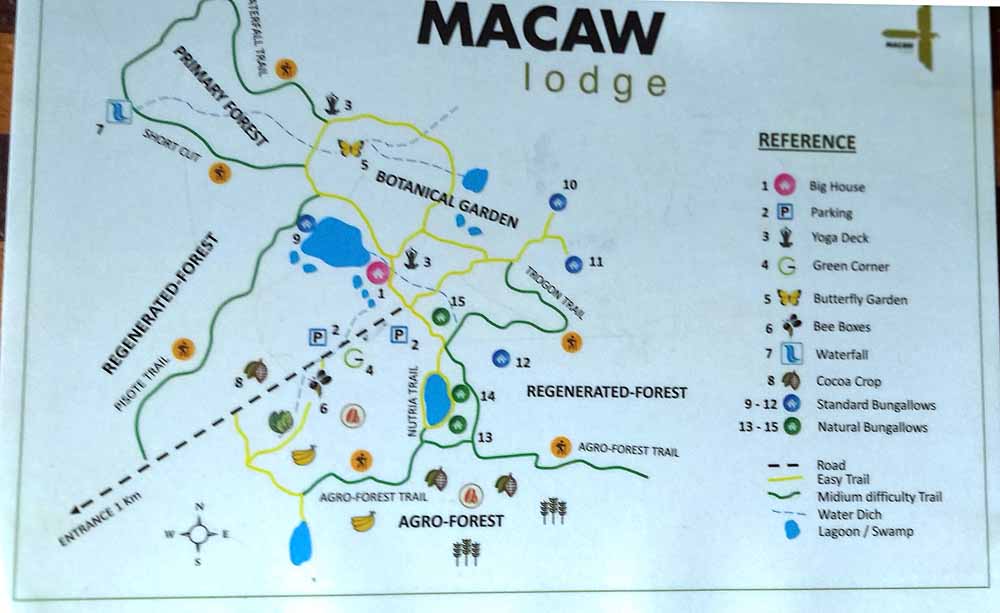
Soon after I arrived at about 2:30, the rain started and hasn’t stopped. I shot photos of leaves and many things in the rain from the porch of my cabin, but prefer this shot of my cabin vista just before the rain began and hoping for a sunrise from this same direction in the morning – depending on what the rain does! ? Instead of printing trail maps they ask guests to photograph this posted map (below) and use your cell phone when a map is needed. That’s becoming more common in many of the lodges here since literally everyone has a cellphone.
View from my cabin porch just before rain started. Macaw Lodge Trail Map
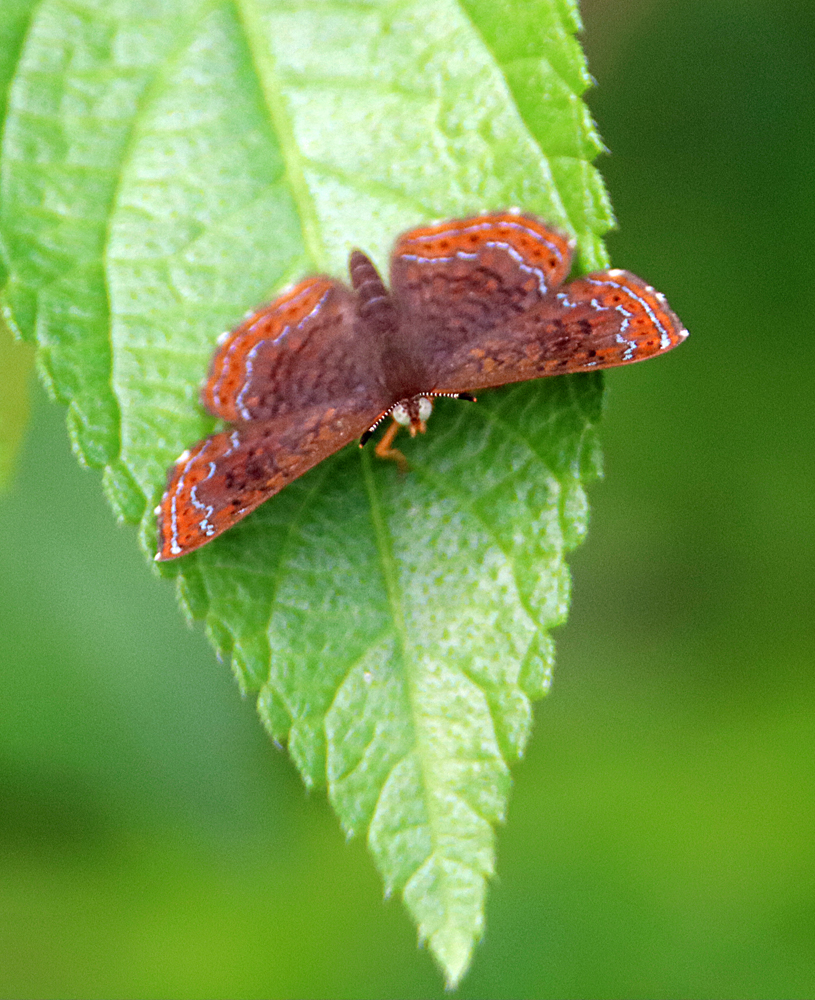
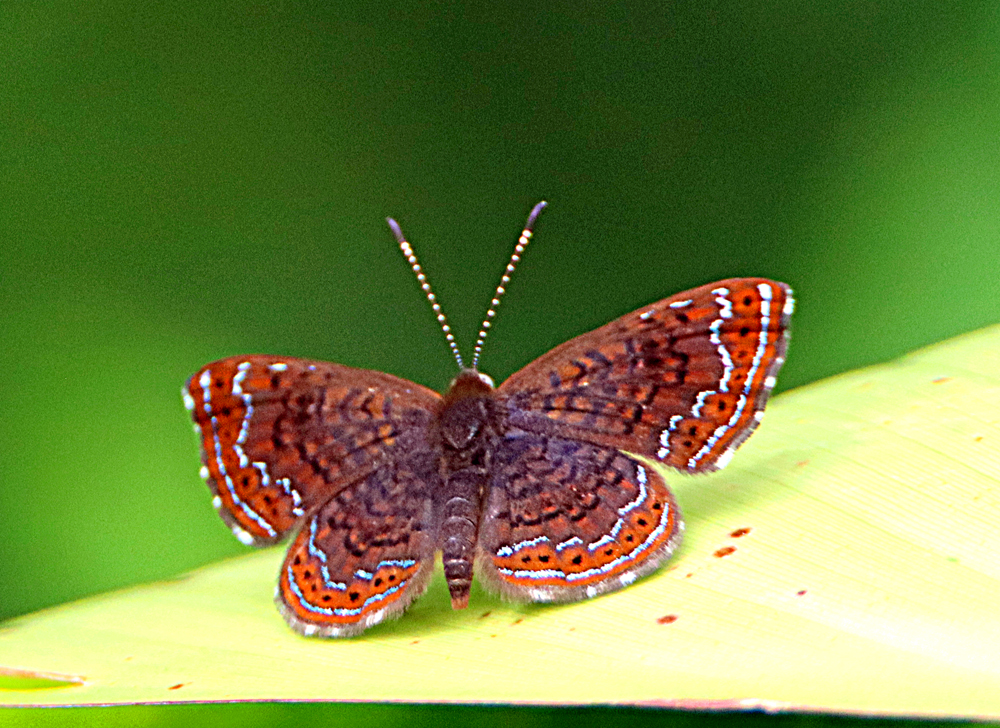
One of the few butterflies that are still hanging around is the Rounded Metalmark, one of my most seen tiny butterflies this years and unlike a lot of the brown Skippers, he/she is a “colorful brown” to me. I like blue and brown together with the orange and those big beady eyes! And he’s only a little larger than my thumbnail! 🙂
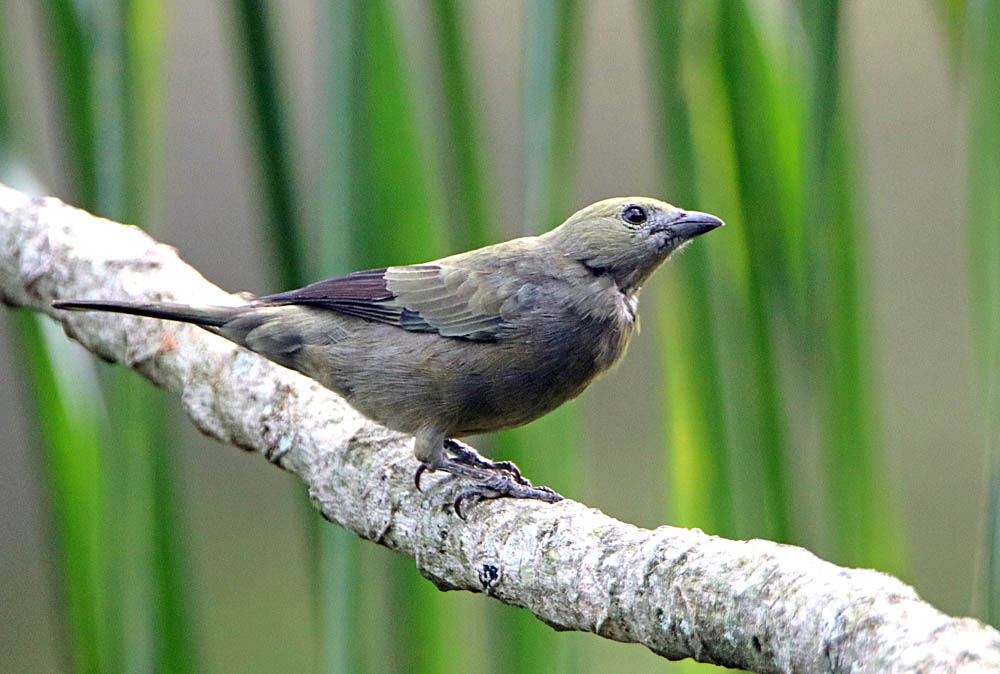
This Palm Tanager seems to be contemplating the row of palms behind my Cecropia Tree and when he flies in them, I can no longer photograph him as he hides between the fronds. 🙂
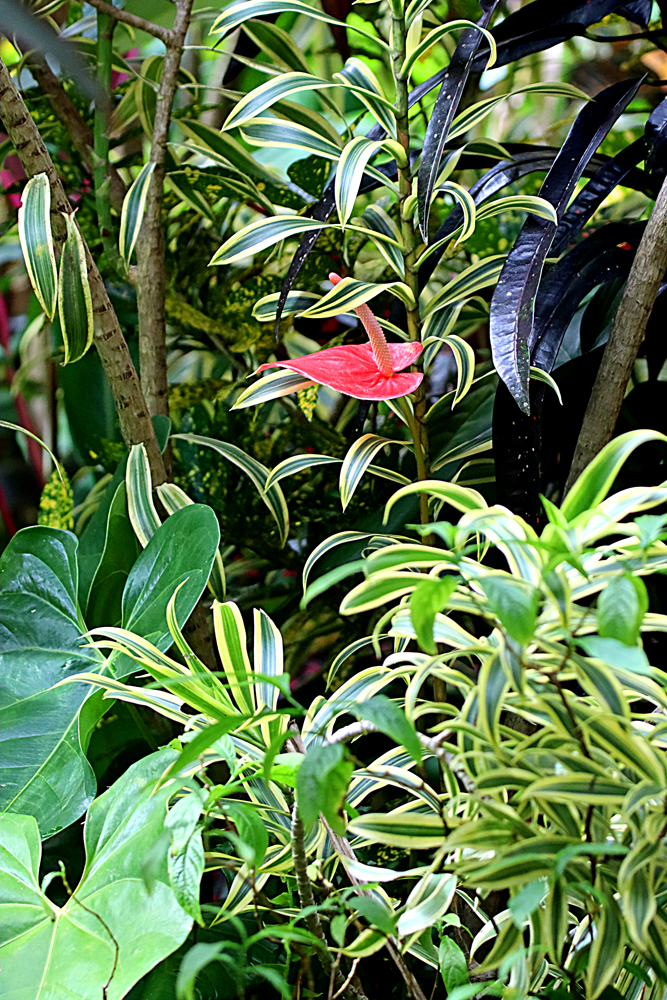
Anthuriums have almost always done well in my garden and even better in a big pot on my terrace where they get sun about 80% of the day. They grow in one shady part of my garden with almost no sun, but not as well and with smaller & fewer flowers. But this week I observed this “stray” among my taller plants that get 60+% sunshine, mostly midday. I did not plant the anthurium there where the taller plants get all of the sun, but look what this flower did that somehow got planted among the tall ones! It sent the flower stem up through the tall plants to a height of 5 ft 3 inches, that’s 63 inches or 160 centimeters! It’s the first time I’ve seen an anthurium shoot up that high! It is obviously one strong and persistent flower! 🙂
Anthurium reaching over 5 feet up for sunshine.
See the ones in a pot with about 80% sun and another in almost total shade. They all seem to do well, but the above one shows that sunshine is important to any flower, even one that grows in the shade. 🙂
This morning’s walk through the garden revealed only one butterfly, but a favorite! 🙂 The Rounded Metalmark, Caliphelis perditalis, (linked to my other gallery shots), a tiny butterfly in the Riodinidae or Metalmark family of butterflies about the size of two of my thumbnails. I love the rich blend of blue, orange and brown colors and in my gallery you can see some shots of his “cute” bug-eyed face! 🙂 Surprisingly, the only place I’ve seen this species so far is in my garden here in Atenas. 🙂
And yes, butterflies seem to be fading (moving or dying off) a little earlier this year than usual. I will be interested to see if there are more in the “wilder” forest preserve I will visit next week at Macaw Lodge adjacent to Carara National Park. And hopefully more birds there too! 🙂