This was the first “lesson” and sort of “introduction” or “welcome” to the class and getting started. You can learn more about it at their website: https://en.andanafoto.com/
QUESTIONNAIRE
First, she wanted me to fill out an “Assessment Questionnaire” which was about me and how I reacted to a long list of things, like maybe sort of measuring my “mindfulness” and it eventually ranked me on their “Five Facets of Mindfulness.” It said that all of their students averaged somewhere between 8 & 40 points on each facet. I guess I am a little more mindful than some of her students, averaging in the mid-20s on all of the facets and I will be asked to take the questionaire again after completing the course to see if I’ve changed. They gave me my scores on the answering of questions, listed below by each facet with my score of 20-something our of 40 possible, which I guess means I’m just a little over halfway mindful. 🙂
Five Facet Mindfulness Questionnaire (FFMQ), 05/05/2026
Observe: 22 / 40
Describe: 25 / 40
Nonjudge: 25 / 40
Nonreact: 24 / 35
Act with Awareness: 26 / 40
Two Boring Audio Recordings to Listen To
- For a visual-centered class on photography and whatever (mindfulness here), I think they are making a mistake to present the main content strictly orally! And she is not a captivating speaker, nor a motivating person or voice. So I got started on this little journey with a bit of a “let down” from their advertised promises, but told myself I would stick it out, try to be positive, and make the most of it, adding my own creativity. 🙂
First a 12 minute WELCOME audio which I remember nothing significant about.
Then, after the questionnaire, if not already done before the welcome, since it was pushed before and after that vocal recording. There was a 14 minute AUDIO ON “PHOTOGRAPHY AND MINDFULNESS,” and like the first audio, I remember nothing significant about it except that I was beginning to fume about the shallowness of this course. She is starting with Buddha quotes in all of her talks so far and though there is a lot of truth in Buddha’s teachings, I am not a big Buddha fan, so another “turn-off” for me.
But I told myself to “Stay with it and it will get better!” Or “make the best of it!” 🙂 One of her quotes in today’s opening lesson . . .
Yesterday is a memory.
Tomorrow is unknown.
Knowing happens now.
~Buddha
She Recommended the Photography of Rinko Kawauchi
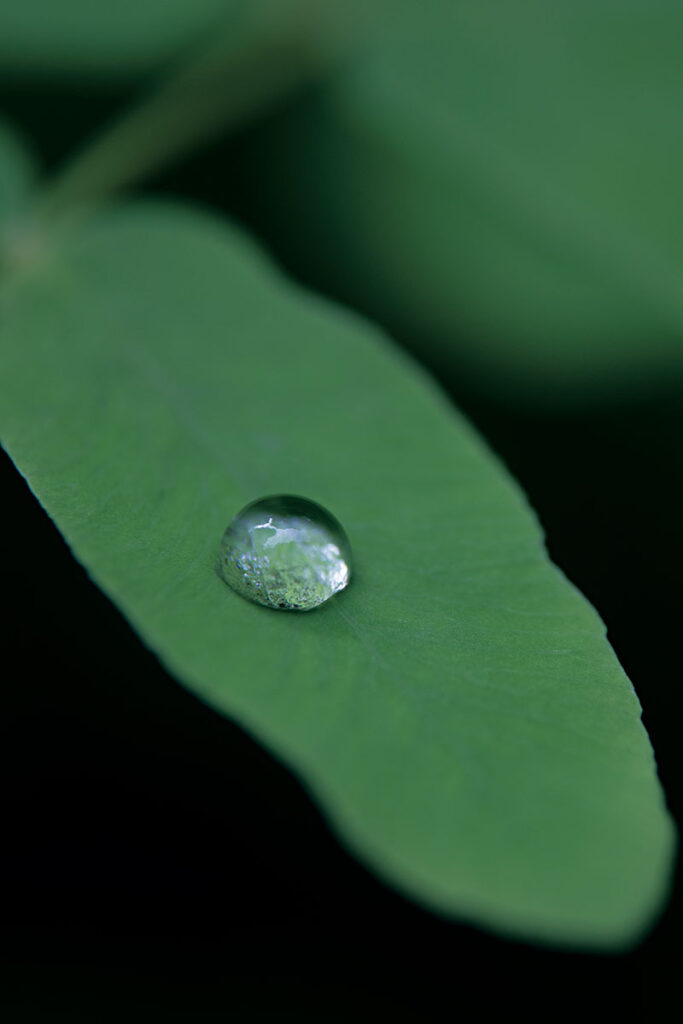
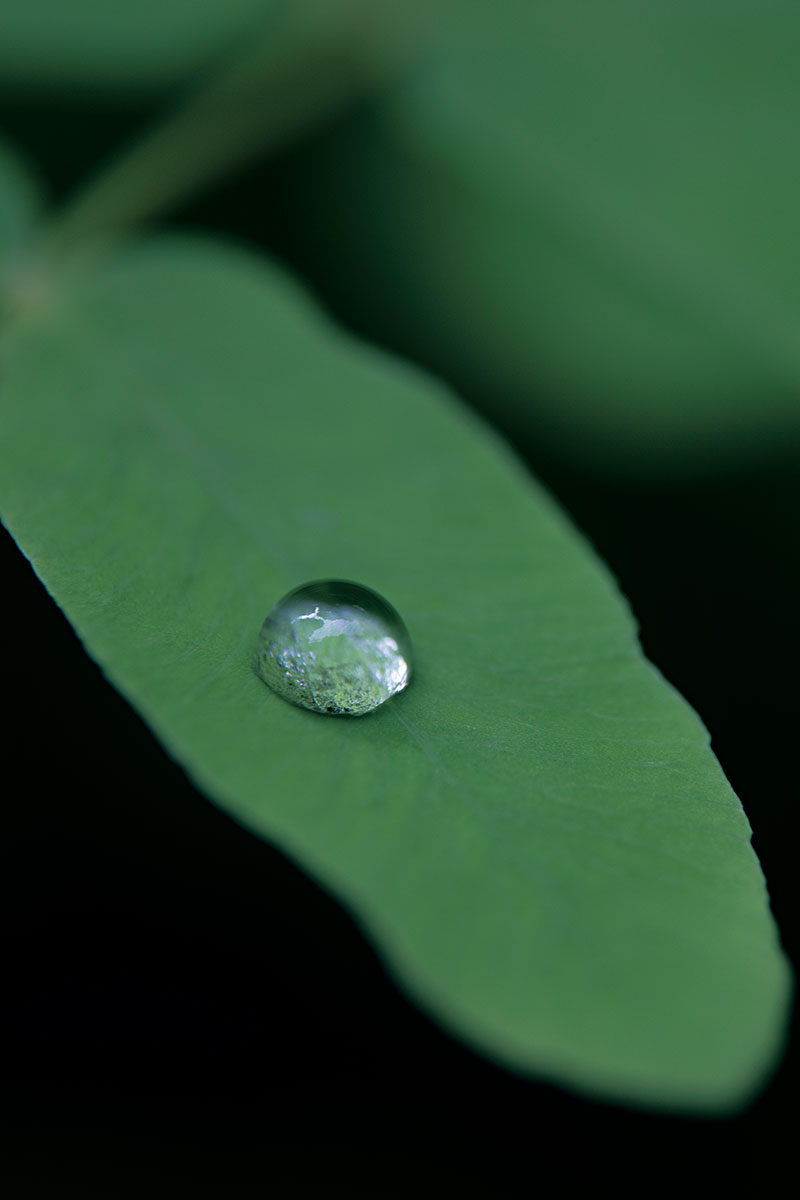
- The class page on this photographer may be accessible to registed students only: Rinko Kawauchi
- Or from my Google Search, the photographer’s official website in English: https://rinkokawauchi.com/en/ Some good work, though maybe not “great.” And that is of course “in my opinion.” 🙂
- Yay! Now we have some visuals! 🙂
Music Video of Natalia Doco:
Not exactly my kind of art video, but good for some girls evidently. So we ended with two visuals and I was a little more appeased, but still not overwhelmed! 🙂
They (she) recommended that each student make a notebook for the class notes and I started one with most of the above in it, handwritten, but by lesson 2 I decided it would be quicker for me to type my notes, easier for anyone to read, and much more shareable as a page on my website with links. Thus at the end of “Pause 2” I started this webpage and will link to it during the class time of 5 weeks (2 lessons a week) from my blog which was getting a little sparse with few birds or butterflies in my garden. Who knows? This may be just what someone else is looking for, even if my first impressions are not very high. AND, by the end of the class I just might be excited about it – “We will see!” 🙂
¡Pura Vida!
Webster Dictionary Definition of “Mindfulness”
1
: the quality or state of being mindful
2
: the practice of maintaining a nonjudgmental state of heightened or complete awareness of one’s thoughts, emotions, or experiences on a moment-to-moment basis
also : such a state of awareness
Google AI Summary of Mindfulness . . .
According to Merriam-Webster, mindfulness is defined as the quality or state of being aware, specifically “the practice of maintaining a nonjudgmental state of heightened or complete awareness of one’s thoughts, emotions, or experiences on a moment-to-moment basis”. [1, 2]
Key aspects of the Merriam-Webster definition include:
- Awareness: The quality or state of being mindful.
- Nonjudgmental: Observing thoughts and feelings without criticizing them.
- Moment-to-moment: A,Present-focused approach to experiences. [1, 2]
Synonyms provided by Merriam-Webster include awareness, attention, consciousness, and observation. [1, 2, 3]
Andana’s Written Summary of “What you heard today:“
References for Further Exploration from a Place of Calm and Curiosity
Along this journey of observation, imagery, and presence, certain voices have emerged—through art, philosophy, or psychology—that reflect on what it means to look deeply, feel consciously, and live attentively.
Here I share some of those names, with links so you can continue exploring if any resonate with you. This is not an exhaustive or academic list, but rather a map of references that accompany this practice.
Siddhartha – Hermann Hesse
A novel that is, in itself, a meditation. Through Siddhartha’s spiritual journey, Hesse explores the kind of deep learning that can only arise from lived experience. This story reminds us that the path of mindfulness is personal, winding, and always open to change. See book.
Jon Kabat-Zinn
Creator of the MBSR program (Mindfulness-Based Stress Reduction), Kabat-Zinn has played a key role in bringing mindfulness into medical, educational, and personal contexts in the West. His approach bridges science and contemplative wisdom. Visit his website and resources at Mindful.org.
Henri Cartier-Bresson – The Eye of the Heart
Master of the decisive moment and humanist photographer, Cartier-Bresson sought not only perfect technique, but a deep alignment between gaze, emotion, and moment. He described the act of photographing as an intuitive and contemplative gesture—the here and now of the precise moment. Explore his website at henricartierbresson.org.
Wabi-Sabi
More than an aesthetic, it is a Japanese philosophy that celebrates the beauty of simplicity, imperfection, and transience. In mindful photography, wabi-sabi invites us to find harmony in what is neither obvious nor symmetrical. Learn more about Wabi-Sabi in this article.
Miksang
A Tibetan term meaning “pure eye.” It is a contemplative photography practice based on direct perception, without interpretation. The photographer does not “take” the photo, but is instead captured by it. An invitation to see before thinking. Explore Miksang on its official website miksang.com.
Christopher Germer, Ronald Siegel, and Paul Fulton
Authors of the influential book Mindfulness and Psychotherapy, they have integrated mindfulness into clinical practice and everyday life. Their approach combines self-compassion, presence, and openness to the here and now. See book.
The process of getting to know yourself is an intimate and individual journey. The exercises will accompany you and make it easier to temporarily focus on what you will explore. Getting to know yourself through photography is a deeply personal journey that requires autobiographical exploration and a sacred space that belongs solely to you. This space belongs exclusively to you; you will conduct the interpretations, embark on projects, and gain the insights essential to your journey.
-o-
RETURN to main page of Photography & Mindfulness OR to my Photographer page.