
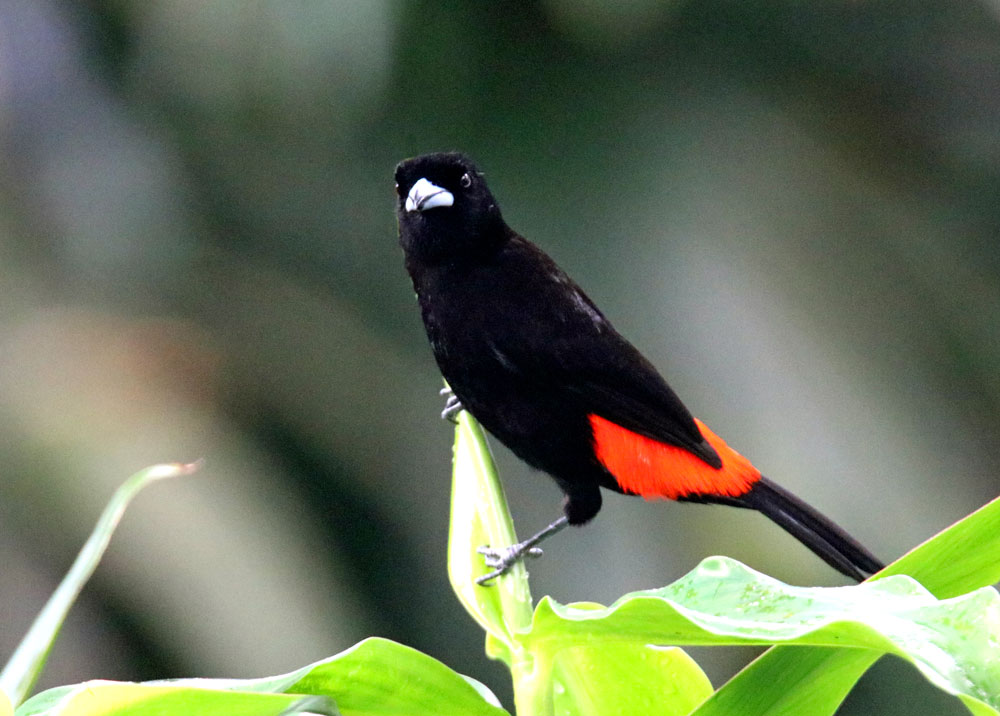
Scarlet-rumped Tanager

This one on the Caribbean side has an identical male as the Pacific side male with a slightly different female and they are thus considered different subspecies. I keep my photos separated in two galleries. For more of these from the Caribbean Slope, see Scarlet-rumped Tanager, Passerini’s (my gallery link) and yes, when I first came to Costa Rica these were call Passerini’s Tanager, while the ones on the Pacific side were called Cherrie’s Tanager. If you want to see if you can tell the difference in the two females, check out the other gallery: Scarlet-rumped Tanager, Cherrie’s (linked). And note that some sources say that the difference is seen only in the immature birds! 🙂 It is also interesting that some sources also say that the Cherrie’s is found only in Costa Rica and thus the scientific name includes the Latin “costaricensis.” 🙂 In my photos it seems that the Pacific side females are slightly darker in color with no other differences to me and I have never been where I could compare immature ones. These two photos are both male.
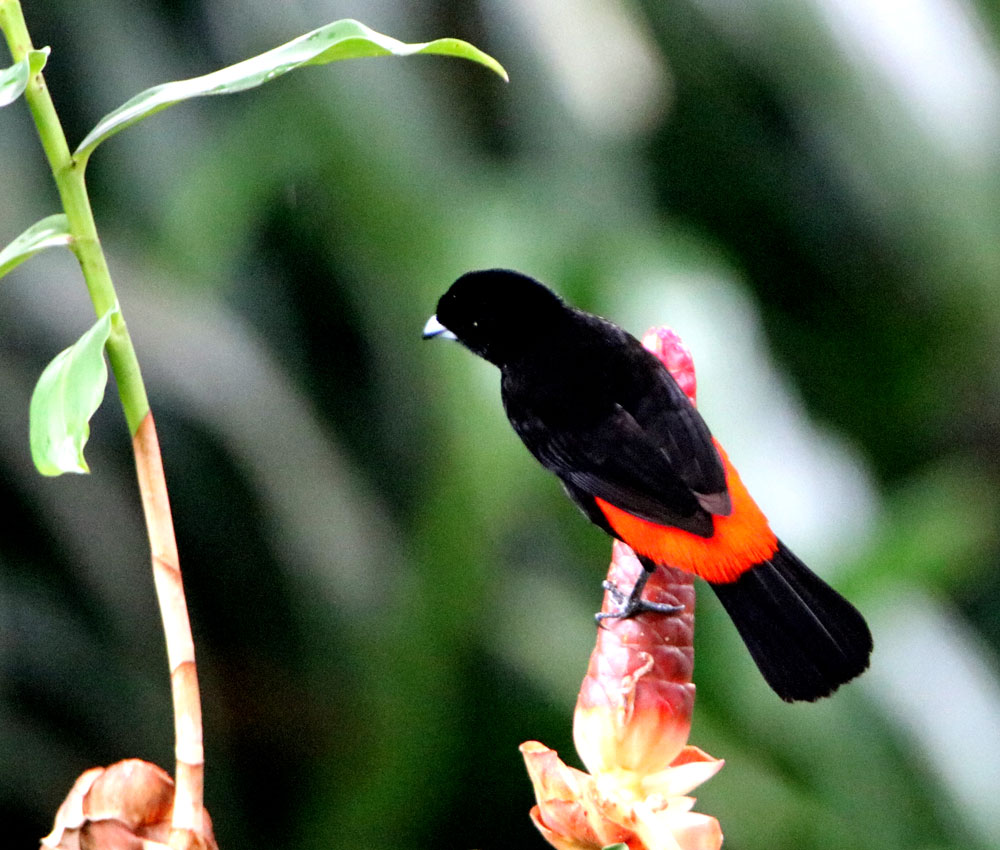
Scarlet-rumped Tanager, male, Hotel Banana Azul, Puerto Viejo, Limón, Costa Rica

¡Pura Vida!

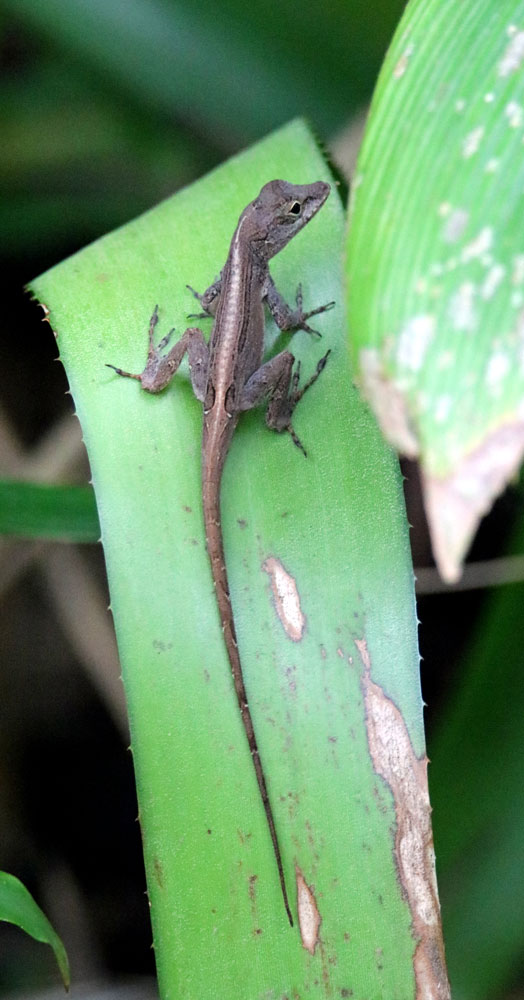
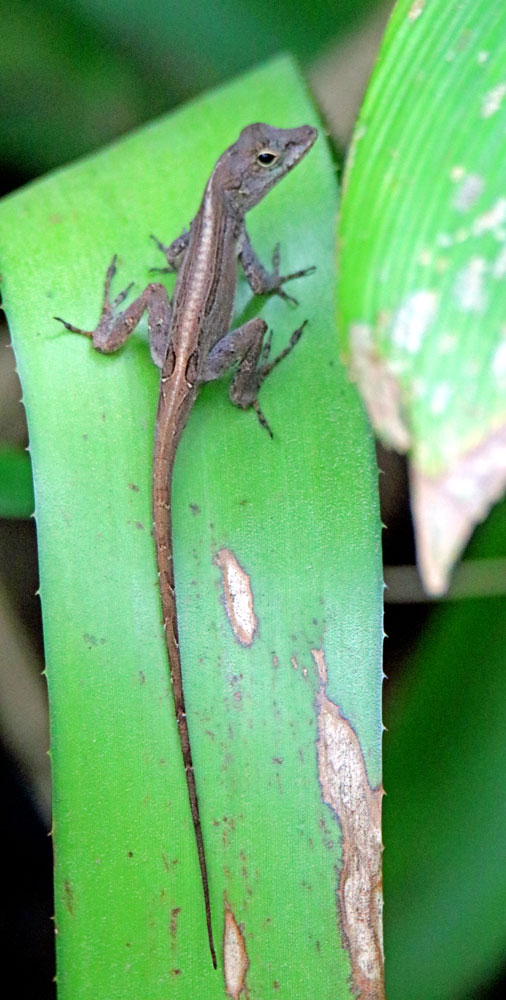
Ghost Anole

Another new species of lizard for me! The Ghost Anole, Anolis lemurinus (my gallery link with only these 2 photos now) or you can check out the parent gallery LIZARDS (22+ species) (linked) where you will find 8+ anole species in the Genus Anolis, plus a lot of other interesting tropical lizards. Just more of the adventure of living in Costa Rica! 🙂 And yes, this one was found at Hotel Banana Azul in the Caribe. And because I went to Gandoca-Manzanillo Wildlife Refuge on the last day there, all of those photos are yet to come. 🙂

Ghost Anole, Hotel Banana Azul, Puerto Viejo de Talamanca, Limón, Costa Rica

¡Pura Vida!

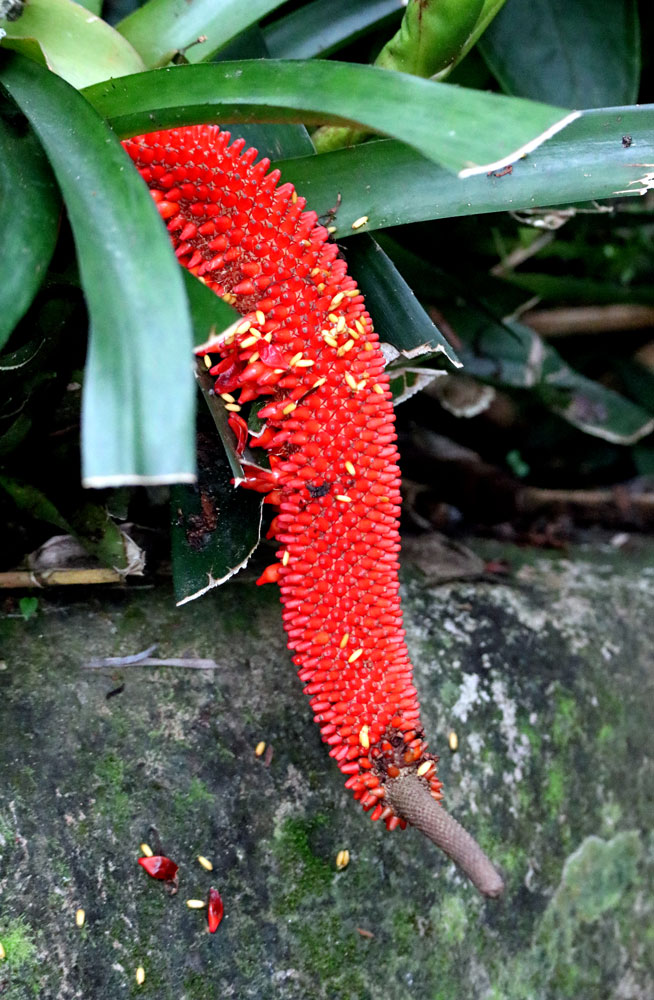
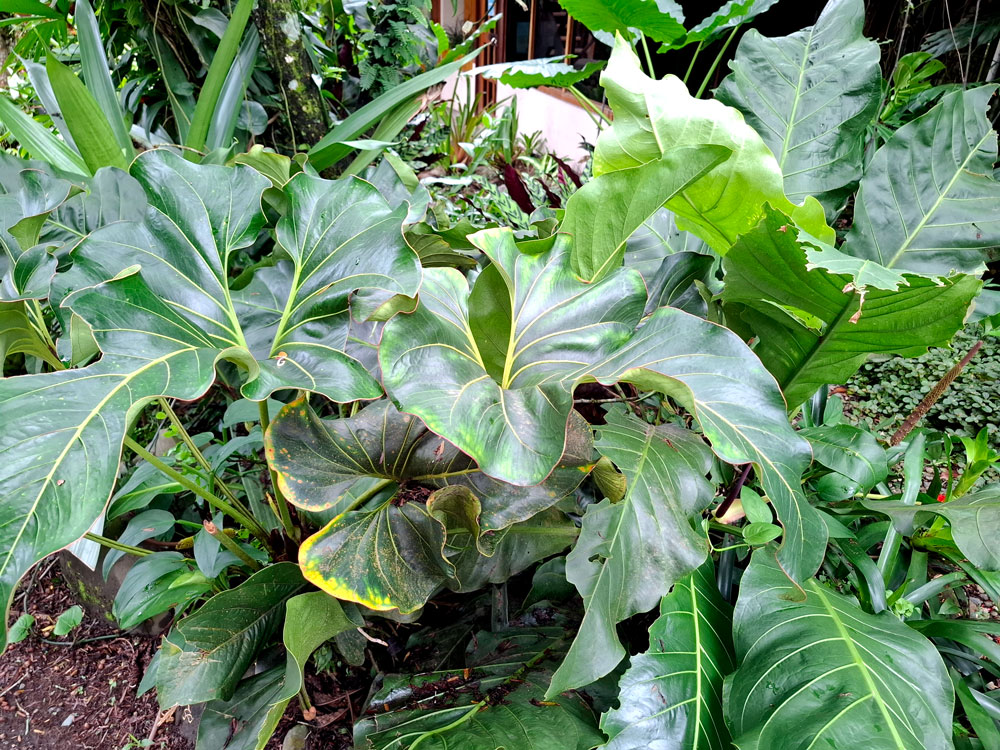
Tabacón

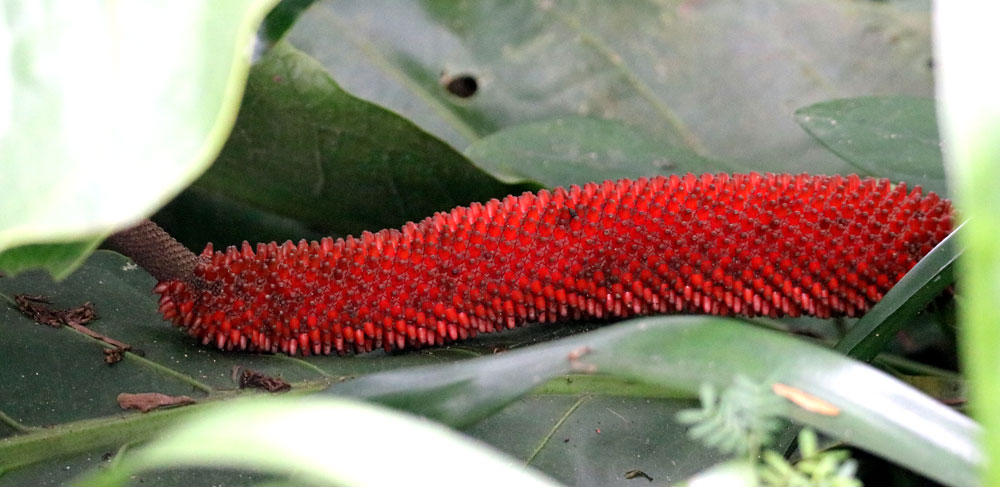
For those familiar with the Arenal Volcano area of Costa Rica, you know that name as the name of a Hot Springs Resort there, but did you know that it was named after a plant, Anthurium upalaense (Tabacón) (Research Gate article link)? It is much larger than the anthuriums in my garden and is found on the Caribbean side of Costa Rica with some also overlapping into nearby Nicaragua and Panama. The large leaves of the plant collect small dead leaves falling from other plants where they rot to feed the anthurium. That long red spadix is not a flower but contains many many tiny little flowers that are pollinated by insects and turn into many berries that are eaten by birds. Another amazing new discovery in nature for me! 🙂 And almost exclusive to Caribbean Costa Rica!

Anthurium upalaense (Tabacón), Hotel Banana Azul, Puerto Viejo, Limon, Costa Rica

¡Pura Vida!

Blue Morning

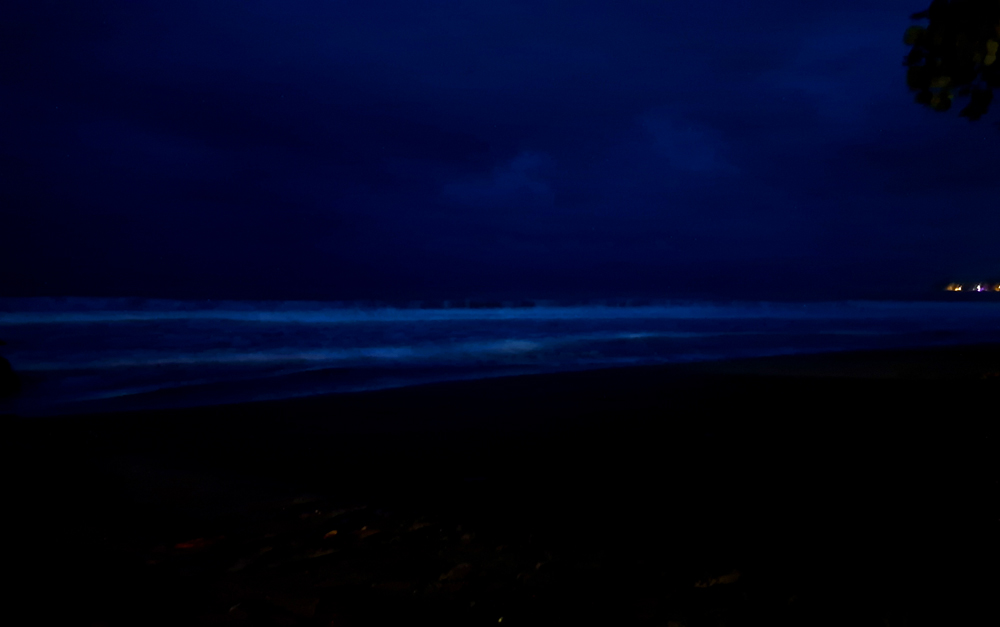
I was out on the beach early yesterday morning with hopes of a brilliant sunrise. Instead, God gave me a rich blue sky, quickly followed by a nourishing rain in this tropical forest. This year’s more extreme weather promises some more extreme experiences! 🙂

Sunrise Caribe South, Banana Azul, Limon, Costa Rica

And as the light increased from the above first sight, see the changing blues added to other colors in the next three shots . . .

Continue reading “Blue Morning”

Rough Water

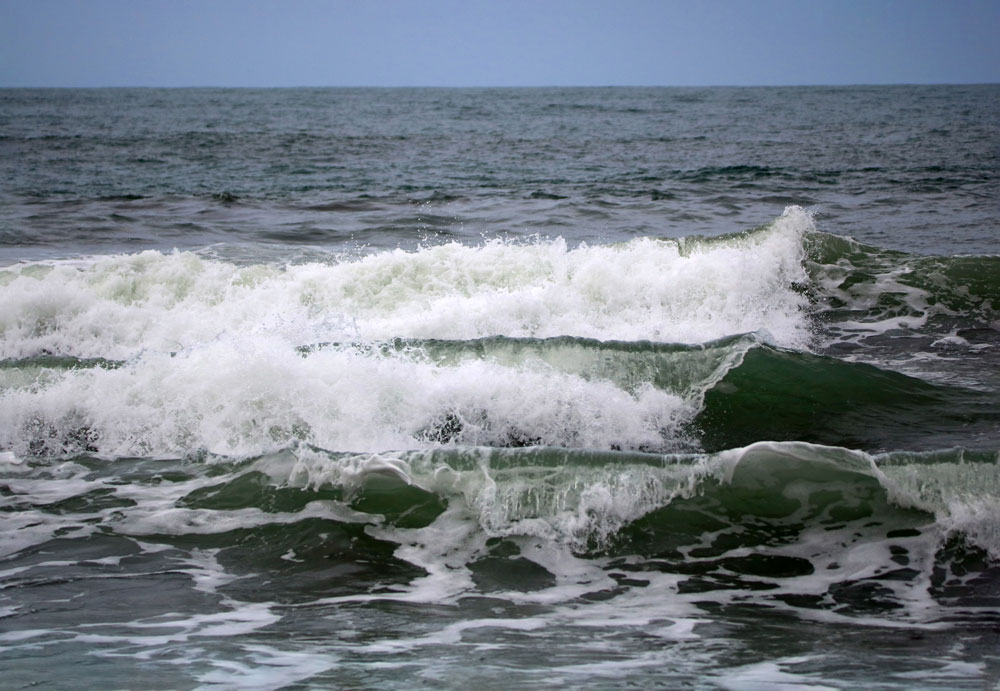
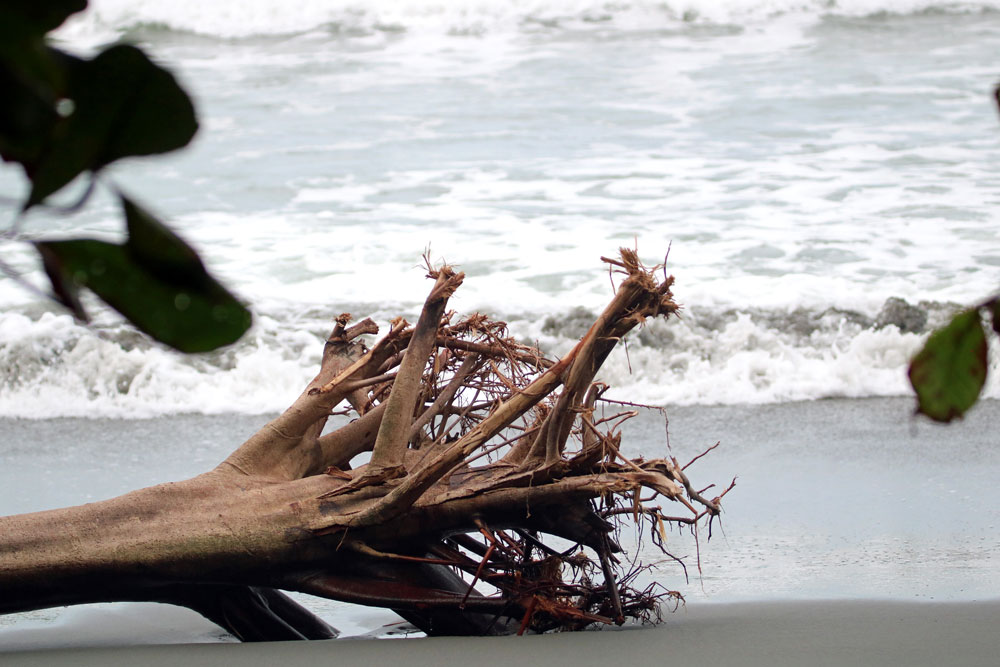
The combination of global warming and the “Super Nino” this year has made where I live on the Pacific Slope hotter and drier this year with not much of a rainy season. While the other sided of Costa Rica, the Caribbean (Atlantic) is wetter with more rain, but also hotter and thus more humid than usual. And the ocean seems rougher and high tide is higher. One photo shows a whole tree on the beach that probably blew down somewhere else and washed up here OR was washed away here by high tide and high winds and just hasn’t made it out to sea yet. I don’t know.

I didn’t get here until the afternoon with a good flight through the clouds and I’m settled in my room and made a walk down the beach road looking for nature. More tomorrow with hopes of a good sunrise and some butterflies!

Playa Negra, Puerto Viejo de Talamanca, Limon, Costa Rica

¡Pura Vida!

See more of this side of Costa Rica in my gallery Caribbean Beaches. And tonight I go to sleep with the sound of the surf and a little heavier surf than in the past.

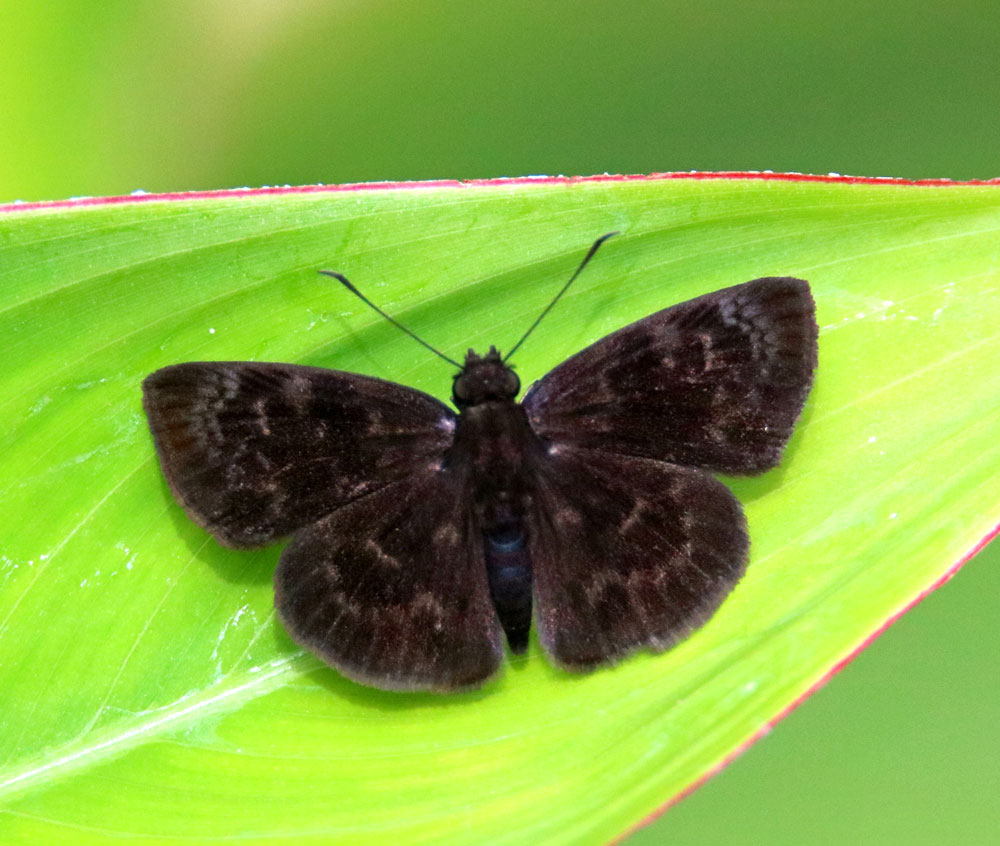
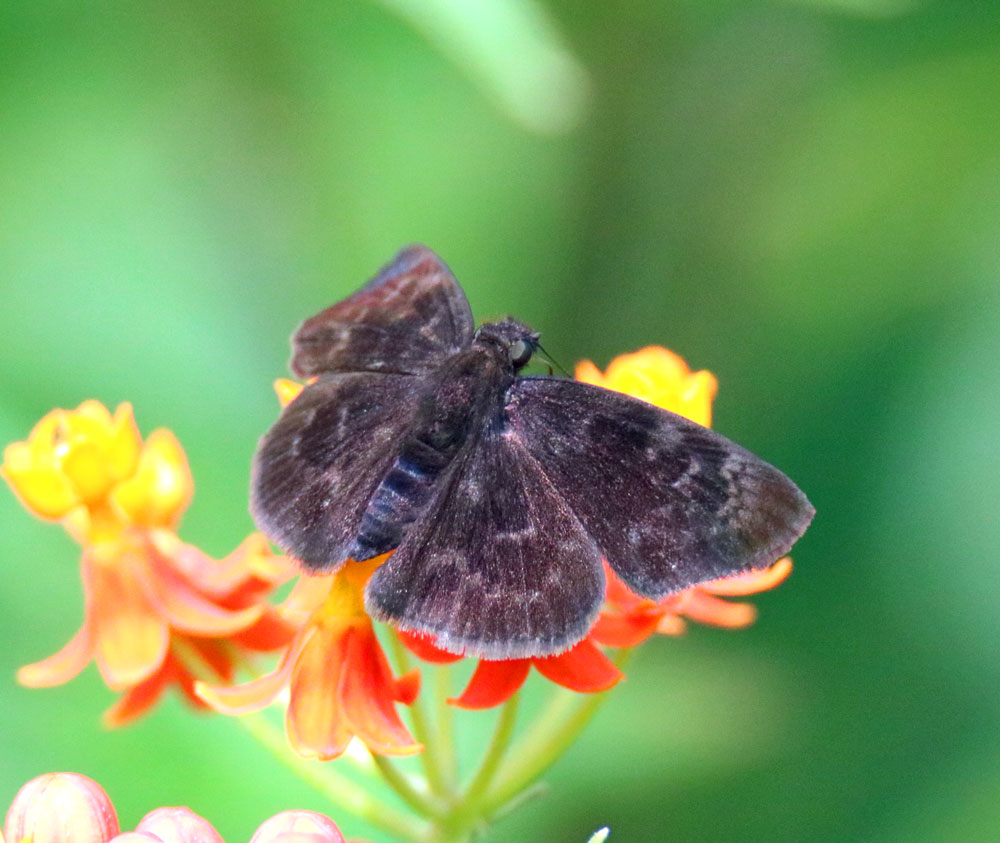
Fridericus Spreadwing 

I hope that I’m identifying this new species for me correctly, Fridericus Spreadwing, Quadrus fridericus (iNaturalist Costa Rica link). Both photos were made on the same day, but I think they are two different individuals. And of course I’ve started a gallery for Fridericus Spreadwing (linked) with one more photo than these.

Fridericus Spreadwing, Atenas, Alajuela, Costa Rica

¡Pura Vida!

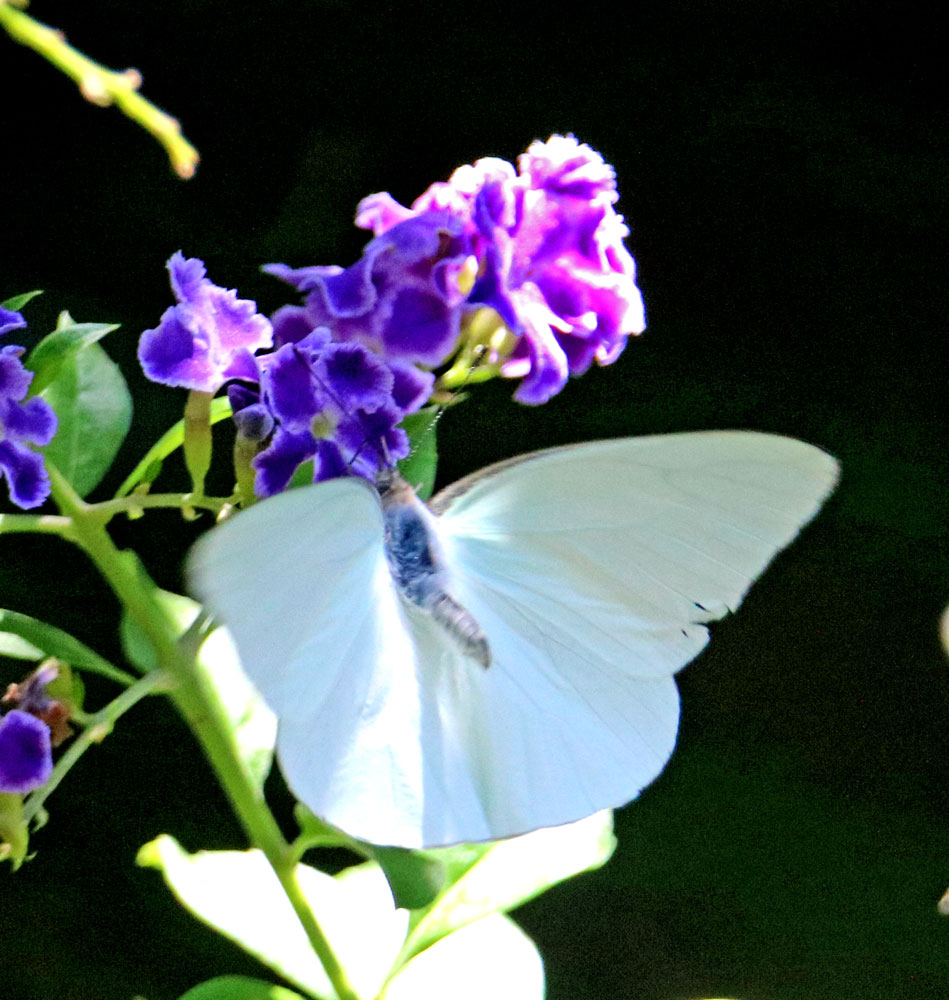
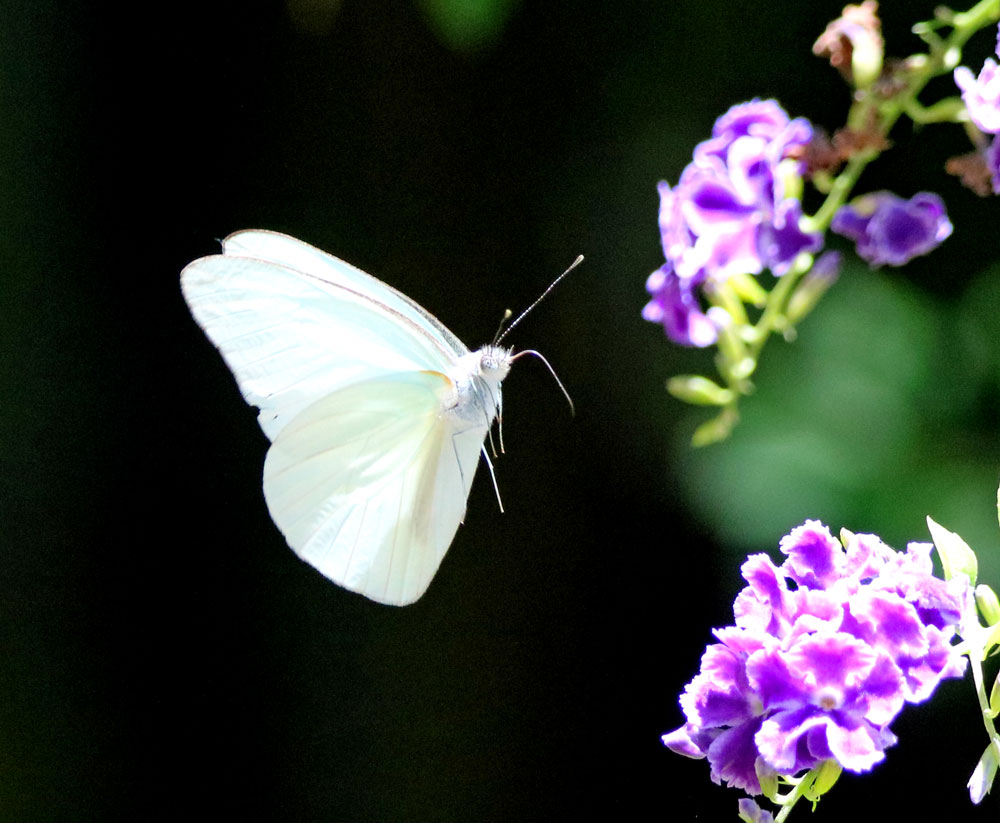
Florida White

Found in many more places than the U.S. state of Florida, this butterfly is throughout tropical America from Brazil north to the Florida peninsula and South Texas including the Caribbean islands and all of Central America. I see him frequently in my garden as you can see in my gallery Florida White (linked). In the gallery, the ones with large swatches of dark brown (black) trim are females in the wet season only.

Florida White, my garden, Atenas, Alajuela, Costa Rica

¡Pura Vida!

Florida “Blizzard?”

From Google: “In coastal Florida often tell modern “nature stories” about the massive, sudden irruptions or migrations of these butterflies. During peak population explosions, millions of Florida Whites hatch simultaneously. Residents describe looking out their windows and thinking they are seeing a “beachside blizzard” or “flying white ashes” blowing down the highway. It creates an ethereal, temporary winter wonderland in a tropical climate. [1]” Click that footnote “1” for a video of that “blizzard.” 🙂

Melwhite on Milkweed

Is it a contrast or a harmony of colors? Either way, I like these photos of the Common Melwhite (my gallery link) on the Tropical Milkweed flowers (NaturalistaCR link).

Common Melwhite butterfly on a Tropical Milkweed flower, Atenas, Alajuela, Costa Rica

¡Pura Vida!

How do I get that mottled green background? (Someone asked.) Simply by using my 600mm lens from a distance of 6 feet or more. The long lens automatically puts my focus point in focus and everything else blurry. In this case, my “jungle-like” garden is mostly greens with only occasional flowers, thus the mottled green background. When I shoot up, with the sky as background (often with birds), the background can be anything from bright blue to gray to white, depending on the weather, and more rarely golds to oranges. I’ve tried a close-up lens for both flowers and insects and it just doesn’t work for me (for multiple reasons). 🙂

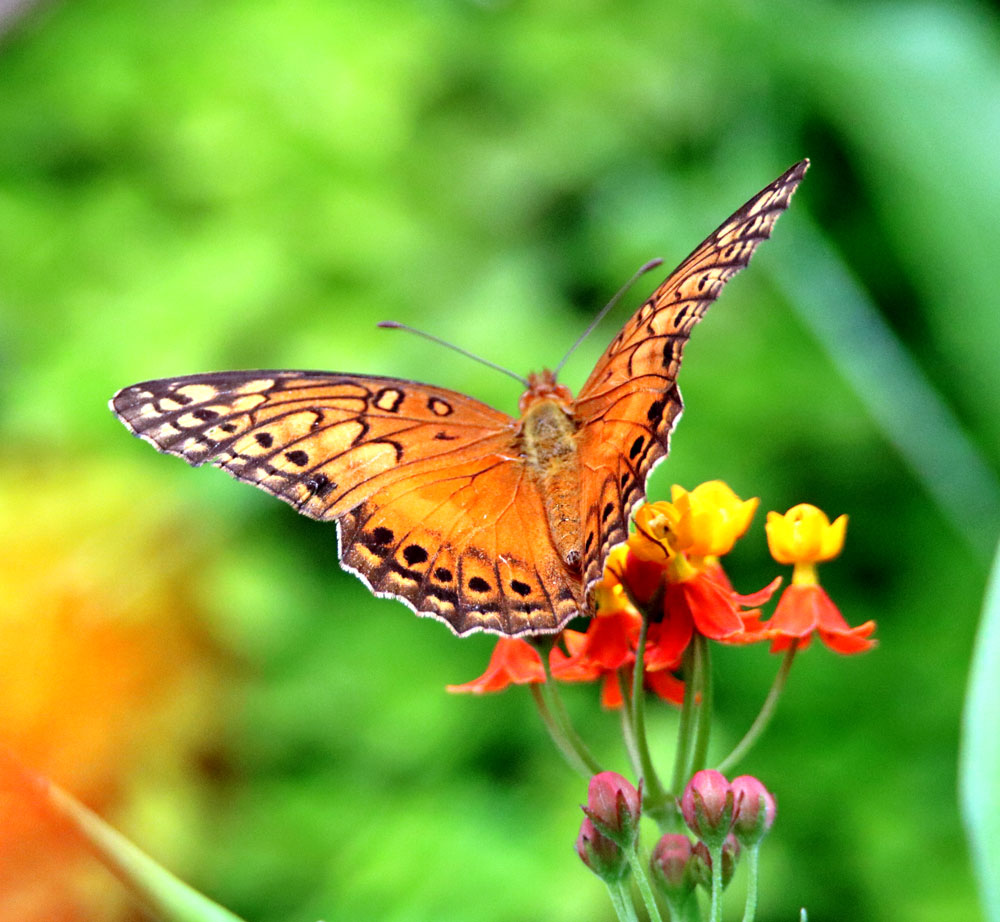
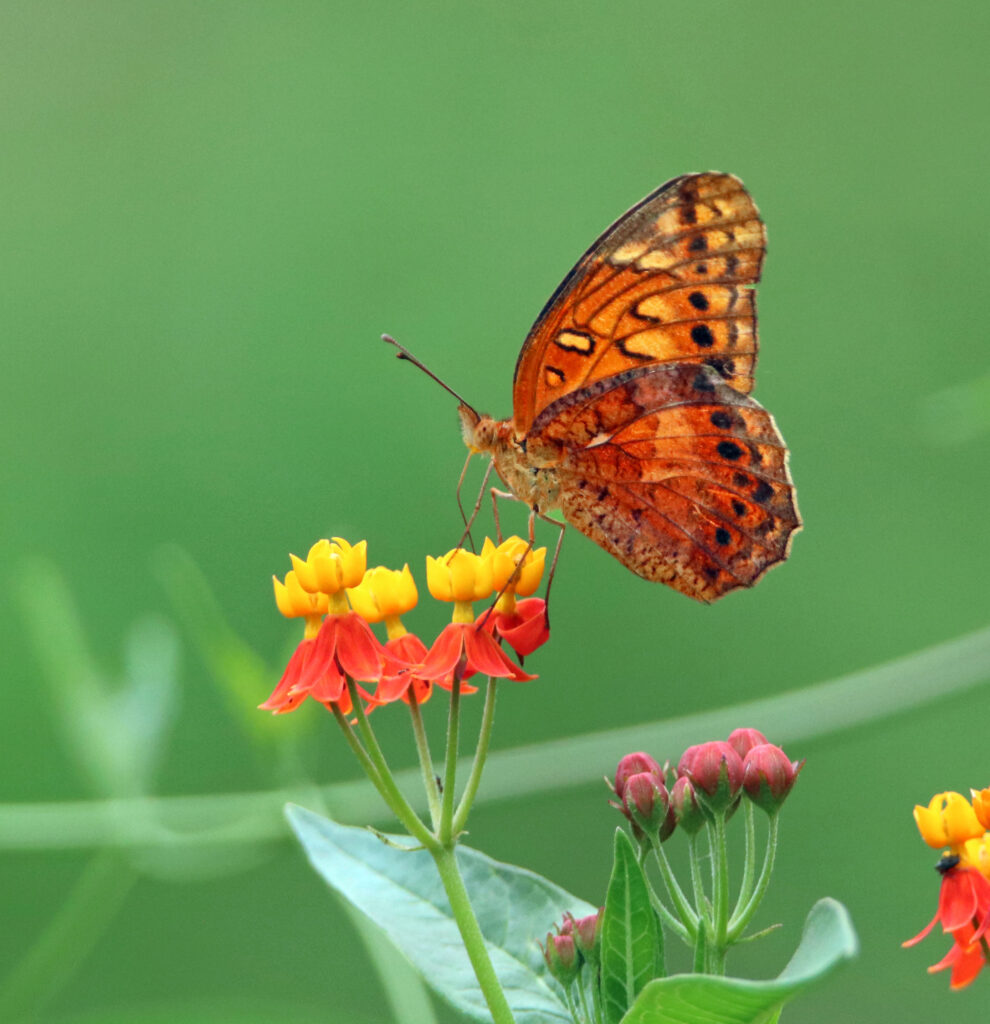
Mexican Fritillary

This colorful orange butterfly lives throughout Mexico and Central America, the West Indies and a few strays along the Southwestern U.S. border. See more photos in my gallery: Mexican Fritillary (linked). A bit of interesting indigenous history that includes this butterfly from Google Search:

The “Flower World” (Xochitl): In early Classic Teotihuacan and Postclassic Aztec culture, orange butterflies symbolized fire, rebirth, and a floral spiritual paradise. [1, 2] ~Google (Click the two footnote numbers for more information from their sources.)

Mexican Fritillary, Atenas, Alajuela, Costa Rica

¡Pura Vida!

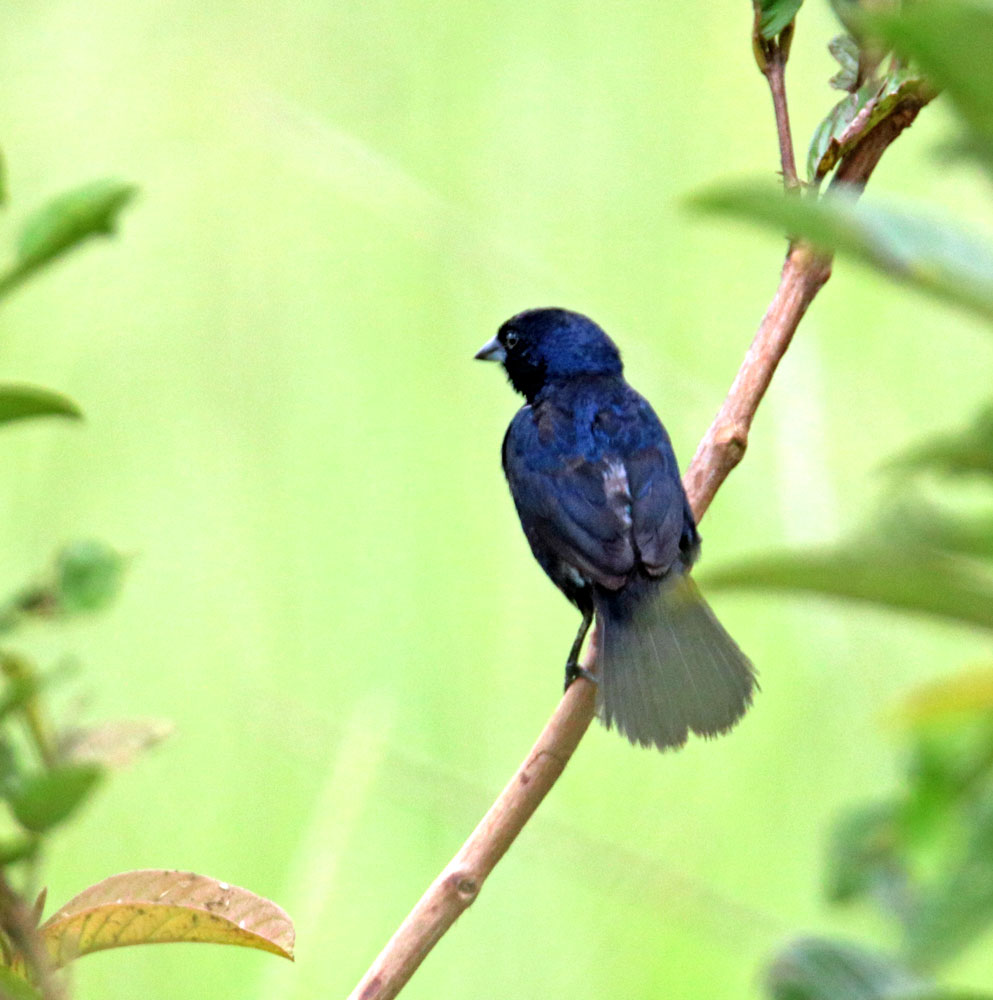
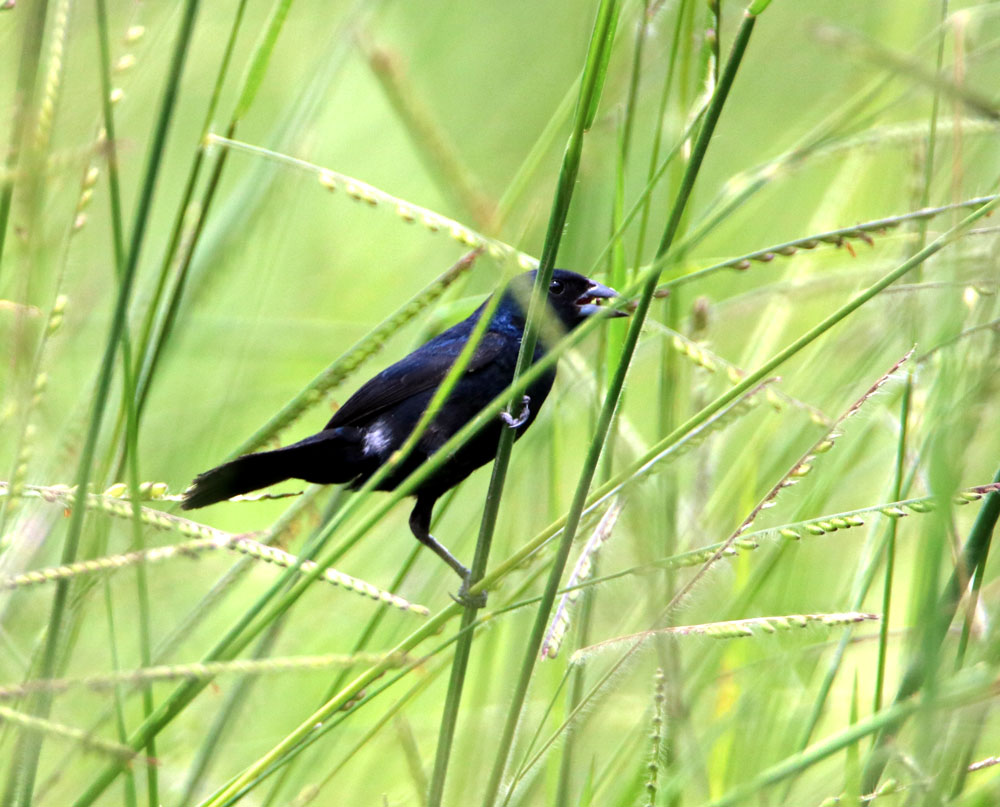
Blue-black Grassquit

Another seed-eating bird found only in Central & South America, the Blue-black Grassquit (my gallery link) with the one above on a little bush or plant in the cow pasture across the street from me. This male was jumping straight up in the air from this bush about two feet or 60 centimeters as a courtship display, which I’m yet to catch an action shot of! 🙂 See more from there and from 6 other Costa Rica locations in my above-linked gallery. And/or read more about them and see their distribution map on eBird and a very good article on Wikipedia.

Most often seen in the grasses of a meadow or cow pasture as above, eating seeds, Blue-black Grassquit, Atenas, Alajuela, Costa Rica

¡Pura Vida!