This most frequent swallowtail in my garden has showed up a little less this year, but is always a pleasure to see. Here’s the two basic views, top view and side view . . .


charliedoggett.net

This most frequent swallowtail in my garden has showed up a little less this year, but is always a pleasure to see. Here’s the two basic views, top view and side view . . .
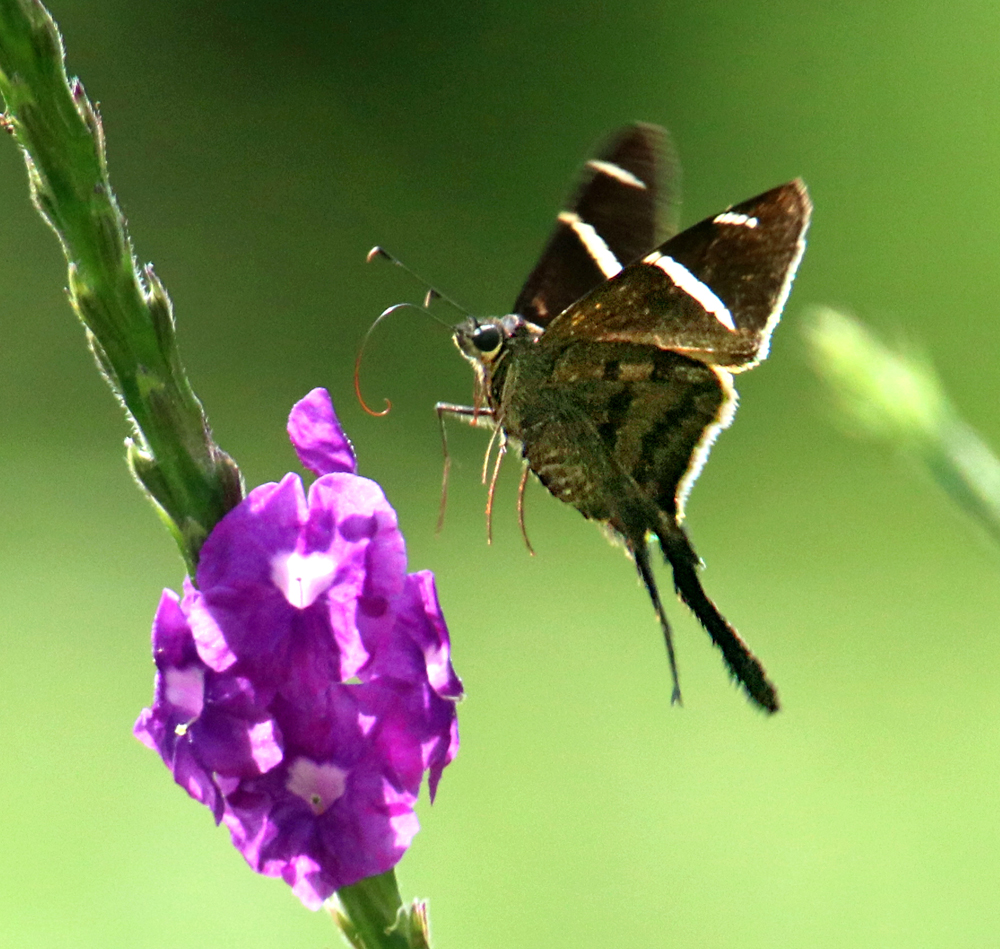
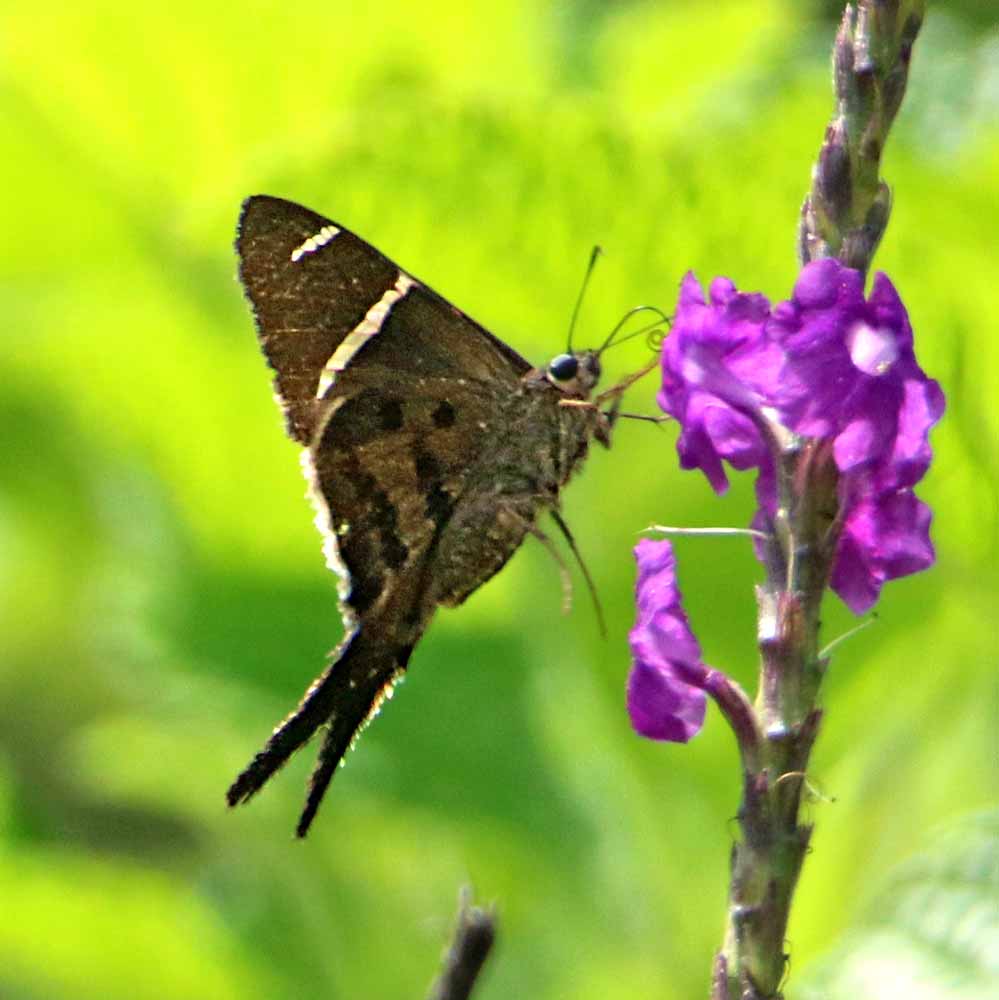
Sometimes I’m not sure which of the several Longtails photos like this are, but from the beginning I was pretty sure these were Tanna and when iNaturalist AI agreed, I became pretty confident! 🙂 See my gallery of Tanna Longtail or if you go to iNaturalist Costa Rica you will see that I am the lead observer there, with the most photos. Tanna Longtail just seems to like it here in Atenas, as do I! 🙂
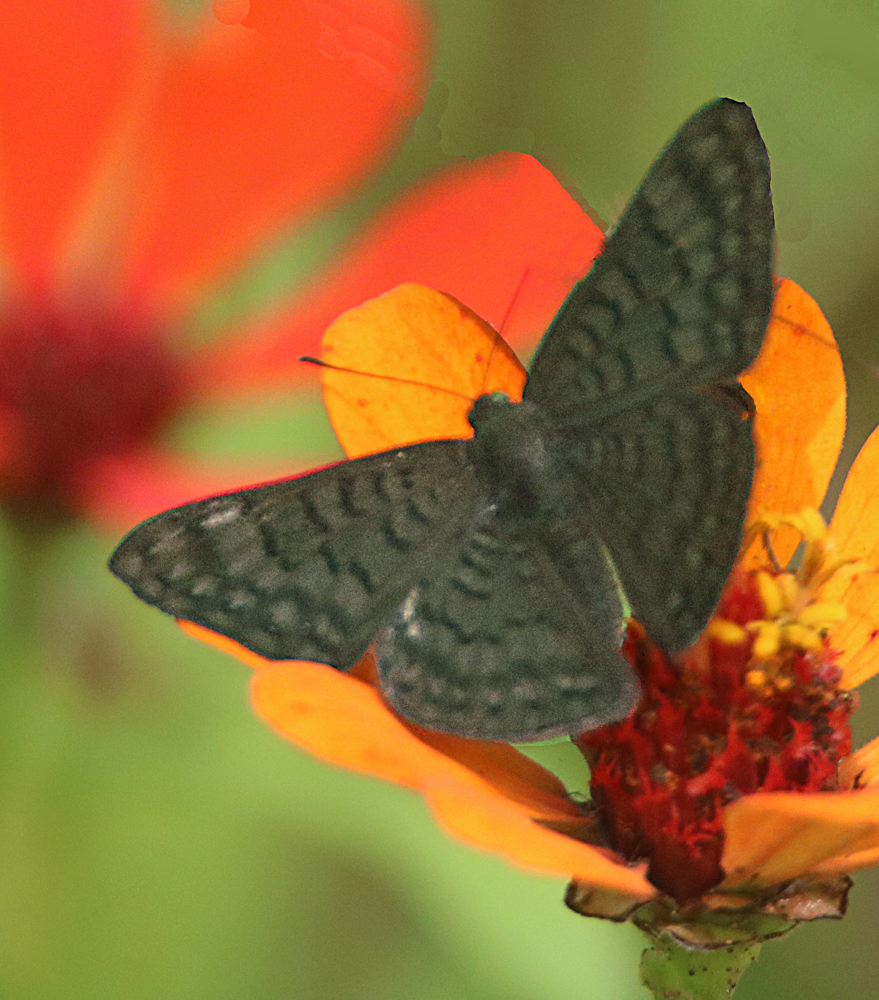
Costa Rica is so diverse in all its species that after 10+ years here, it is still not unusual to find a new species as I have with butterflies about 4 or 5 times this year. I was processing my several photos of the Falcate Skipper shared the other day (Oct 27) and in only one of those photos, I found this other butterfly partly hiding it. I slowly and painstakingly removed the Skipper from this photo in Photoshop so I could share and post on iNaturalist & BAMONA without the confusion of another butterfly on the same flower. 🙂 This Emesis ocypore (scientific name) is not very common, found from Southern Mexico to Columbia and also in parts of Africa! Yes! On two continents! In the Americas he is most common in Costa Rica, though on iNaturalist CR there are only 19 observations reported. Mine will make #20 when I get to it! And on BAMONA only 3 now, mine will make 4! 🙂 Here is my one and only photo of this rarity from my own garden on October 17, 2025 . . .
I did start a gallery for this species, but with only this one photo! It is at this link: Dark Emesis, Emesis ocypore. Note that it is in the Metalmark Family, Riodinidae.
¡Pura Vida!
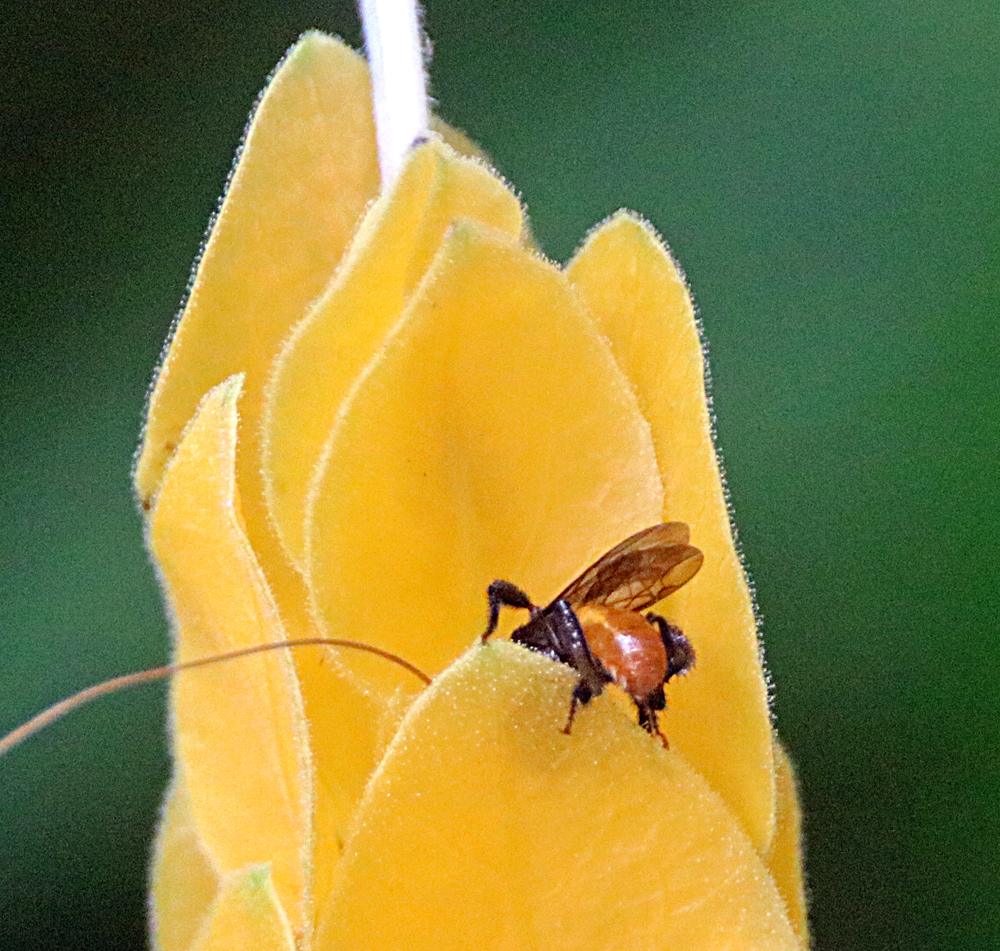
. . . on one of my few Golden Shrimp flowers blooming this year (not enough sun I think). This Red-tailed Stingless Bee has the scientific name of Trigona fulviventris and the Spanish common name of Abeja Culo de Vaca. I have 8+ species of bees in my Bee Gallery, with only two other shots of this species, also in my garden.
¡Pura Vida!
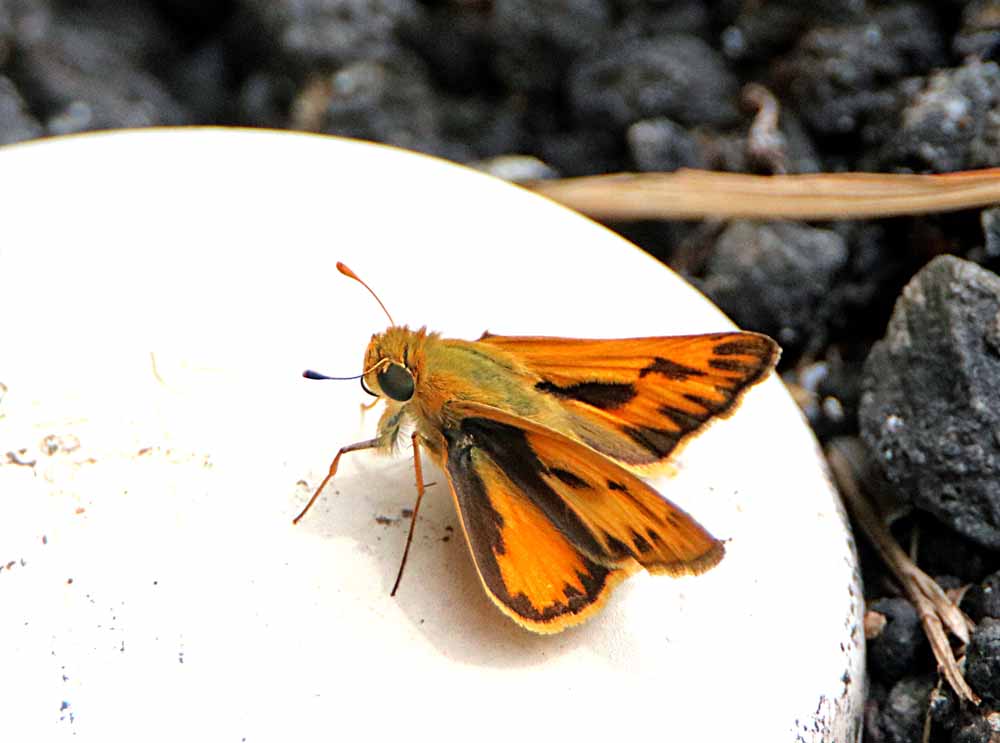
As I’ve said before in this blog, I really try to get both a top view and a side view(or bottom view) of every butterfly because of the sometimes big differences and the clues for good identification. Though not as radically different as some butterflies, there is a difference in the Fiery Skipper – Hylephila phyleus (my gallery link), as you can see in these two photos . . .
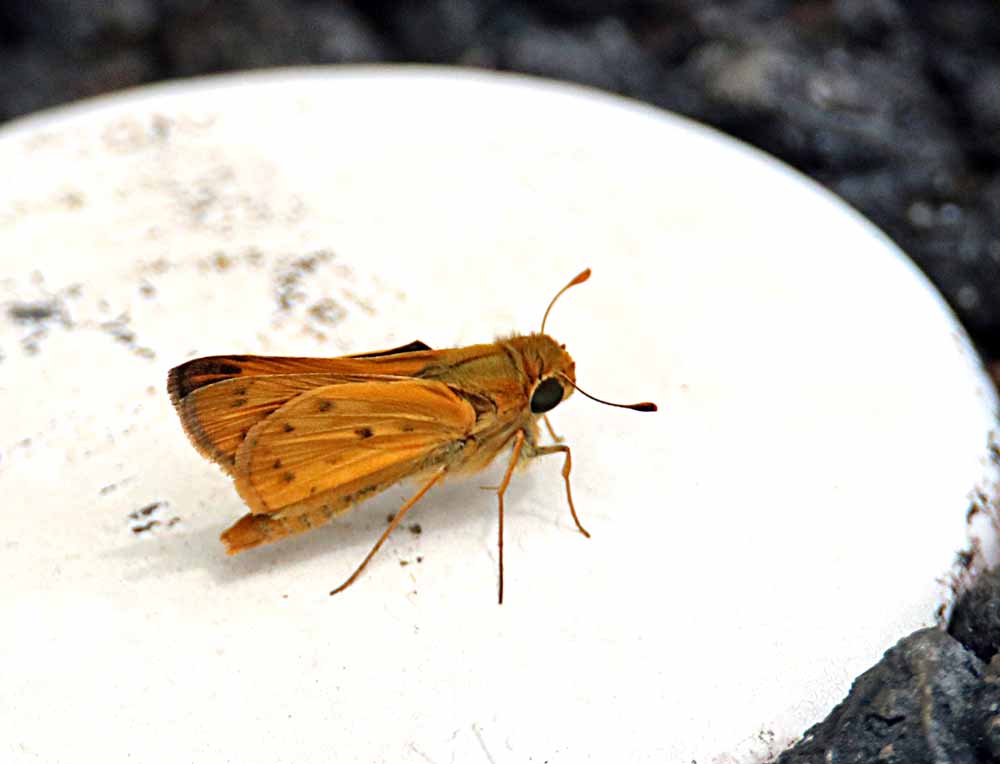
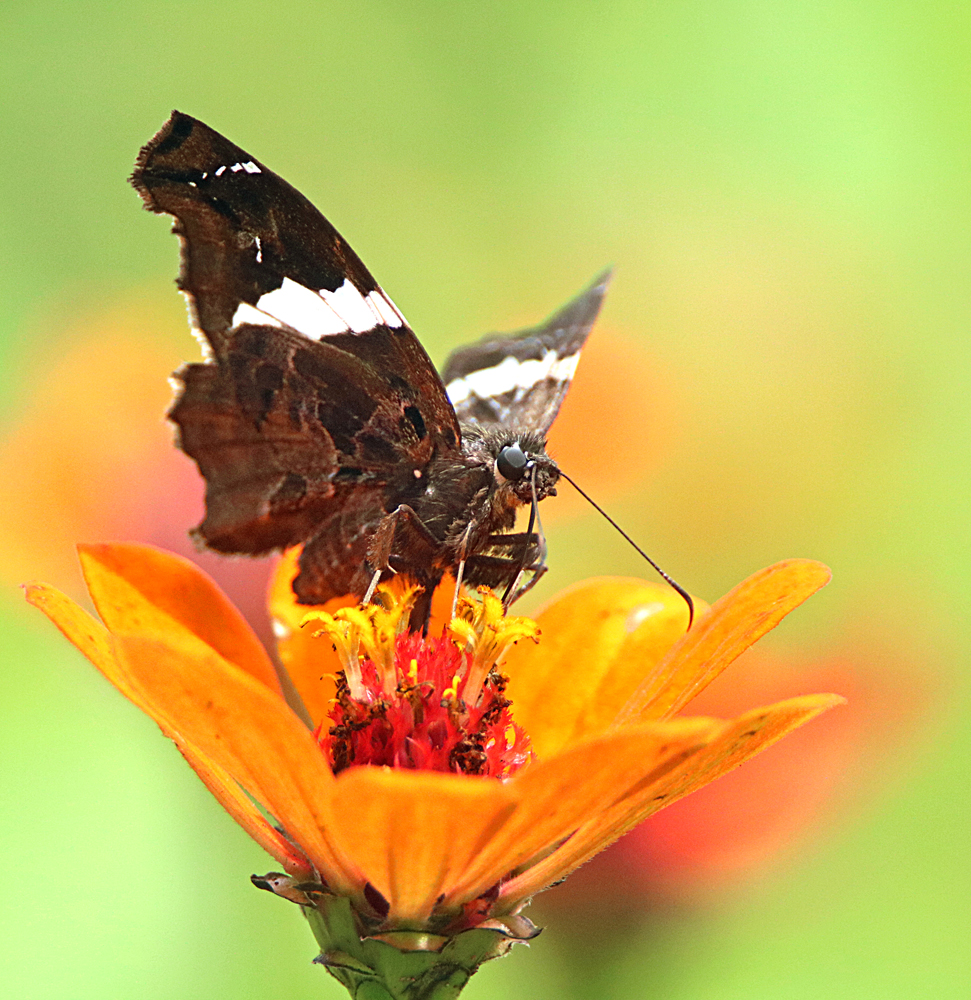
Not gorgeous, but another good pollinator! 🙂 This is my second time to see and photograph the Falcate Skipper, Spathilepia colonius (my gallery link), one of the many Skippers here, found from Argentina to Mexico. Here’s 2 shots, a top view and a side view, which is what I want of all butterflies! (You need both views for easy identification.) 🙂
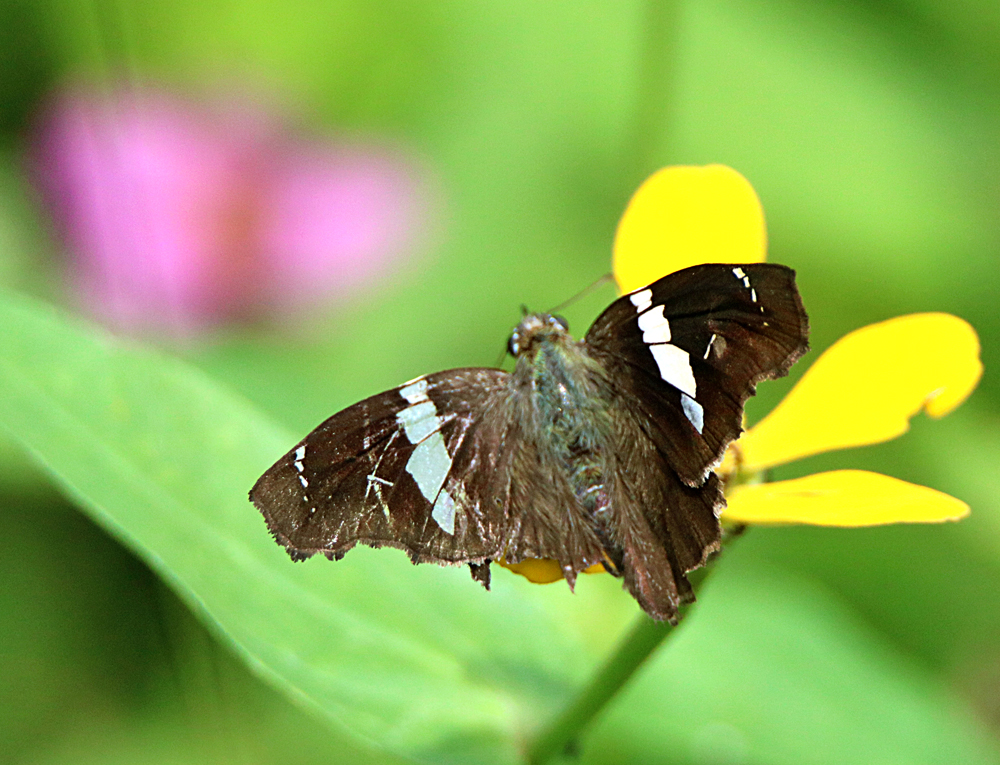
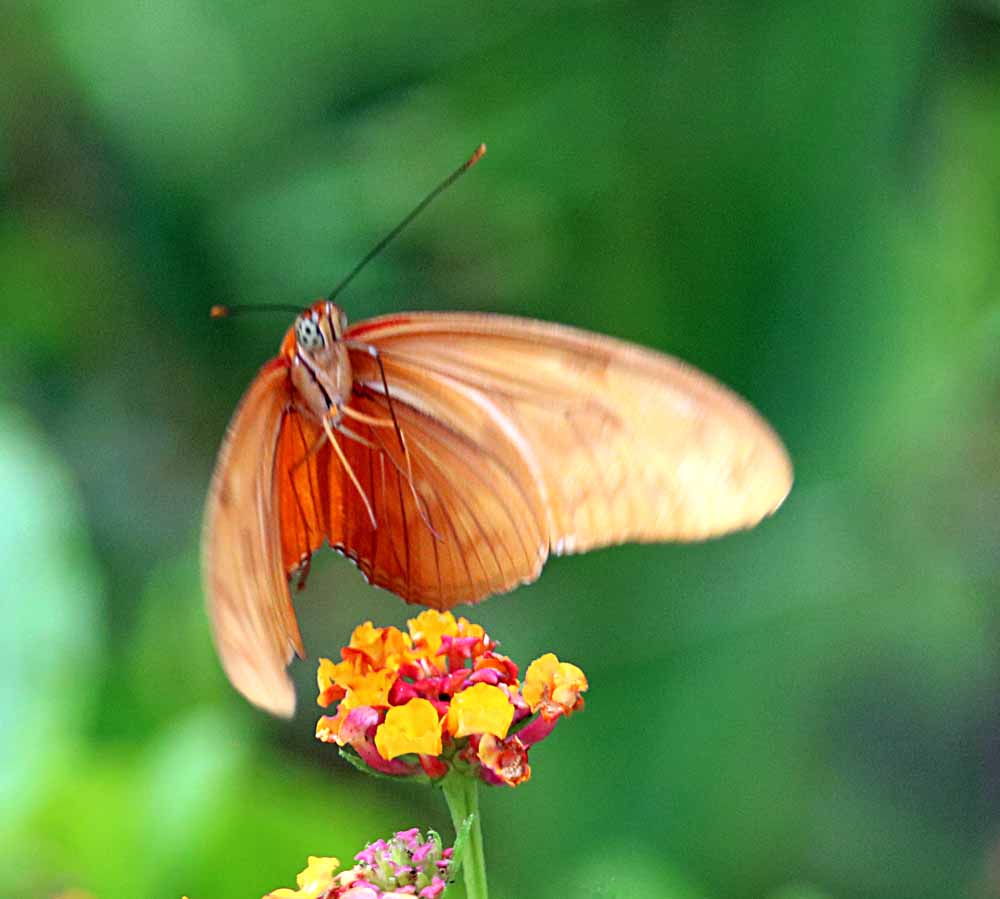
The Julia is turning out to be one of the most colorful butterflies in my garden this year with some other past butterflies not back. Here’s just two shots from my garden the other day and you can see more in my gallery: Julia Heliconian, Dryas julia with shots from literally every area of Costa Rica on both slopes, though, because I’m home more than anywhere, the most shots are from here in Atenas. 🙂 And the featured photo was chosen because it is an unusual view of one flying toward me and not because of the quality of the photo. Below is the most common view of this very orange butterfly . . .
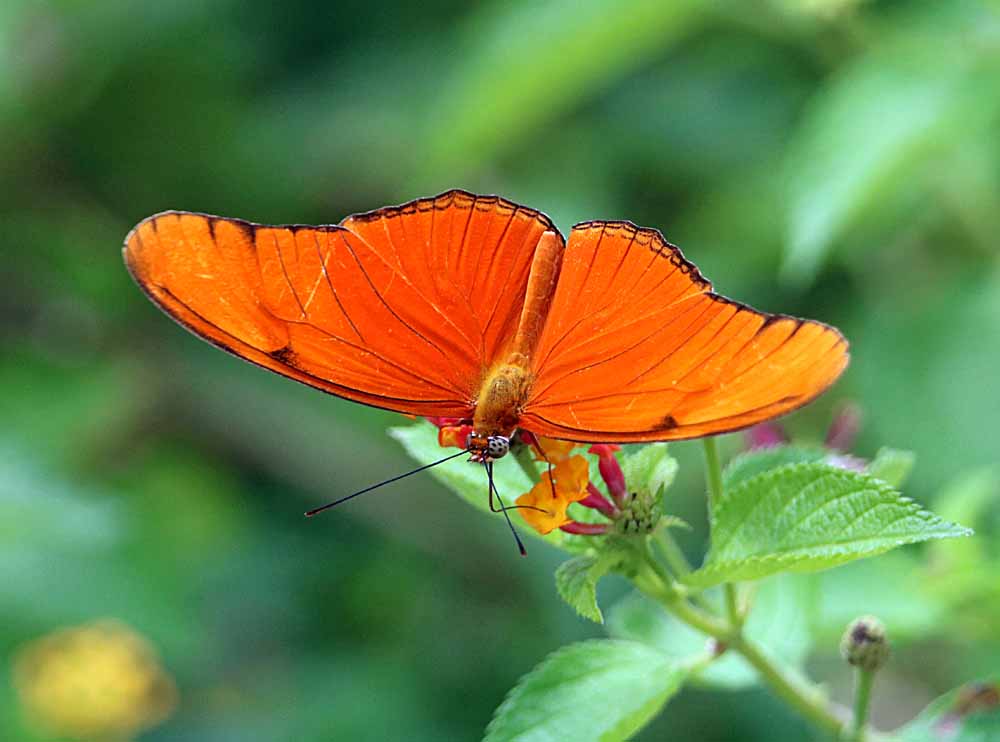
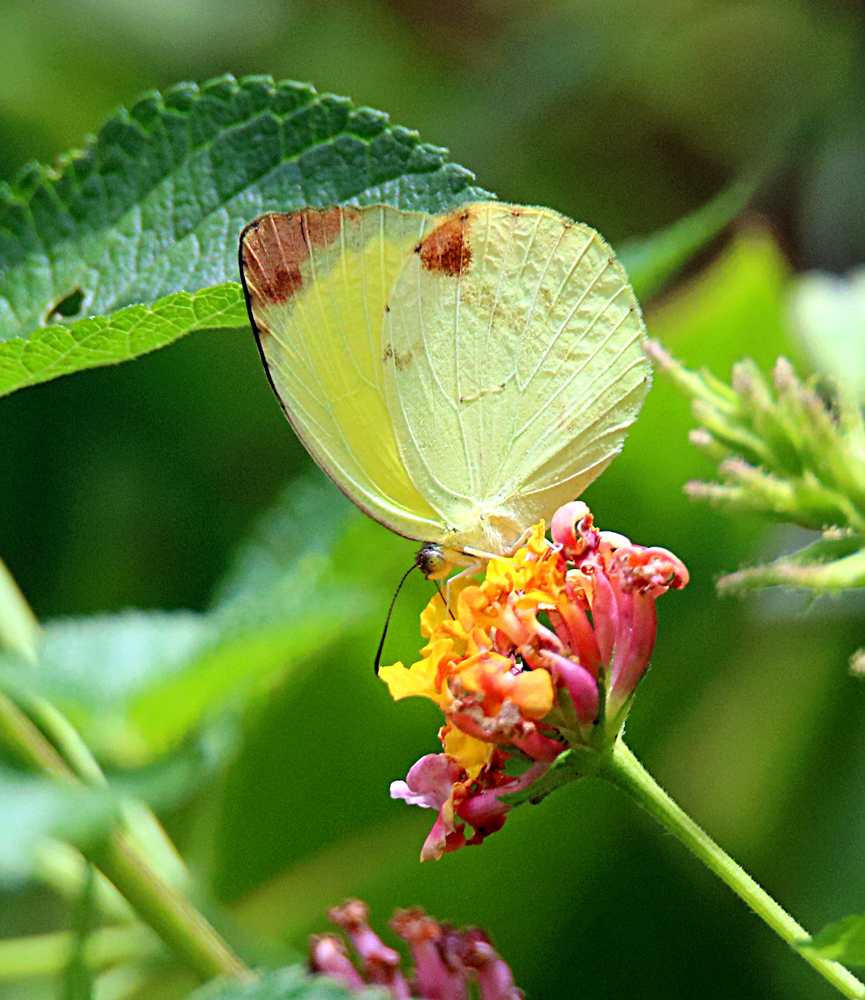
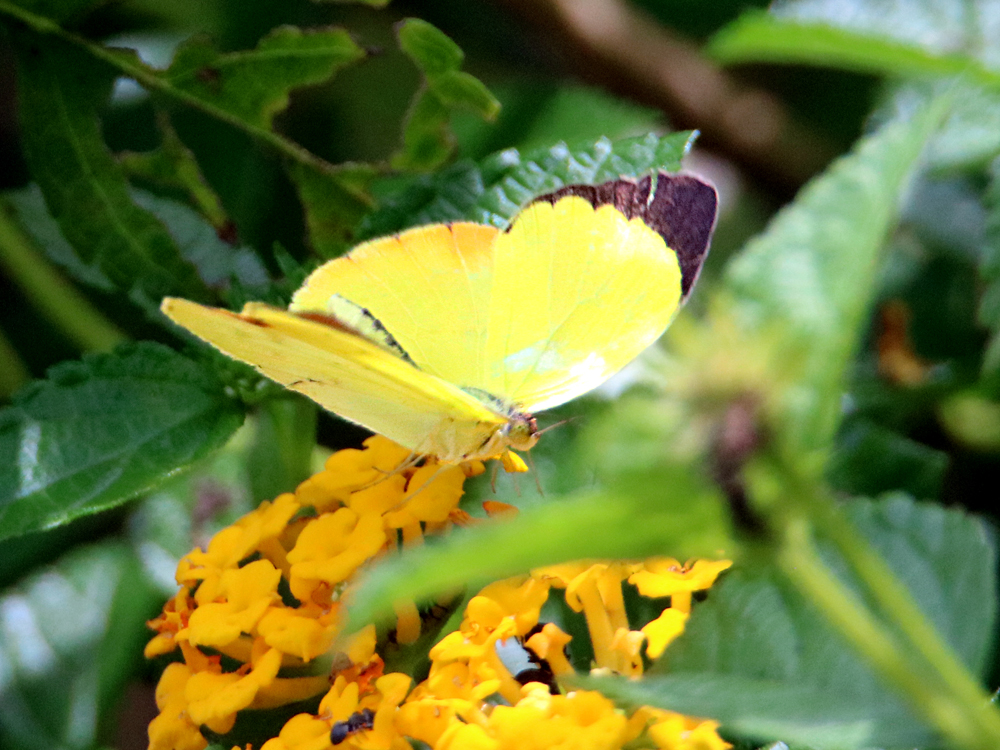
My first inclination is Eurema westwoodii (my gallery link), but this one is almost as close to Eurema dina (my gallery link) and Eurema leuce (my gallery link), so my plan at this time when I make my submissions to iNaturalist (at the end of each month for that month’s observations), I will simply use the genus and hope one of the gung-ho butterfly specialists there will identify and give a reason. While with BAMONA I may just submit as “cannot identify” and see what one of the coordinators there says, since they don’t have genus buckets to submit to. And hopefully both sites will have someone to give me a reason for the correct identification. 🙂 Here’s just two shots, a side view and a top view.
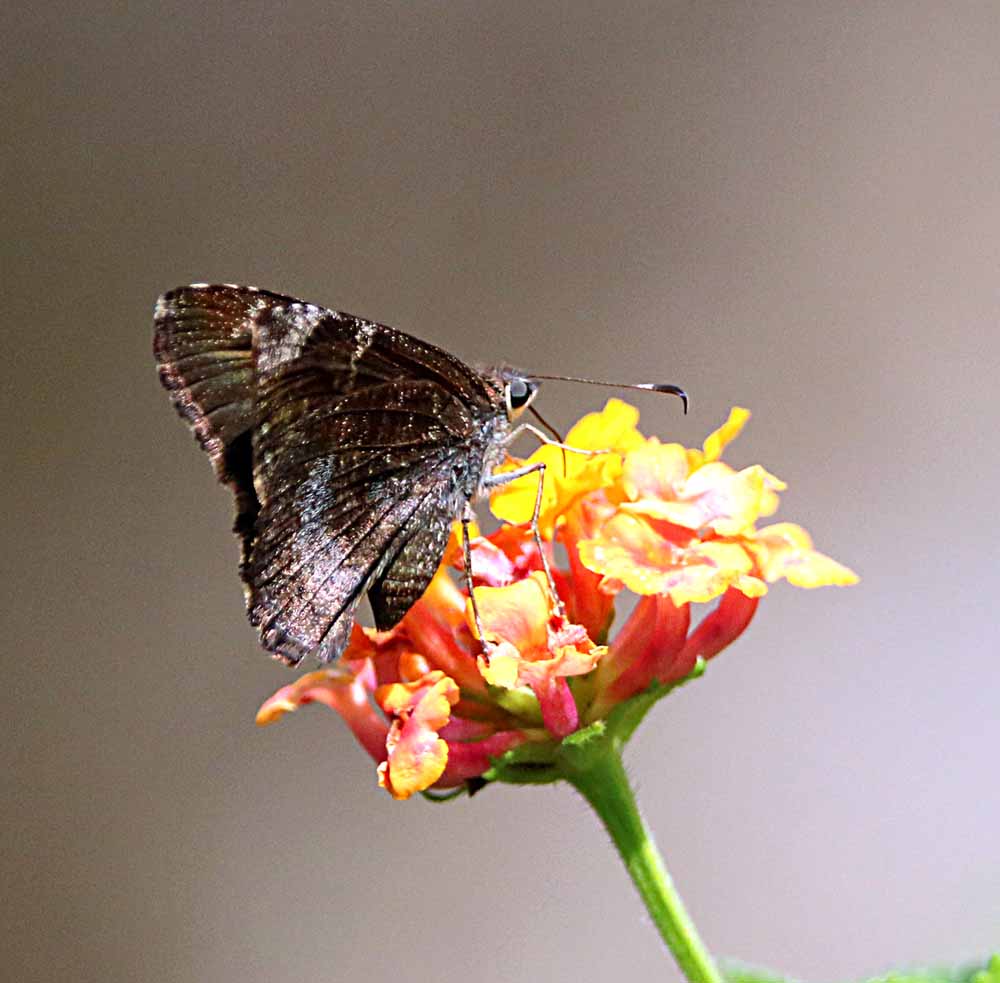
This “one more brown Skipper” is not very exciting and thus not as many “observations” posted on iNaturalist, where I am the lead observer. 🙂 But like every human being, every butterfly is important to ecology and he/she has it’s own beauty and purpose. There seem to be a lot in my neighborhood as you can see in my Gallery: Mimosa Skipper, Cogia calchas.
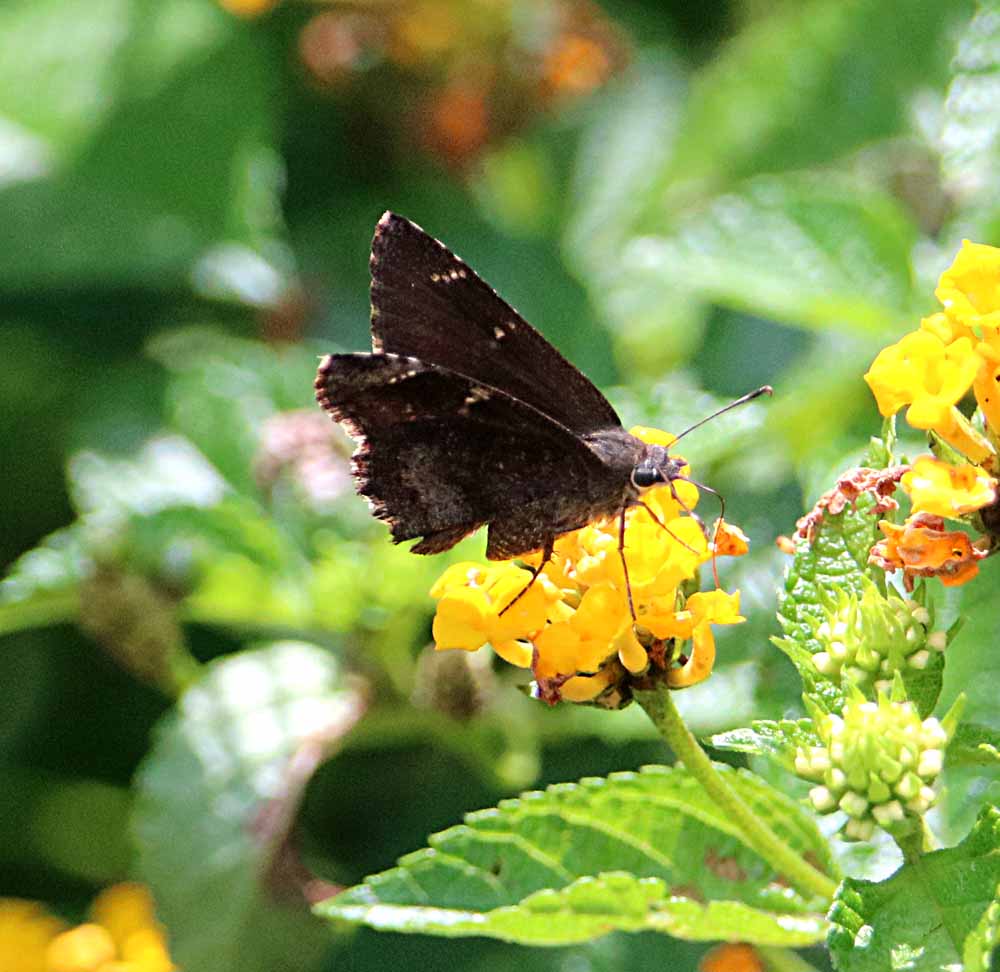
To see how many other “brown skippers” there are here, check out the gallery level above this one, Hesperiidae – SKIPPERS (106+ species) where the majority are brown or mostly brown. The unloved family of butterflies. 🙂
¡Pura Vida!
Continue reading “Mimosa Skipper”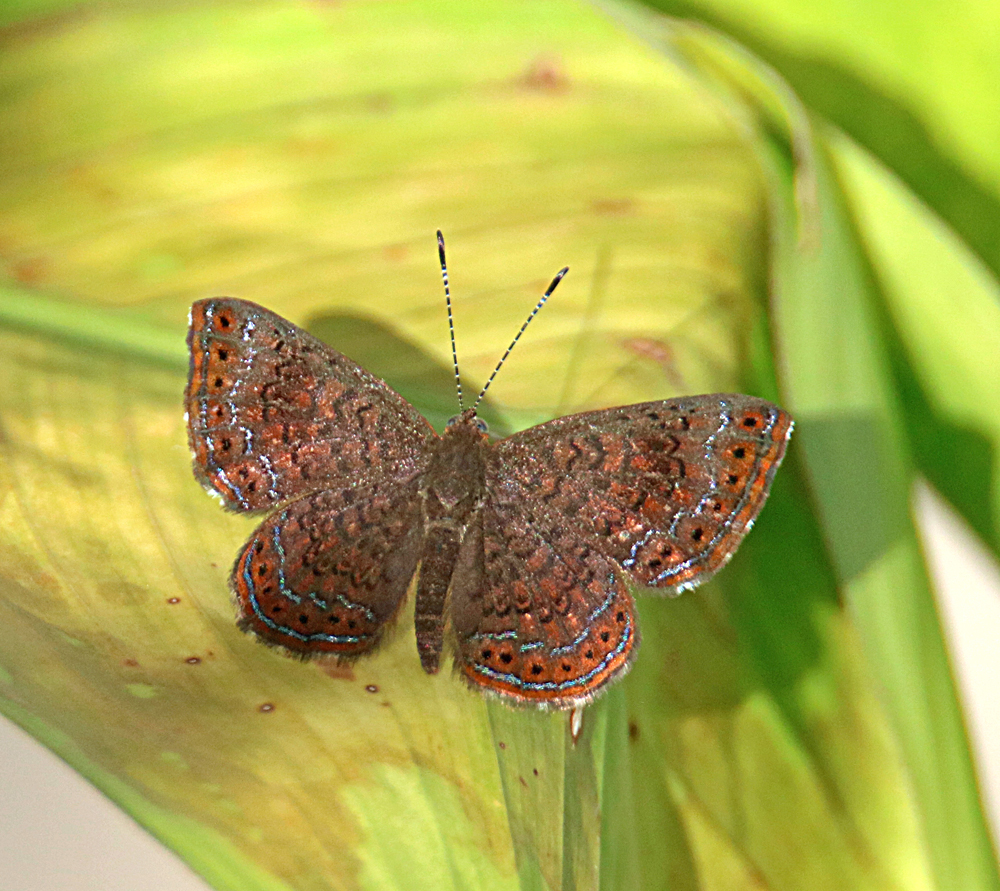
This species, Calephelis laverna (my gallery link) was seen almost daily last year but only a few times this year and it is one I have had trouble identifying with none of the expert identifiers responding to my submissions on iNaturalist or BAMONA. With the Glassberg book I gave it the Rounded Metalmark, Calephelis perditalis, identification. Later with more photos to compare with on iNaturalist, I changed to Calephelis laverna (mainly because of the bits of white on the border). iNaturalist doesn’t use a “common name” while Butterflies of America calls it Laverna Calephelis (reversing the scientific name word order which they generally do when there is not a known “common name” and BAMONA always follows Butterflies of America.
But I am still hoping for an “expert” to confirm or change this identification. Until then, this is my best effort at identification. It is found from Mexico to Brazil, so the location fits. Just one photo from my garden on October 1 and thus the beginning of October nature photos . . .
¡Pura Vida!