I am not through sharing photos from this year’s trip to Banana Azul and haven’t even started on the photos from a morning hike in Gandoca-Manzanillo Wildlife Refuge (source of my most wildlife sightings this year), but with all the praise I’ve given Banana Azul over the years and what was an annual trip every September (the month with usually less rain), I need a “DISCLAIMER” to previous recommendations for this hotel and area and to explain why I will not continue annual trips here and may not even return to Banana Azul.
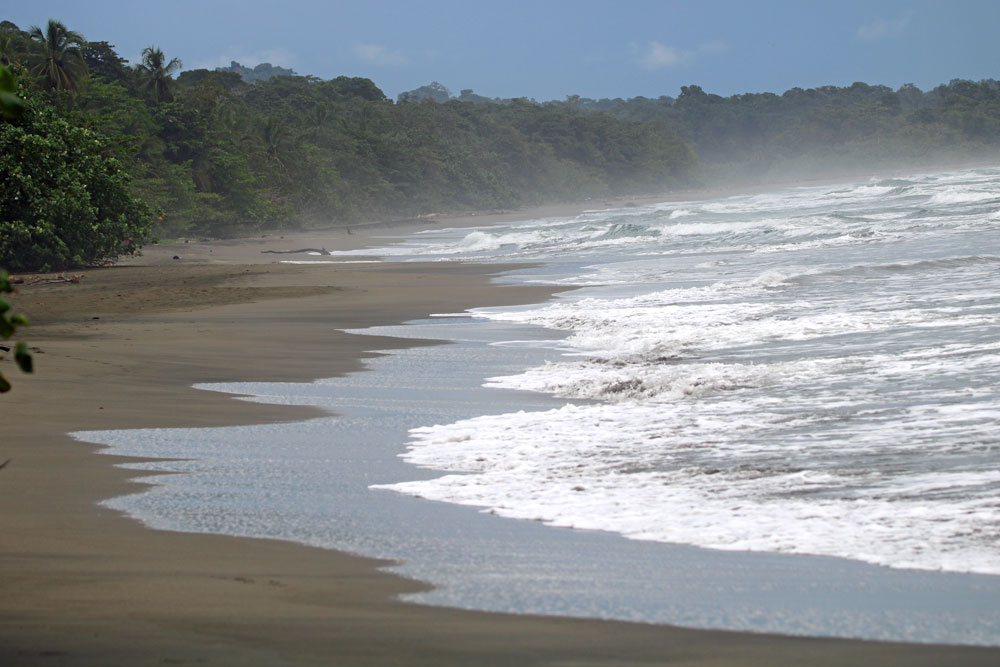
At places on the beaches there is barely a space for walking out of the water and in others no dry space at all! Playa Negra, Hotel Banana Azul, Puerto Viejo de Talamanca, Limón, Costa Rica. From a beach to a trail!
Read on for my explanation or reasons and to see more photos . . .
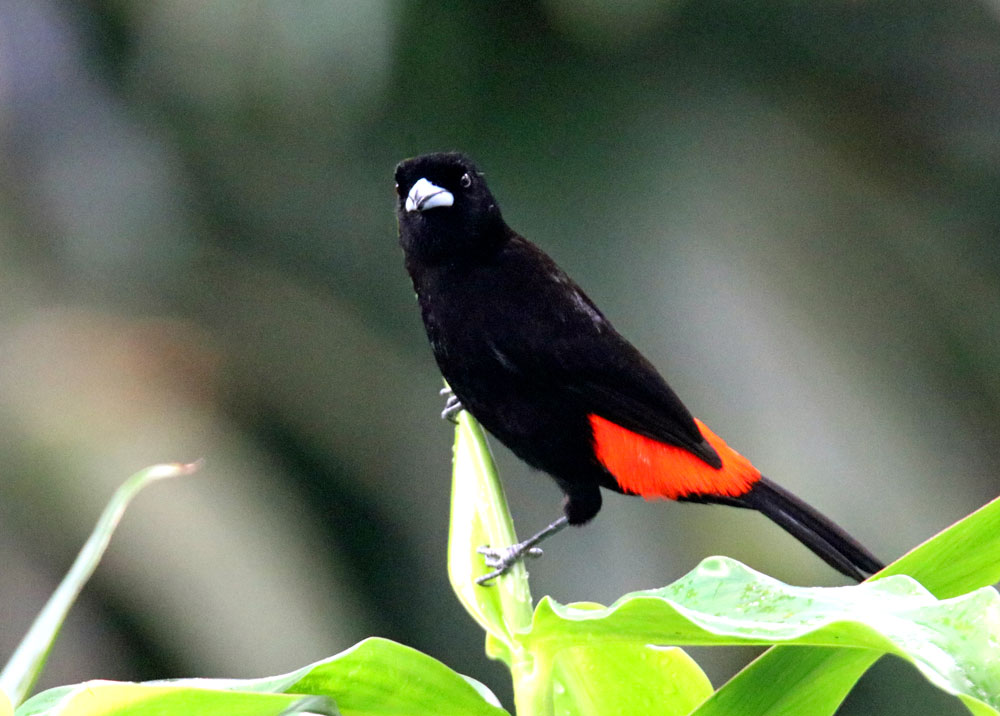
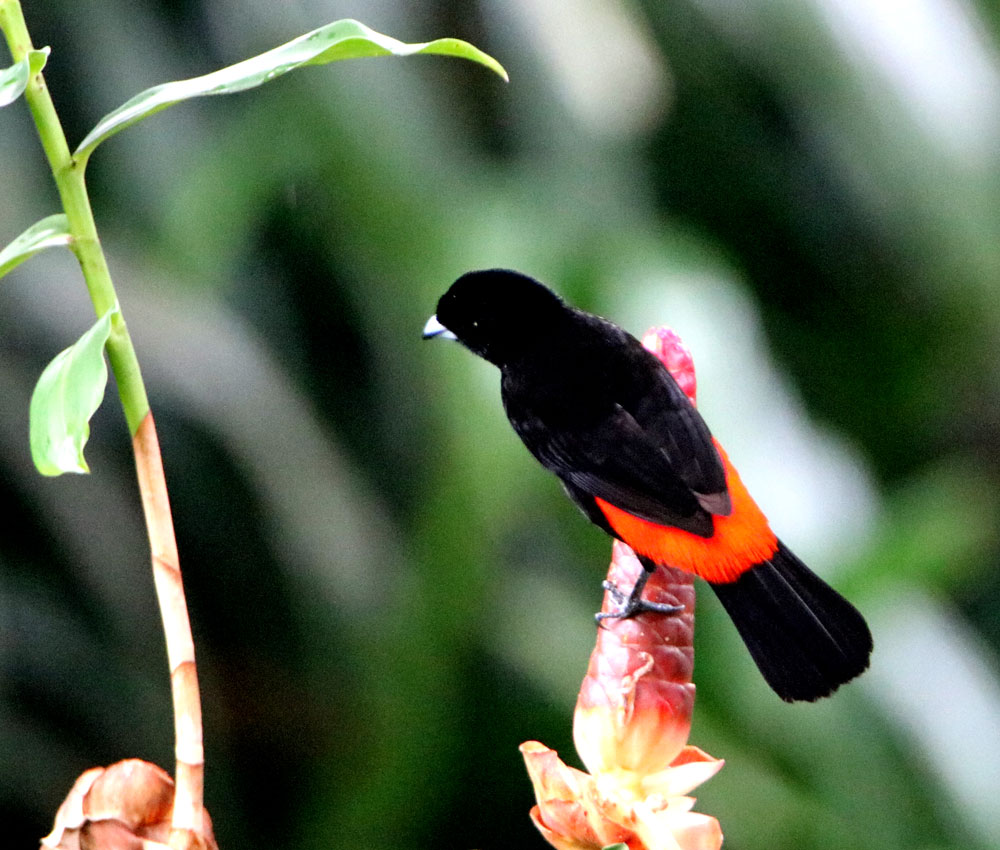
This one on the Caribbean side has an identical male as the Pacific side male with a slightly different female and they are thus considered different subspecies. I keep my photos separated in two galleries. For more of these from the Caribbean Slope, see Scarlet-rumped Tanager, Passerini’s (my gallery link) and yes, when I first came to Costa Rica these were call Passerini’s Tanager, while the ones on the Pacific side were called Cherrie’s Tanager. If you want to see if you can tell the difference in the two females, check out the other gallery: Scarlet-rumped Tanager, Cherrie’s (linked). And note that some sources say that the difference is seen only in the immature birds! 🙂 It is also interesting that some sources also say that the Cherrie’s is found only in Costa Rica and thus the scientific name includes the Latin “costaricensis.” 🙂 In my photos it seems that the Pacific side females are slightly darker in color with no other differences to me and I have never been where I could compare immature ones. These two photos are both male.
Scarlet-rumped Tanager, male, Hotel Banana Azul, Puerto Viejo, Limón, Costa Rica
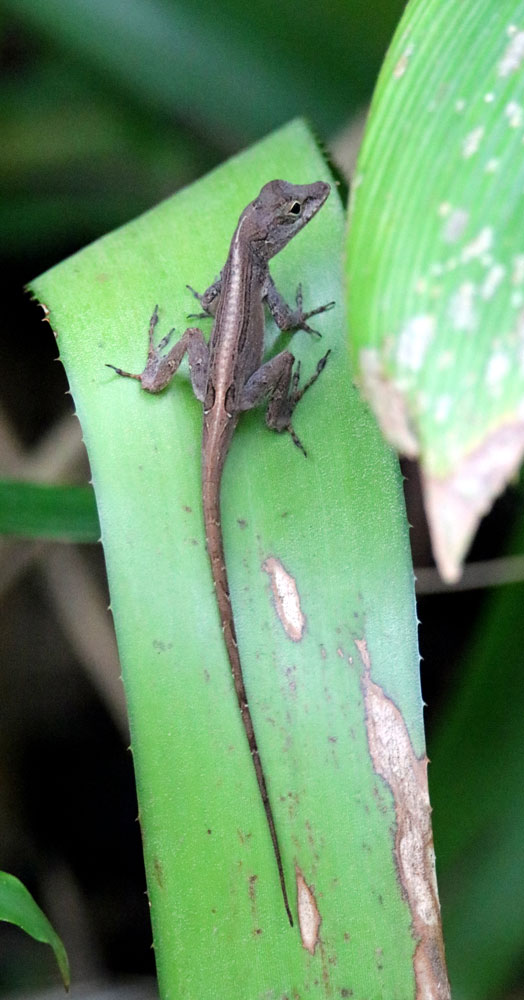
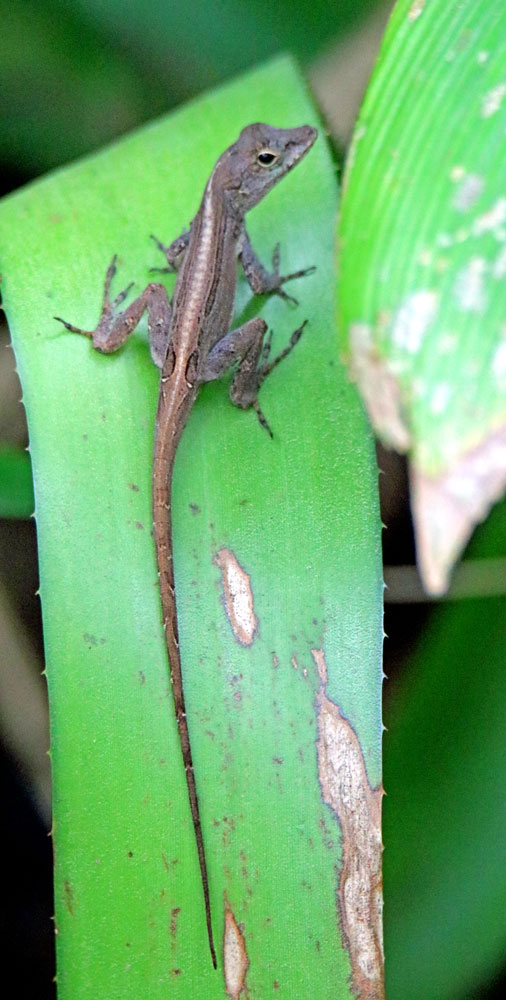
Another new species of lizard for me! The Ghost Anole, Anolis lemurinus (my gallery link with only these 2 photos now) or you can check out the parent gallery LIZARDS (22+ species) (linked) where you will find 8+ anole species in the Genus Anolis, plus a lot of other interesting tropical lizards. Just more of the adventure of living in Costa Rica! 🙂 And yes, this one was found at Hotel Banana Azul in the Caribe. And because I went to Gandoca-Manzanillo Wildlife Refuge on the last day there, all of those photos are yet to come. 🙂
Ghost Anole, Hotel Banana Azul, Puerto Viejo de Talamanca, Limón, Costa Rica
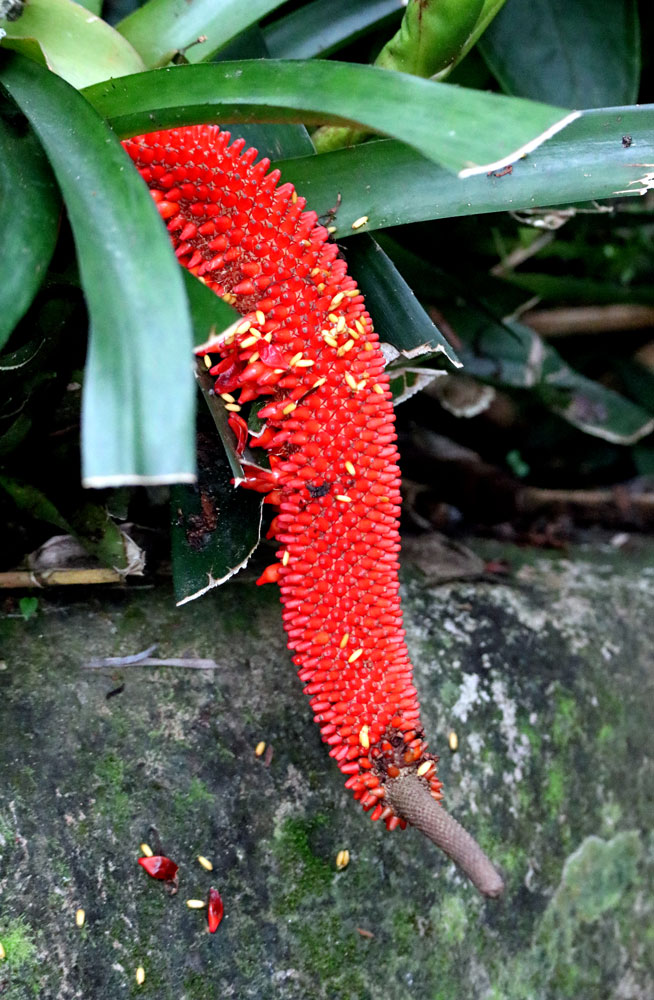
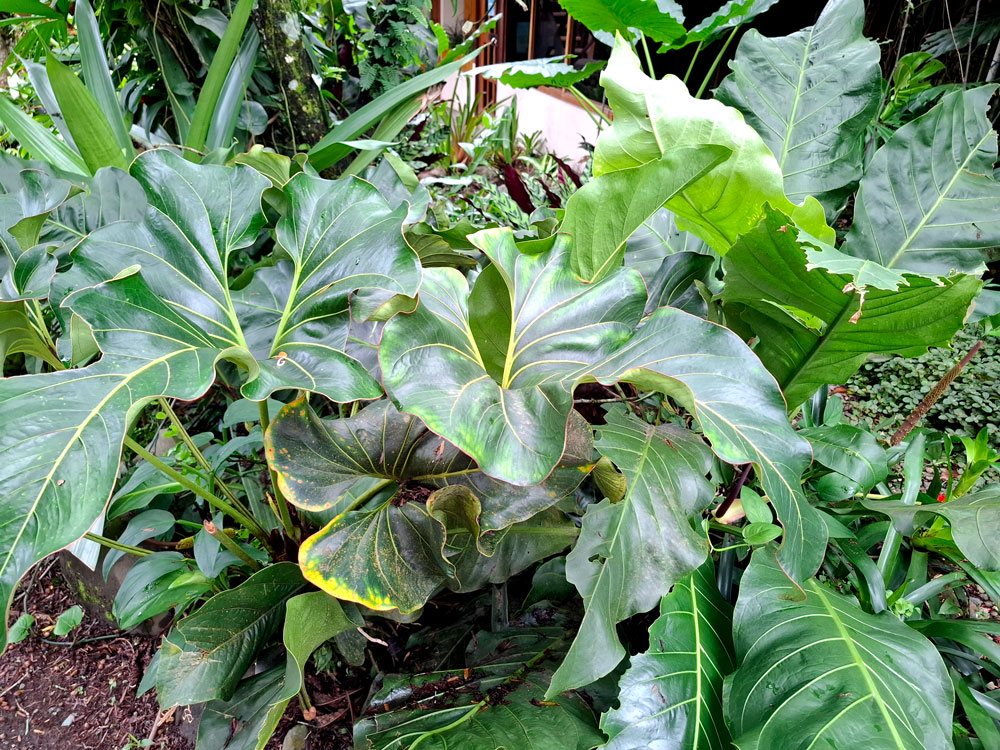
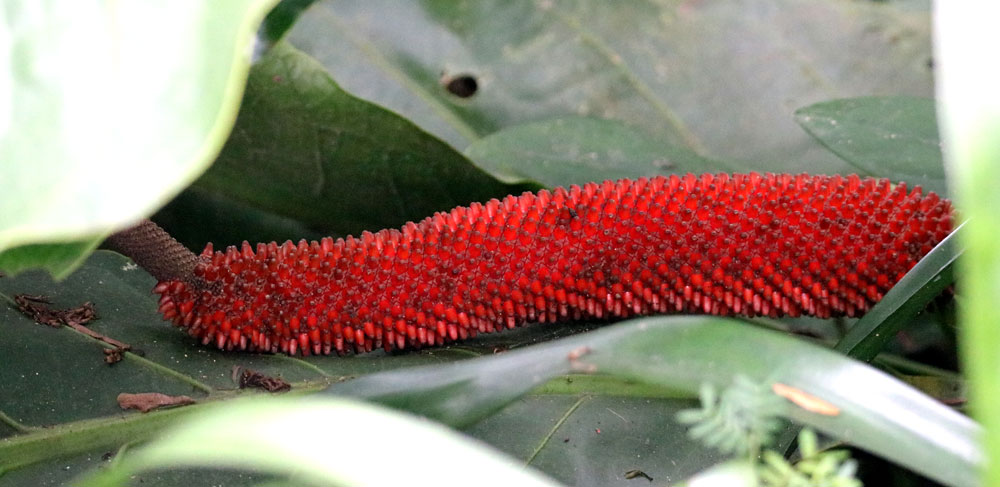
For those familiar with the Arenal Volcano area of Costa Rica, you know that name as the name of a Hot Springs Resort there, but did you know that it was named after a plant, Anthurium upalaense (Tabacón)(Research Gate article link)? It is much larger than the anthuriums in my garden and is found on the Caribbean side of Costa Rica with some also overlapping into nearby Nicaragua and Panama. The large leaves of the plant collect small dead leaves falling from other plants where they rot to feed the anthurium. That long red spadix is not a flower but contains many many tiny little flowers that are pollinated by insects and turn into many berries that are eaten by birds. Another amazing new discovery in nature for me! 🙂 And almost exclusive to Caribbean Costa Rica!
Anthurium upalaense (Tabacón), Hotel Banana Azul, Puerto Viejo, Limon, Costa RicaAnthurium upalaense (Tabacón), Hotel Banana Azul, Puerto Viejo, Limon, Costa Rica
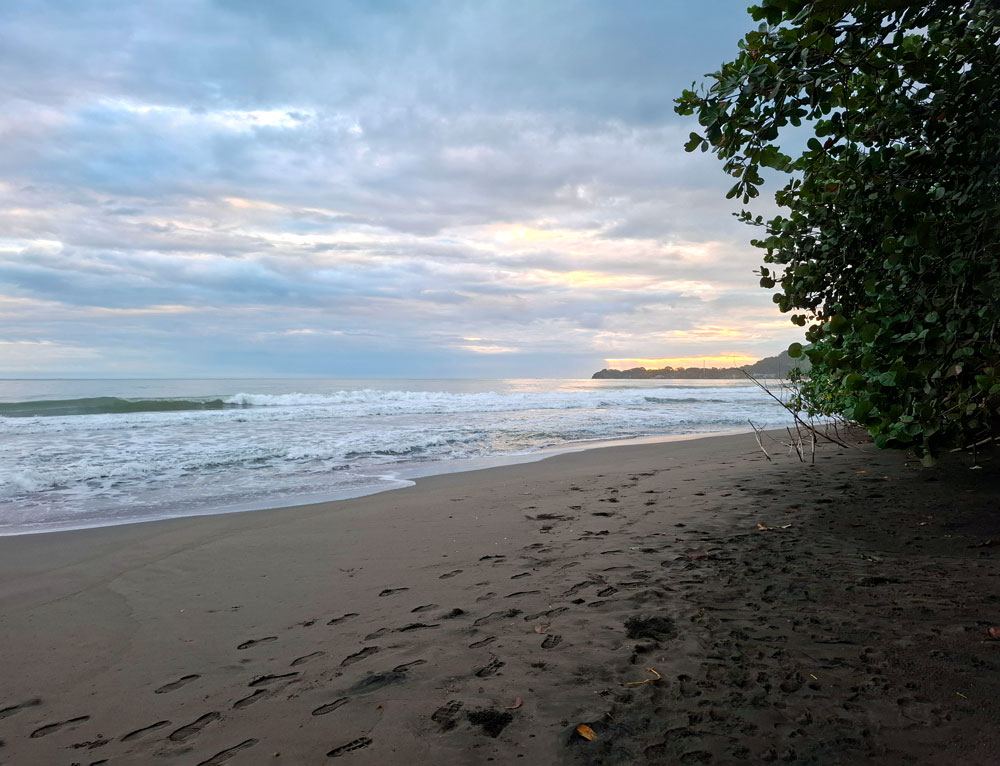
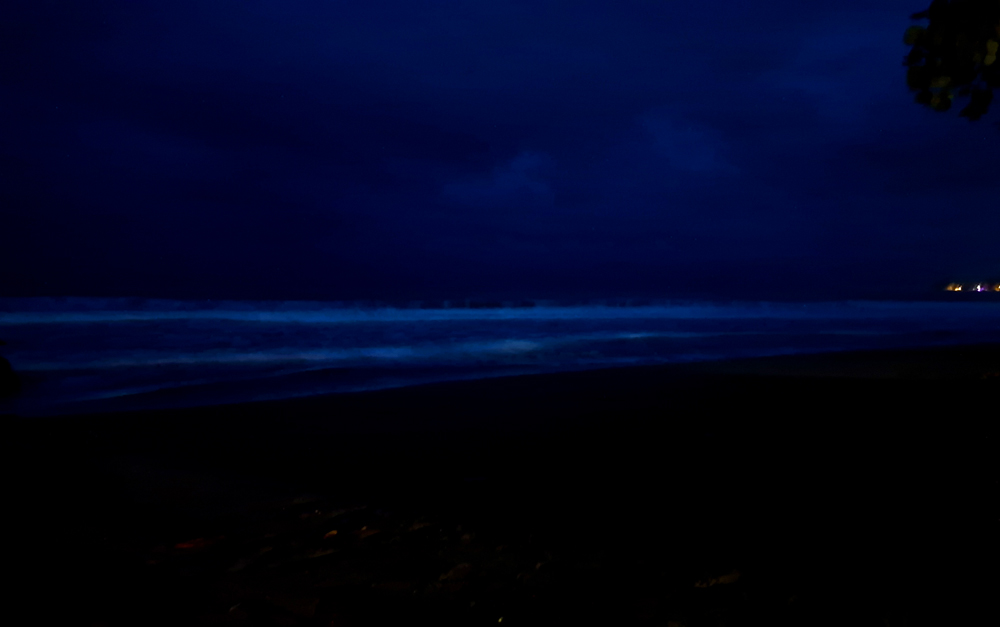
I was out on the beach early yesterday morning with hopes of a brilliant sunrise. Instead, God gave me a rich blue sky, quickly followed by a nourishing rain in this tropical forest. This year’s more extreme weather promises some more extreme experiences! 🙂
Sunrise Caribe South, Banana Azul, Limon, Costa Rica
And as the light increased from the above first sight, see the changing blues added to other colors in the next three shots . . .
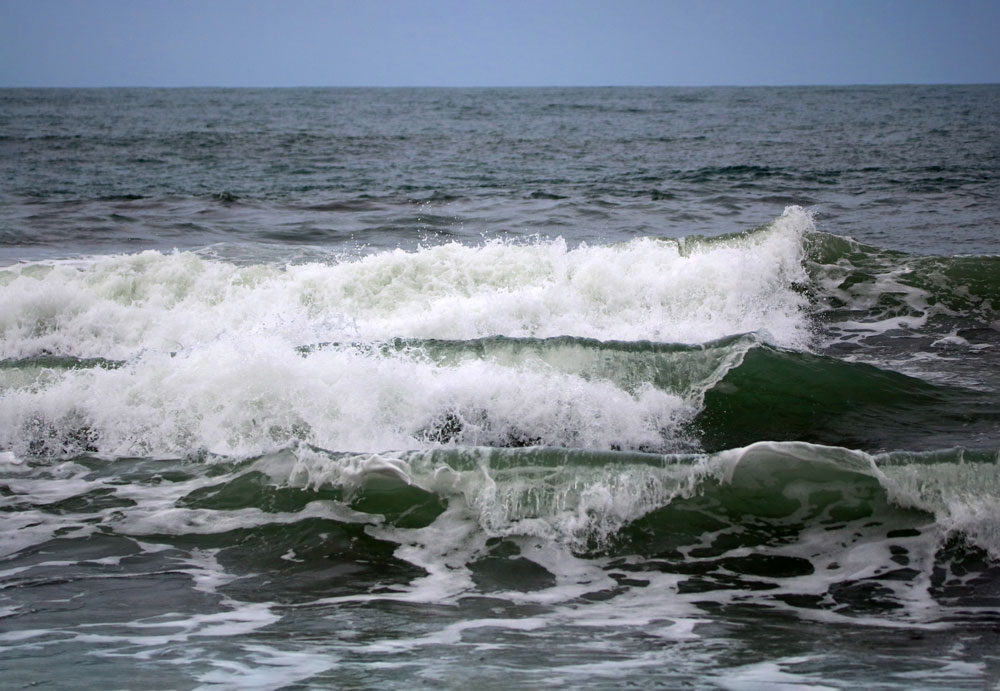
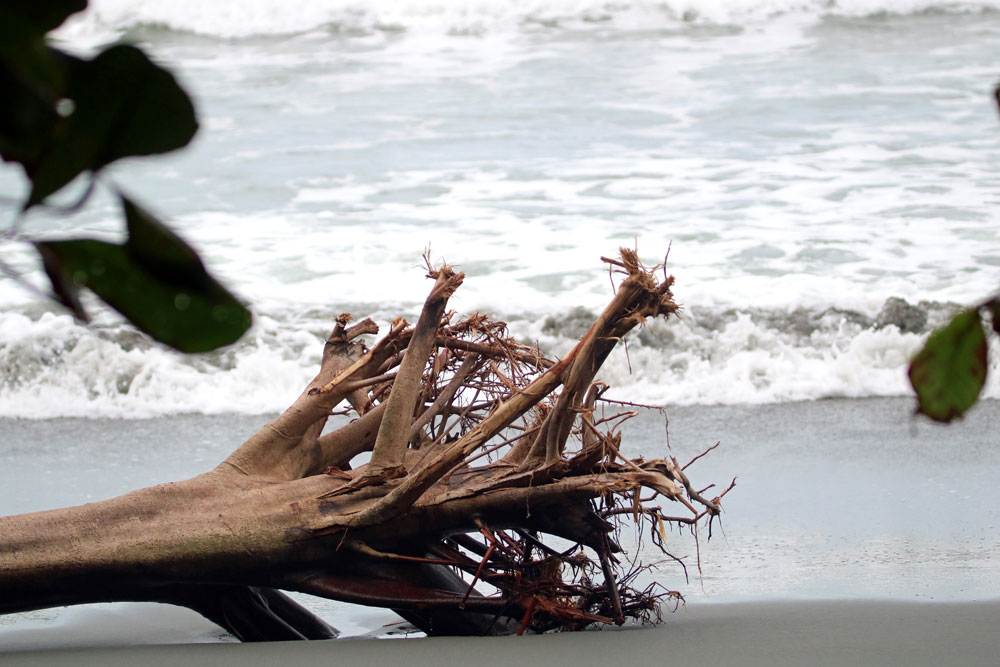
The combination of global warming and the “Super Nino” this year has made where I live on the Pacific Slope hotter and drier this year with not much of a rainy season. While the other sided of Costa Rica, the Caribbean (Atlantic) is wetter with more rain, but also hotter and thus more humid than usual. And the ocean seems rougher and high tide is higher. One photo shows a whole tree on the beach that probably blew down somewhere else and washed up here OR was washed away here by high tide and high winds and just hasn’t made it out to sea yet. I don’t know.
I didn’t get here until the afternoon with a good flight through the clouds and I’m settled in my room and made a walk down the beach road looking for nature. More tomorrow with hopes of a good sunrise and some butterflies!
Playa Negra, Puerto Viejo de Talamanca, Limon, Costa Rica
¡Pura Vida!
See more of this side of Costa Rica in my gallery Caribbean Beaches. And tonight I go to sleep with the sound of the surf and a little heavier surf than in the past.
I’m on the Pacific Coast of Costa Rica today and this photo was made on the opposite side of the country on the Caribbean Sea Coast in 2021 at sunrise. This greeting card photo was one of several I created that year and did not use, but I like it and decided to share today. Tonight maybe I will share a sunset photo IF the weather cooperates! 🙂 HAVE A GREAT CHRISTMAS DAY!
Sunrise on Costa Rica’s Caribbean Coast in 2021.
¡Feliz Navidad! or Merry Christmas!
A potted Poinsettia has kept my terrace in the Christmas Spirit this December! 🙂
This photo from my terrace was made on December 16, so maybe by now those few little gray rain clouds have already disappeared from our skies here. 🙂
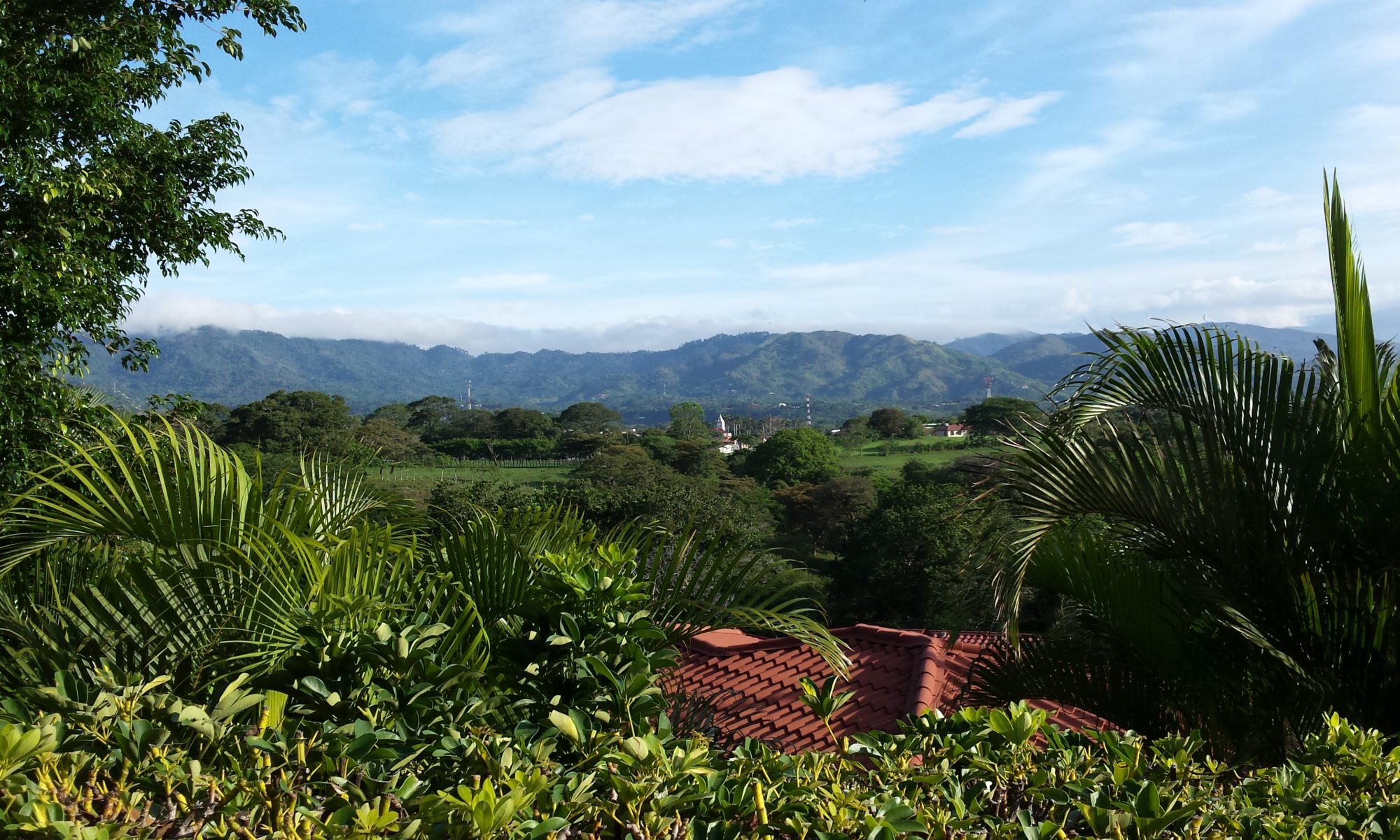
December 16 vista from my terrace.
The “Rainy Season” which is sometimes called “Winter” (el invierno) here is generally from May to November, but there can be an overlap of rainy and dry seasons in December with pretty much no rain from January through March or April called “Summer” (el verano) here and then in late April or May the rain starts again to keep beautiful Costa Rica green! (With climate change we’ve had a lot more rain this December!) And that description above is mainly for the Central Valley or center of this little country with both coasts, coastal lowlands, and a few internal low areas called rainforests have rain year around as do some of the cloud forests high in the mountains.
And then there is the northwest part of the country, called Guanacaste (that province name), which is dry most all year with some deserts and only a few really wet areas like Palo Verde NP or Rincón de la Vieja. So if you don’t like the weather one place, go somewhere else! 🙂
Plus a little interesting trivia is that here in the Central Valley our two rainiest or wettest months are usually September & October while the year-around wet and rainy Caribbean Coast has their least amount of rain during those two months. Thus I usually travel to the Caribbean side in September or October! 🙂 But it’s not the same on the mid & south Pacific Coast which can have rain year around like the Caribbean. 🙂
CLICK IMAGE ABOVE to go to the report or click address below (assuming they allow non-members in). AND YES! All those photos in the montage above are ones I submitted to iNaturalist. Their A-I work I guess. 🙂
The above-linked report includes lots of data, graphs, and the actual photos or you can go to My Observations page (linked) to just see which ones I submitted. Just beginning!
I have for 10+ years submitted my bird observations to eBird and in the last 2 or 3 years my butterfly observations to butterfliesandmoths.org, but in May of 2024 I started submitting all of my nature photos to iNaturalist Costa Rica (en español, Naturalista Costa Rica) including the birds and butterflies (double reporting them). 🙂 Though plants are included in iNaturalist, right now I’m only submitting the unusual ones or ones that I need help identifying! 🙂 My online gallery and website/blog will disappear after my death, but photos I submit to these organizations will be there for posterity! 🙂 Maybe that will be my legacy? 🙂
. . . are a part of the often unseen beauty in nature and have become a regular category of photos for me when I trek in the forest. Here’s 2 photos plus the feature at top, but you can see several more in my Lichens, Leaves & Nature Things GALLERY from the Caribe Sur this month.
Withered Cecropia Leaf One of many lichens on rainforest trees.
¡Pura Vida!
And beyond this recent trip to Hotel Banana Azul, I have a bigger gallery of collected Leaves & Nature Things pulled from many trips and my garden that just might interest you and another of Just Fungi (lichens, mushrooms, etc.). Both are from all over Costa Rica. 🙂
Since I first wrote this I have completed the entire Trip Gallery for Hotel Banana Azul, Playa Negra, Puerto Viejo de Talamanca, Limón Province! 🙂
And though I could continue sharing photos from Banana Azul, I think I will stop for now and come back to photo shares from my garden in Atenas, Alajuela Province, starting tomorrow. But you can see more in the above-linked Trip Gallery. ¡Pura Vida!
Two of the four basilisks in Costa Rica are easy to identify, the Green or Emerald Basilisk is rather obvious! As is the Helmeted Basilisk! 🙂 But the two I have never been able to easily identify are the Basiliscus basiliscus, Common Basilisk and the Basiliscus vittatus, Striped or Brown Basilisk which is further complicated by many calling both Common Basilisk, all in Spanish of course! 🙂 Then colors and patterns vary according to local and age of the lizard, from baby to juvenile to immature adult to adult and of course some slight differences in the sexes. So, for years my gallery has had just one basket for all of “Common, Brown and Striped Basilisks,” even though the scientific names are two.
Brown or Striped Basilisk, Hotel Banana Azul, Playa Negra, Puerto Viejo de Talamanca, Limón, Costa Rica
I now found a simple way to separate the two species and now have two separate galleries for the two scientific names. Thanks to iNaturalist Costa Rica, I suddenly realized that the easiest to identify difference is where they live! 🙂 One on the Caribbean Slope and one on the Pacific Slope.
The one in this photo made on the Caribbean Coast is a Brown or Striped Basilisk, Basiliscus vittatus (my gallery link). Note that even though most locals say one or the other (Brown or Striped), most books and websites use both for the common name of this one species, Basiliscus vittatus. And similarly, the Spanish common names are two, Basilisco Café or Basilisco Rayado, and the people on the Caribbean Slope often use a shortened name of “Common Basilisk” (“Basilisco Común“), even though that is the official common name of the one on the other coast! See my confusion about what to call these little lizards? 🙂
The one that is officially called Common Basilisk is Basiliscus basiliscus (my gallery link) and is found only on the Pacific Slope! The Spanish name for it is Lagarto Jesucristo Común, and thus the only one to legitimately use the name “Common Basilisk” (“Basilisco Común“). And by the way, even though only in the official Spanish common name of this one, both of these, plus the Green Basilisk, are regularly called “Jesus Christ Lizards,” because all three walk on water! 🙂
And if you are confused, welcome to the club! 🙂
¡Pura Vida!
I do have this photo in an “Other Wildlife” sub gallery of my trip gallery, though the bee I shared earlier is the only other good photo, with a so so one of Leafcutter Ants. Since I first wrote this I have completed the entire Trip Gallery! 🙂