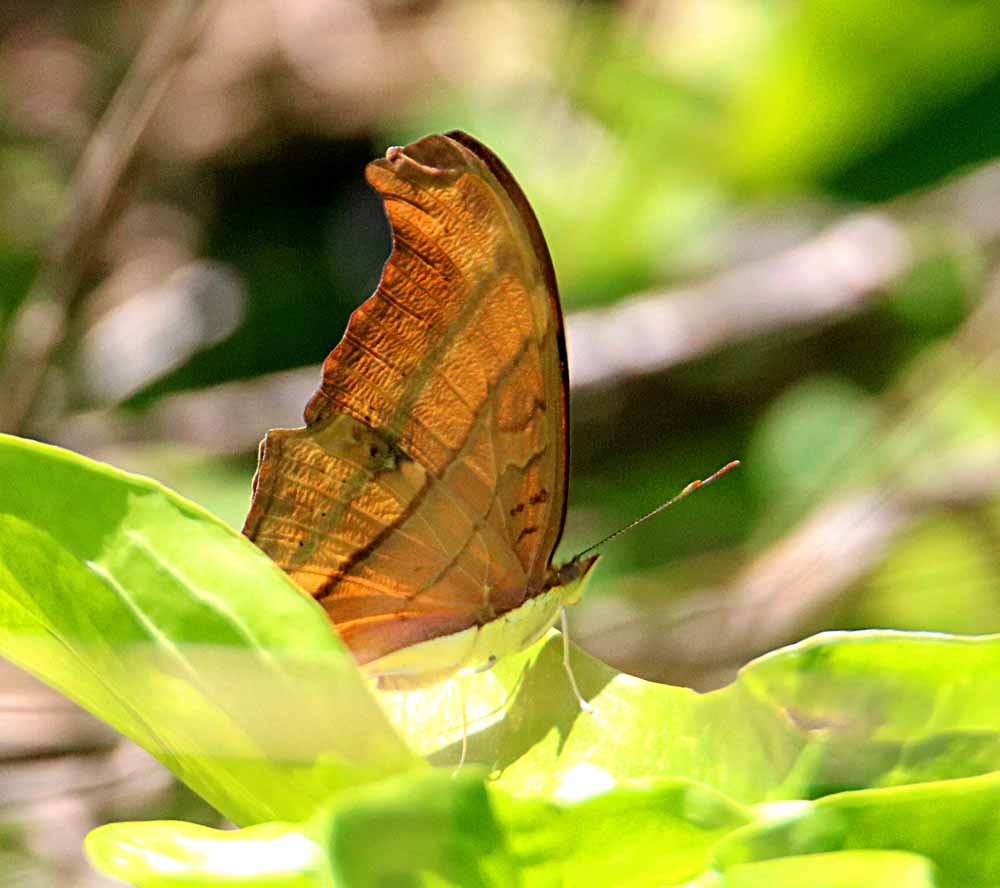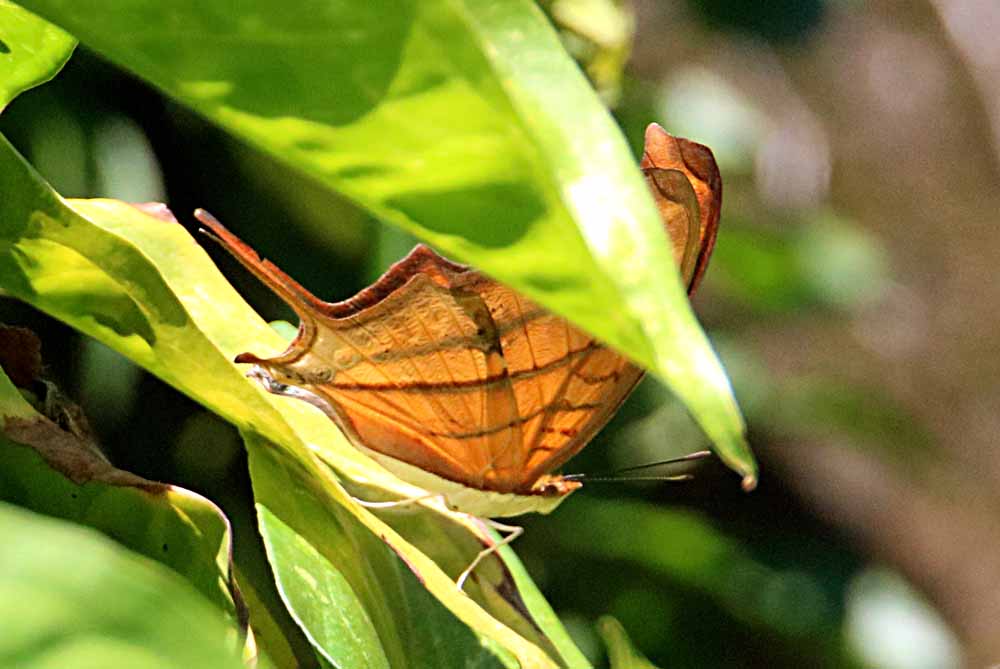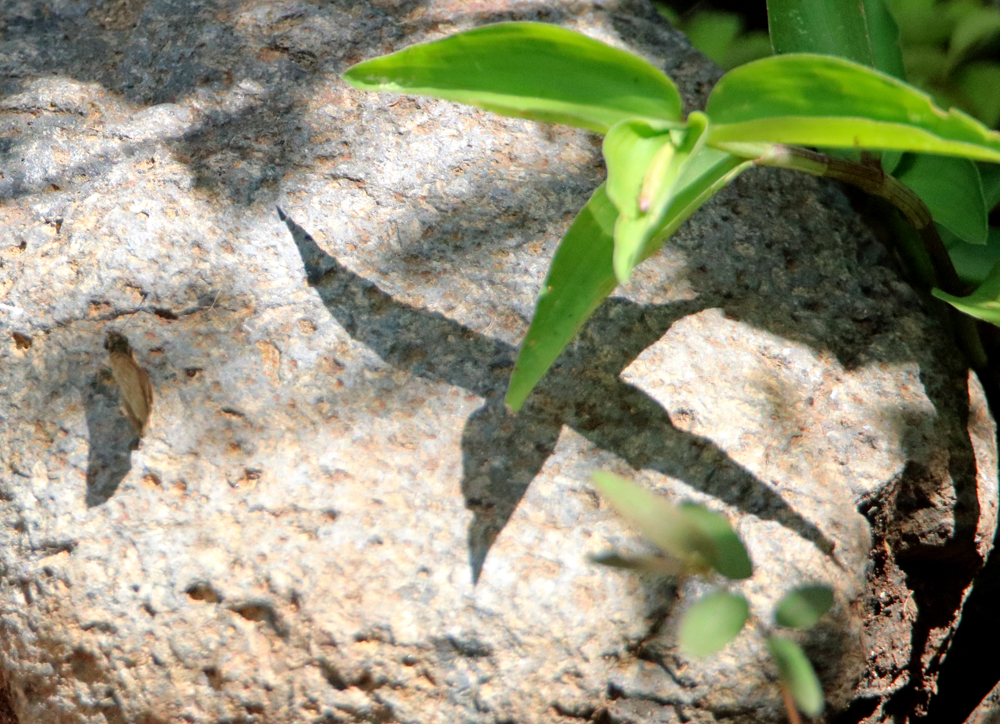


Hecale Longwing, Heliconius Hecale (my gallery link) is found from Mexico south to the Peruvian Amazon, including my garden in Costa Rica! 🙂 My gallery includes sightings in 8 different Costa Rica locations on both slopes. Here’s a side view and a top view recently in my garden:
Hecale Longwing, Atenas, Alajuela, Costa RicaHecale Longwing, Atenas, Alajuela, Costa Rica
¡Pura Vida!
Toucan Sighting with No Photo!
Have I told you yet that a Keel-billed Toucan landed in my Cecropia Tree the other morning after breakfast? He was smaller than some, so probably immature or not quite an adult. And it was one of the few mornings that I did not take my camera with me to breakfast on the terrace! I slowly pulled the cell phone out of my pocket and turned it on just as he flew away! Oh well, that’s life! ¡Así es la vida! 🙂 And my camera has been with me for breakfast every day since! 🙂
The national bird of Costa Rica was thought by the indigenous people to sing in the rainy season at the end of the dry season, late April or May. It is the Clay-colored Thrush, Turdus grayi (my gallery link) and is found from South Texas throughout Central America and in Columbia. There are always Yigüirros in my garden. Read about on eBird.
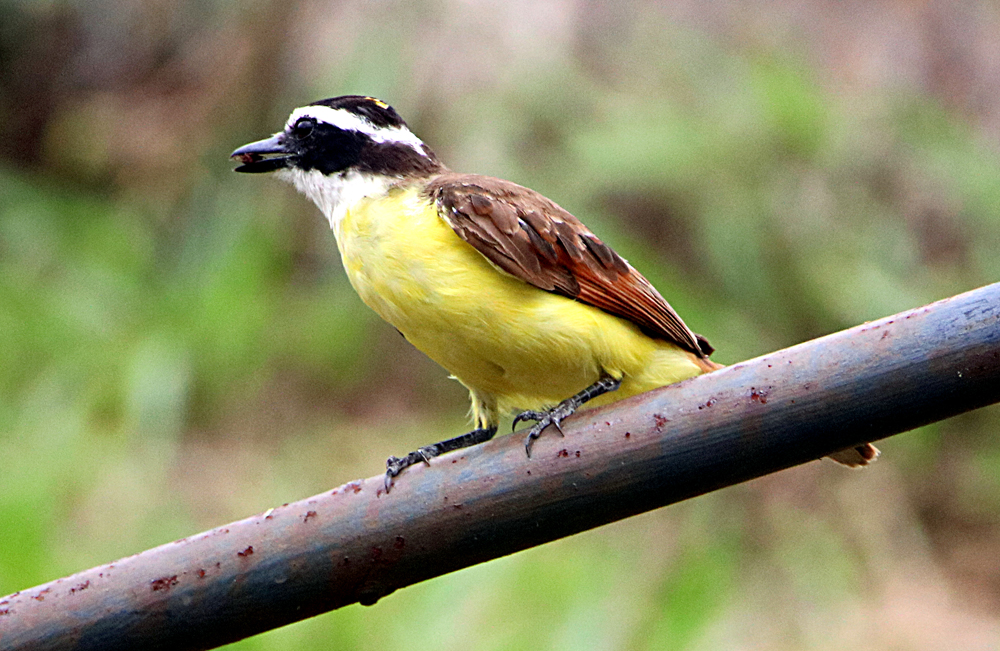
Another regular visitor in my garden is the Great Kiskadee, Pitangus sulphuratus (my gallery link) is another common bird throughout Central and South America. Read more about him on eBird.
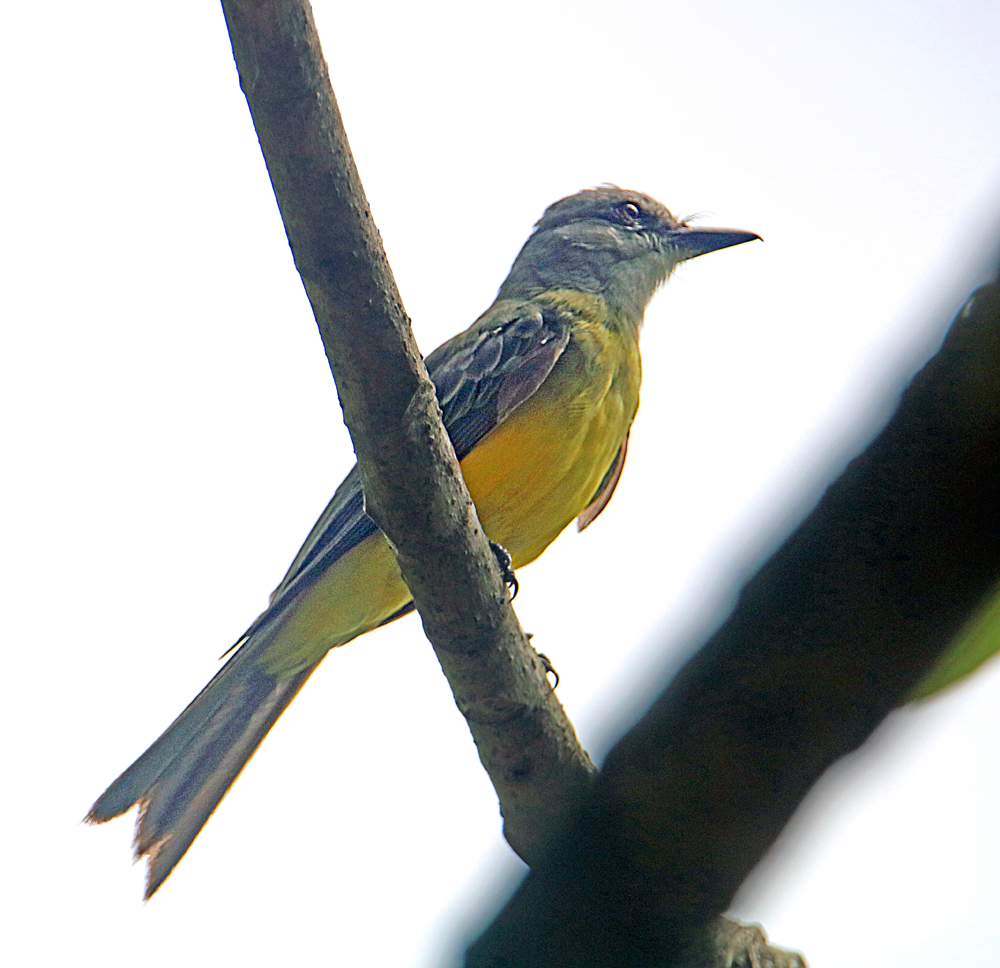
I do still see birds in my garden even though the butterflies greatly outnumber them! 🙂 And of the four I am sharing these next four days, this is the least-seen of them: Tropical Kingbird, Tyrannus melancholicus (linked to my gallery) and as always, you can read more about them on eBird. They are seen throughout Central America and most of South America and are sometimes known as one of the “telephone wire birds: or “fence birds,” as they like open areas and catch flying insects, including my beloved butterflies. 🙂
I’ve seen this one only one other time and just the top of wings then, which are a bright blue, while this folded wing view shows the underneath side of wings to be brown. He is the Red-headed Firetip, Pyrrhopyge zenodorus (linked to my gallery). Photographed yesterday across the street from where I live.
Red-headed Firetip, K’s Zinnia Garden, Atenas, Alajuela, Costa RicaRed-headed Firetip, K’s Zinnia Garden, Atenas, Alajuela, Costa Rica
And yeah, I know, the top of this one seems to be more brown than blue, so maybe one of nature’s exceptions. You can see a bright blue one in my gallery linked above. 🙂
Two of the four basilisks in Costa Rica are easy to identify, the Green or Emerald Basilisk is rather obvious! As is the Helmeted Basilisk! 🙂 But the two I have never been able to easily identify are the Basiliscus basiliscus, Common Basilisk and the Basiliscus vittatus, Striped or Brown Basilisk which is further complicated by many calling both Common Basilisk, all in Spanish of course! 🙂 Then colors and patterns vary according to local and age of the lizard, from baby to juvenile to immature adult to adult and of course some slight differences in the sexes. So, for years my gallery has had just one basket for all of “Common, Brown and Striped Basilisks,” even though the scientific names are two.
Brown or Striped Basilisk, Hotel Banana Azul, Playa Negra, Puerto Viejo de Talamanca, Limón, Costa Rica
I now found a simple way to separate the two species and now have two separate galleries for the two scientific names. Thanks to iNaturalist Costa Rica, I suddenly realized that the easiest to identify difference is where they live! 🙂 One on the Caribbean Slope and one on the Pacific Slope.
The one in this photo made on the Caribbean Coast is a Brown or Striped Basilisk, Basiliscus vittatus (my gallery link). Note that even though most locals say one or the other (Brown or Striped), most books and websites use both for the common name of this one species, Basiliscus vittatus. And similarly, the Spanish common names are two, Basilisco Café or Basilisco Rayado, and the people on the Caribbean Slope often use a shortened name of “Common Basilisk” (“Basilisco Común“), even though that is the official common name of the one on the other coast! See my confusion about what to call these little lizards? 🙂
The one that is officially called Common Basilisk is Basiliscus basiliscus (my gallery link) and is found only on the Pacific Slope! The Spanish name for it is Lagarto Jesucristo Común, and thus the only one to legitimately use the name “Common Basilisk” (“Basilisco Común“). And by the way, even though only in the official Spanish common name of this one, both of these, plus the Green Basilisk, are regularly called “Jesus Christ Lizards,” because all three walk on water! 🙂
And if you are confused, welcome to the club! 🙂
¡Pura Vida!
I do have this photo in an “Other Wildlife” sub gallery of my trip gallery, though the bee I shared earlier is the only other good photo, with a so so one of Leafcutter Ants. Since I first wrote this I have completed the entire Trip Gallery! 🙂