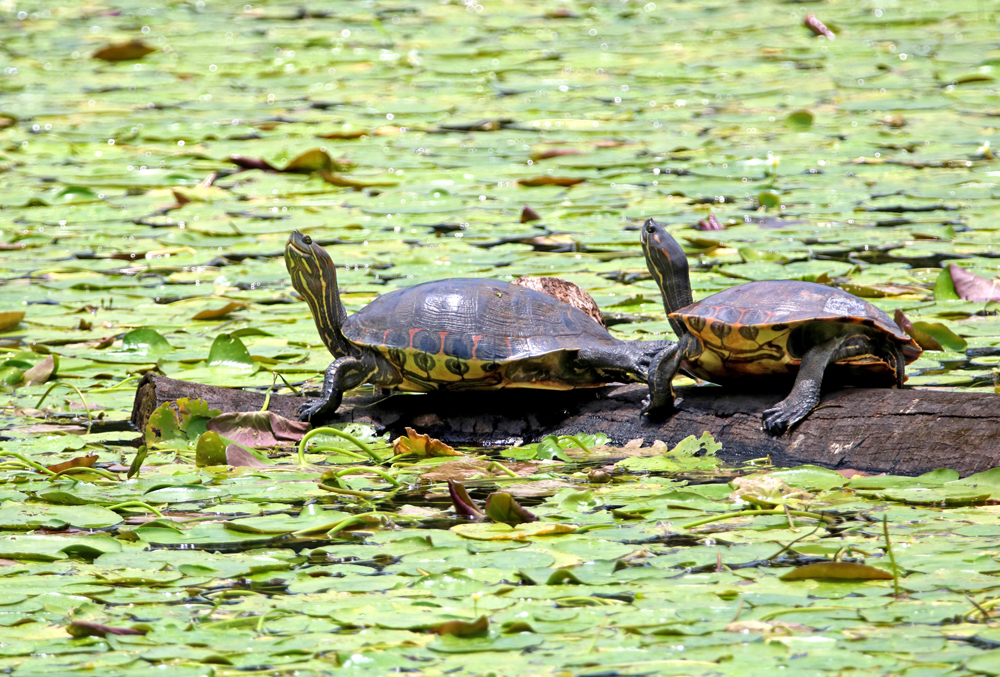
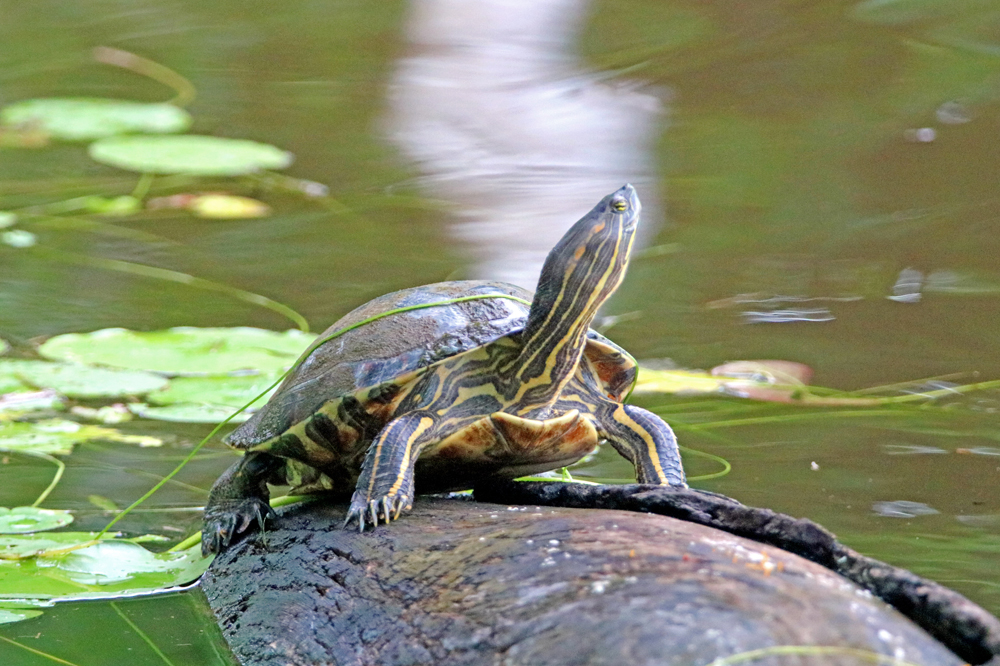
These are my first turtles to be labeled Nicaraguan, but that is what iNaturalist’s AI said for every one of these photos (less the nose shot) and we’ll see if the experts agree after I post them there. It is very similar to the Central American Slider and thus could be either. But Maquenque is almost on the Nicaragua border, plus this species is supposedly all over Costa Rica.
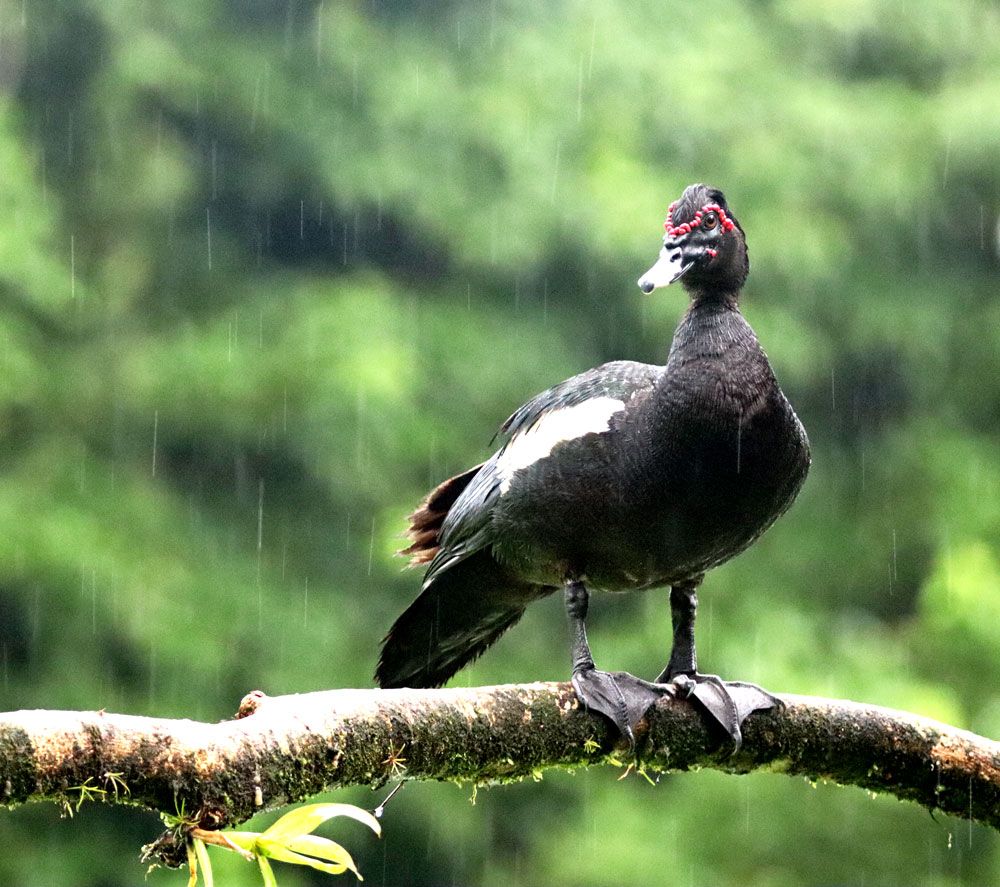
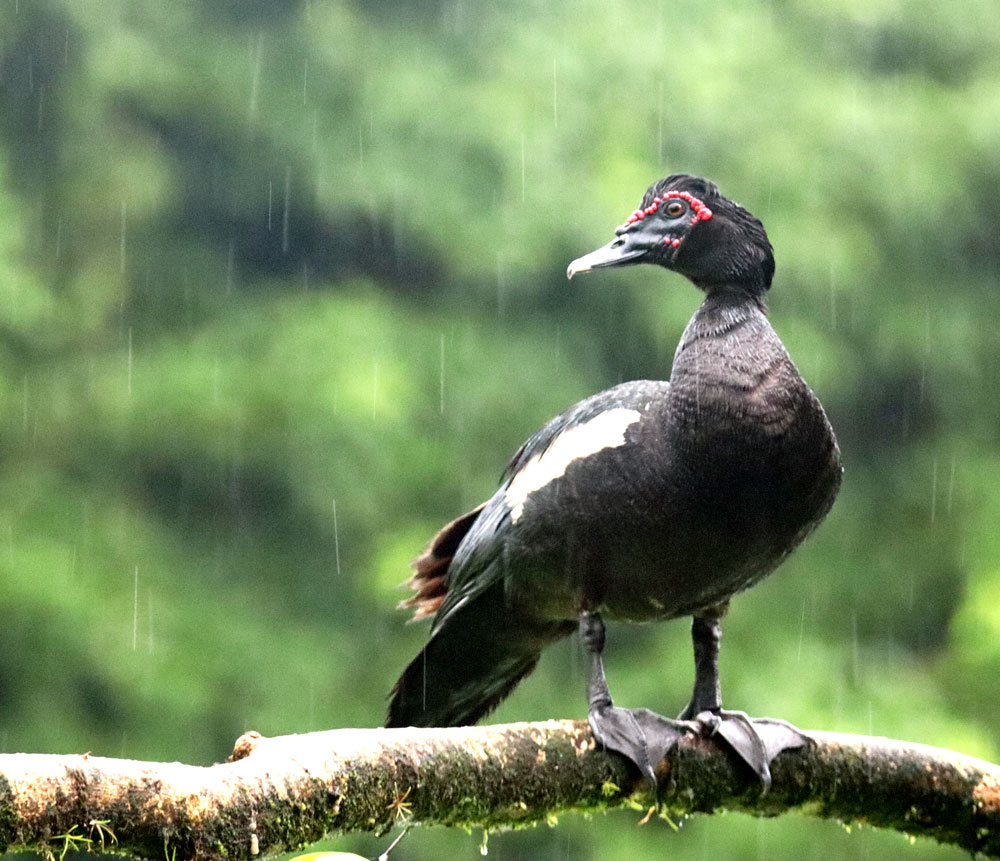
That familiar idiom was seen literally during the several rains of my visit to Maquenque Lodge in early July, shown here in photos of a Muscovy Duck in the rain (link to my gallery). But I guess I could also use the phrase as the idiom it is known for when I read about the idiotic president and Republican politicians of the United States while living a more relaxed life in the nature and beauty of a tropical paradise country with no army, no wars, no enemies and no national hatred or fears . Pura vida! Trump affects me like water off a duck’s back! 🙂 (Though I do sometimes mourn for what is happening to my country of birth and shake my head in disbelief.)
Muscovy Duck, Maquenque Ecolodge, Boca Tapada, Alajuela, Costa Rica
¡Pura Vida!
Trip BIRDS Gallery Finished
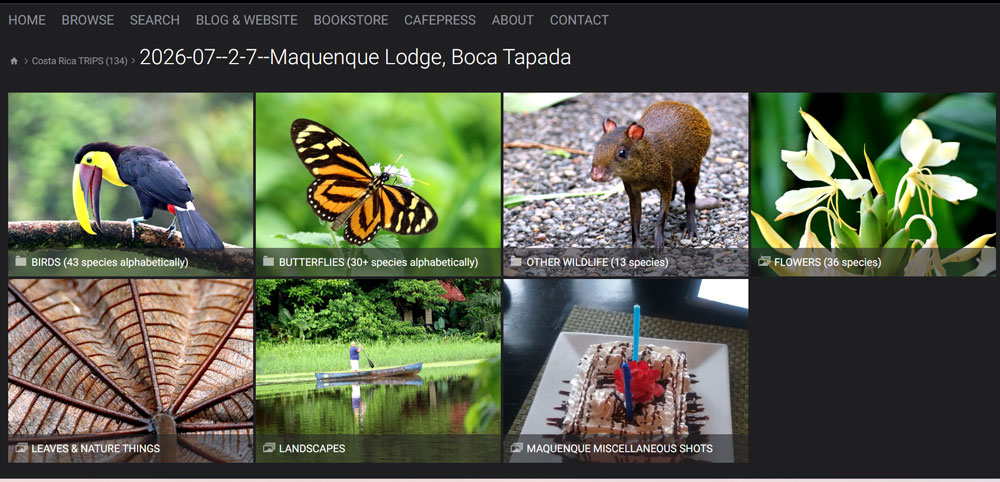
I finally processed all the bird photos from my 2026 Maquenque Trip linked at:
And yes, on previous trips I had 61 and 62 species, but I’m an old man now plus it rained every day this trip, so considering that, 43 was not a bad number. 🙂
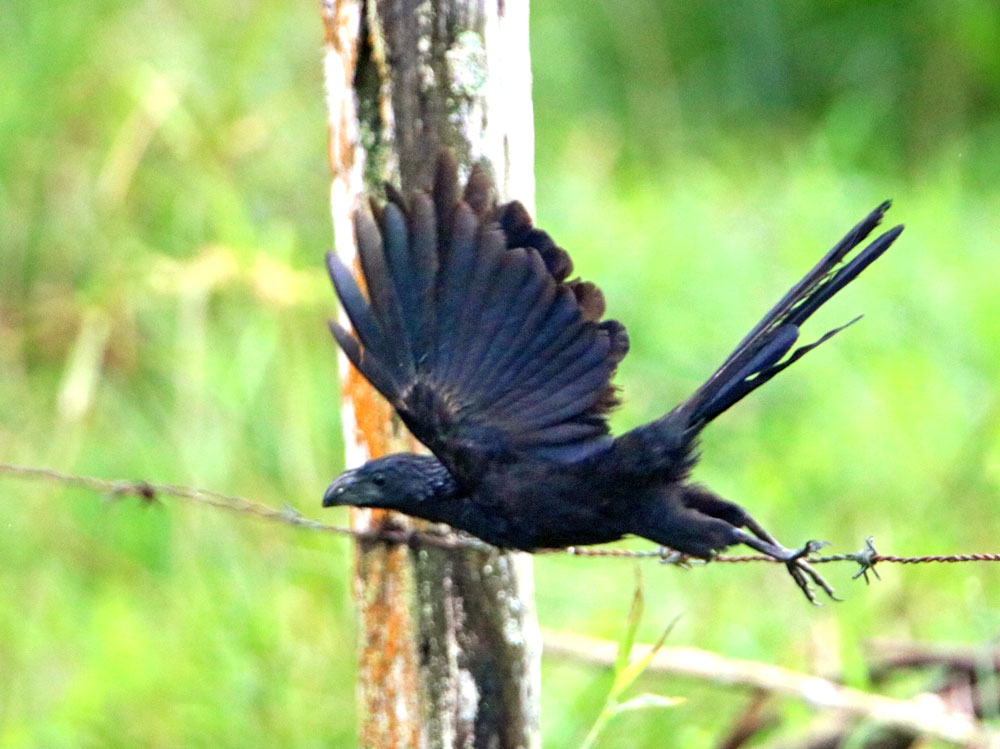
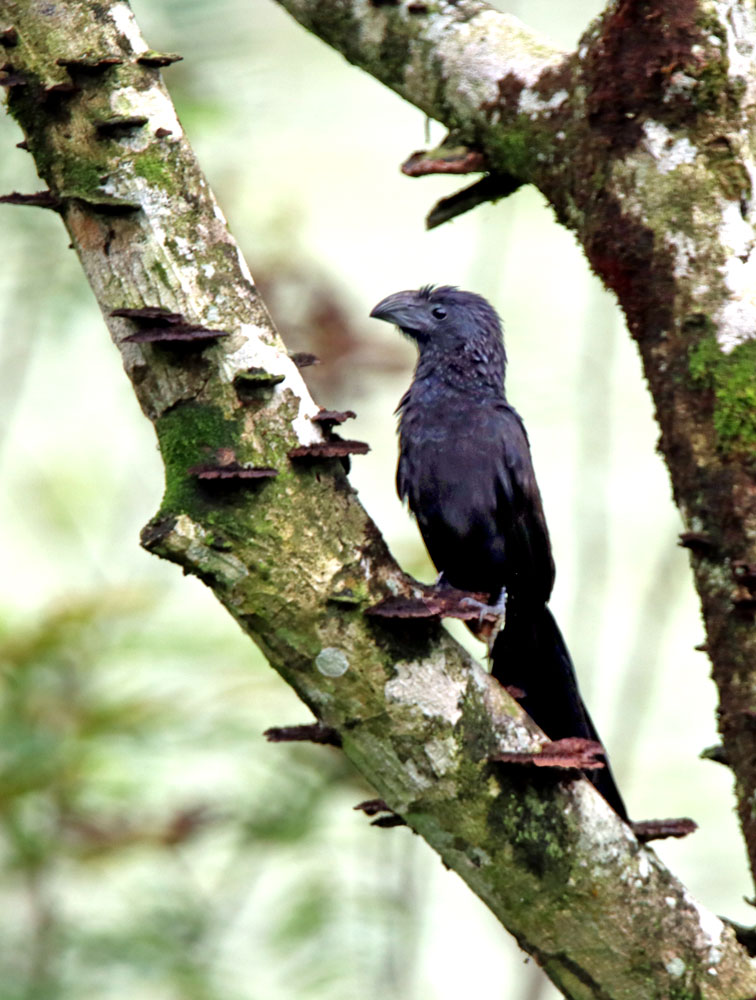
This striking bird is seen occasionally in my garden, but Maquenque Ecolodge is still my #1 place to see and photograph the Groove-billed Ani(my gallery link) and in more interesting situations including a photo of a family of 8 Groove-billed Anis lined up together on a fence! 🙂
And yes, there is a Smooth-billed Ani (my gallery link) that books say is seen only along the South Pacific Coast where the Groove-billed is not usually seen but I have a shot from the South Caribbean from where others have posted photos on iNaturalist, plus iNat shows some reported in the Northern Central Valley hills. They are still more rare than the Groove-billed which is literally seen all over Costa Rica up to 1,500 feet altitude. 🙂
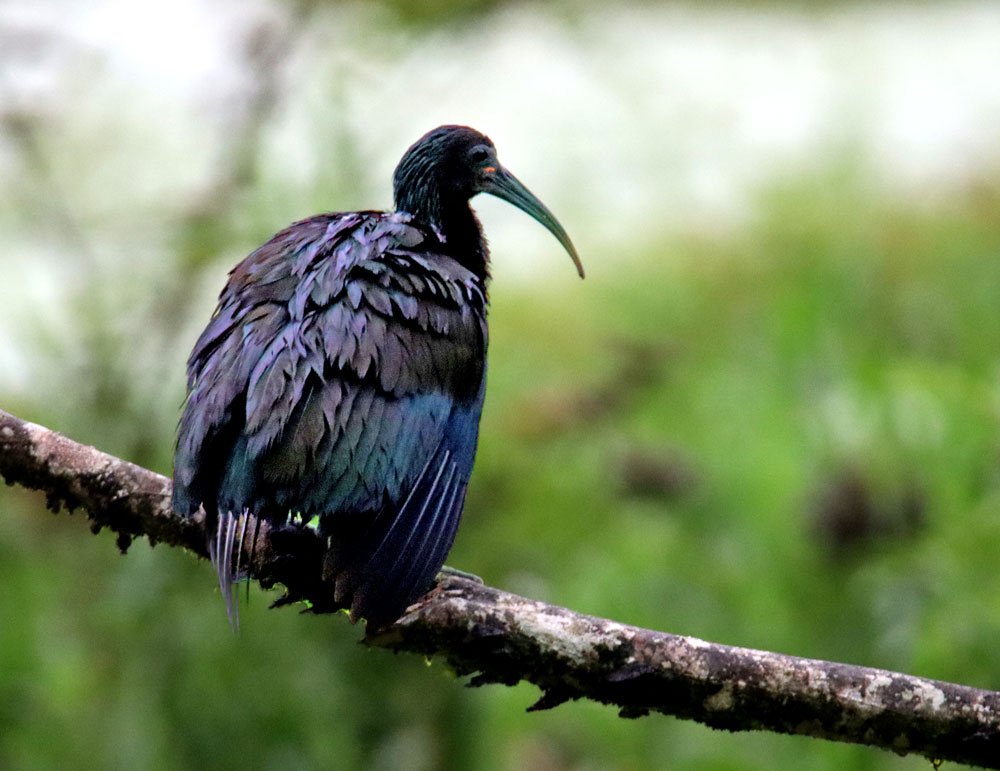
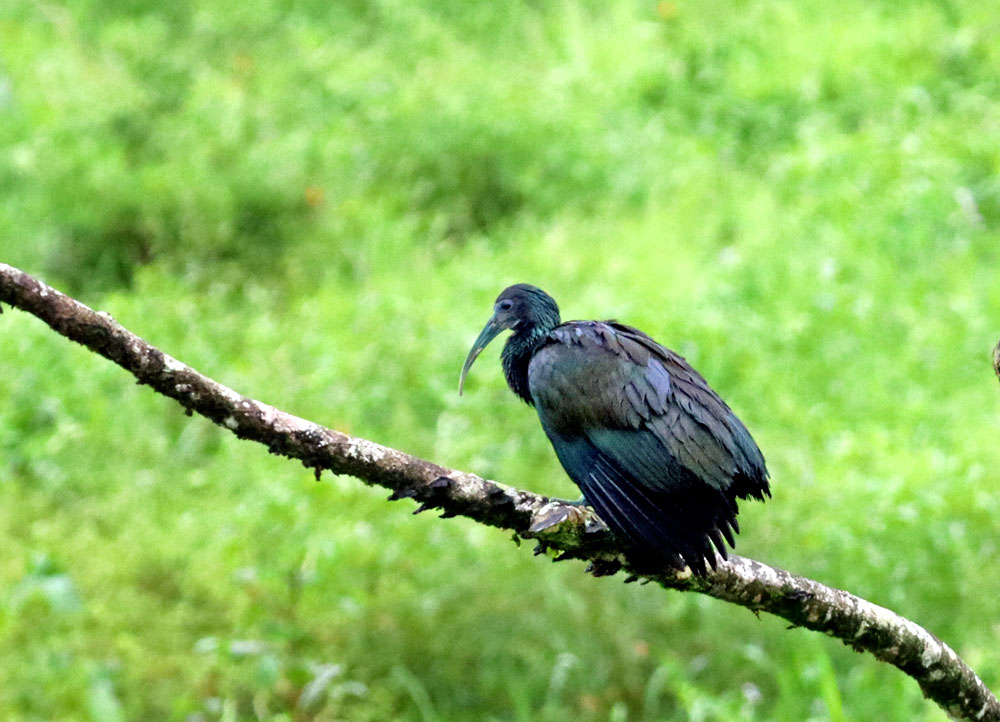
Maquenque ranks up there with Tortuguero on seeing and photographing the Green Ibis, though this time I was not able to get a close as before plus the cloudy/rainy weather made them look darker or nearly black, but they are always dark as you can see in my gallery: Green Ibis (linked). Just 2 shots here with more in the gallery. And though they all have a green tint, it is difficult to get that green to show up in a photo.
Green Ibis, Maquenque Eco Lodge, Boca Tapada, San Carlos, Alajuela, Costa Rica
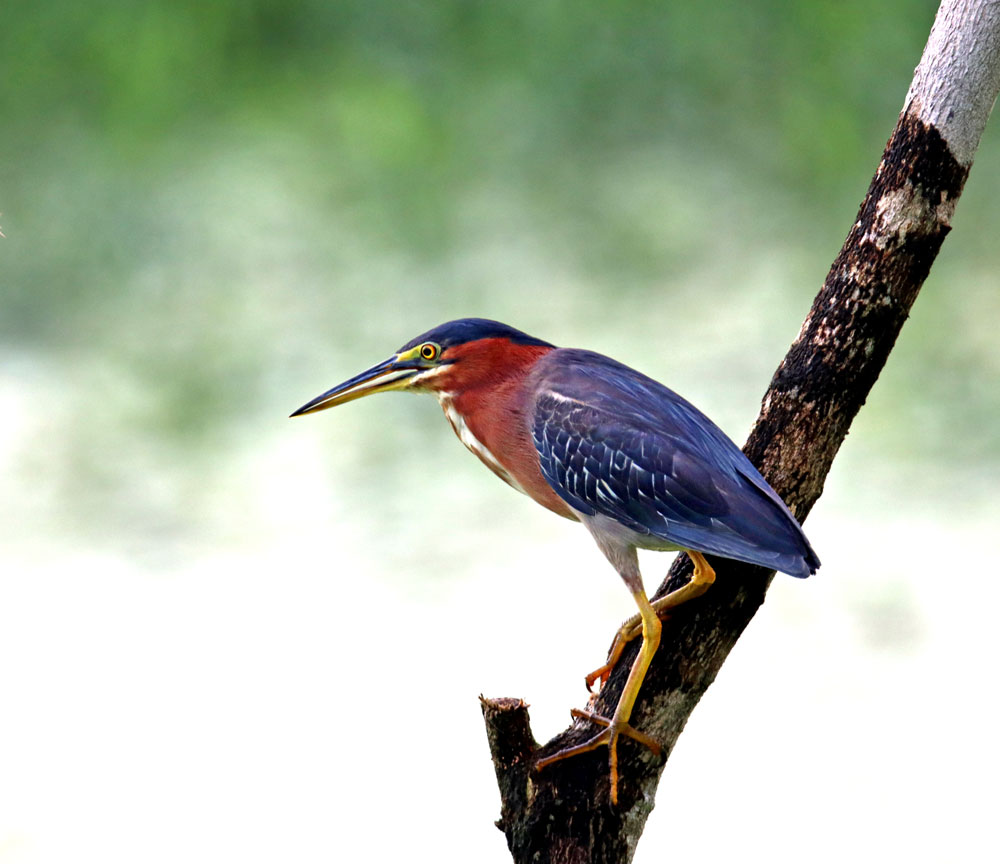
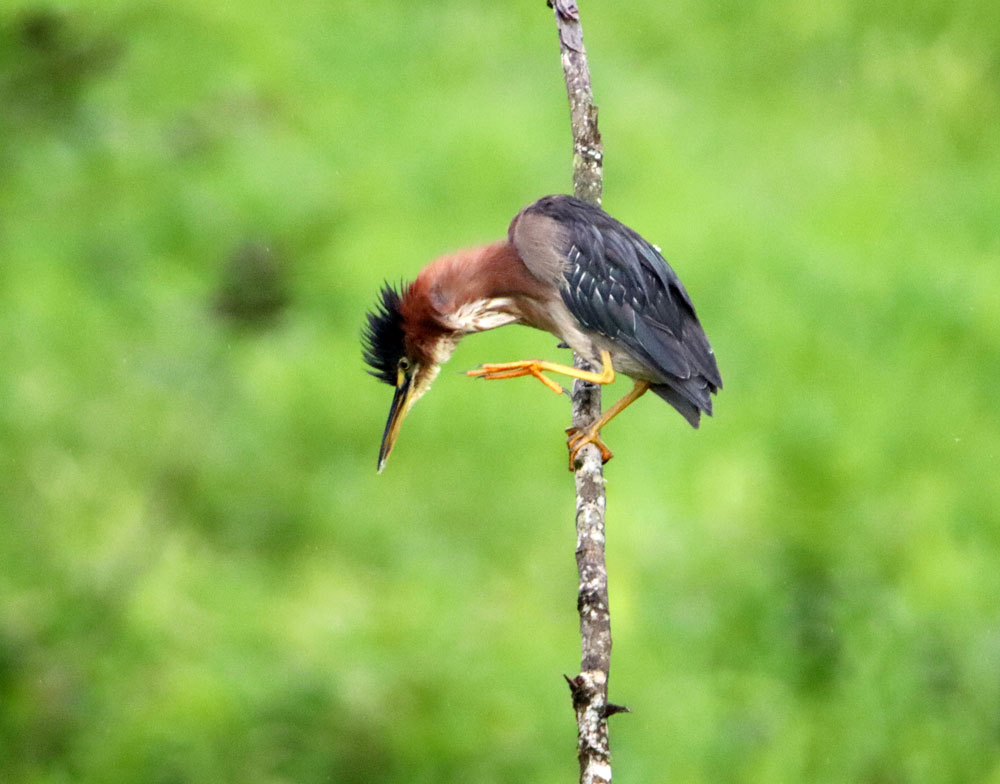
Where there’s water there’s Green Herons and I have a lot of photos from all over Costa Rica of this interesting bird in my gallery: Green Heron. And as in this wet look photo below, they can have many different looks, particularly when fishing from a limb , , ,
Contorted Green Heron fishing at Maquenque Eco Lodge, Boca Tapada, Alajuela, Costa Rica
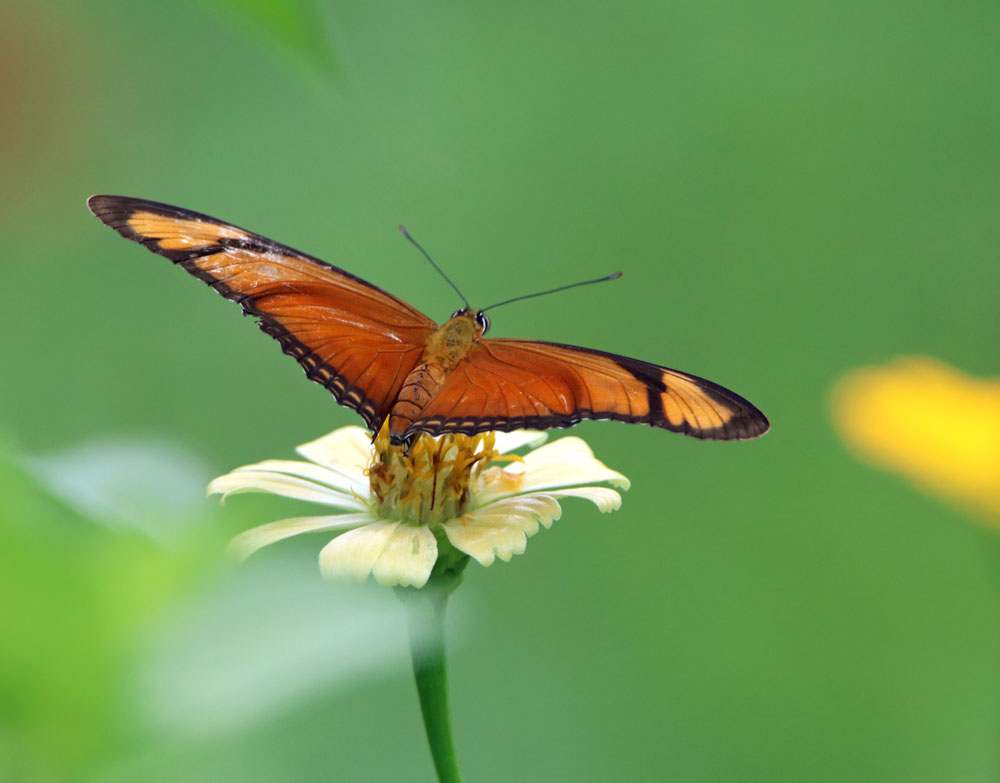
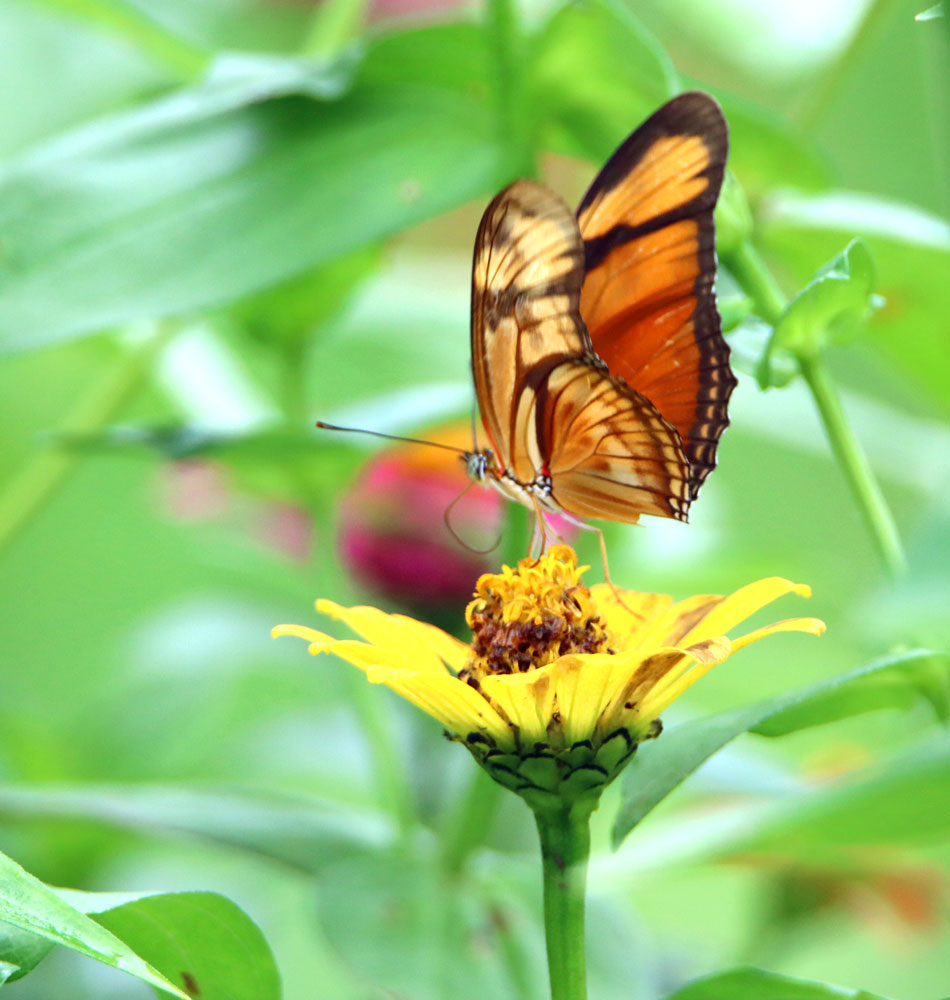
The Julia Heliconian (my gallery link) was also prevalent at Maquenque as in my garden, another favorite butterfly. Here’s the distinctive side view and top view . . .
Julia Heliconian, Maquenque Eco Lodge, Alajuela, Costa RicaJulia Heliconian, Maquenque Eco Lodge, Alajuela, Costa Rica
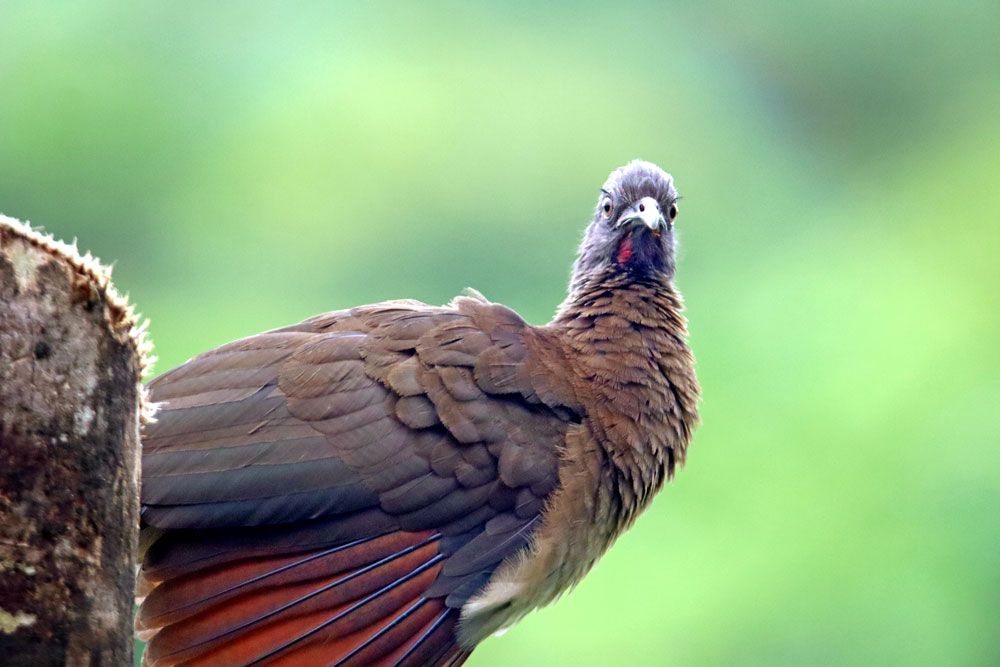
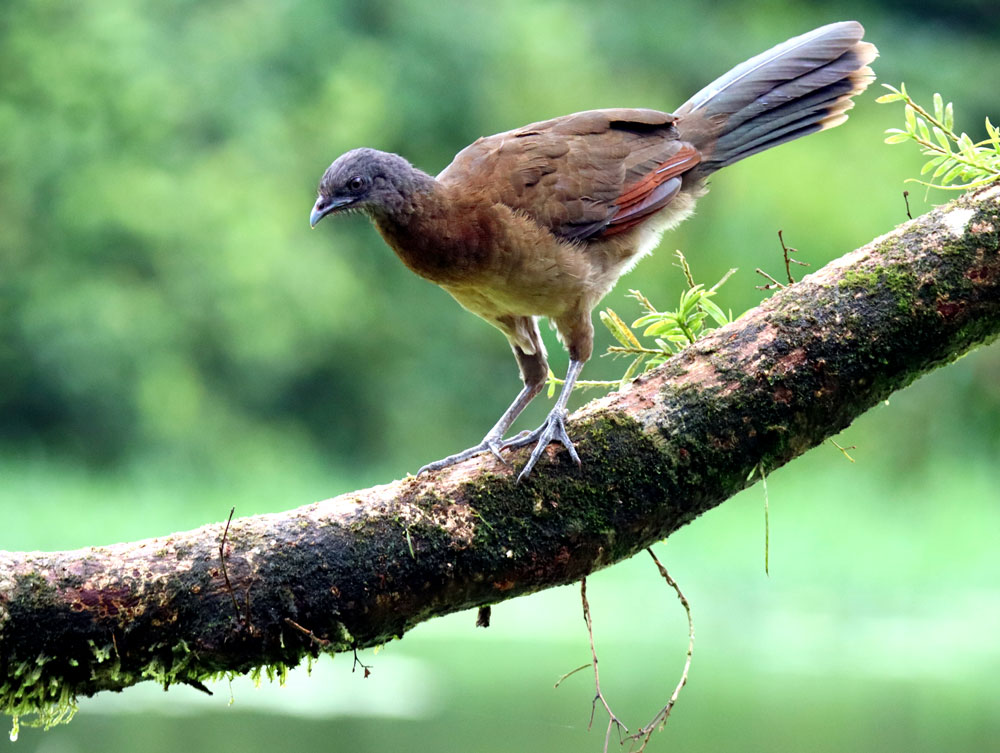
Another bird nearly as big as the Crested Guan and Curassow at Maquenque is the Gray-headed Chachalaca (my gallery link) and this chattering big bird is also common at my house while the other two are not. These three shots are representative of the many different looks that Chachalacas seem to have. I particularly like the second photo below of a very wet Chachalaca in a rain. 🙂 And note that both male and female have the red dewlap on their neck during mating season (unlike Crested Guans which is only the males.) In fact, male & female Chachalacas are almost identical, though males tend to be a little larger.