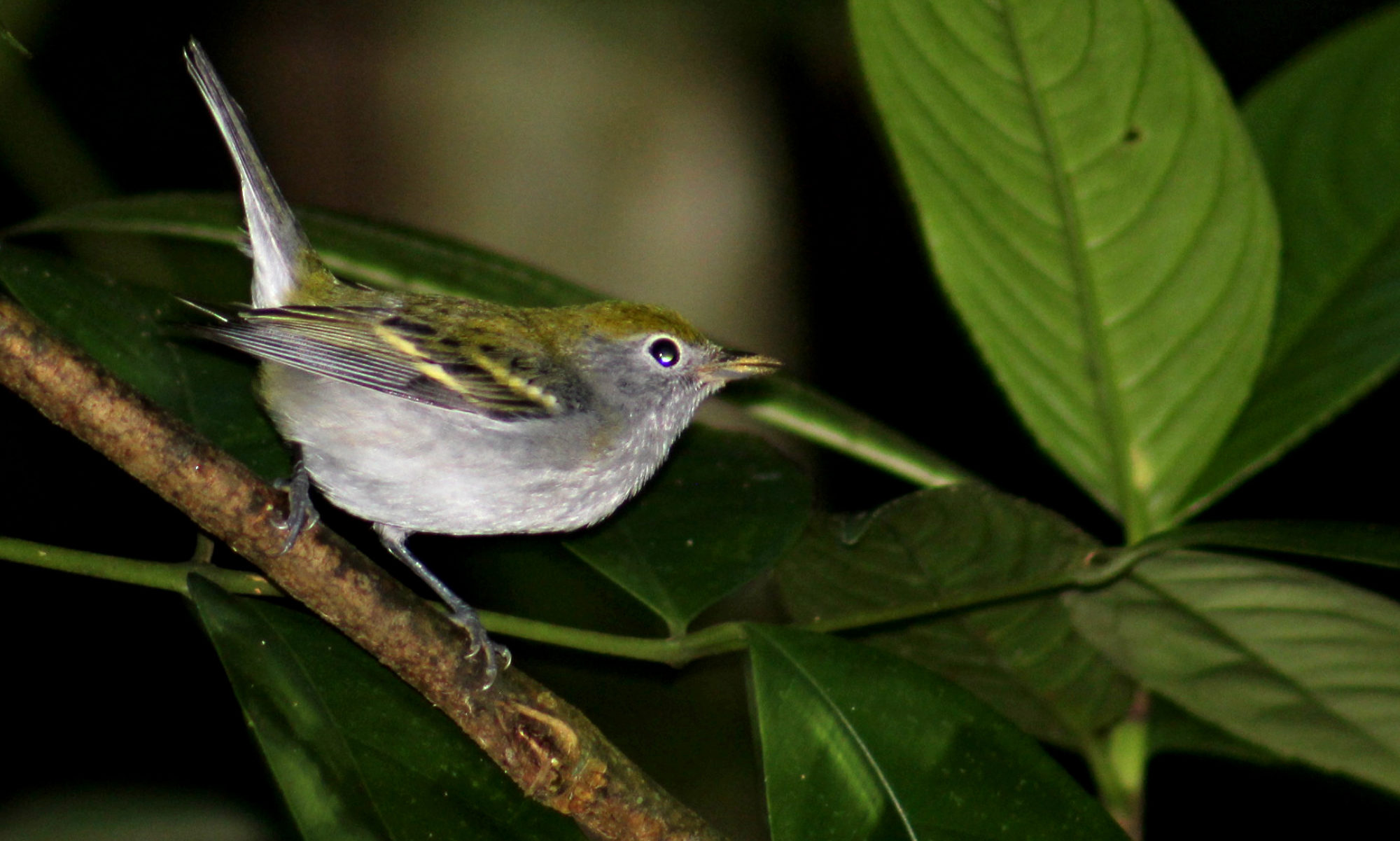
Don’t ever be afraid of to standing out. Fear fitting in because you can get lost in the crowd, but standing alone you’ll always find yourself.
~Unknown
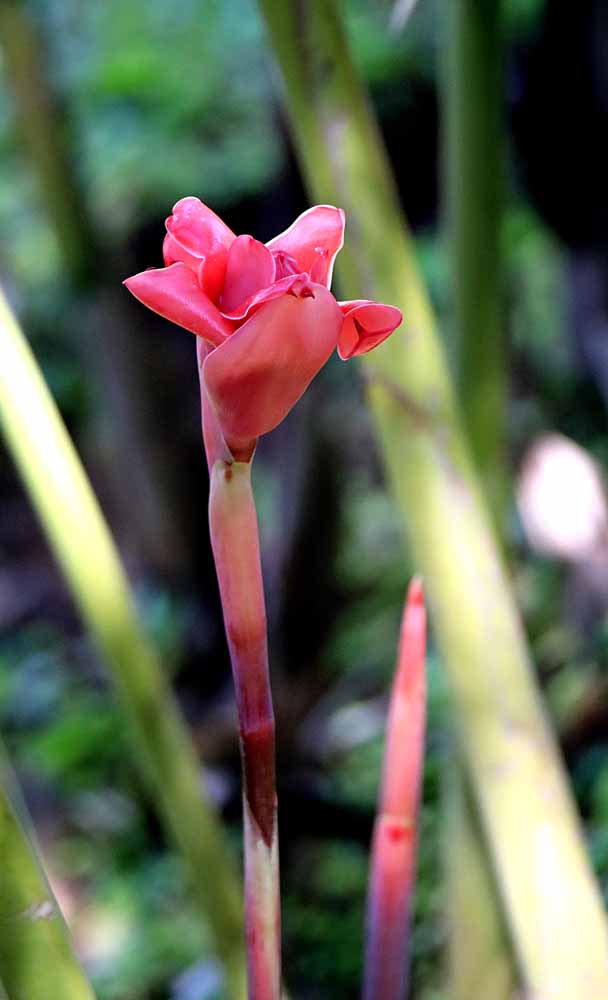
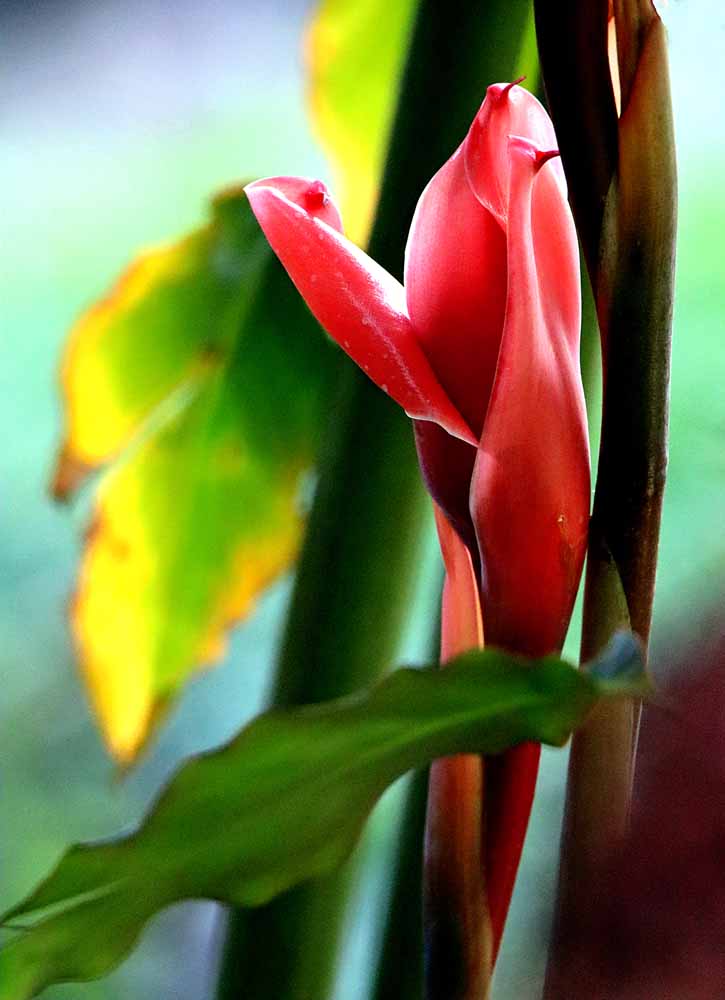
These two photos of budding Torch Gingers or Baton del Emperador are each seemingly lost in a crowd of other like plants and yet both of their developing shapes and bright red color make them stand out to me.
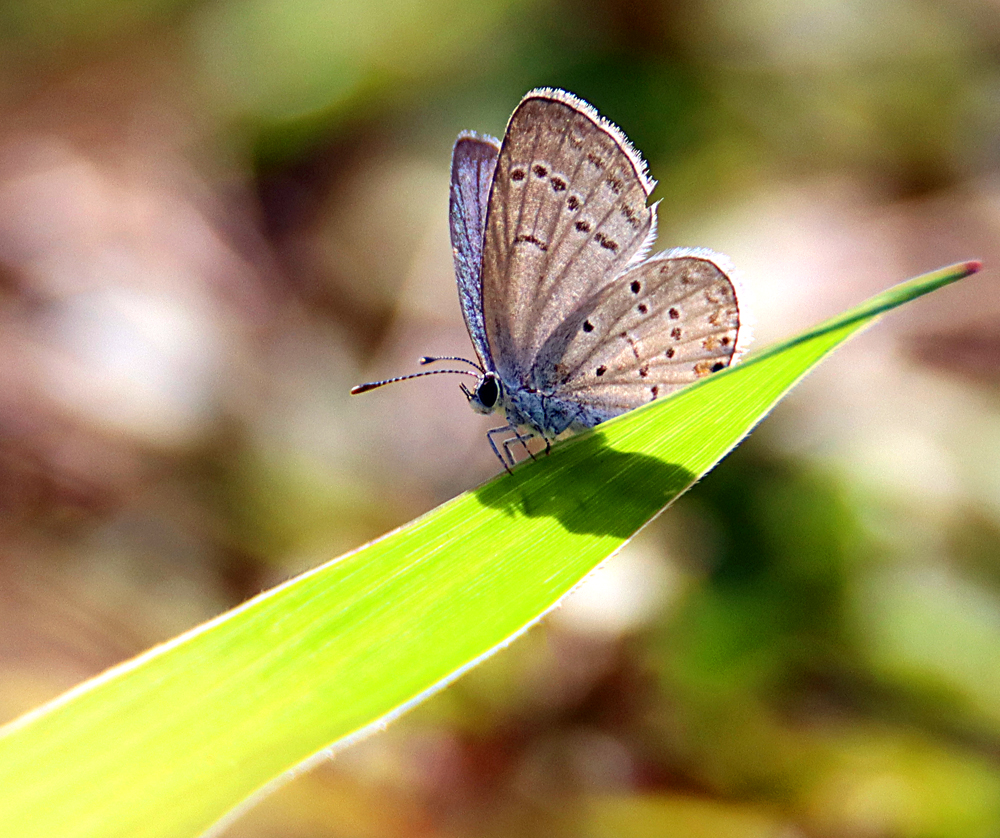
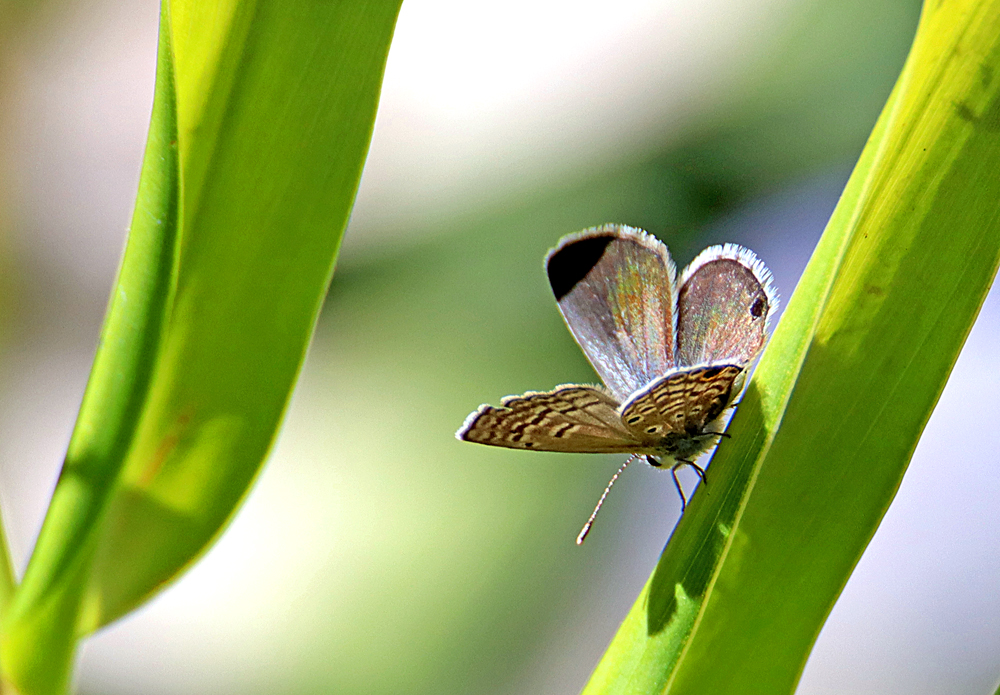
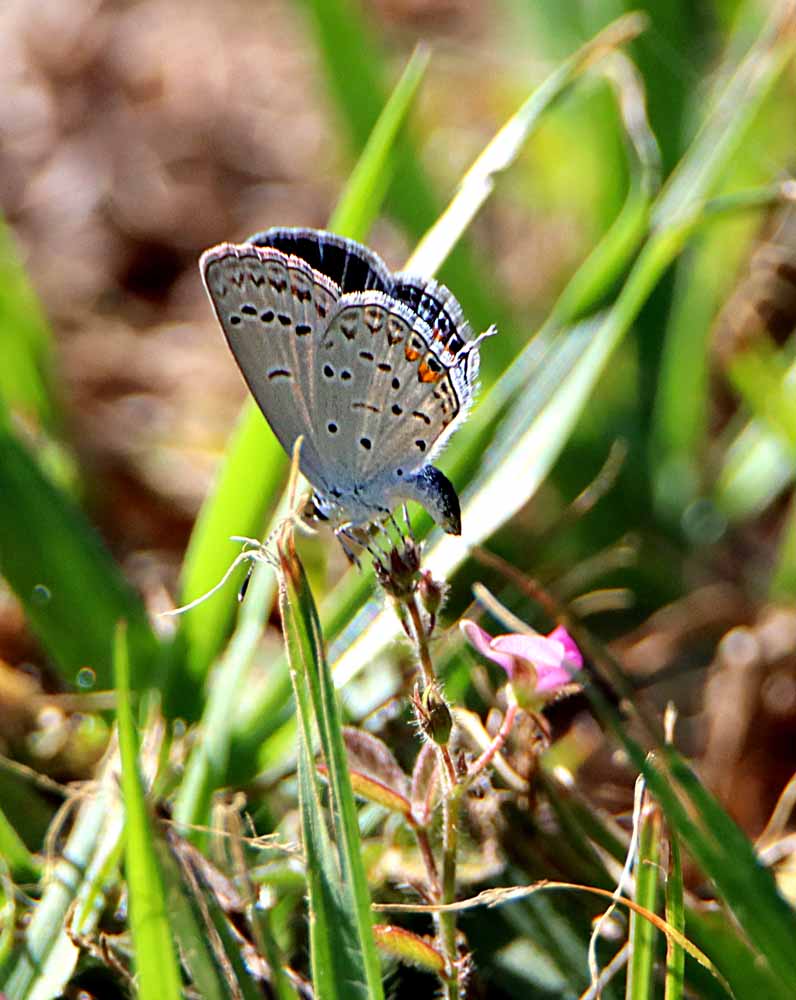
This Eastern Tailed-Blue (Cupido comyntas) is a cousin of the Ceraunus Blue (linked to blog post) I shared a few days ago, another sub-family in the Gossamer Wings or Lycaenidae Family (linked to that group of galleries) of butterflies and another one of those very tiny ones, as noted by him being on a blade of grass in these photos. :-) Most in the Lycaenidae Family are tiny. Also he’s called a “blue” because the top of his wings are a powdery blue, though barely seen in just one of these photos. Because of the wind this time of year he keeps wings folded when landed, but you can see my photo of another one with open wings in my Eastern Tailed-Blue GALLERY where all the photos have come from my garden. 🙂 And also note that with my eyes he looks white, but the light and/or camera give him a brownish hue this time that I cannot explain.
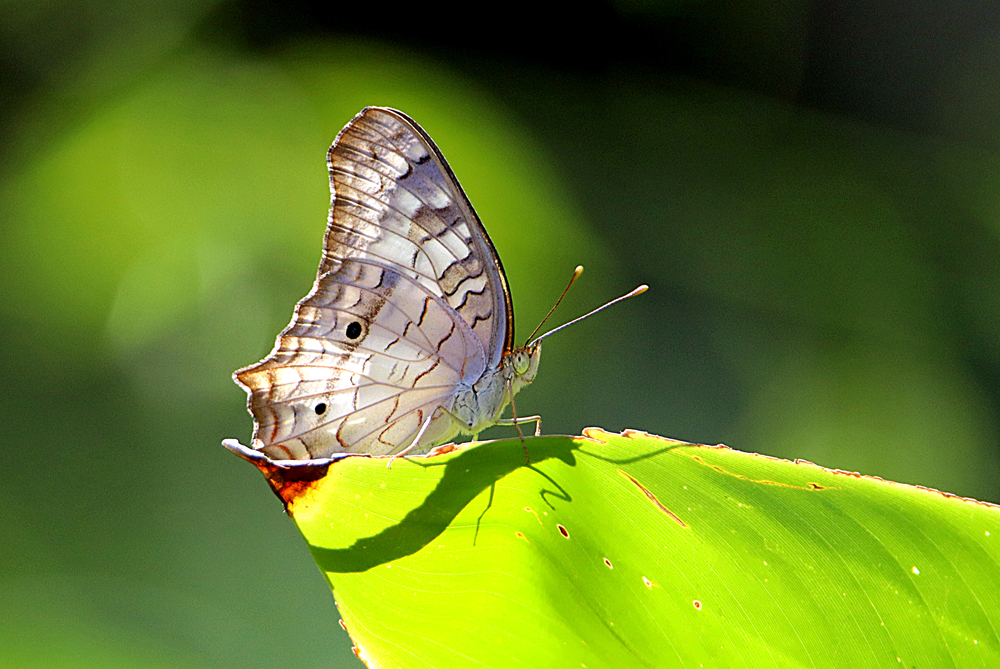
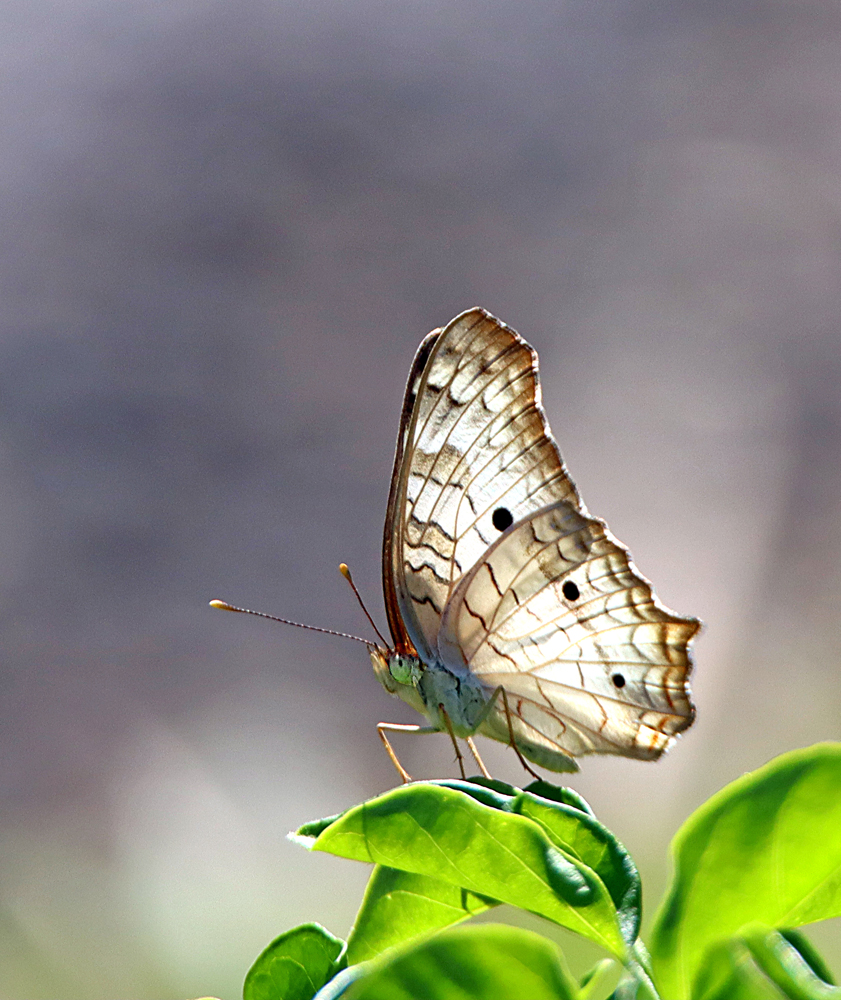
White Peacock – Anartia jatrophae – I always prefer photos of the tops of their wings when open and spread out, but we have so much wind this time of year that they won’t risk being blown away by keeping their wings folded every time they land and even then their folded wings are like a little sail sticking up. :-) Though not as common for me as the Banded Peacock, they are fairly common all over Costa Rica on both slopes as you can see in my White Peacock GALLERY, though so far only at lower elevations. Here’s two shots from my garden the other day . . .
This tiny little butterfly was new to me in a September 2022 sighting at Hotel Banana Azul in Caribbean Costa Rica, which I saw again there and in my garden in 2023, Ceraunus Blue, Hemiargus ceraunus! I liked it so much I chose one of my garden shots for the cover of my newest butterfly book, Pura Vida Butterflies, Second Edition released last month.
Of course I also have a Ceraunus Blue GALLERY with shots from all four sightings. Now here’s what I saw the other day in my garden, with two shots, even though not as good as my earlier photos :-) . . .
Ceraunus Blue, Atenas, Costa Rica — And what looks like a black/dark brown corner of the wing is actually a shadow of the leaf above him. :-) Continue reading “Ceraunus Blue”
This past Christmas I got a potted poinsettia for my terrace as usual, but the only one they had at the time I purchased it was the strange red with white flecks or variegations in the petals. :-)
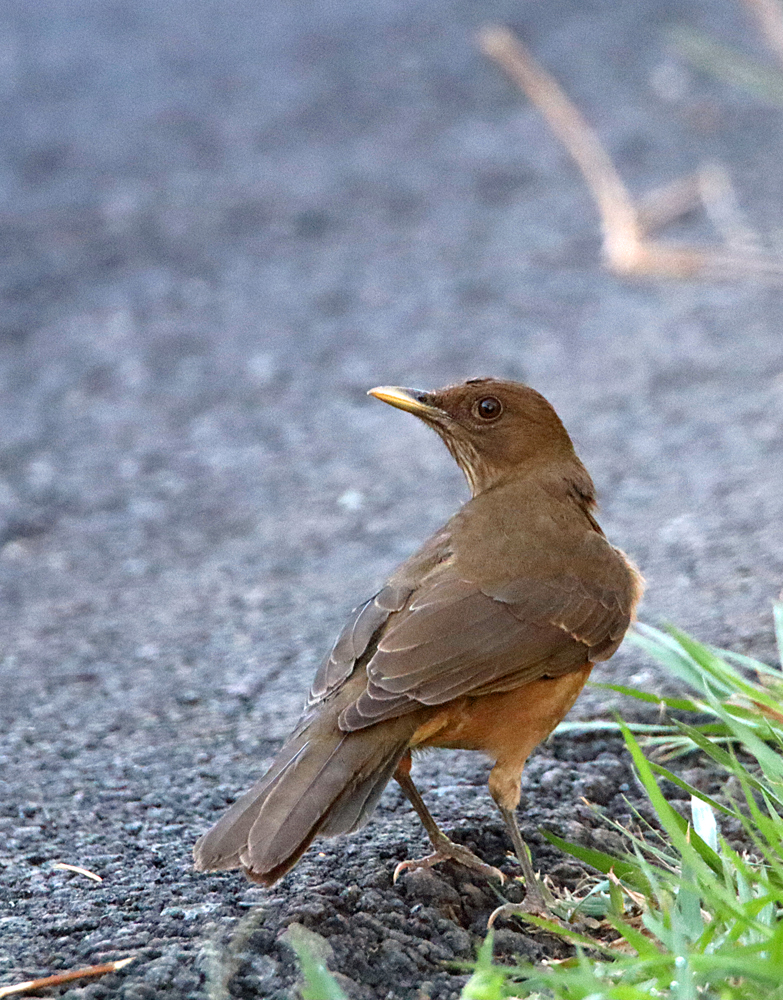
is the locally used Spanish name for the English-named Clay-colored Thrush (Turdus grayi), the National Bird of Costa Rica, supposedly because the indigenous people believed that its beautiful songs in April brought the beginning of rainy season in May. It is mostly a Central American bird, found from South Texas to Columbia in South America. And yes! Their songs in April are beautiful! They sing their hearts out almost constantly until it starts raining, then they stop. :-)
Yigüirro or Clay-colored Thrush, Atenas, Costa Rica
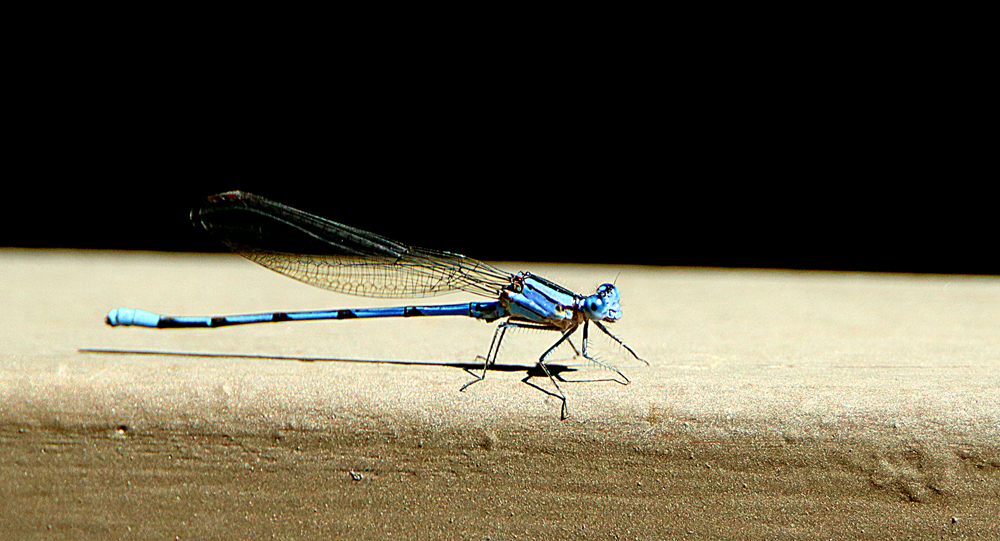
The Cerulean Dancer Damselfly (Argia anceps), male here, is one of dozens of blue and black damselflies with this one most often confused with the Azure Dancer and the Thorn-tipped Dancer (says the book), but because of the shade of blue, the size and the wing color I am declaring this a Cerulean Dancer! :-) But to be honest, with both damsel and dragonflies, I am seldom 100% certain of the identification and I use a Costa Rica specific field guide with nearly 300 species of damselflies and dragonflies included with photos! You would think that makes it easy, but not for me! The many similarities between species makes identification a challenge for many! This one was photographed on the railing of my terrace in Atenas, Alajuela Province, Costa Rica.
Cerulean Dancer Damselfly, Atenas, Alajuela, Costa Rica
Another interesting butterfly not often seen, the Eastern Tailed-Blue, Cupido comyntas, in my garden. I have seen him once before in my garden as shown in my Eastern Tailed-Blue GALLERY.
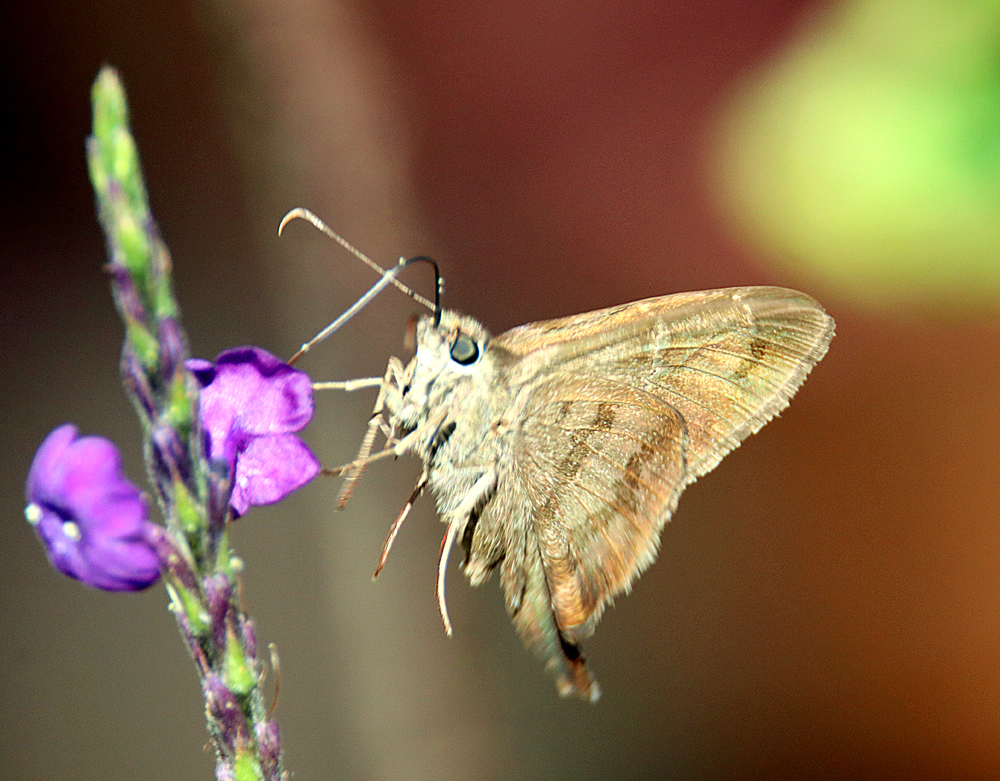
I continue to find what appear to be “new” species for me, though this one is pretty much identical to the “Plain Longtail” with the exception of a slightly shorter tail (he could have broken off the tip as he did the 2nd tail) and the “orange smudges” on the wings, large on top and smaller on bottom or side view. I’ll label this the Plain Longtail, Urbanus simplicius and let one of the coordinators at butterfliesandmoths correct me if they believe otherwise. These little detailed differences continue to be an ID challenge for me! 🙂 Here’s 2 shots, one side view & one top view . . .