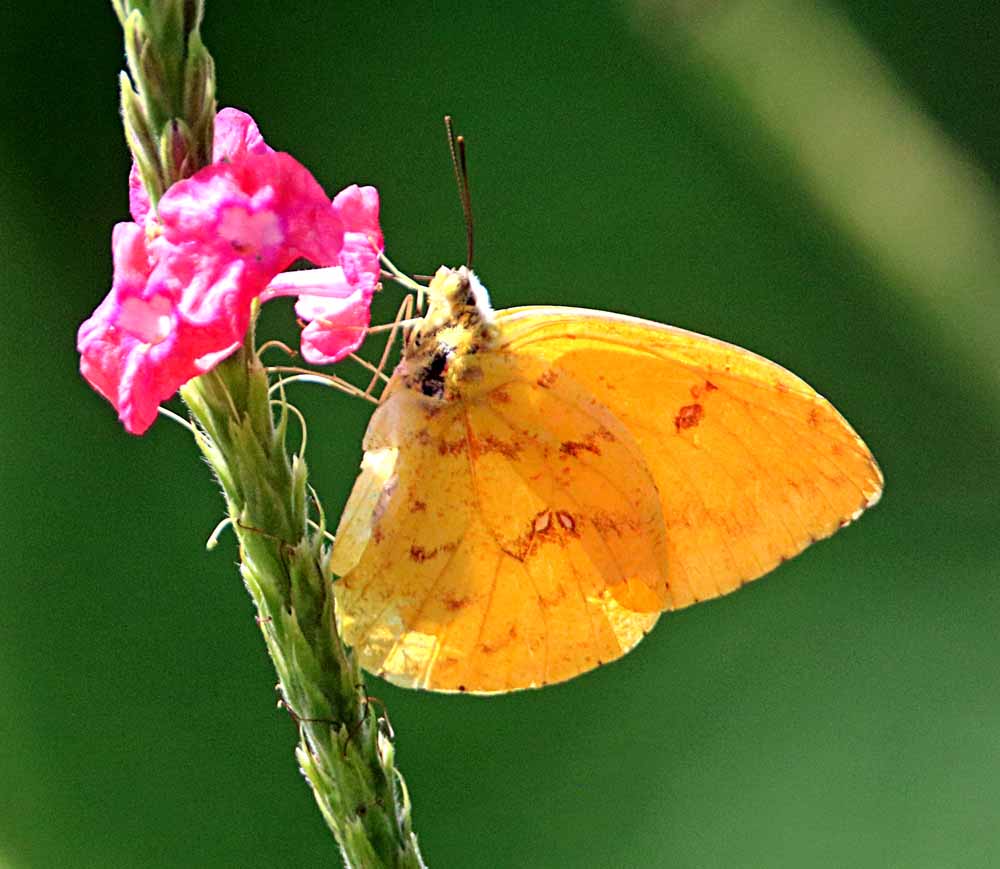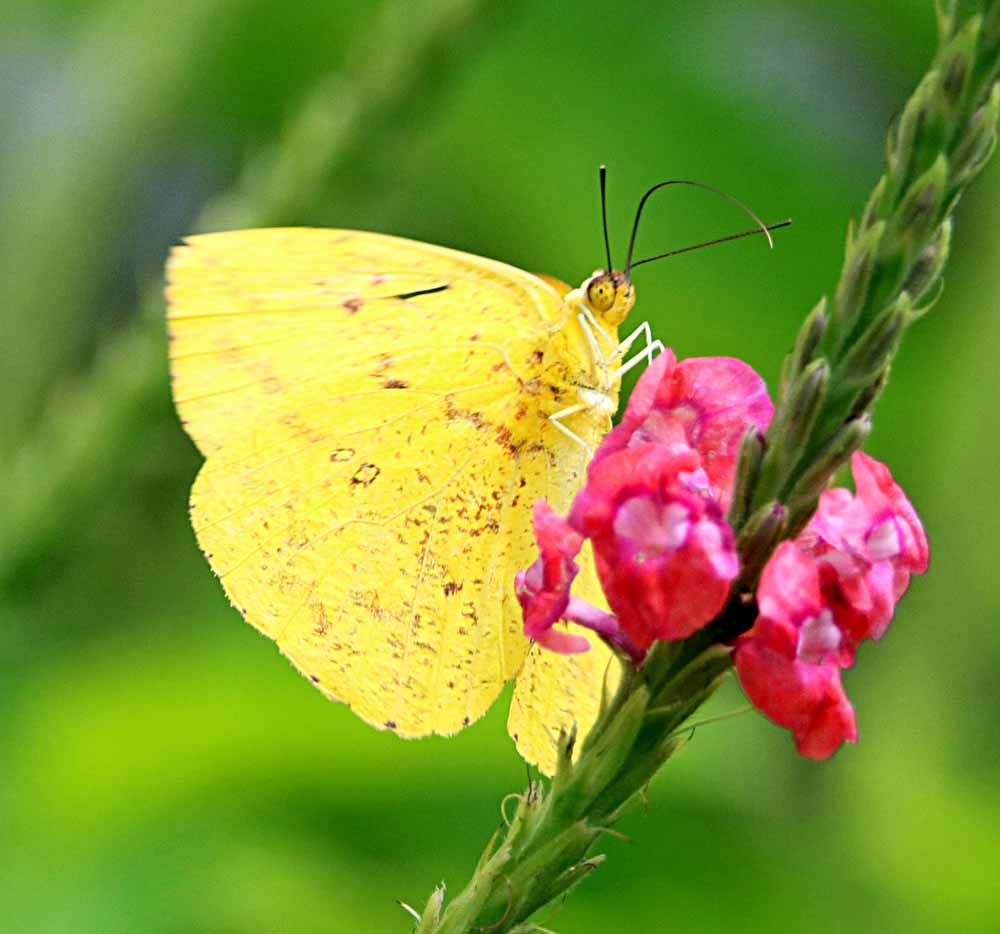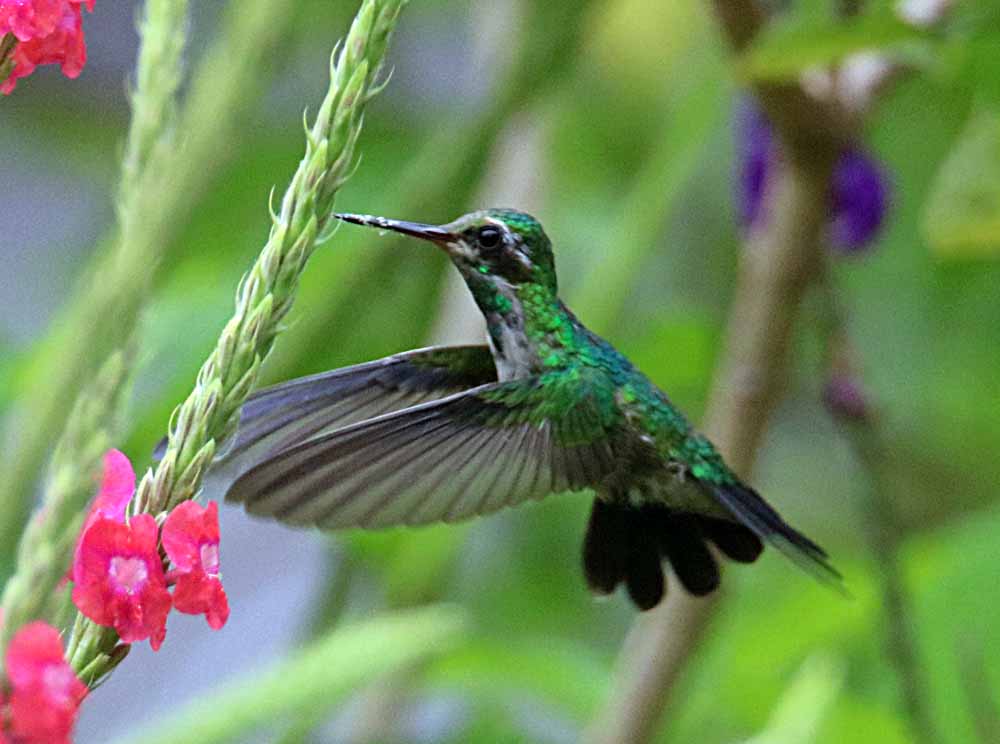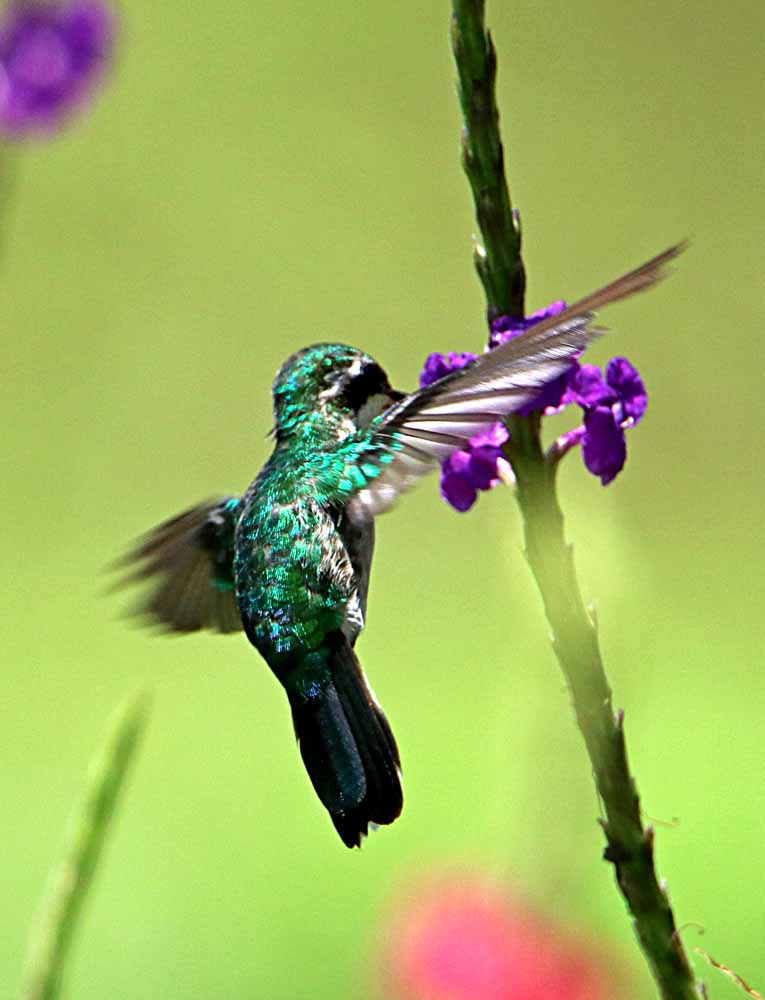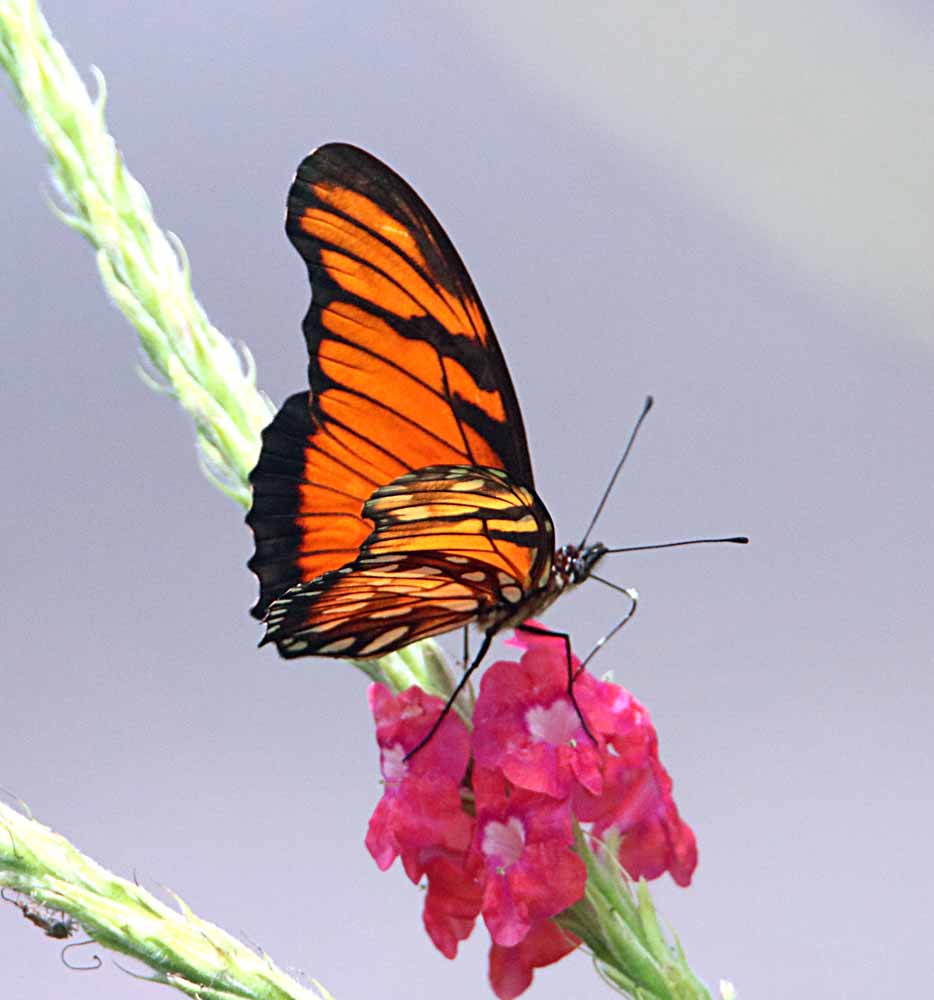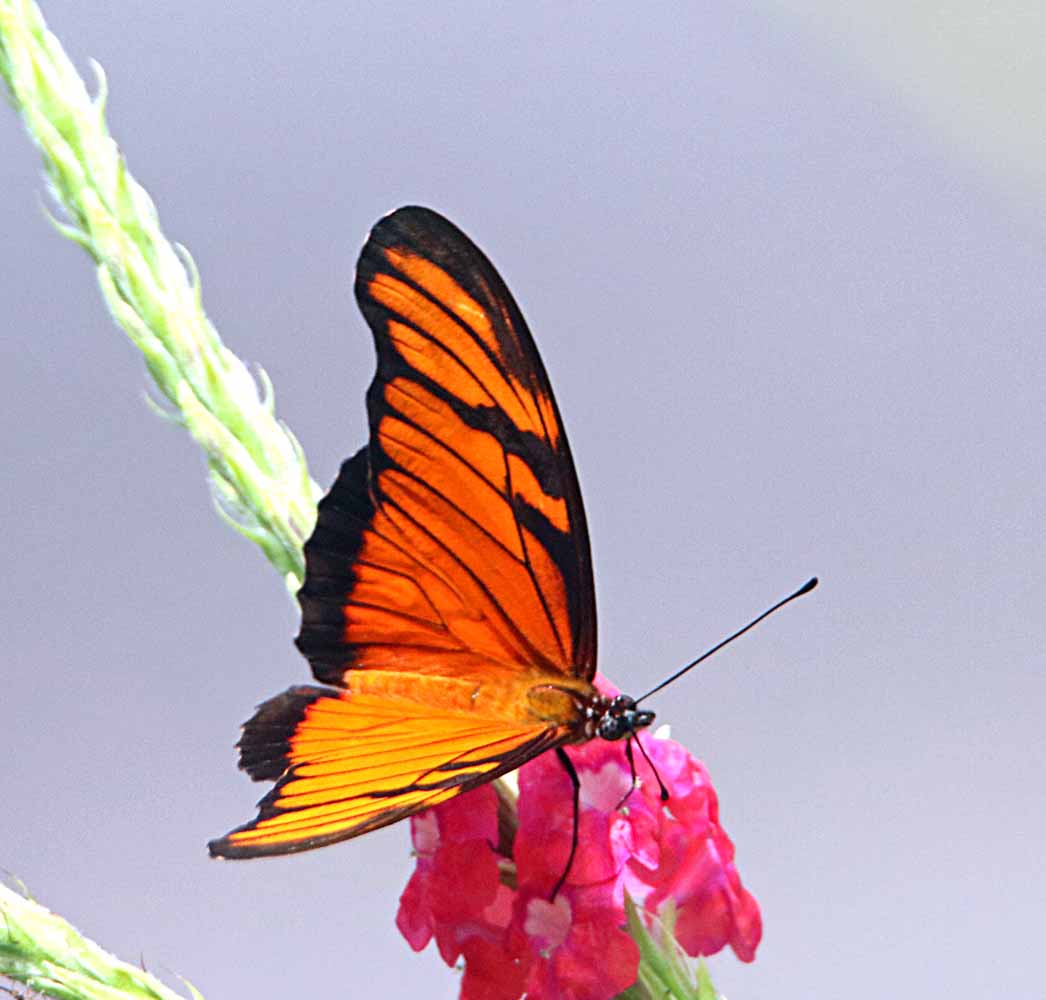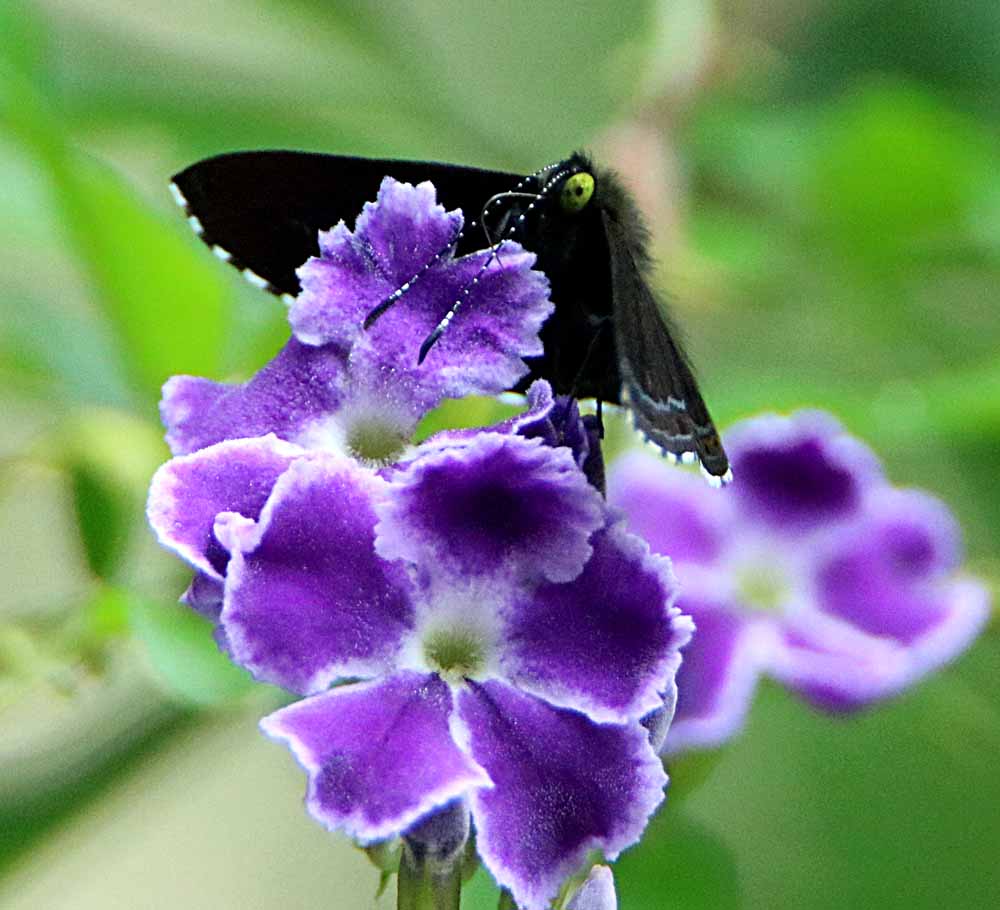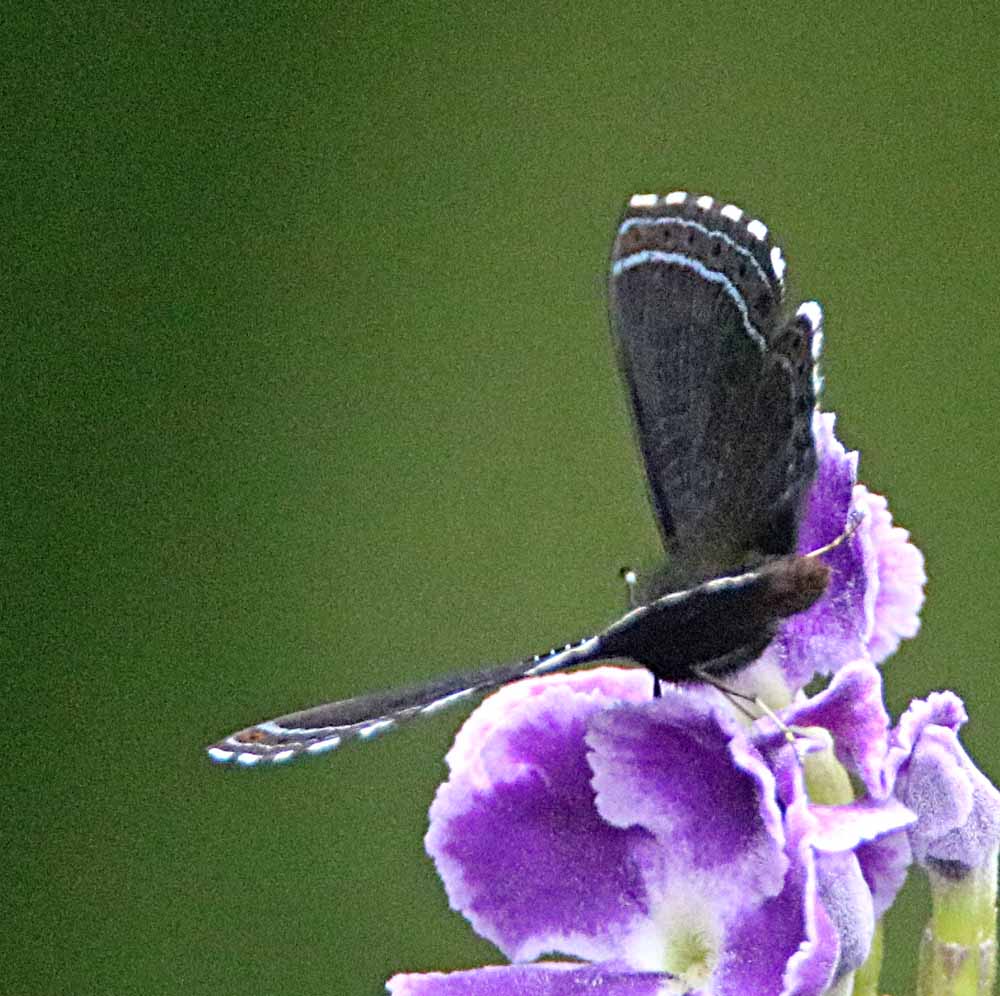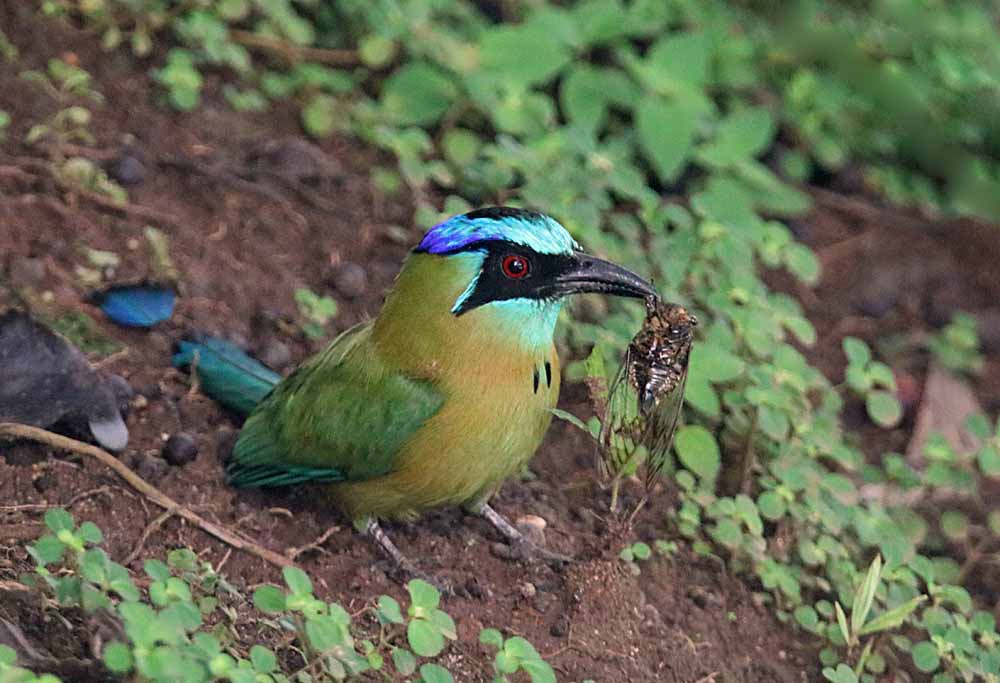

This Orange-barred Sulphur, Phoebis philea (my gallery link) does not have the strong “barring” that some of this species have, but the stronger yellow color to me eliminates the possibility of a a similar-spotted butterfly, the Cloudless Sulphur, which is usually white or a light yellow. But I could be wrong! 🙂 And if someone changes it on iNaturalist, I will come back and change it here! 🙂
This Blurry-striped Longtail, Chiodes catillus (my gallery link) is also sometimes called White-striped Longtail by some sources. It is a less seen longtail skipper, but one of the many species that make up the huge biodiversity of Costa Rica! Here’s two shots of the same individual showing the difference in color that bright sunlight or shadows can make on these butterflies. 🙂
One of my many “favorites” is the Tropical Buckeye, Junonia evarete or Junonia zonalis (linked to my gallery) is found throughout Central America, West Indies, Florida and the Southwestern U.S.
When iNaturalist “Identifiers” (participants with expertise in butterflies) can’t accurately identify a photo, they will often generalize and give it a subfamily or genus label to put it under, and thus I am doing that also, especially with photos that don’t have enough details to be sure of the identity. And I’ve already started adding galleries for genus and subfamily for cases like this.
Genus Strymon, Atenas, Alajuela, Costa Rica
This one is almost definitely in the Genus Strymon (Scrub-Hairstreaks), but I’m not able to tell which species. Maybe someone will be able to on iNaturalist after I post it there or on BAMONA where I have to just click “unable to identify.” And both sites have people who maybe will identify is as a species. If interested, I have identified 5 species in this genus in my galleries:
One of those tiny Hairstreak family of butterflies, the Cassius Blue, Leptotes cassius (my gallery link) may be a regular this year. I shared one in early April who was sitting on the wet black-topped driveway.
. . . for my resident Rufous-tailed Hummingbird. And of course this Torch Ginger is just one of the many “Flower Restaurants” where he eats as I purposefully do not have feeders filled every day. It is more natural and healthier for the birds to eat from flowers. Here’s three shots from the other day in my garden . . .
Rufous-tailed Hummingbird on a Torch Ginger, “Bastón del Emperador,” Atenas, Alajuela, Costa RicaRufous-tailed Hummingbird on a Torch Ginger, “Bastón del Emperador,” Atenas, Alajuela, Costa RicaContinue reading “The “Flower Restaurant””
This Blue-gray Satyr, Magneuptychia libye (linked to iNaturalist Costa Rica where there are 307 observations of this species which is a new species for me!) and it makes my 22nd species of Satyrs! 🙂 My galleries for these are at the bottom of the Nymphalidae – BRUSHFOOTS Family Gallery, my largest family of butterflies, though just a little larger than the Skipper! 🙂
Blue-gray Satyr, Atenas, Alajuela, Costa Rica
¡Pura Vida!
And more about those migrants that the U.S. dumped on Costa Rica . . .
This Clay-colored Thrush, Yigüirro (my gallery link) was still singing after the rains started in April but they are here for sure now, almost every afternoon or evening, and he no longer needs to sing in the rain! 🙂
Yigüirro or Clay-colored Thrush singing in Atenas, Costa Rica as the rains start!
It still happens quite a bit for me to not be able to identify a butterfly. This one I first thought was one of the tiny Metalmarks, but all the A-I identifiers puts in in the bigger Skipper family with the leading genuses being Staphylus, Quadrus, or Ouleus, but I still can’t find a match with all my butterfly books and online help. I will eventually post it and hope someone will identify it. Very small, less than an inch wingspan. Here’s three photos . . .