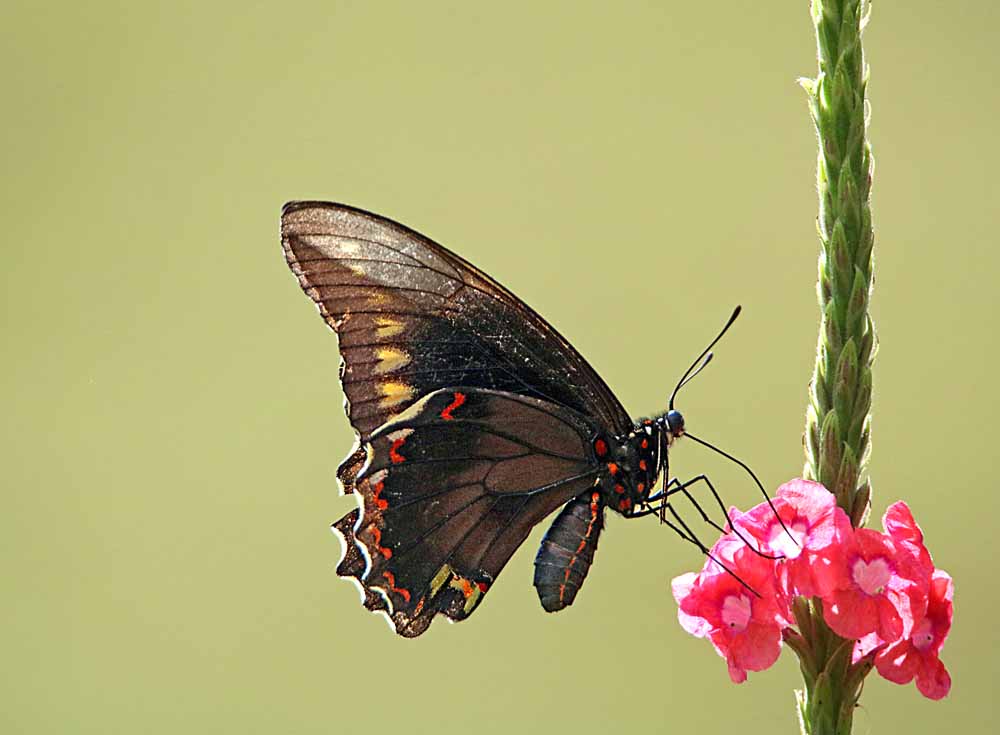
One of the late hangers-on in the late butterfly season is this Polydamas Swallowtail (my gallery link) and I’m sorry I let the camera focus on the flower more than the butterfly! 🙂

charliedoggett.net
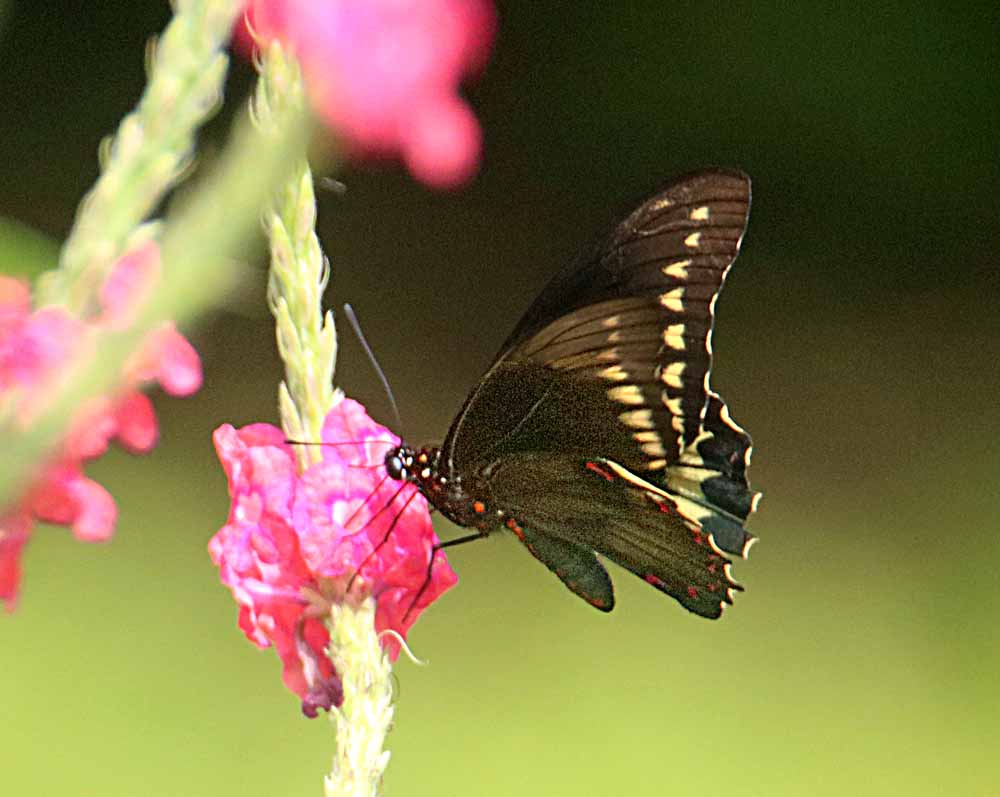
One of the late hangers-on in the late butterfly season is this Polydamas Swallowtail (my gallery link) and I’m sorry I let the camera focus on the flower more than the butterfly! 🙂

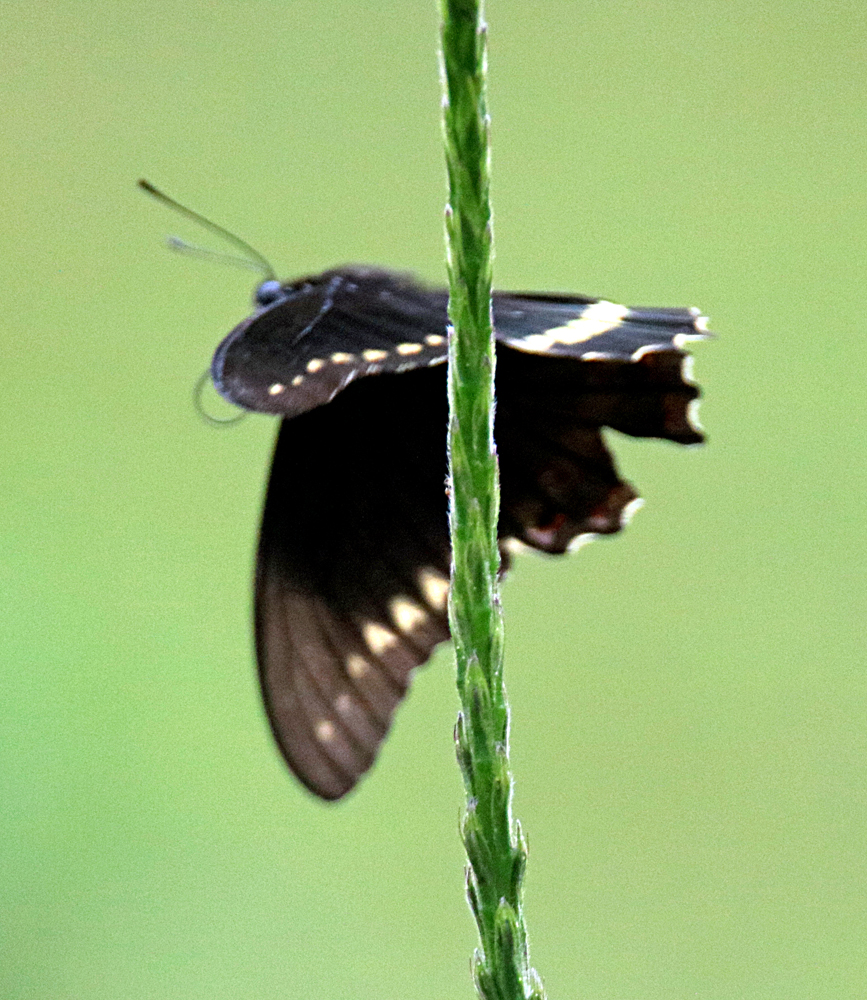
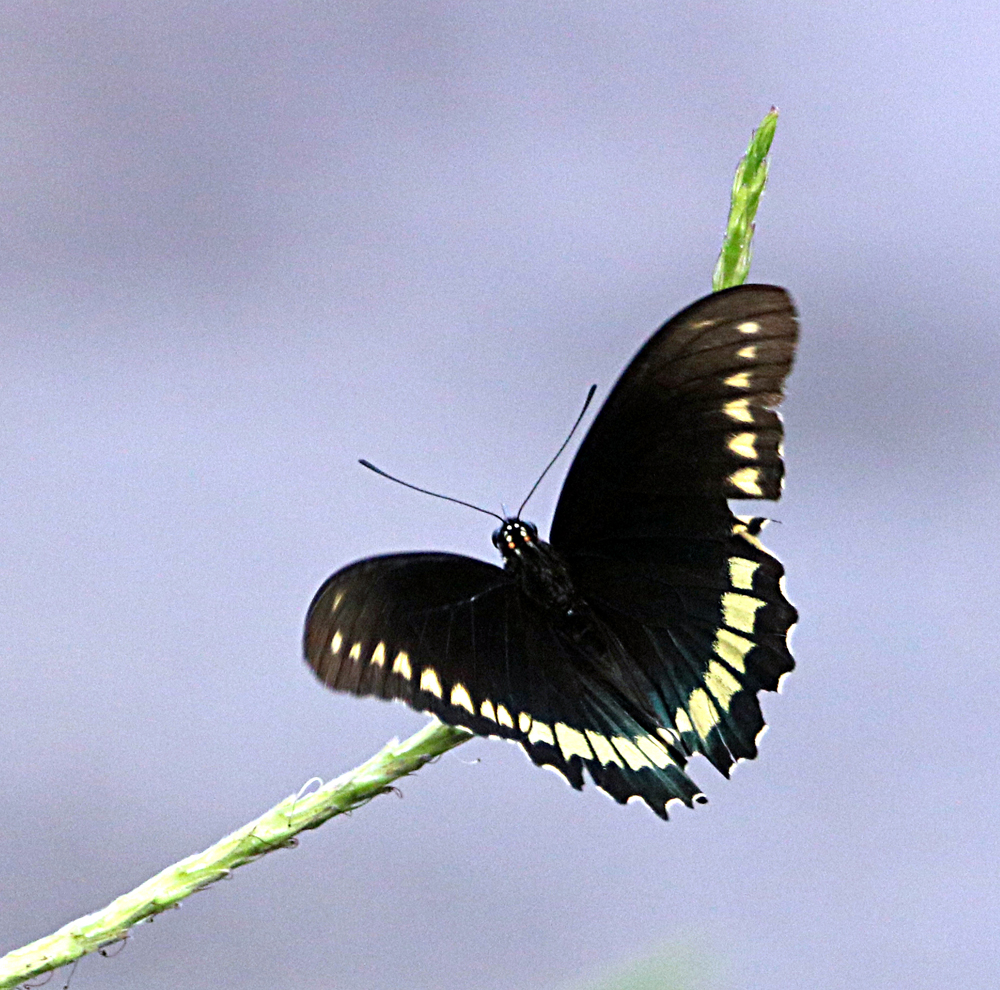
This most frequent swallowtail in my garden has showed up a little less this year, but is always a pleasure to see. Here’s the two basic views, top view and side view . . .

“The answer, my friend, is blowin’ in the wind
The answer is blowin’ in the wind” (apologies to Bob Dylan)
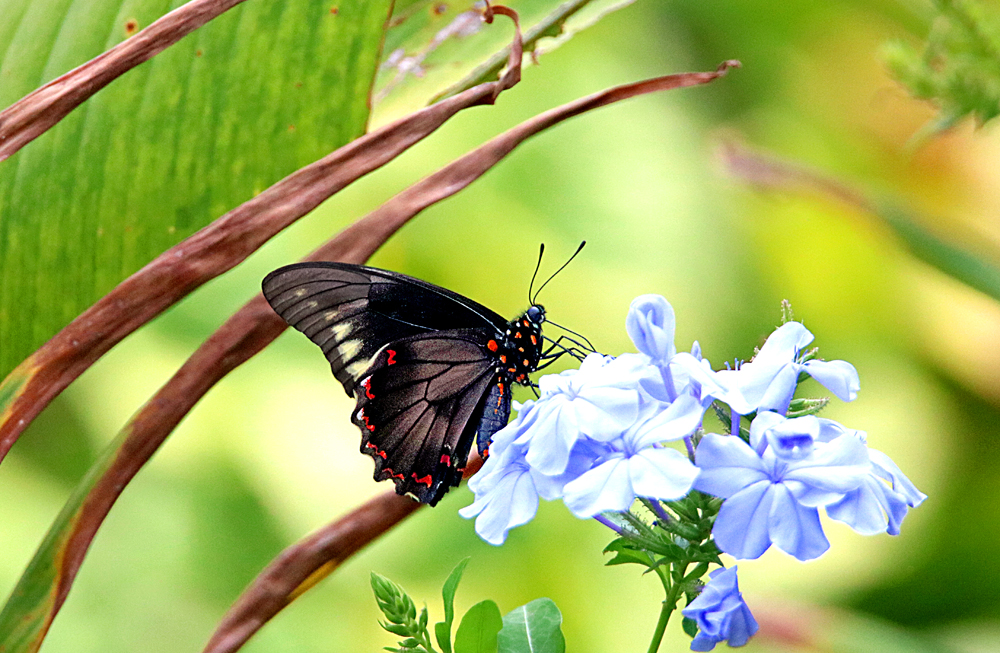
Some large Yellows are flying up in the tree limbs and other smaller yellows, whites and skippers I’ve seen down lower without ever stopping for a photo! 🙂 But Friday I did manage to get a couple of shots of this Polydamas Swallowtail, Battus polydamas (my gallery link) quickly stopping by both the Porter Weed (below) and the Plumbago (above), one of the few who land on that sticky flower! (Maybe the ‘sticky’ keeps him from blowing away!?) 🙂 And though that answer is not as philosophical as Bob Dylan’s, there simply will not be many butterflies until this wind quits blowing! 🙂
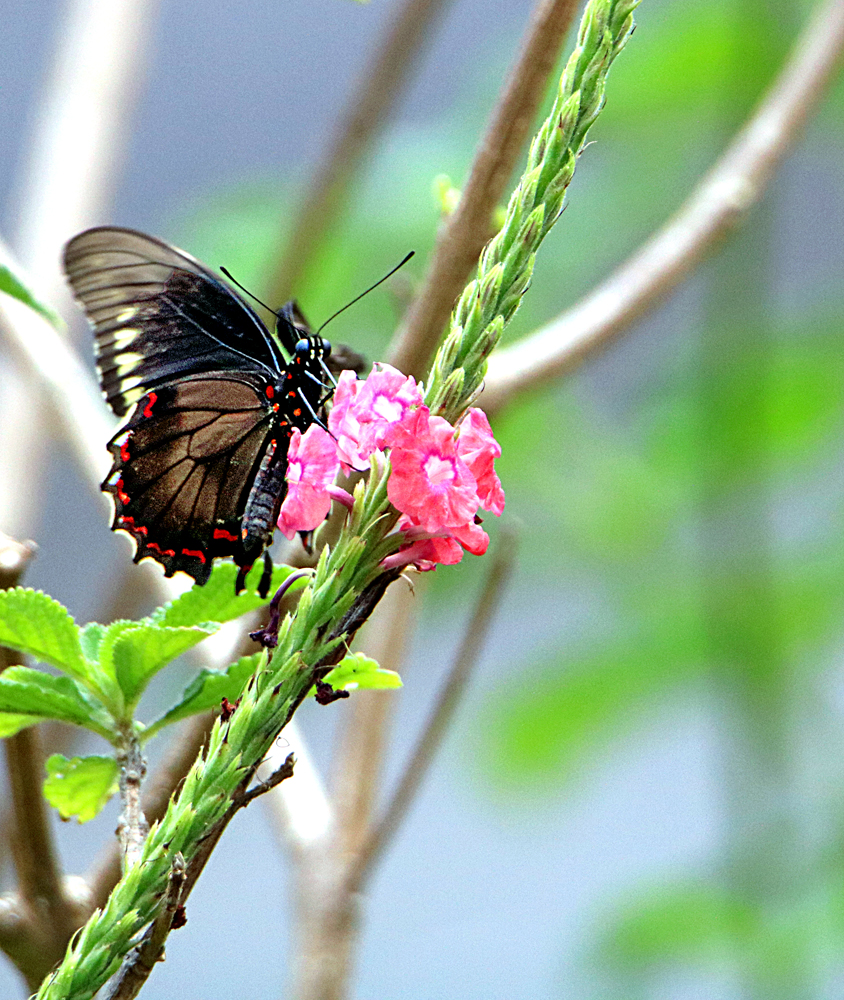
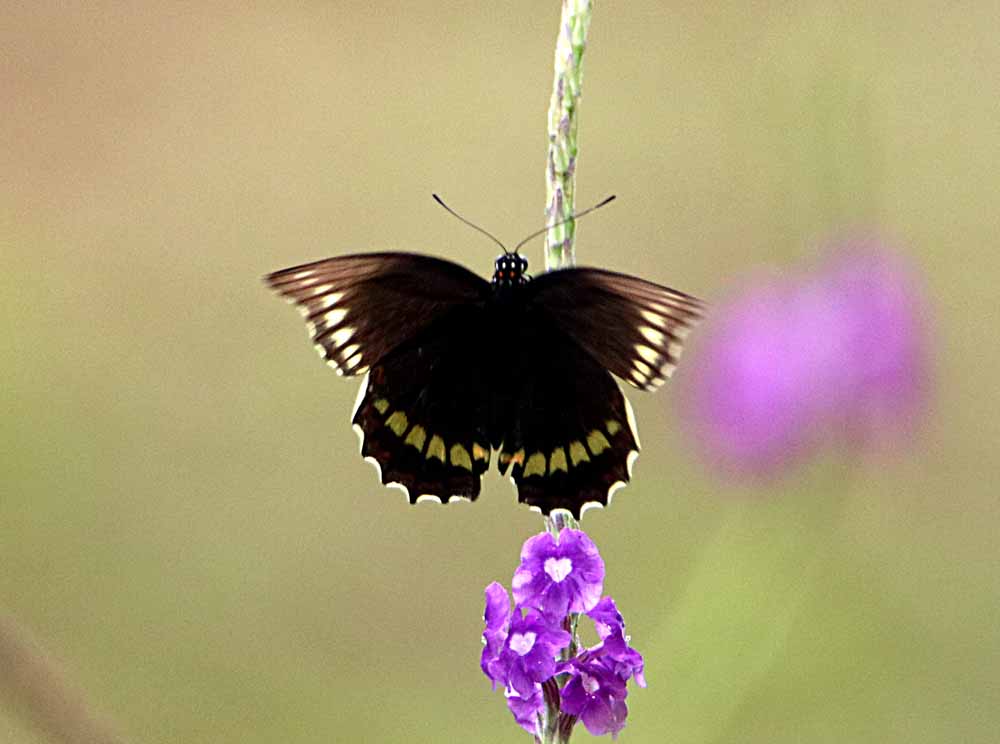
I’m beginning to see some of the old “regulars” back in my garden when the wind is not too strong, but overall, butterflies are still scarce and I don’t expect a lot before May. But I’ve had at least two of these Polydamas Swallowtail, Battus polydamas (my gallery link). Here’s 3 shots of one individual in my garden recently . . .
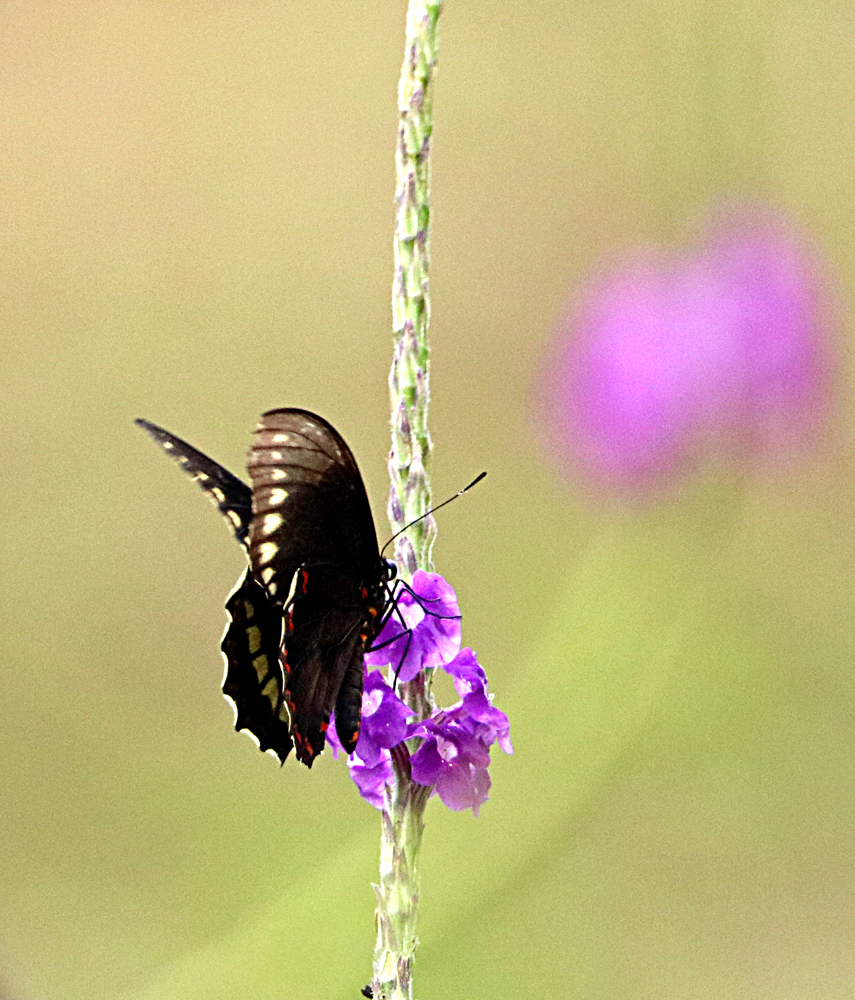
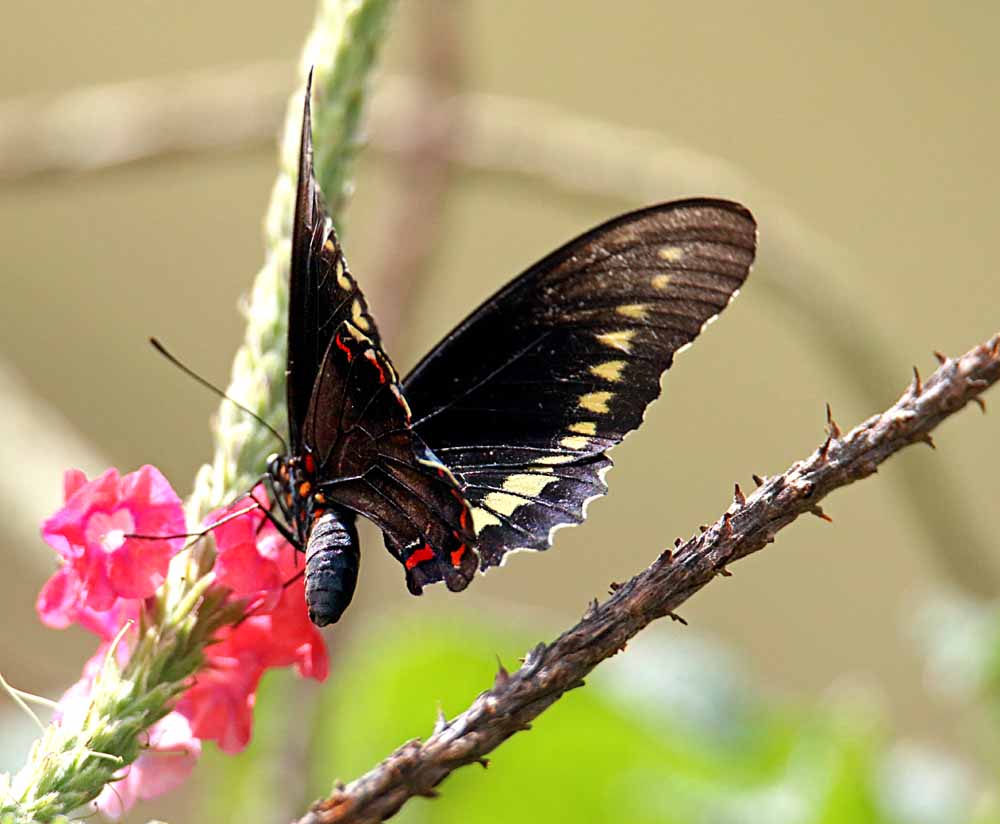
I earlier said that my only butterfly now in the garden is a few Banded Peacocks and I don’t count the Yellows flying up in the trees for reasons I don’t know. Well, the next day after that post, this lone Polydamas Swallowtail showed up in my garden. But still no birds beyond the hummingbird! 🙂 See more of my photos of this Polydamas Swallowtail, Battus polydamas in that gallery. During the butterfly season he is a regular!
¡Pura Vida!
This is the most frequently seen “large” butterfly in my garden and here are a couple of shots from the other day . . .
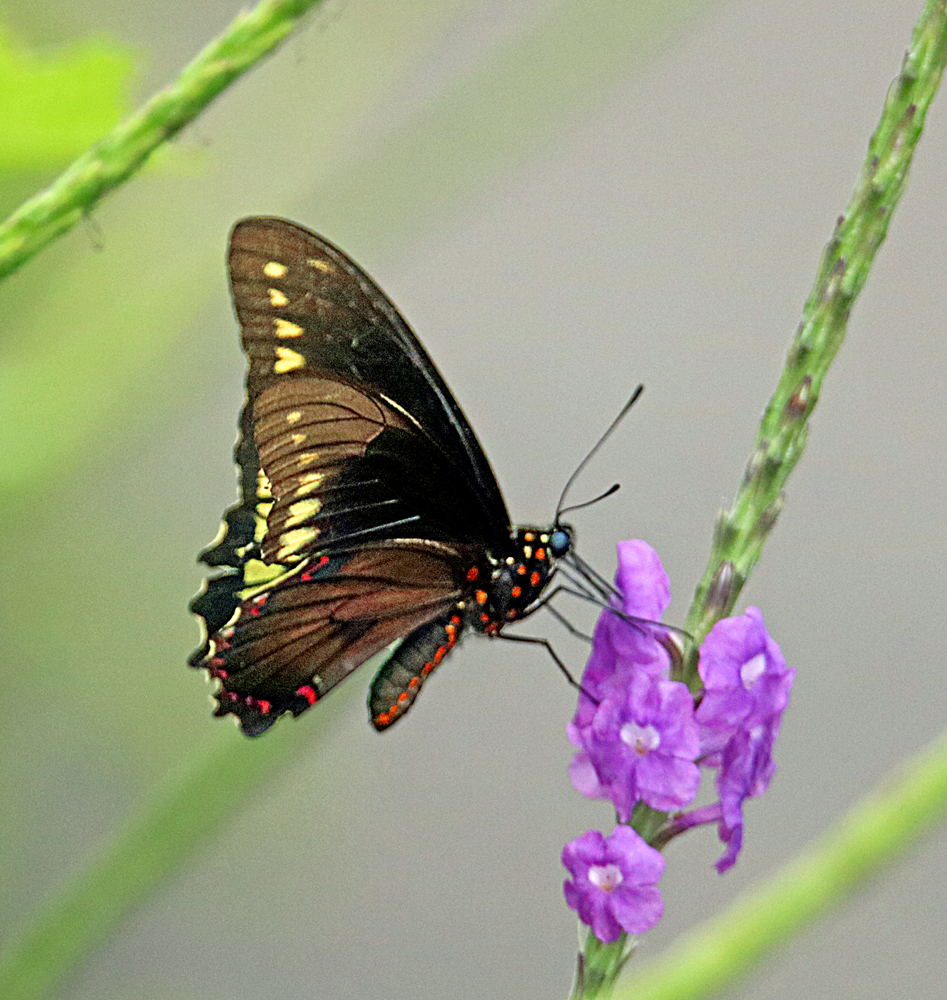
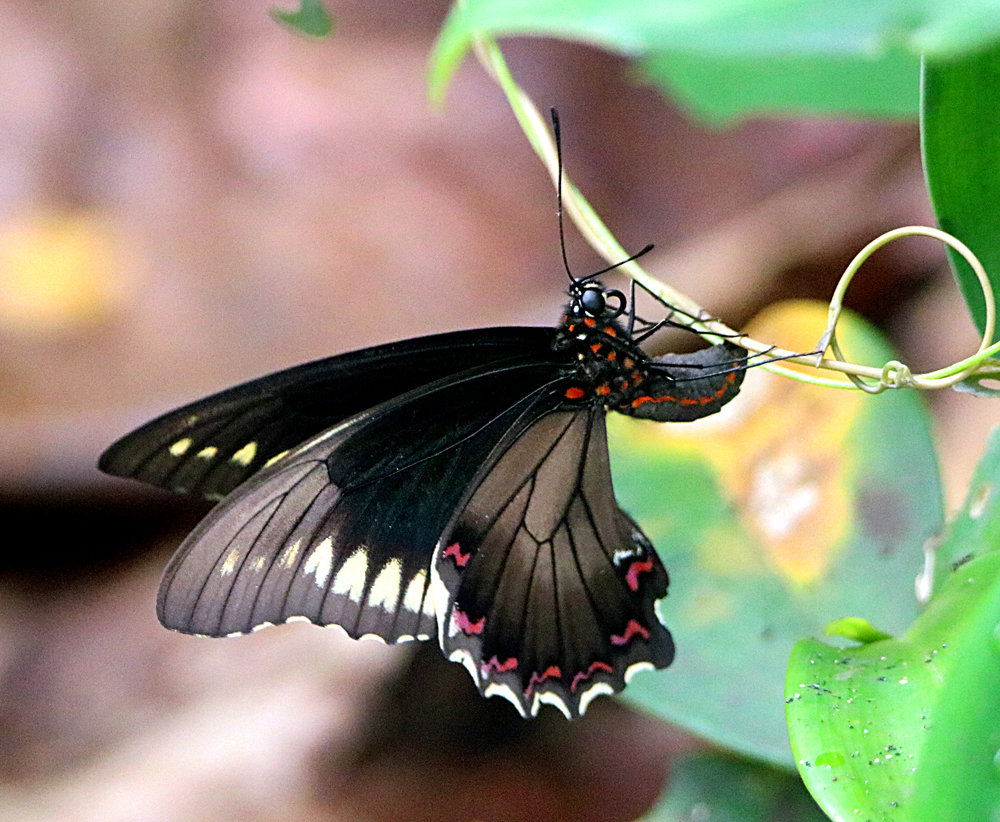
This swallowtail is the species of swallowtails that I see most often in my garden – and I still like it! 🙂 You can see the many that I’ve photographed in my Polydamas Swallowtail Gallery (linked). The scientific name is Battus polydamas and even though most of the other swallowtails are more colorful, he/she is striking! (Male & female are basically identical). Here’s a front view and a side view and you can see several top views in the above-linked gallery which is all black with a yellow dot row. This is my first one to photograph outside my garden. He is found from South Texas and Florida south to Argentina.
¡Pura Vida!
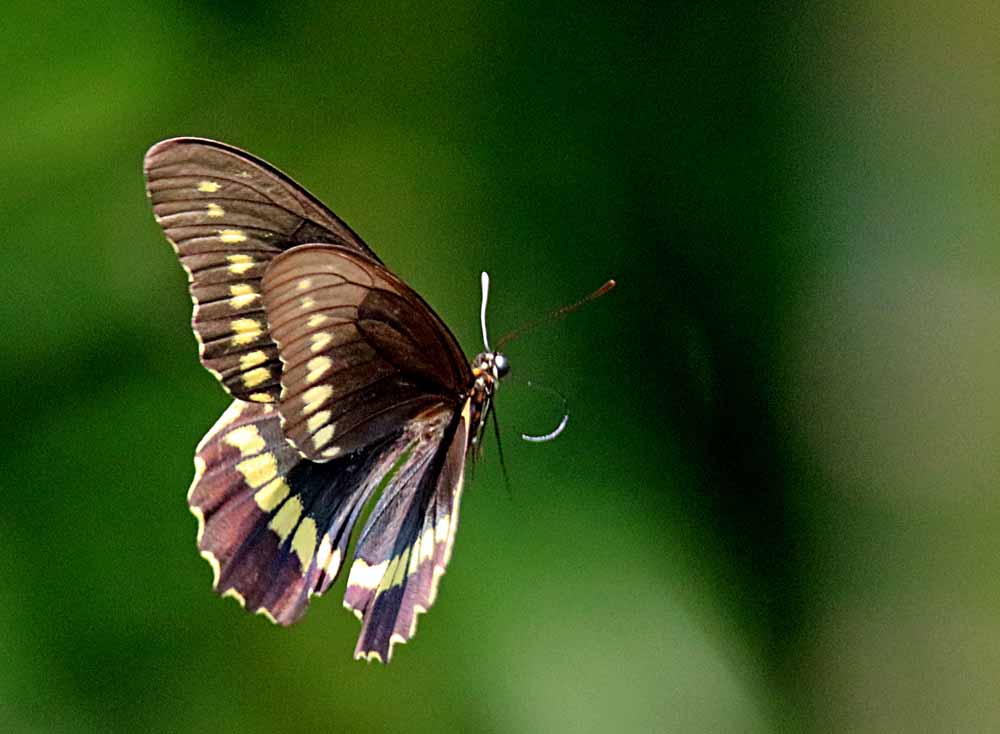
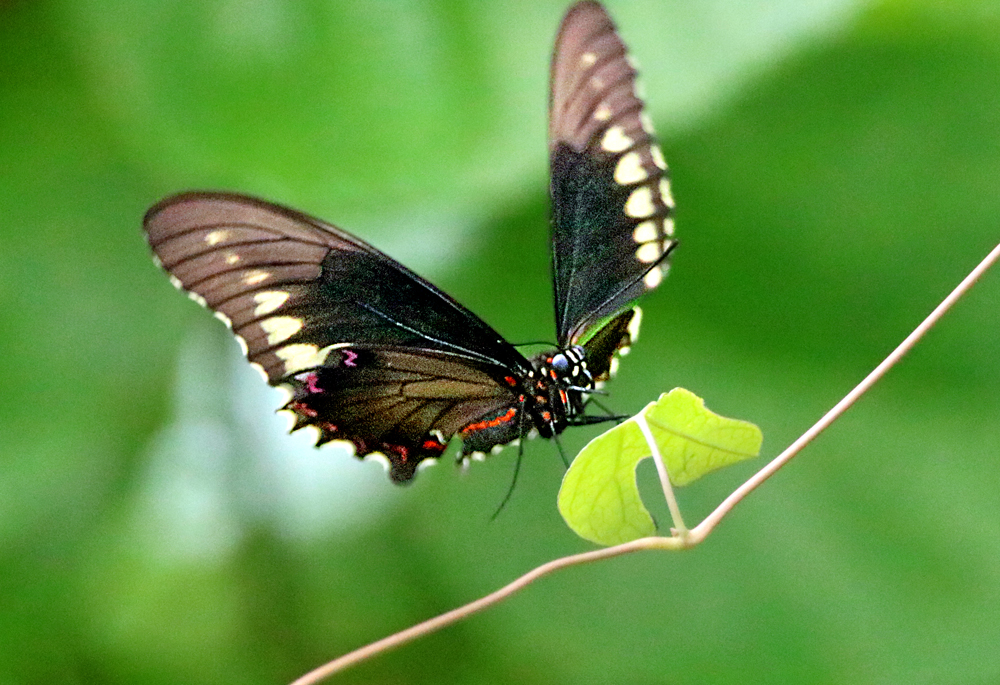
I’m not sure that I can explain why, but these Polydamas Swallowtails reminded me of flying acrobats or dancers as they swoop in and out of the flowers for their feeding. Fun to watch! 🙂 They are Polydamas Swallowtail, Battus polydamas (link to my Polydamas GALLERY with many more shots of their graceful flying and perching).
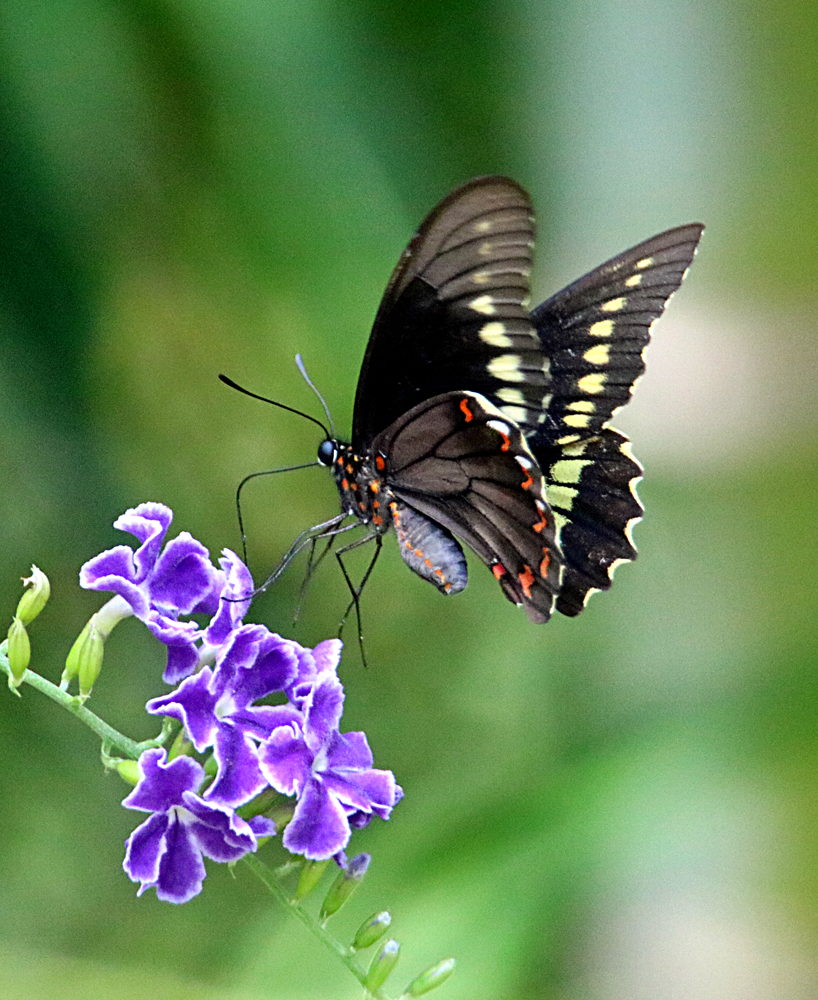
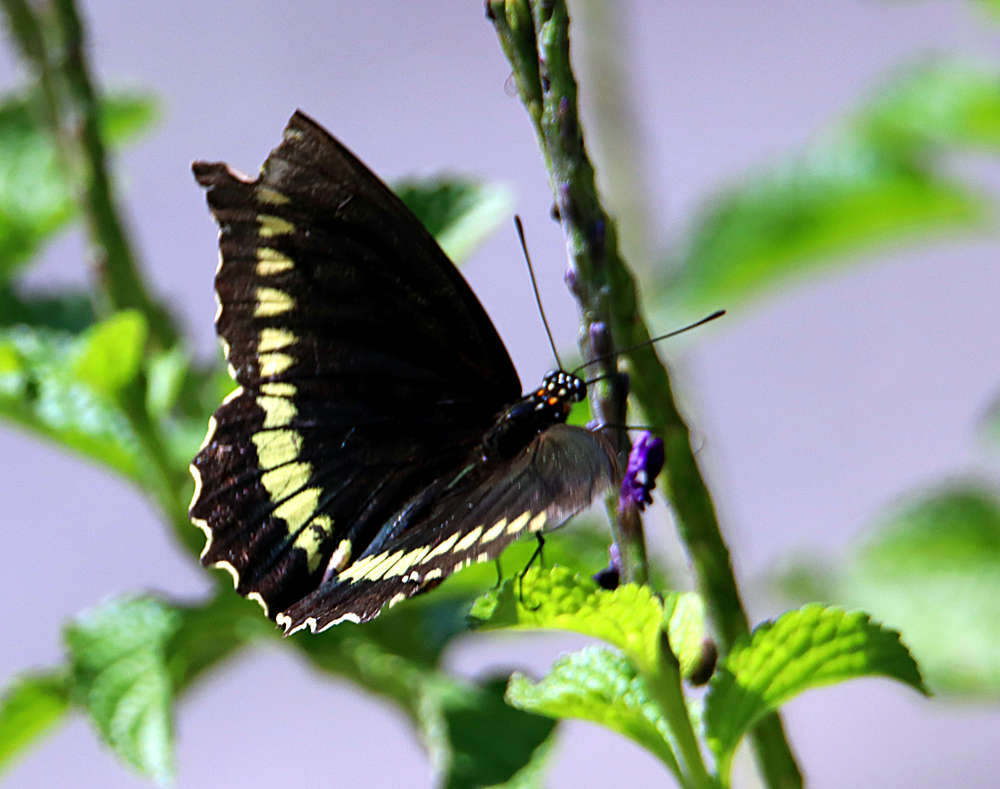
Three shots and three different impressions of what a Polydamas Swallowtail, Battus polydamas “looks like” in three photos from my garden below, plus you can see more in my Polydamas Swallowtail Gallery.
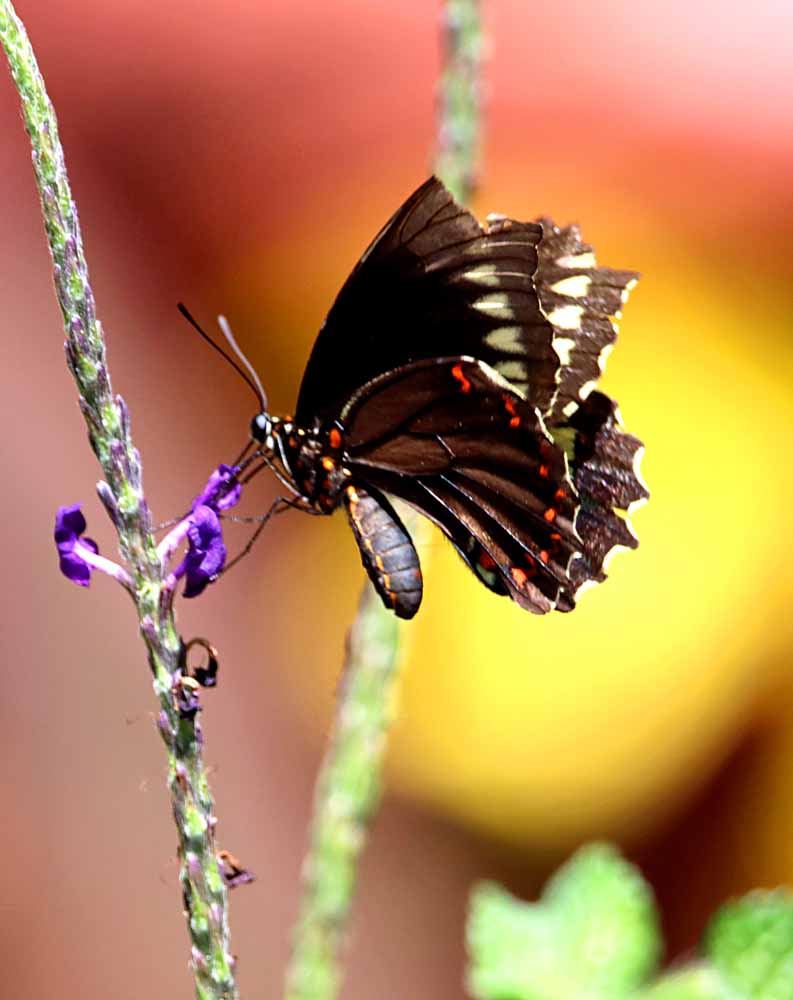
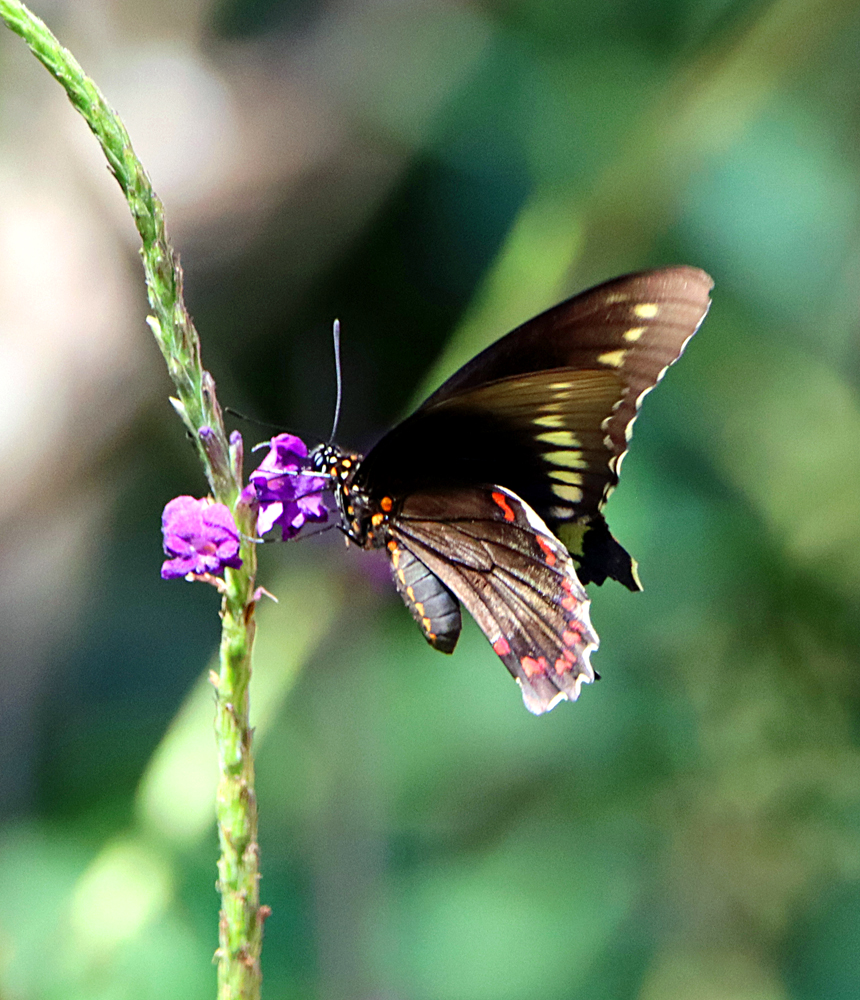
I see many more of these large butterflies during the rainy season, but the other day this one was flitting about the different flowers in my garden in spite of the wind! He has to eat, windy or not! 🙂
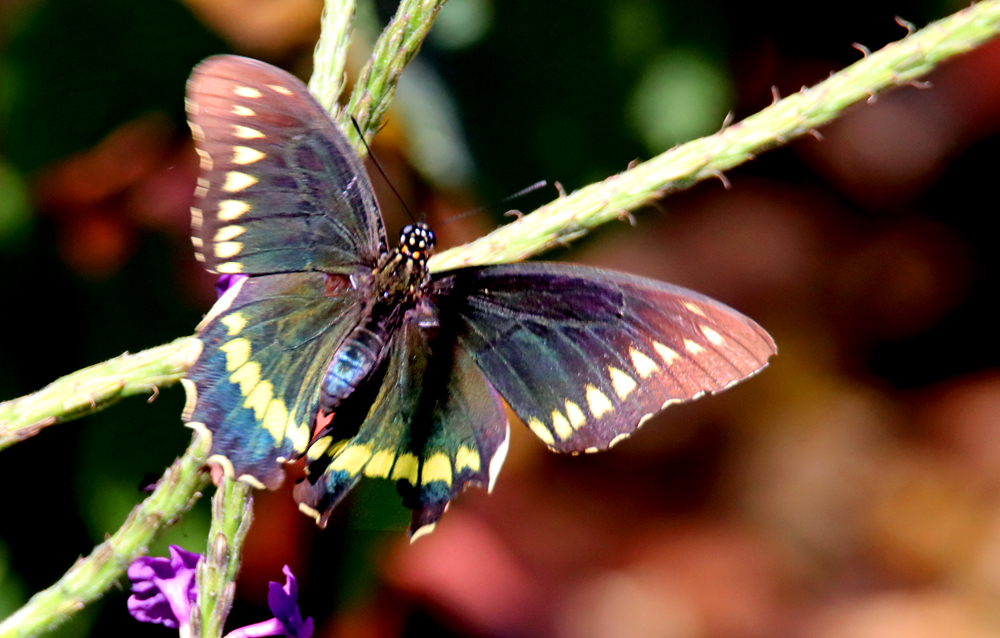
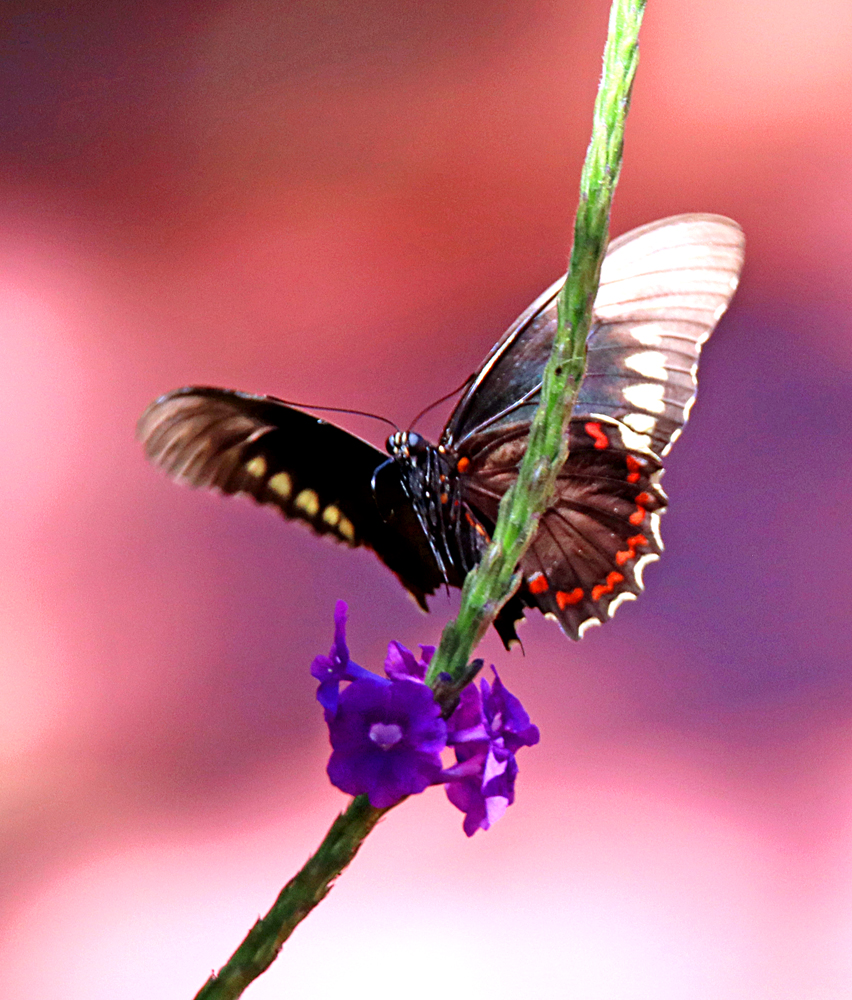
Check out my other shots of this species in my Polydamas Swallowtail GALLERY.
¡Pura Vida!