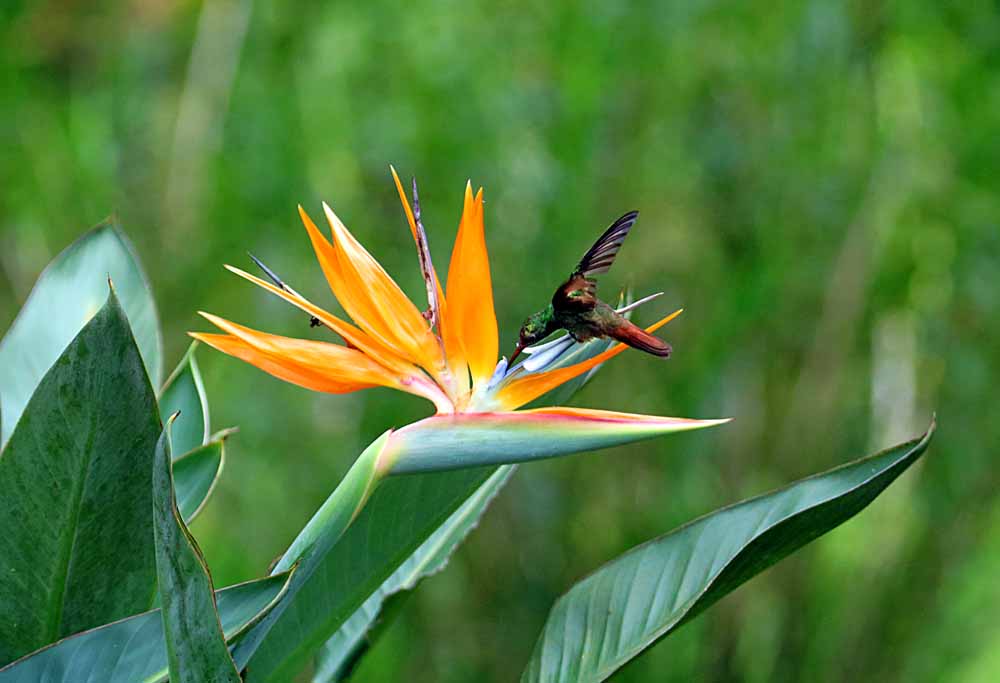
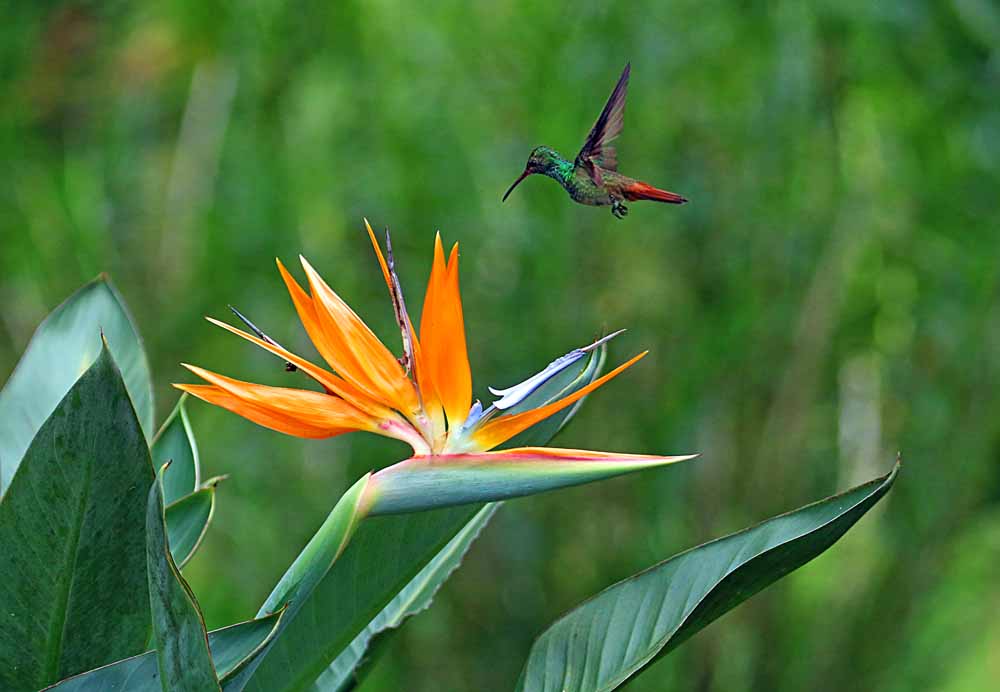
It is probably not unusual, but it was my first time to see a bird eating from a Bird of Paradise Flower, in this case a Rufous-tailed Hummingbird (linked to my Rufous-tailed Gallery). It was before breakfast this morning near the end of our birding hike as we walked through some of the lodge gardens on our way to the restaurant.
Hummingbird Eating from a Bird of Paradise Flower, Arenal Observatory Lodge, Costa Rica.Hummingbird about to eat from a Bird of Paradise Flower, Arenal Observatory Lodge, Costa Rica.
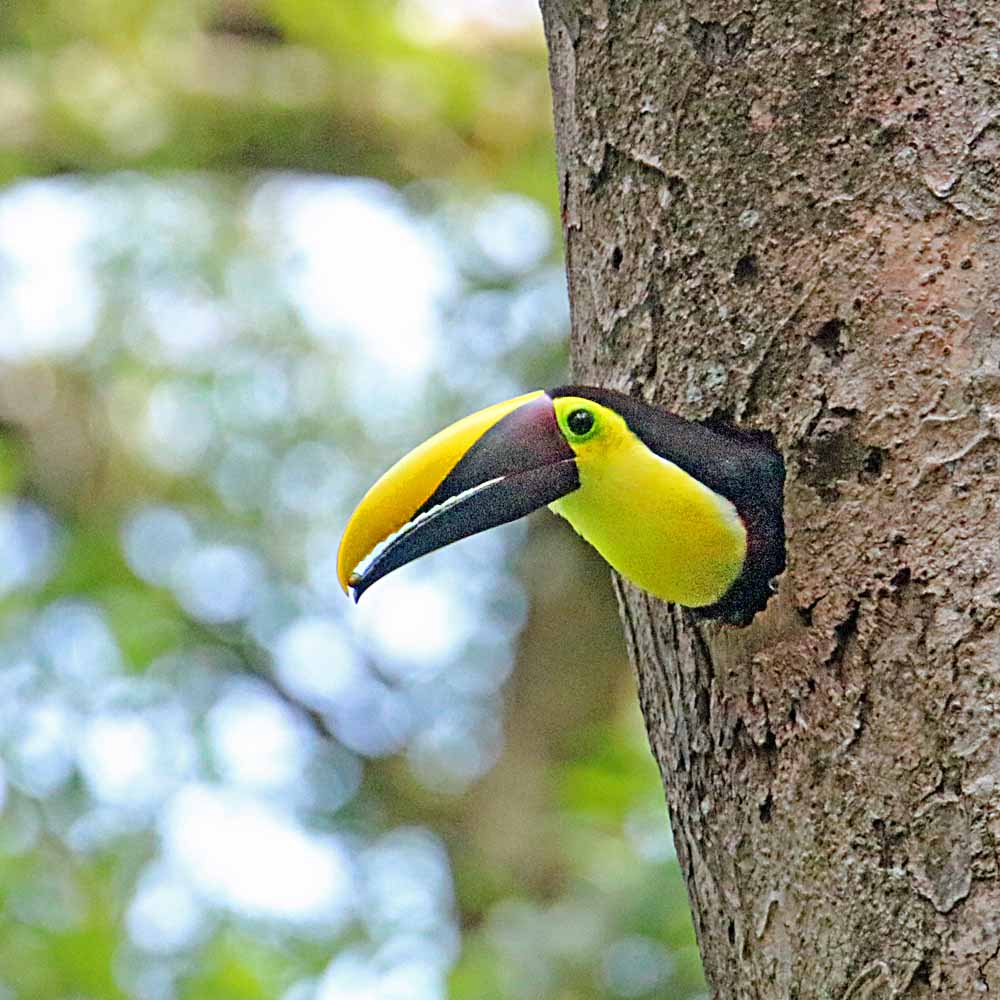
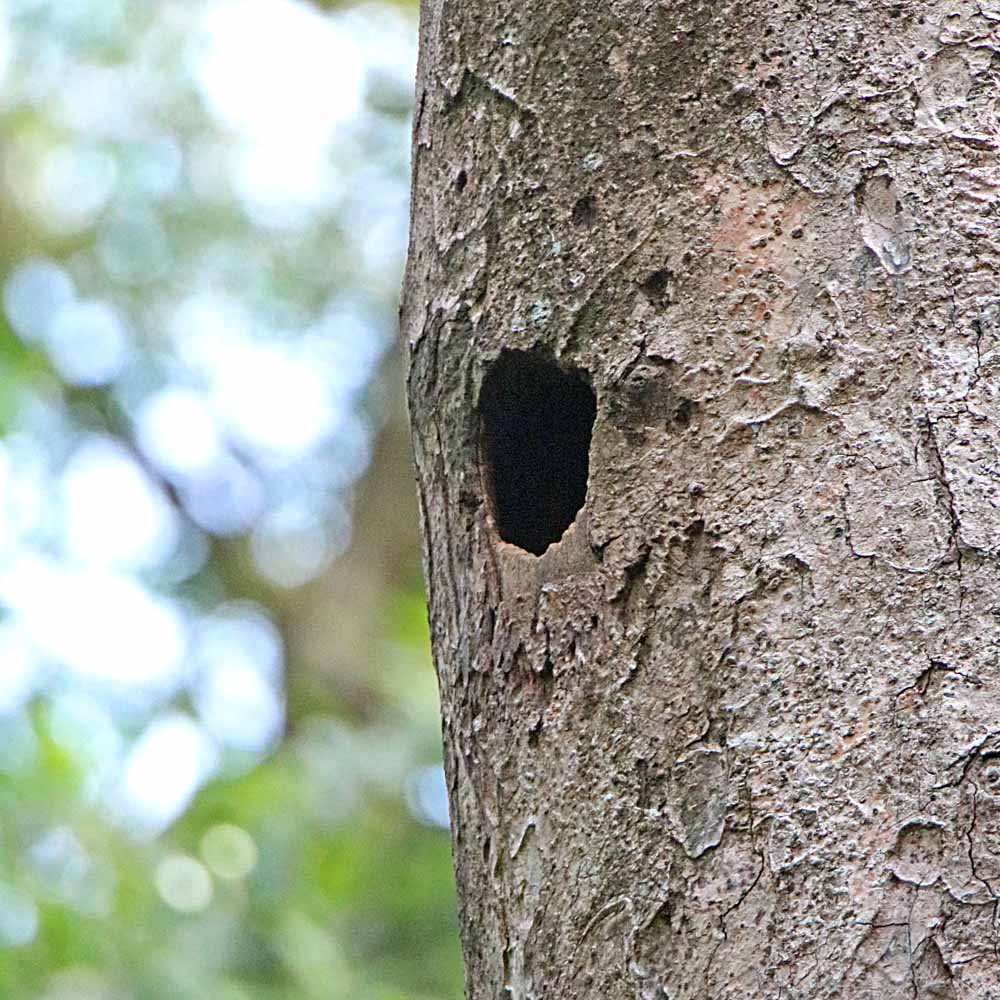
At least in this area, it is the time that most of the birds are nesting, meaning a different kind of bird activity. The feature shot at top is of a Yellow-throated Toucan coming out of her nest with a berry or seed in her beak. Below you can see a shot of how small the hole is that both the male and female squeeze through. I guess their beak determines the size of the whole, usually a remade or enlarged woodpecker hole. 🙂
And in the spirit of nesting season, there’s also a shot of an unidentified bird on her nest and a hummingbird nest. All this reproduction activity is an important part of the ecology of the rainforest that seems to be coming at the beginning of the rainy season.
The toucan nest hole seems to be just barely large enough for them to get their beaks through! 🙂Continue reading “Nesting Time!”
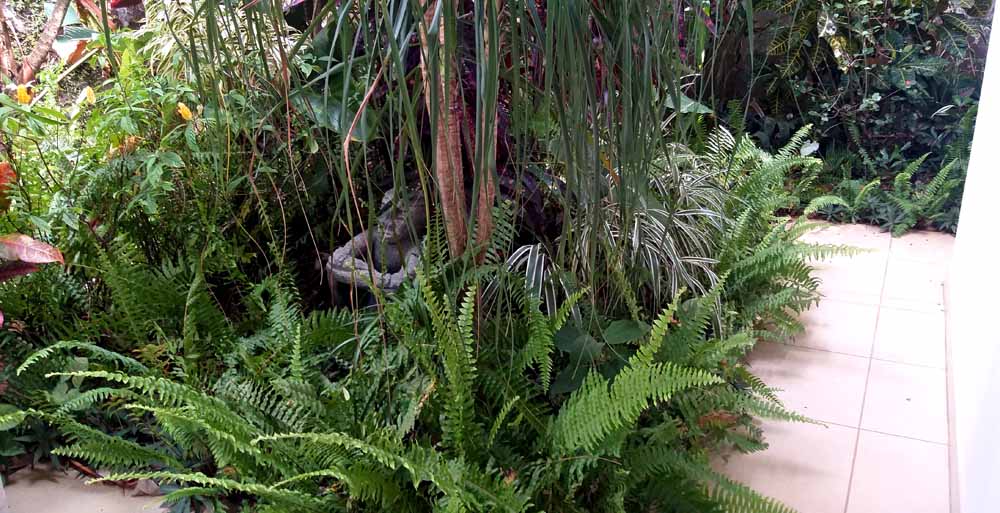
This morning my usual transportation of Walter Ramirez Tours and Taxis is taking me away from my home “garden” or “mini-jungle,” featured above, to one of my favorite forest getaways for 5 nights . . .
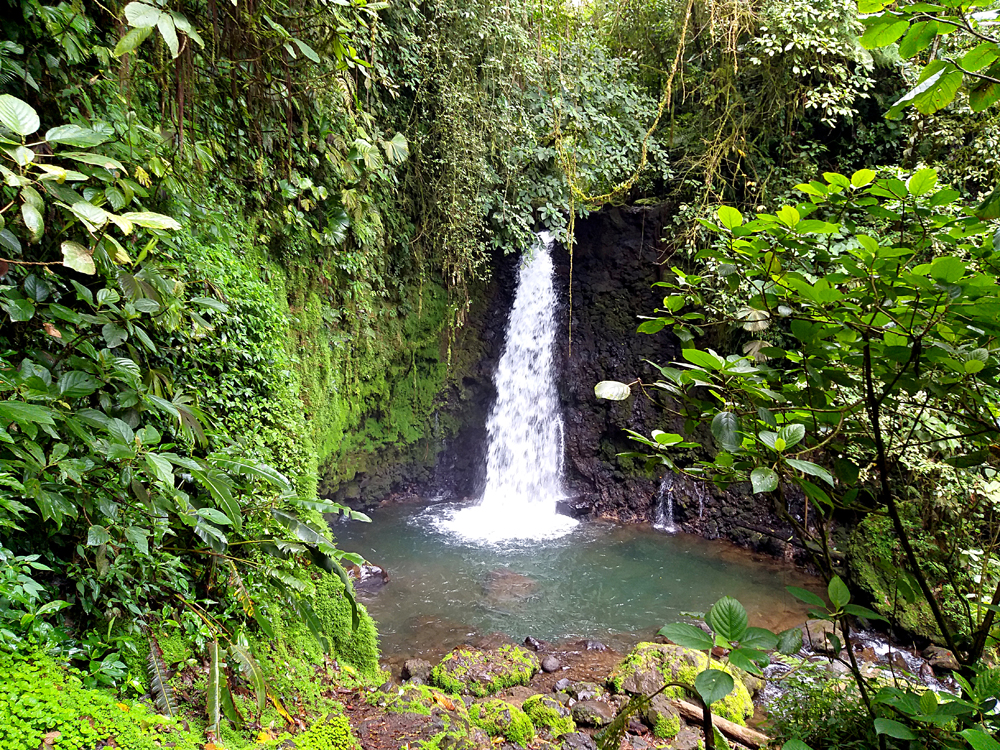
Arenal Observatory Lodge, the only hotel inside the Arenal Volcano National Park, where I will spend 5 days hiking the trails of a forest with a great variety of plants and animals! Tree Ferns to Toucans and more!
Below are four shots of my little mini-rainforest garden in Atenas that I am proud of and in which I photograph much for this blog! Then following that, another 4-shot gallery from my last trip to the Observatory in 2022. I chose to go in May this year because that is the month I got good sunset photos over Lake Arenal in 2018 and my most monkey shots that year, though anytime is a good time to visit Arenal Observatory Lodge! (lodge website link) 🙂 Looking forward to just being there!
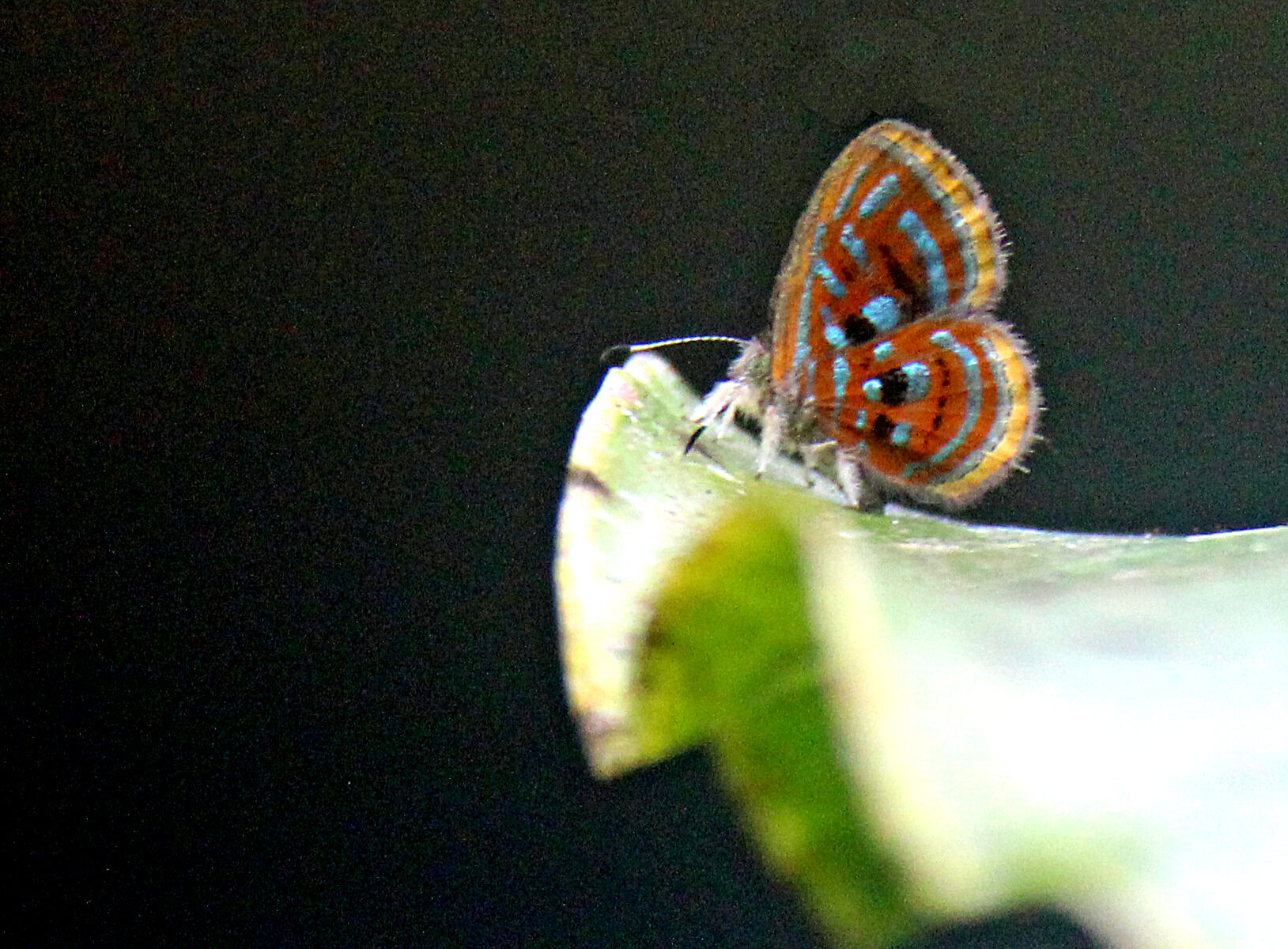
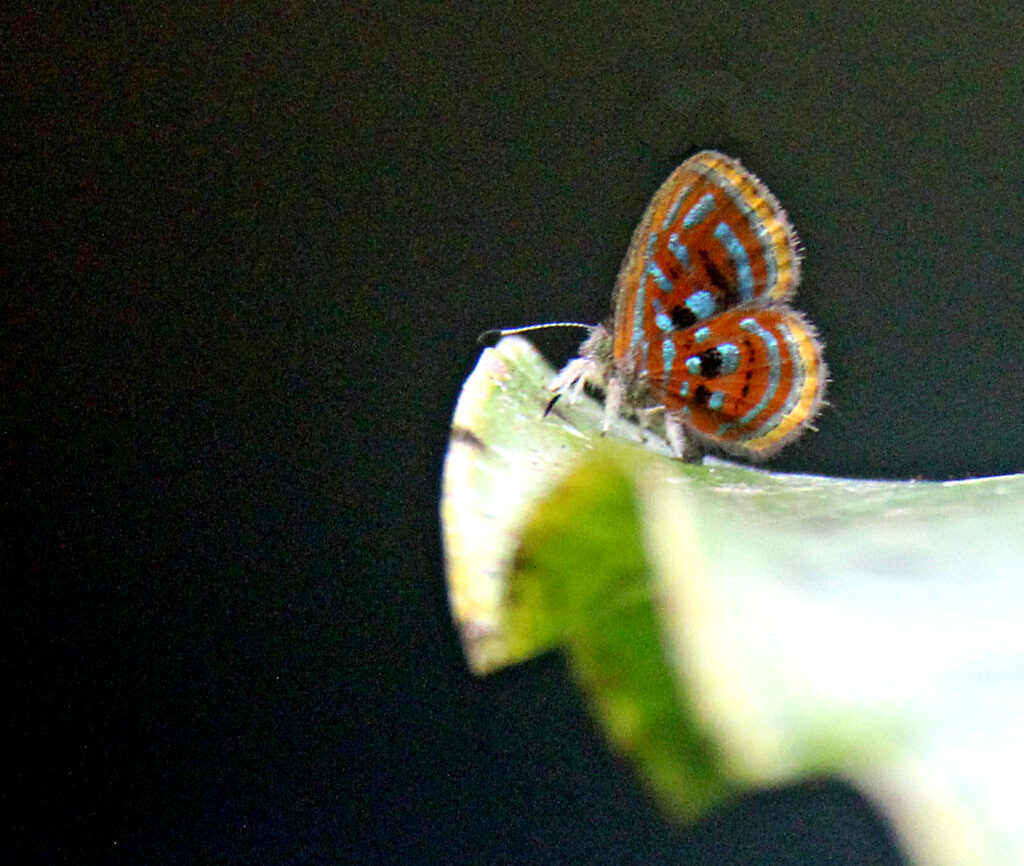
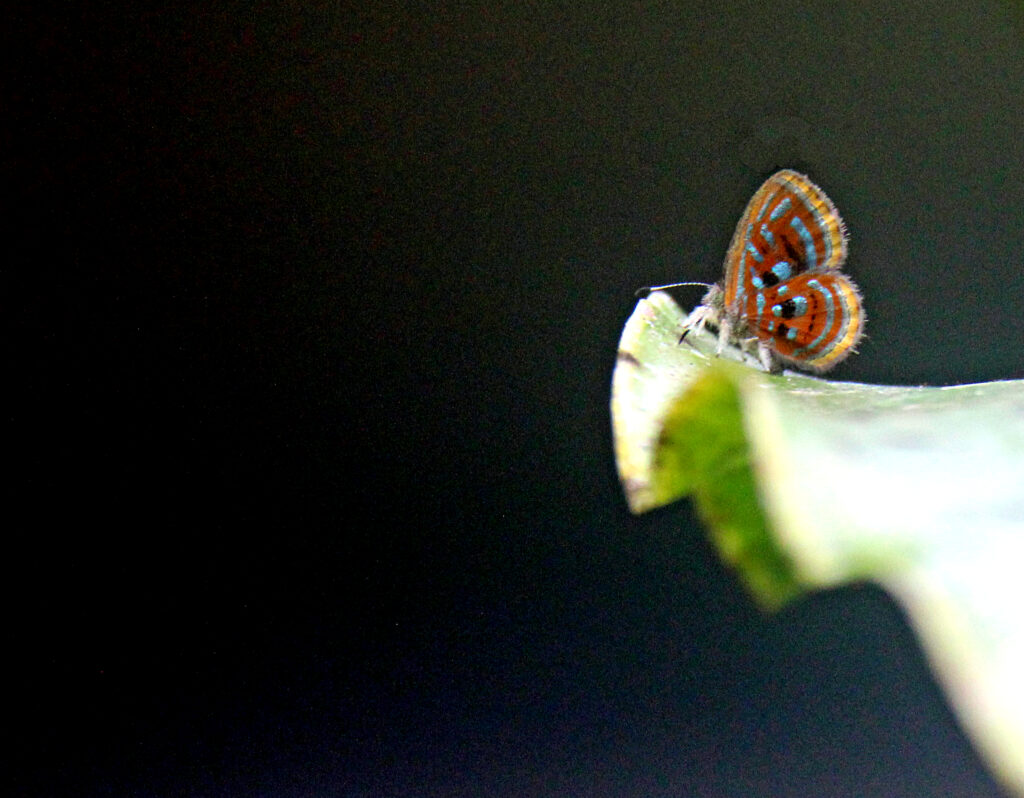
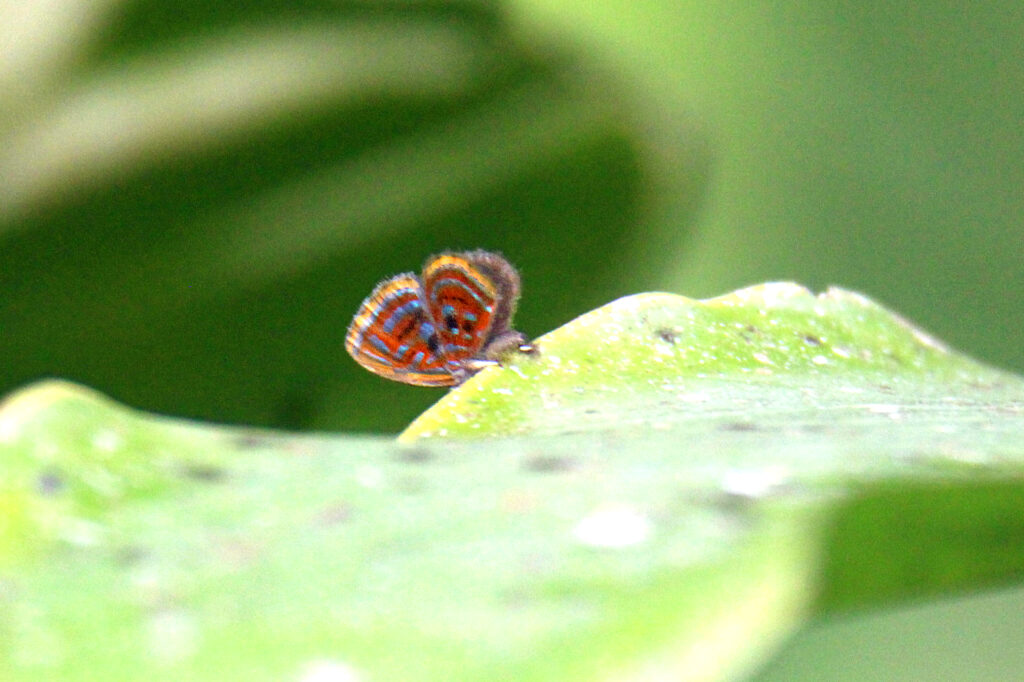
Two years ago, in May 2022, I did a first time trip to a new lodge for me that a friend recommended, Chachagua Rainforest Hotel (link to my trip gallery) and I got a lot of bird photos and quite a few butterflies, two of which are still unidentified. BUT, one of those I identified then was misidentified, and for that I apologize! I first called it a Western Pygmy (blog post link). In retrospect, there is no excuse, but what caused it was that because it was a tiny little fingernail-sized butterfly, I assumed (a dangerous word!) that it was one of the many in the family Lycaenidae or Gossamer-Wings butterflies because all of them are very tiny like this one. Bad assumption as I have now learned that there are tiny ones in all of the families and this one is actually in the Riodinidae or Metalmarks family! It is a Simple Sarota (my species gallery link) or the scientific name Sarota acantus (butterfliesandmoths link where only two of us have submitted photos). 🙂 So I re-submit with the correct name!
Simple Sarota, Chachagua Rainforest Hotel, San Ramon Canton, Alajuela, Costa RicaSimple Sarota, Chachagua Rainforest Hotel, San Ramon Canton, Alajuela, Costa RicaSimple Sarota, Chachagua Rainforest Hotel, San Ramon Canton, Alajuela, Costa Rica
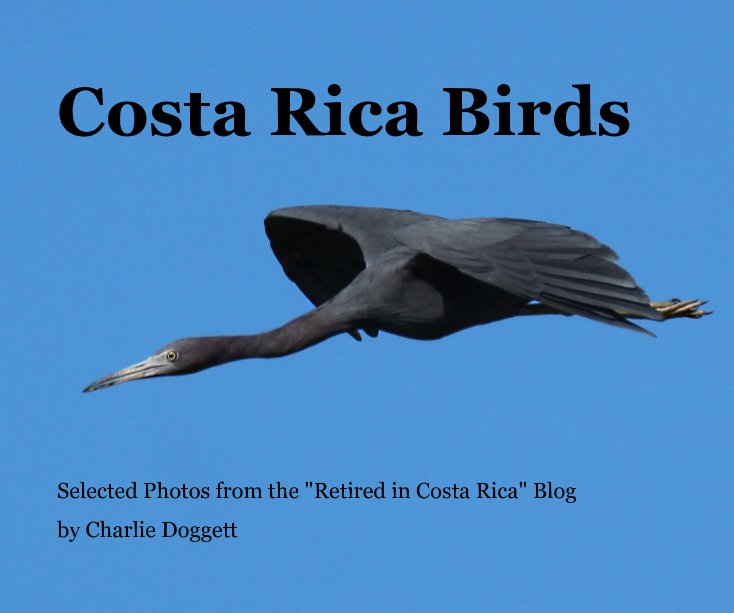
CLICK this front cover image to see a free preview of all pages!
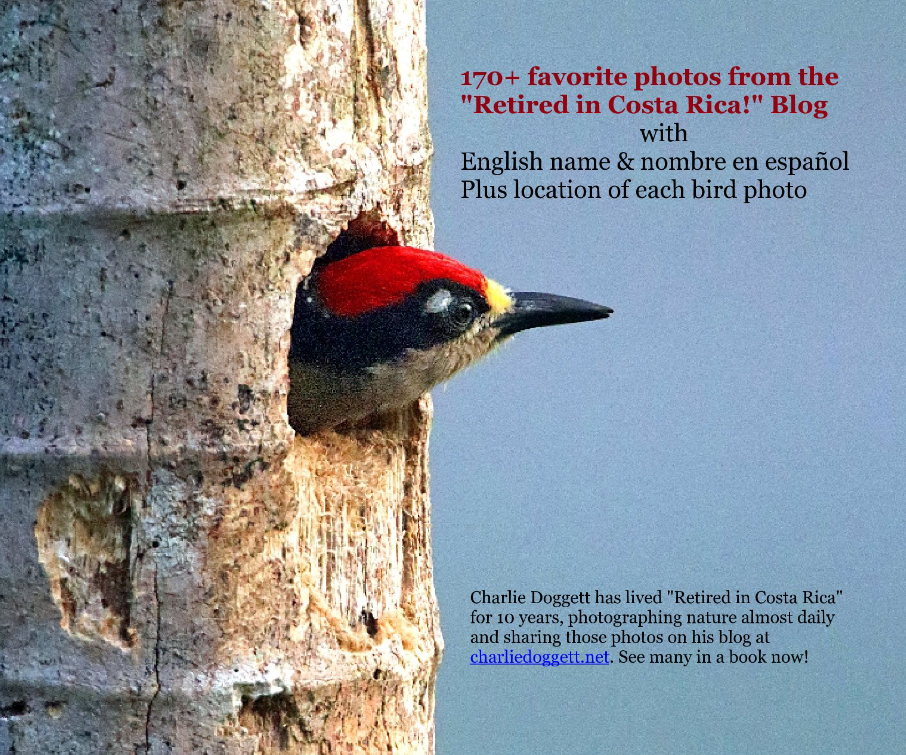
To celebrate what will be 10 years of living in Costa Rica come December, I decided to publish a coffee table book of my favorite bird photos that turned out to be a lot! 174 photos! Each includes both the English and Spanish common names of that bird plus the location where I photographed it. Whether a birder or a lover of “Nature As Art,” I think you will like this 86 page photo book printed on premium matte paper. It might even become a collector’s item some day! 🙂 It will definitely become the book that I gift to the birding lodges I visit over the next year or two! 🙂
Two were photographed at Villa Lapas and one in the Carara Park, but both are a part of the same transitional rainforest in the lowlands of Rio Tarcoles, along the Pacific Coast, just an hour’s drive from where I live in Atenas.
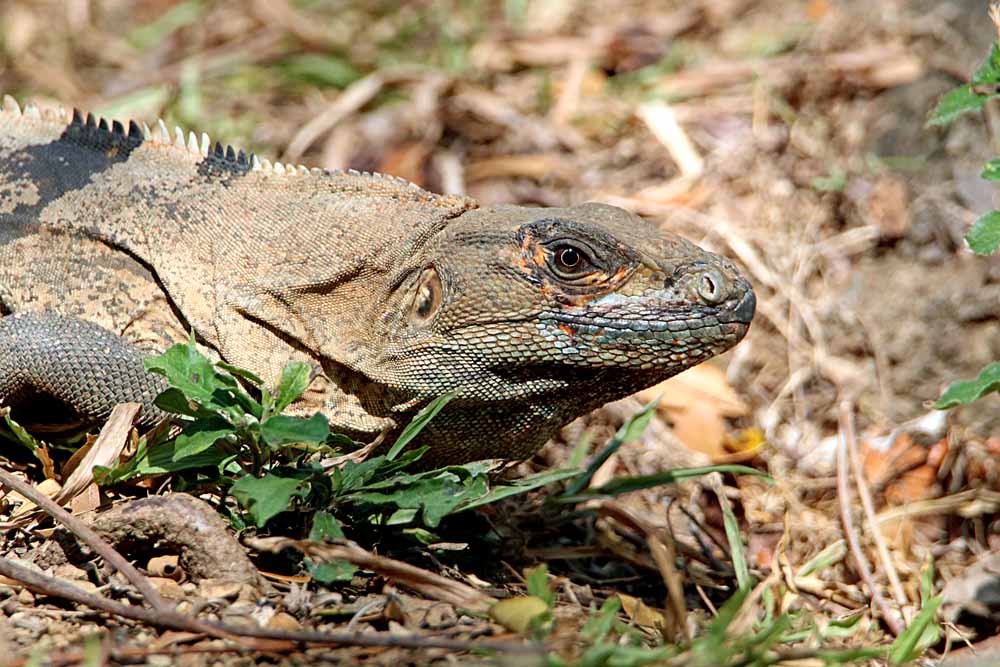
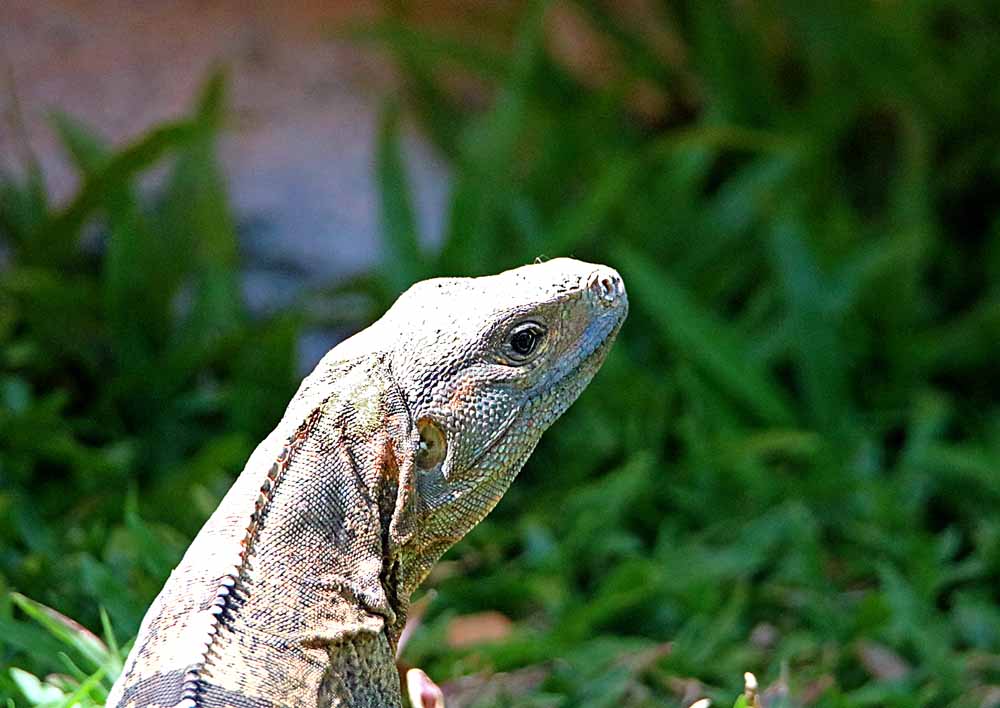
Without a doubt, the most frequently seen wildlife at Hotel Villa Lapas in Tarcoles was the Black Spiny-tailed Iguana, Ctenosaura similis (Wikipedia link) that lives only on the Pacific Slopes of Costa Rica (for reasons I know not), while the Green Iguana can be seen on both slopes, but more so on the Caribbean slope. Just two photos here, but I already have the Iguana Gallery for Villa Lapas ready where you can see more or even more in my CR Black Spiny-tail Iguana Gallery.
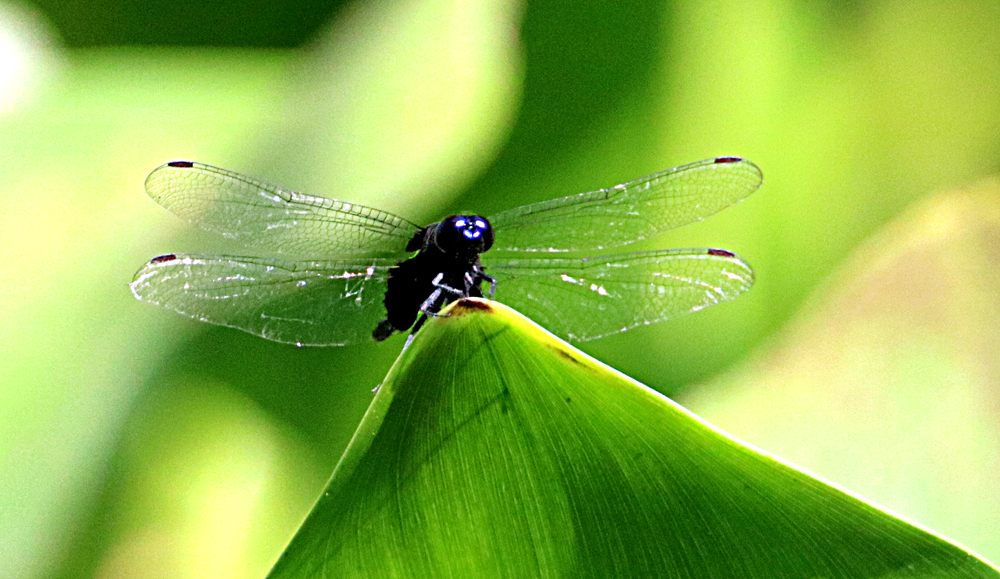
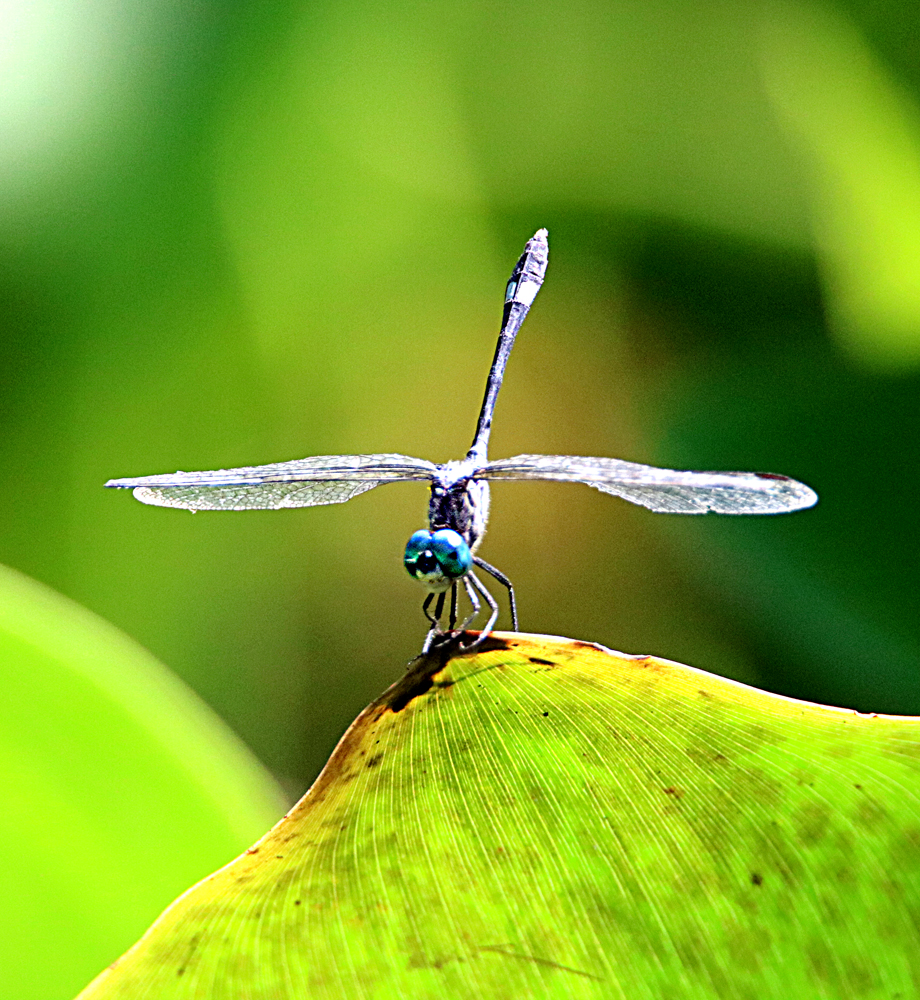
The two most numerous wildlife at Villa Lapas this first afternoon in my camera were iguanas and dragonflies and I decided to share photos of 2 of the many dragonflies on the water lily pond in front of their colonial chapel in the jungle village across from my room. I left my dragonflies book at home, so no IDs on these yet! 🙂
Unidentified Dragonfly, Villa Lapas, Tarcoles, Puntarenas, Costa RicaUnidentified Dragonfly, Villa Lapas, Tarcoles, Puntarenas, Costa Rica
In the morning I do their “Early Bird Walk” before breakfast and their“Sky Way Tour” after breakfast. Then tomorrow night I do their“Night Walk” and hope for a good frog photo! So I should know tomorrow if I like the “new” Villa Lapas (changed a lot in 9 years). The afternoons are too hot & humid here (closer to coast) to do much of anything! Finally, Wednesday morning I’ve decided I will do their “Jungle River Wagon Tour” to get the whole picture of this changing resort and then I will go home after that and give you my final evaluation later. 🙂
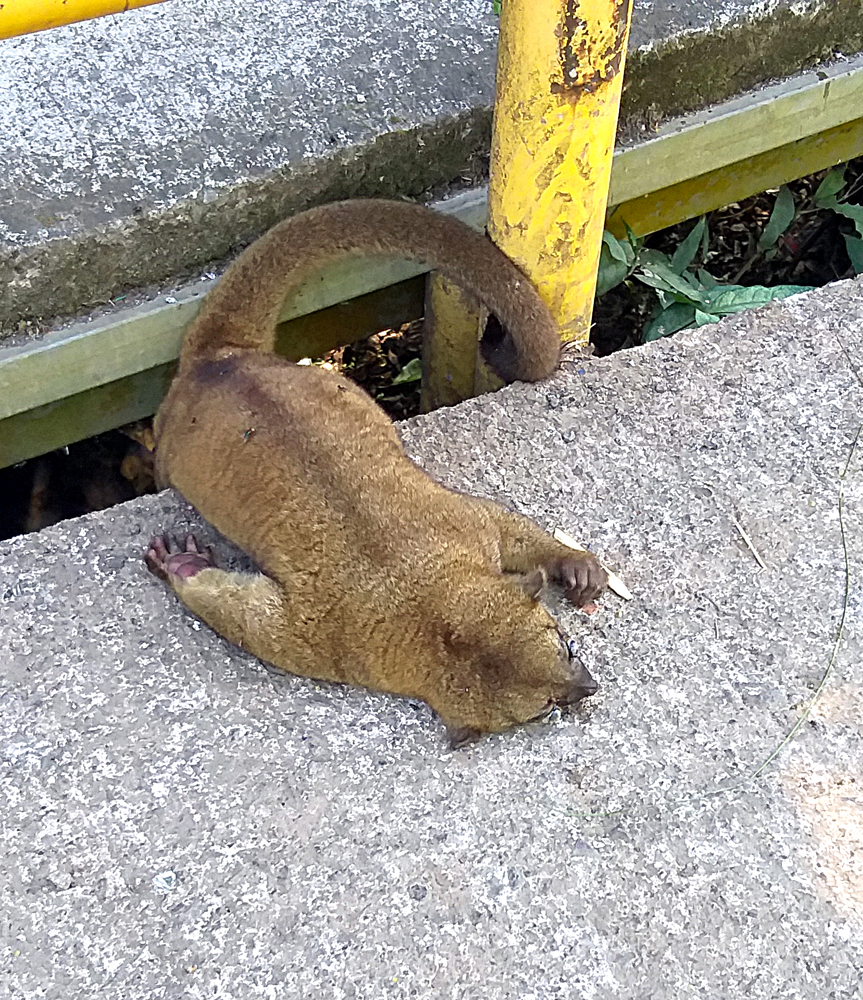
Warning! The second photo is graphic! The Kinkajou is the size of some smaller monkeys (but unrelated) and has a prehensile tail with which he hangs from tree limbs when harvesting fruit. They look similar to the smaller Olingo (but again unrelated). They are found in lowland forests in Central & South America and are nocturnal.
He/she was probably hit by a car in the night. I photographed on the bridge over a small stream on Avenida 8 just outside the Roca Verde main gate on a walk to town. It saddens me that humans continue to remove the forests and trees that keep such unique animals alive. I have never seen one alive in the wild but of course that is partly because they are nocturnal and I am not! :-) Just one more of the thousands of unique species found here in Costa Rica. ¡Pura vida!
I am immensely grateful for each and every one of you who read my blog regularly, occasionally or just look at the photos! My site host reports more that 2,000+ “hits” online at my website/blog every month! 🙂 And that doesn’t count many of the 500+ subscribers who only look at the email version nor most of the 650 Facebook Friends who look at the one feature photo without clicking the the link to the post!
I also appreciate the hundreds of comments left on the posts monthly and many “contacts” or messages through my contact page or by email. Just yesterday I responded to a man in England with questions about photographing wildlife at Esquinas Rainforest Lodge and a friend in the States commented with a meaningful Bible verse about my post yesterday on hugging the 800 year old tree. Nature is fun! :-) And you who read or just look at the pictures are the ones who make it fun for me! :-) THANKS! Keep reading or looking at the pix! And click the gallery links for more pix!
As usual, I’m ending the year with 12 photos from this year, equaling one per month but not literally from each month, since some months have weaker or fewer photos. Nor are these necessarily my top 12 favorite photos from this year, but are representative 2023 photos from “Retired in Costa Rica” this year, with birds and butterflies obviously being two favorite subjects again! :-) One shot here for the email version and eleven more online with a quick click below of “Read More”!