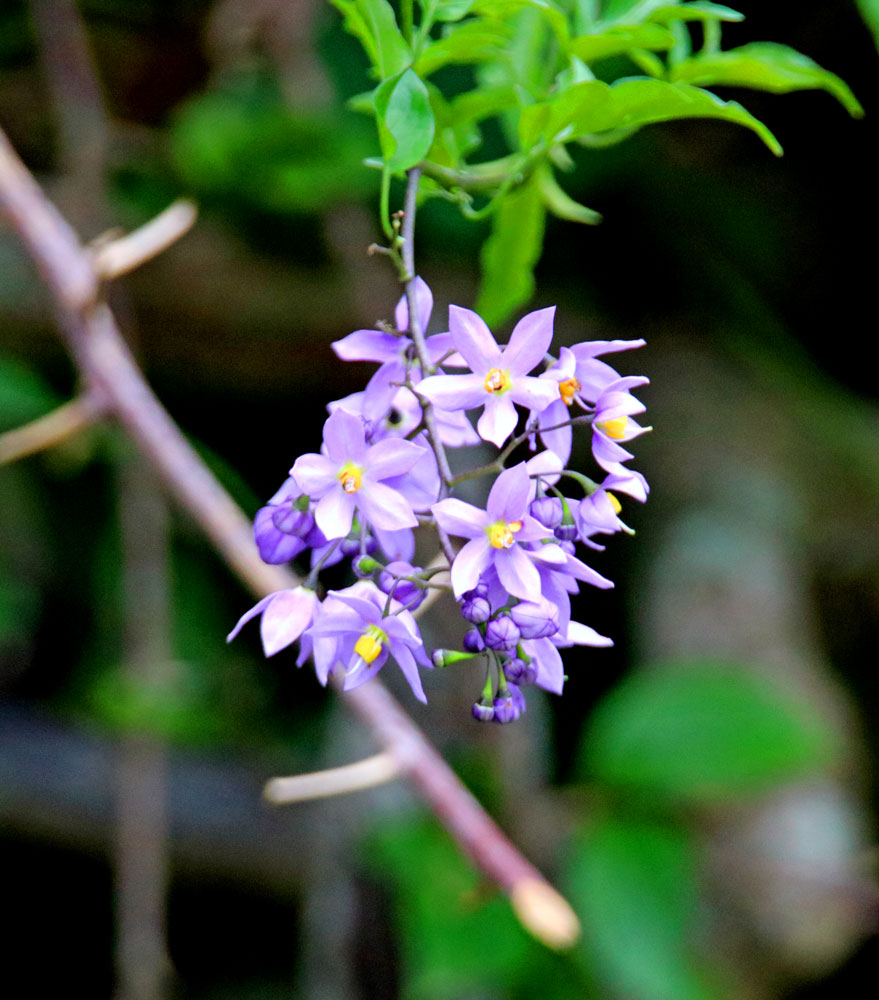
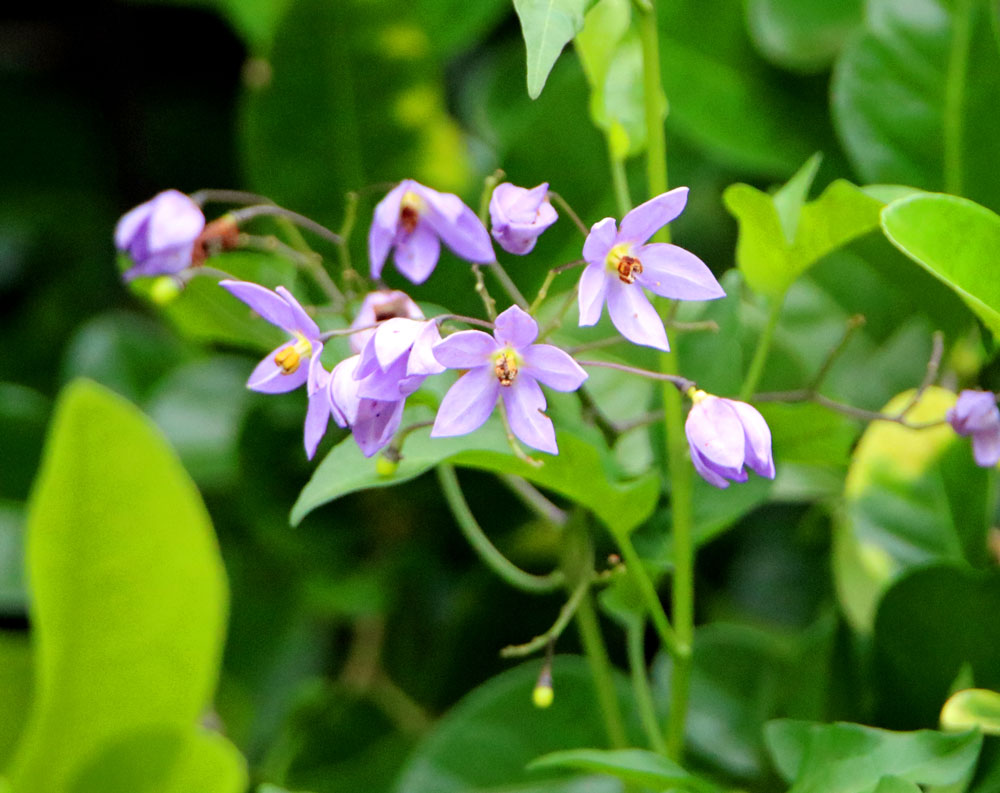
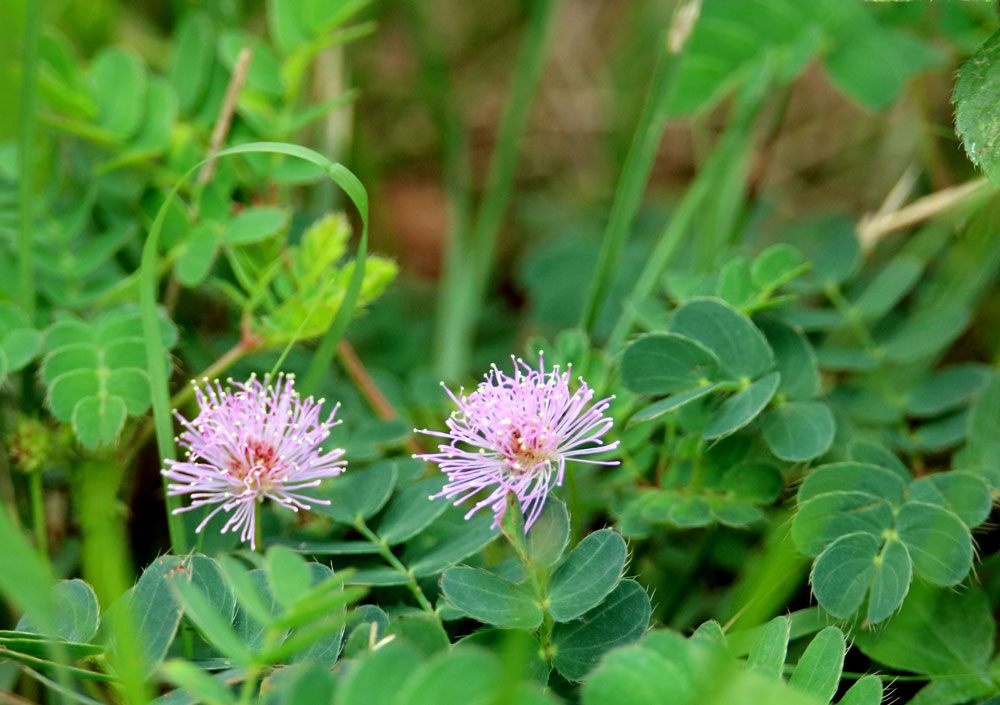
I snapped this vine flower with my cellphone while walking down a Roca Verde street. It was growing on the side of the street on the edge of someone’s property, possibly growing wild. iNaturalist AI tells me it is Brazilian Nightshade – Solanum seaforthianum (linked to a Wikipedia article). If you keep your eyes open and scanning around, there are “little treasures” to find almost anywhere you walk here. 🙂
Brazilian Nightshade, Atenas, Alajuela, Costa Rica
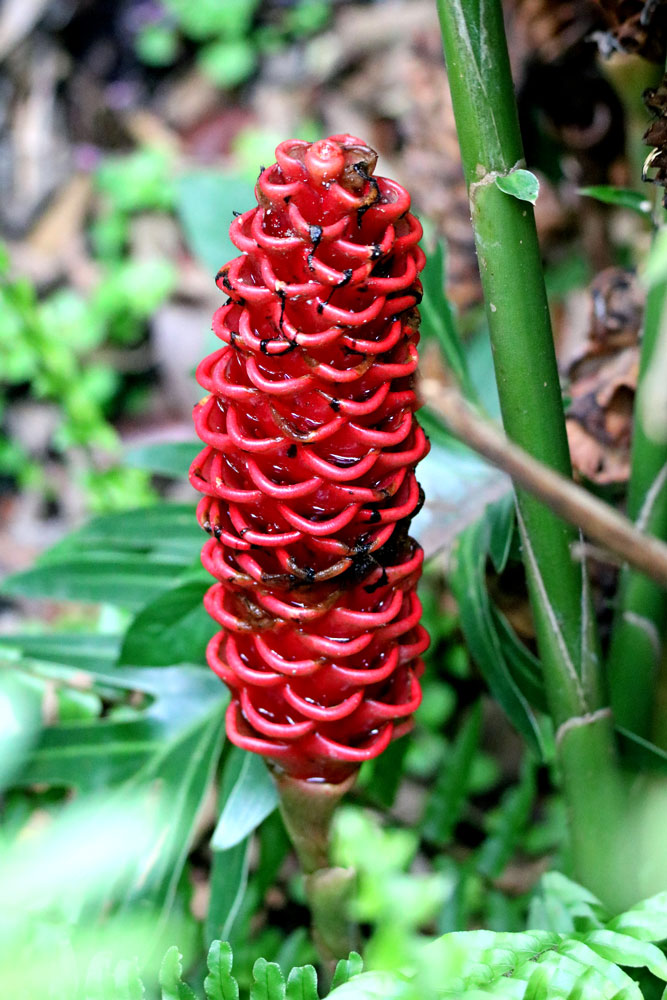
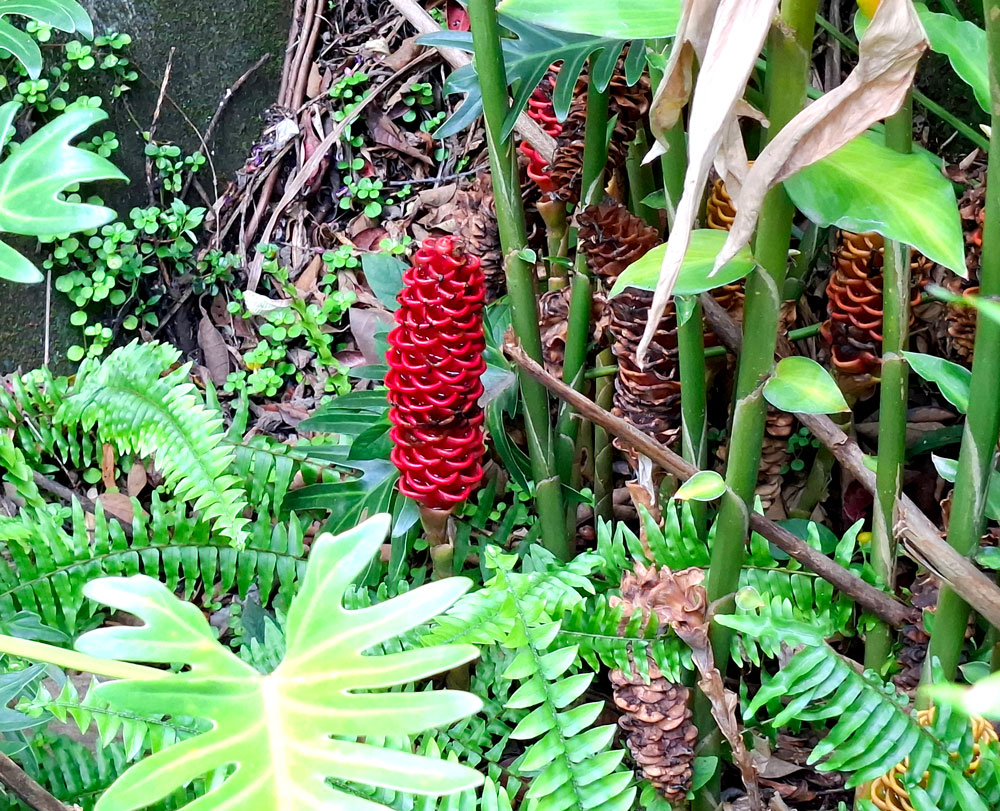
I grow two groups of Maraca or Shampoo Ginger (Zingiber zerumbet) (My gallery link). The ones on the west side of my house by the Higueron Tree usually start yellow and turn orange and at a different time of year than these in my “Jungle Garden” on the south side of my casita which usually stay yellow during their 3 months plus of blooming, with some hints of orange. But this year on a south side one has turned a deep red as shown in the feature photo above. I have been cutting the tall plants back to give more sun to ground plants and the more sun might be the reason, though I don’t know for sure. Tropical plants are just as interesting to watch and photograph as much of the wildlife that I usually focus on.
I first experienced this interesting tropical flower on a jungle trip to Mayan ruins in Guatemala in 2006 December – Guatemala where this plant grew right outside my jungle room at Chiminos Lodge. Tropical adventures always include tropical plants! 🙂
Maraca or Shampoo Ginger, Atenas, Alajuela, Costa Rica
And two more photos showing the usual yellow and some orange ones . . .
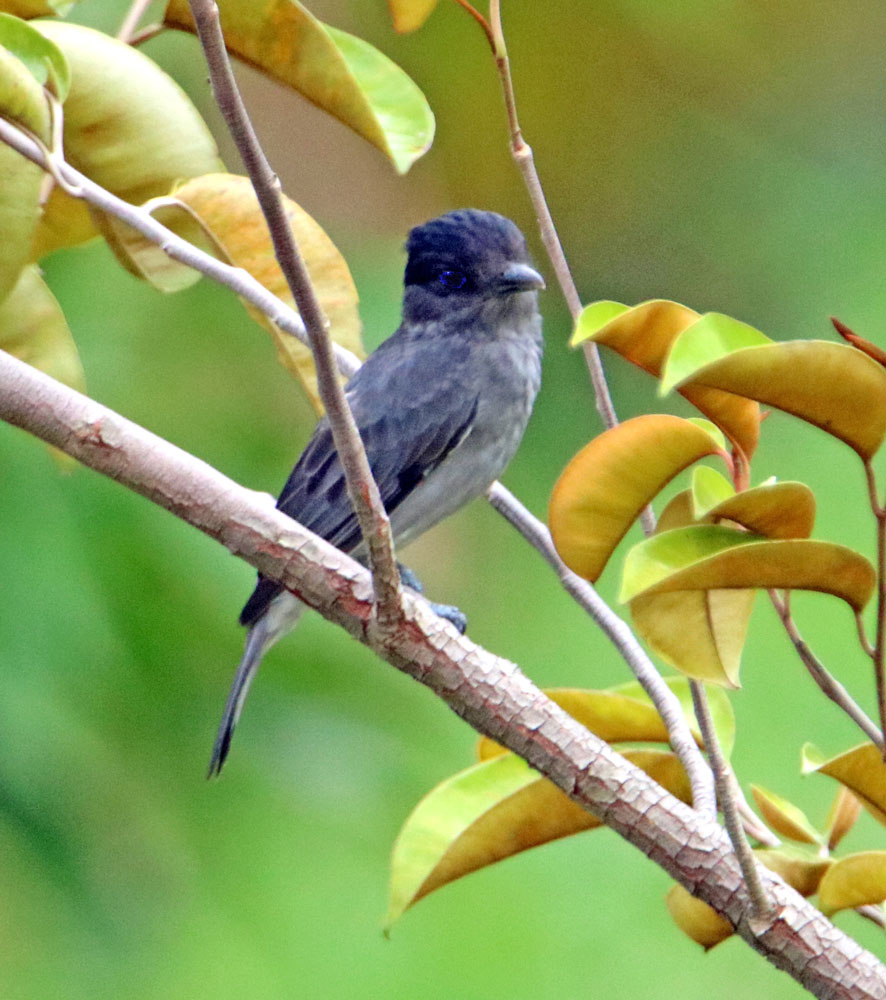
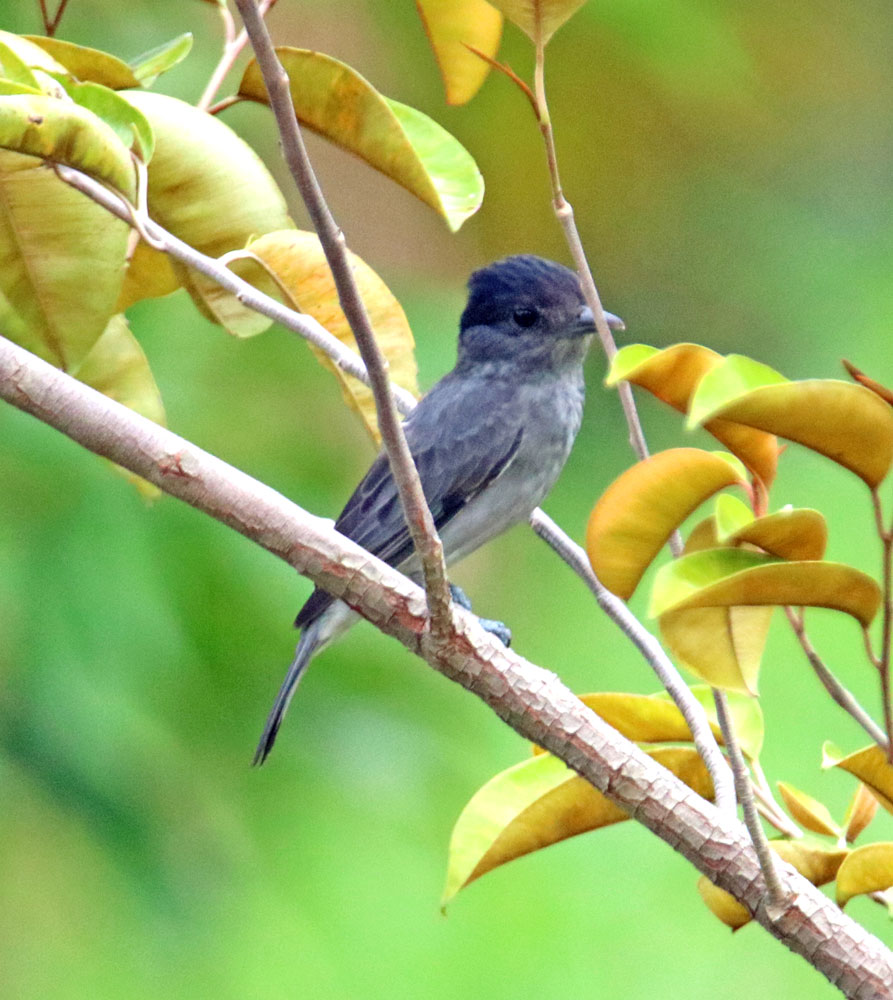
This is a young male Rose-throated Becard (my gallery link) whose throat has not turned rose colored yet and iNat says that some in the rainforest never get the rosy-pink throat. The female is overall reddish brown as you can see in my above-linked gallery. This one landed in a neighbor’s tree for a minute or so, then flew off. I don’t see them very often. They are found from Southern Arizona & Texas south to Panama, so mostly Central American. Read more on eBird.
Rose-throated Becard, Atenas, Alajuela, Costa Rica
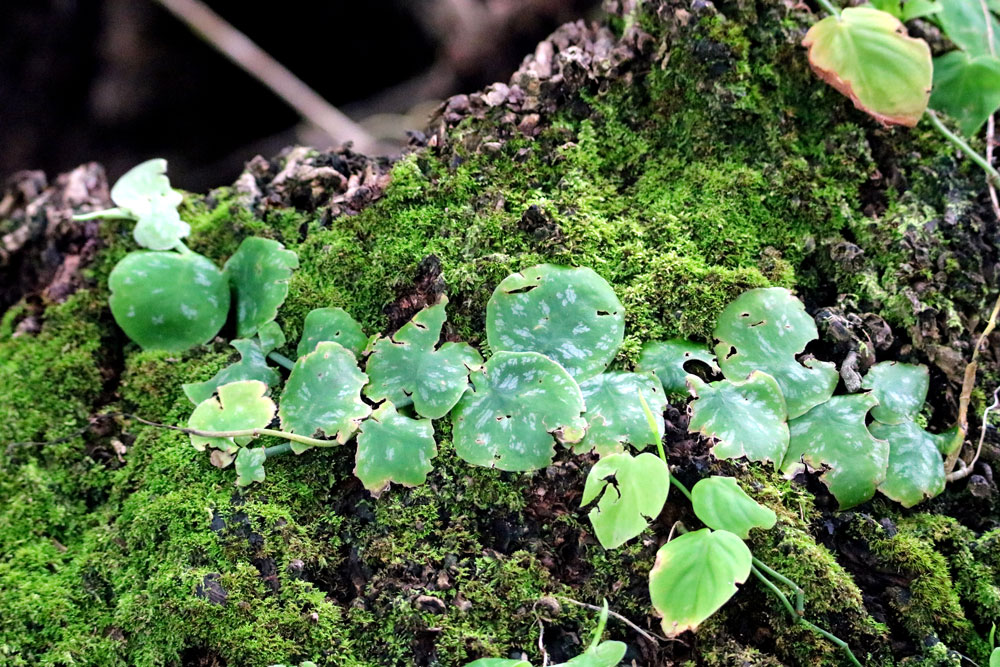
Is not really that “giant” in size like its cousin, Monstera Deliciosa, but rather has leaves that mostly grow flat against the trunk of a tree and sometimes, as in this photo, on top of moss. This Giant Monstera – Monstera tuberculata (Wikipedia article) was growing on a tree in the Gandoca-Manzanillo Wildlife Refuge in the South Caribbean area of Limón Province of Costa Rica on my recent trip there.
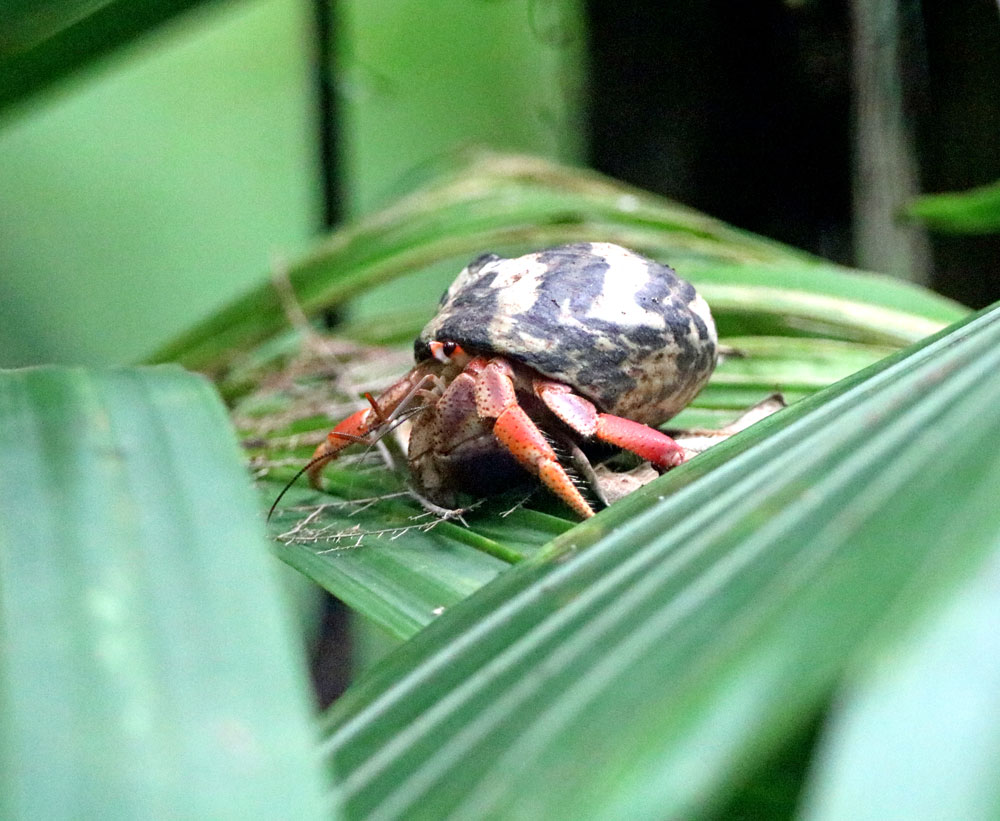
“The Caribbean Land Hermit Crab (Coenobita clypeatus), also known as the soldier crab, West Atlantic crab, tree crab, or purple pincher (due to the distinctive purple claw), is a species of land hermit crab…” ~iNaturalist,
And on iNaturalist Cost Rica they have been reported only from the South Caribbean area of Limón Province where I visited recently.
For several different species of crabs, see my gallery: CRUSTACEANS CR (linked).
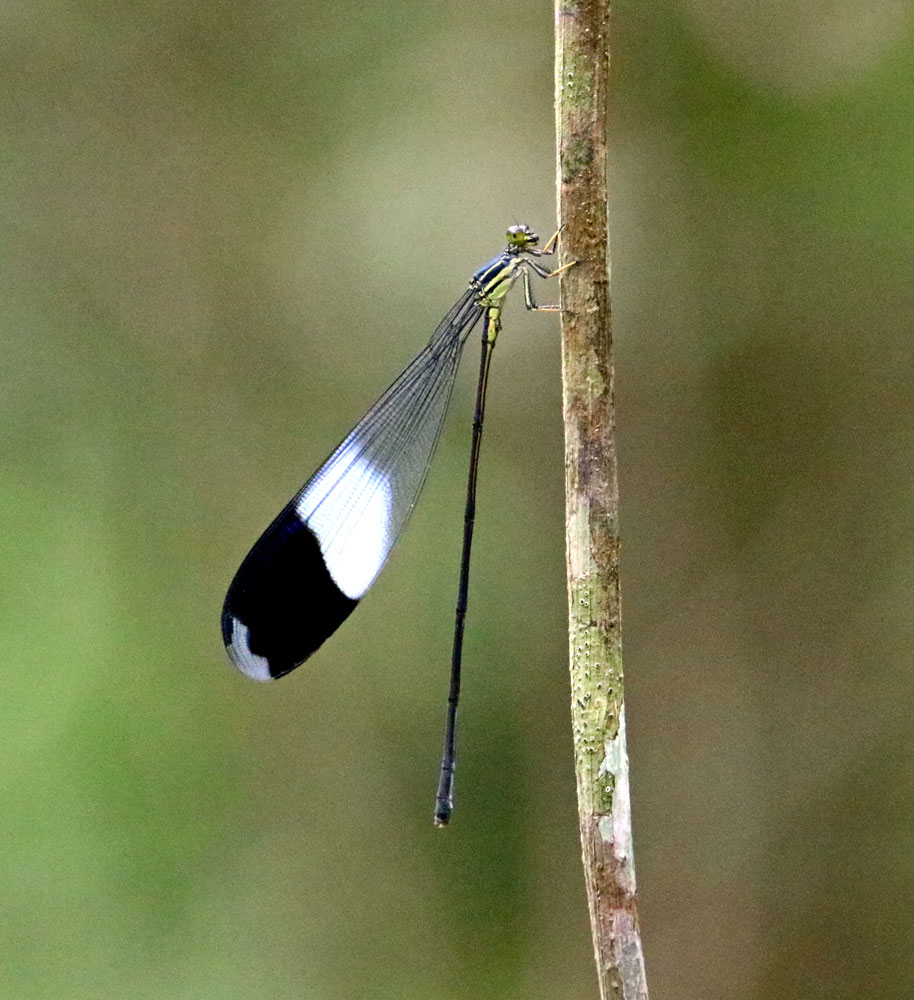
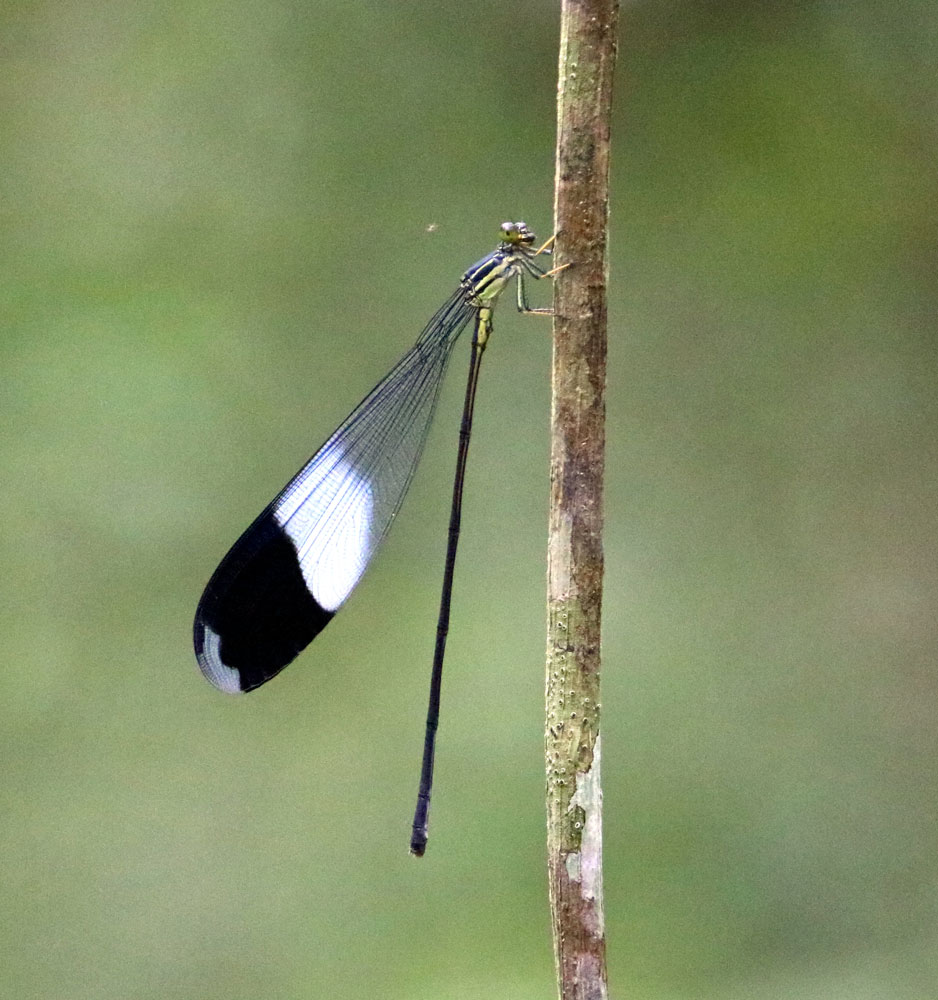
This is a “lifer” or first time seen damselfly for me! It was alongside one of the trails in Gandoca-Manzanillo Wildlife Refuge, Manzanillo, Limón, Cost Rica week-before-last. It is more striking or noticeable in a thick forest like that than a lot of the dragon & damselflies. Again, you never know when nor where you will see what, but I thank God for each new nature experience wherever I am! 🙂
Blue-winged Helicopter Damselfly, Gandoca-Manzanillo Wildlife Refuge, Manzanillo, Limón, Costa Rica
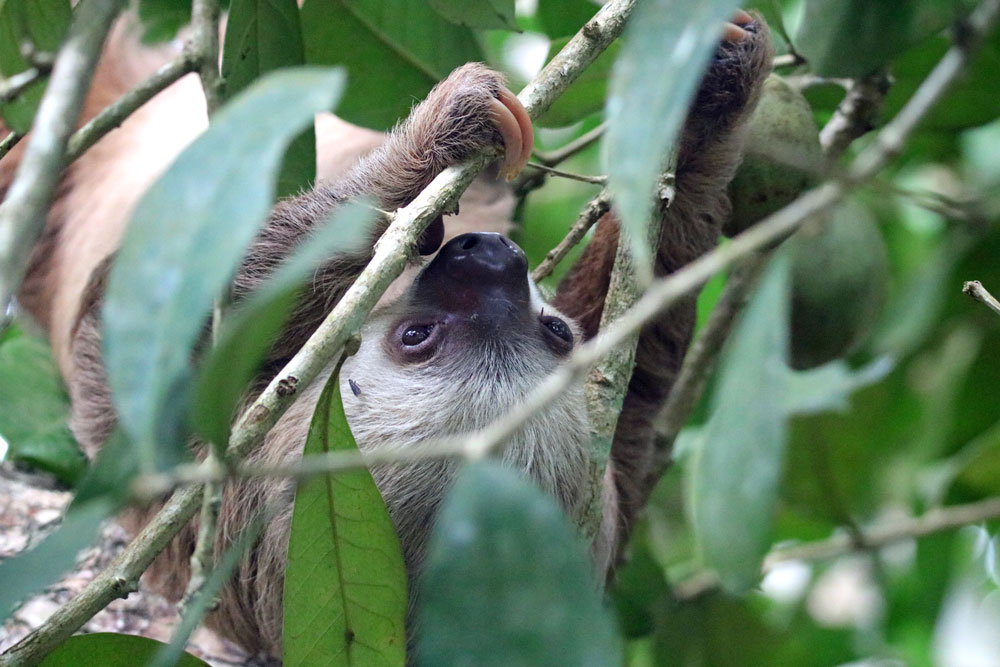
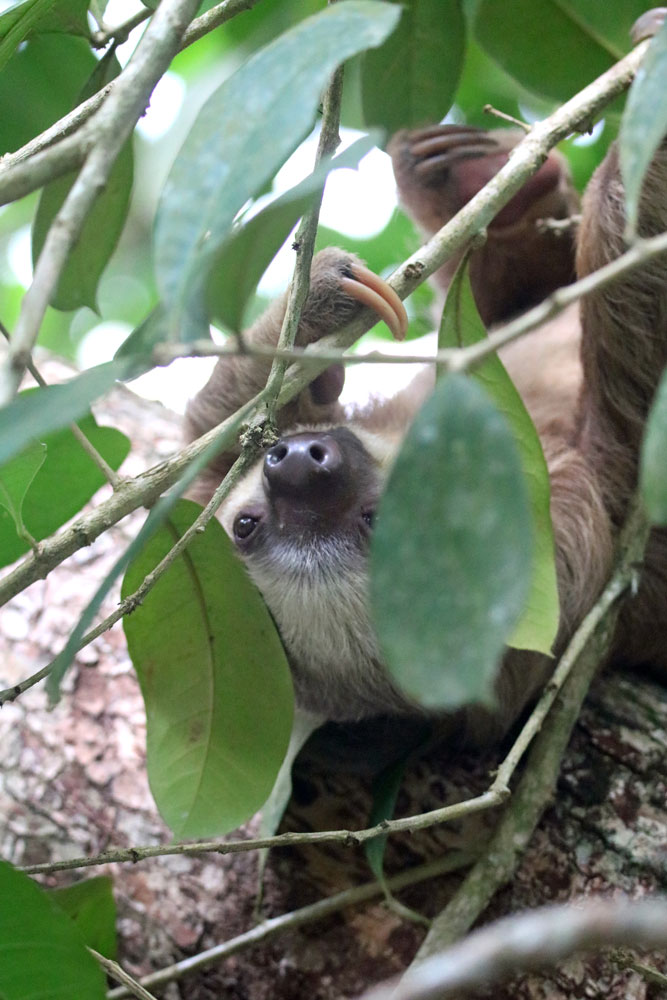
It has been a while since I’ve photographed a sloth and this one was at Gandoca-Manzanillo Wildlife Refuge, Manzanillo, Limón, Costa Rica on this year’s South Caribe trip, at eye-level on a very leafy tree as we were exiting the park. You never know when or where you will see the next wildlife photo op! 🙂 To see more of my sloth photos, go to the galleries: Sloth, Hoffman’s Two-toed and Sloth, Brown-throated Three-toed (linked). And note that I embarrassed myself, not only with the wrong ID in the first edition of this post, but on iNat where two people told me it was 2-toed and I said back, “count them in the photos.” Wellllll . . . I just learned that the 2-toed is thus on front but has 3-toes on the back, which now I see is obvious in this particular photo. I’m red-faced!
Brown-throated Three-toed Sloth, Gandoca-Manzanillo Wildlife Refuge, Manzanillo, Limón, Costa Rica
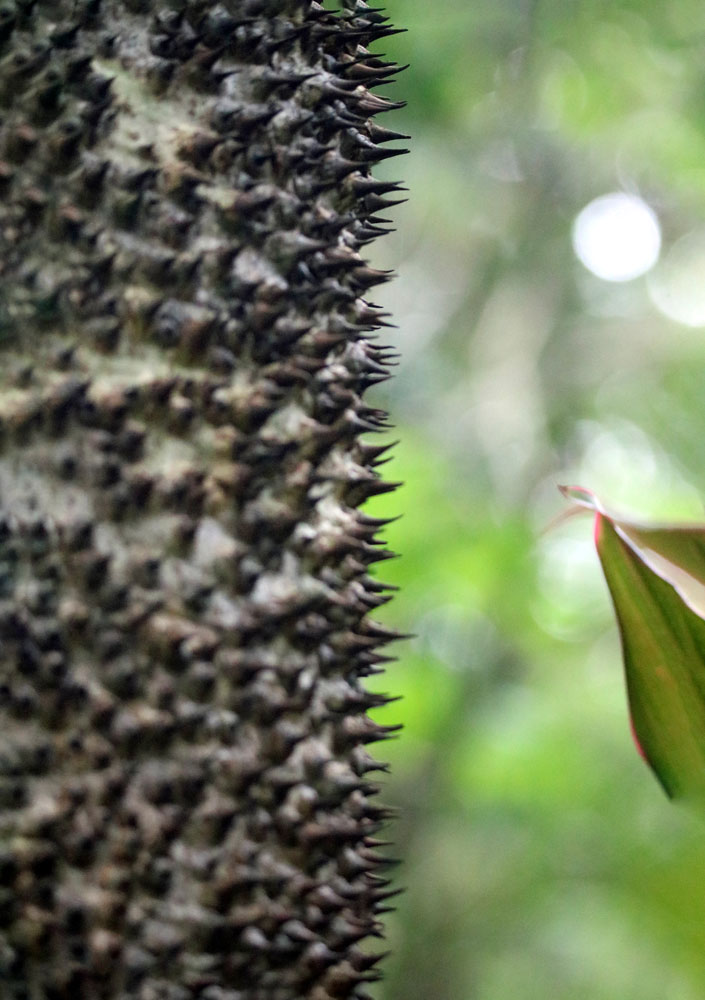
The Sandbox Tree – Hura crepitans (linked to Wikipedia) in wet tropical lands in both the Americas and moist jungles of Africa; seen here on my walk through just one little part of Gandoca-Manzanillo Wildlife Refuge, manzanillo, Limón, Costa Rica. It has a lot of other “Common Names” other than the “Sandbox Tree” listed as the official common name. My favorite of them all is the “Monkey No-Climb Tree.” 🙂 Yes, those scales are very sharp-pointed!
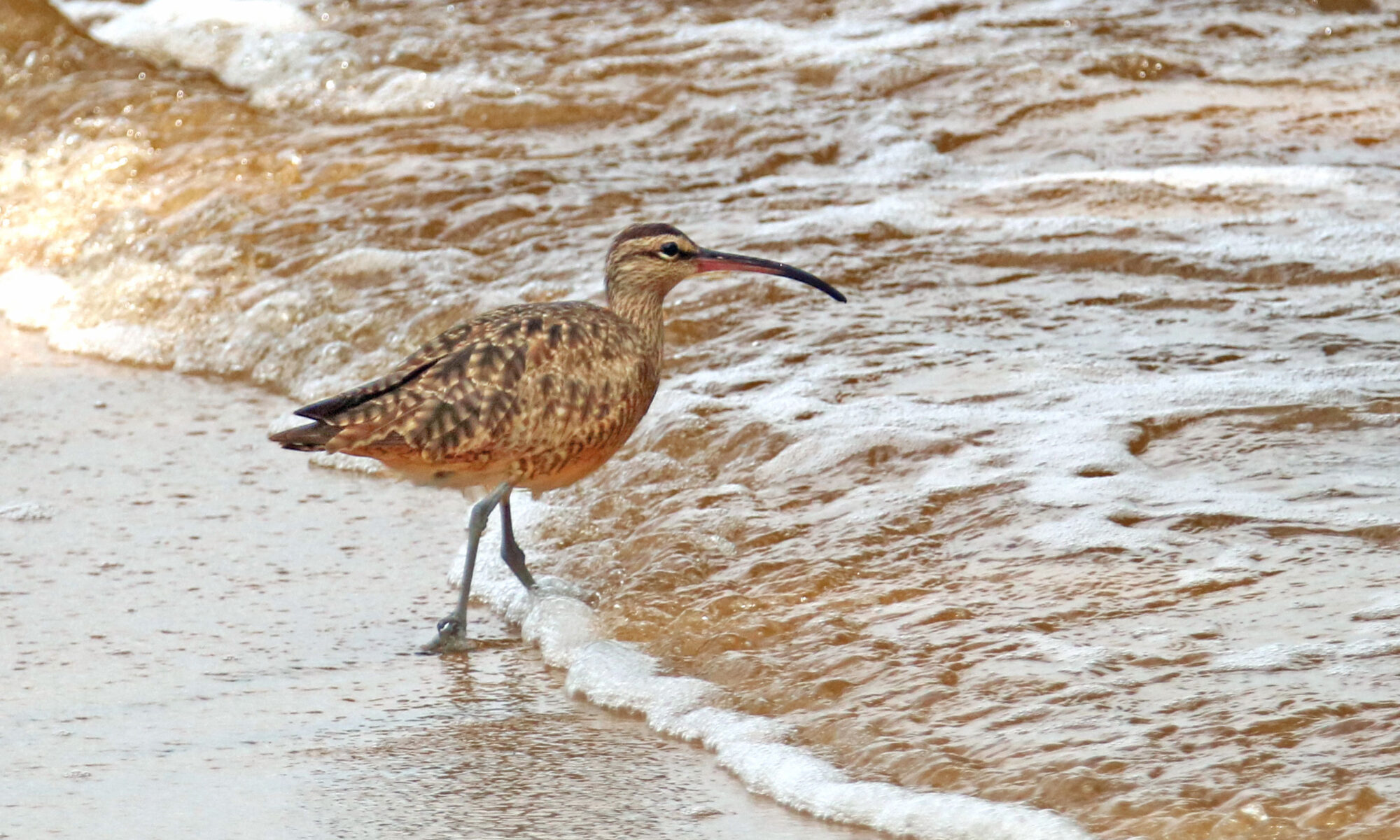
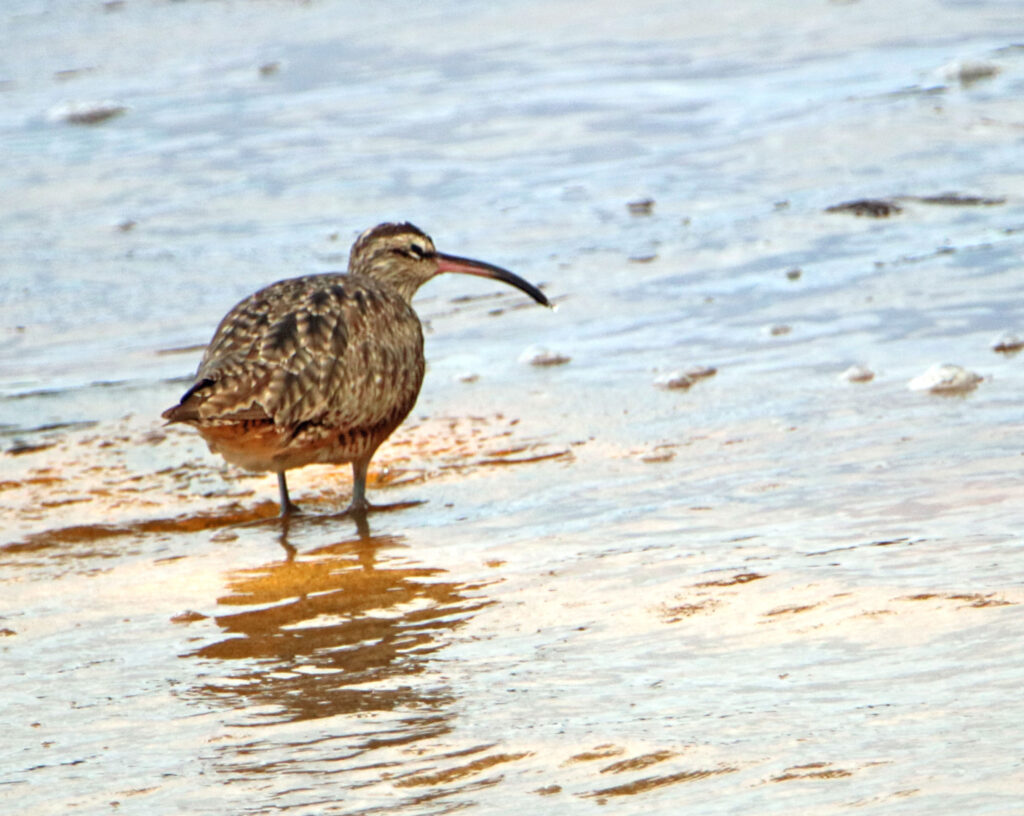
This bird used to be called just “Whimbrel” and that common name and its scientific name was for all Whimbrels world-wide. Now “they” have split them into two species with the old scientific name going for the ones in Europe & Asia and the ones in the Americas (North, Central and South) are called Husonian Whimbrel (Numenius hudsonicus)(my gallery link).
Thus another one of my galleries had to have a name change, including each individual photo. Just part of having up-to-date science! 🙂 This smaller, “chunkier” one (compared to the majority) was seen last week at Gandoca-Manzanillo Wildlife Refuge. And if you notice the water is darker and reddish or rusty, it is because the ocean’s saltwater at high tide went up into the Mangrove Forest and the Bloodwood Trees there react to the salt, releasing a reddish sap this time of year, turning the water red as the tide goes back out. 🙂
Hudsonian Whimbrel, Gandoca-Manzanillo, Limón, Costa Rica