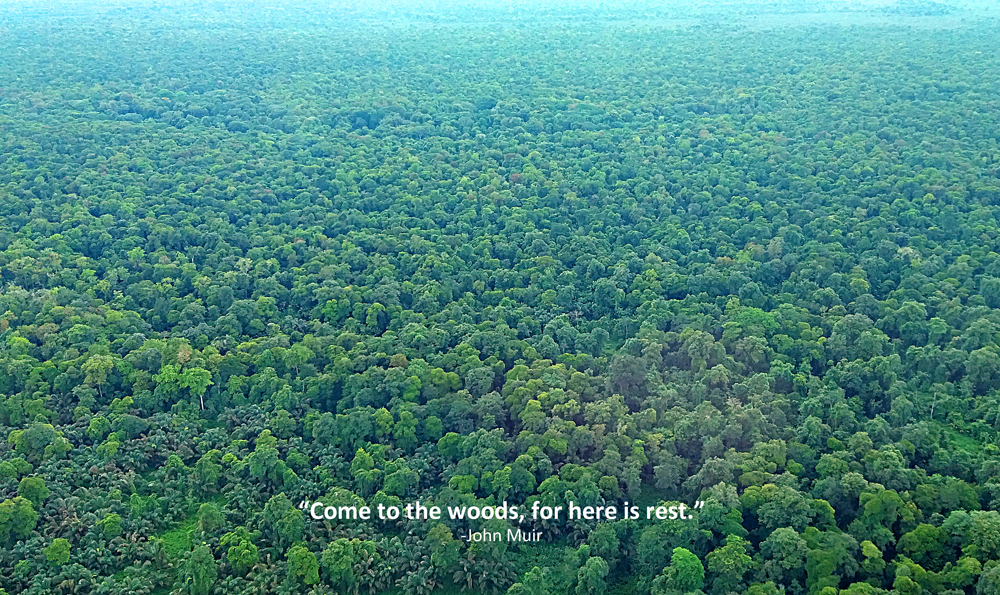
In and/or near Tortuguero National Park, Limón, Costa Rica, seen from a Sansa airplane.
More than 25% of Costa Rica’s forests and land is protected by the government in official National Parks, Wildlife Refuges and Biological Reserves. On top of that there are many “private reserves” that some people say brings the protected percentage closer to 30% but no data on that. And according to Google’s AI:
“With over 615 wildlife species per 10,000 sq km, Costa Rica sits atop of the list as the most bio-diverse region of the world.”
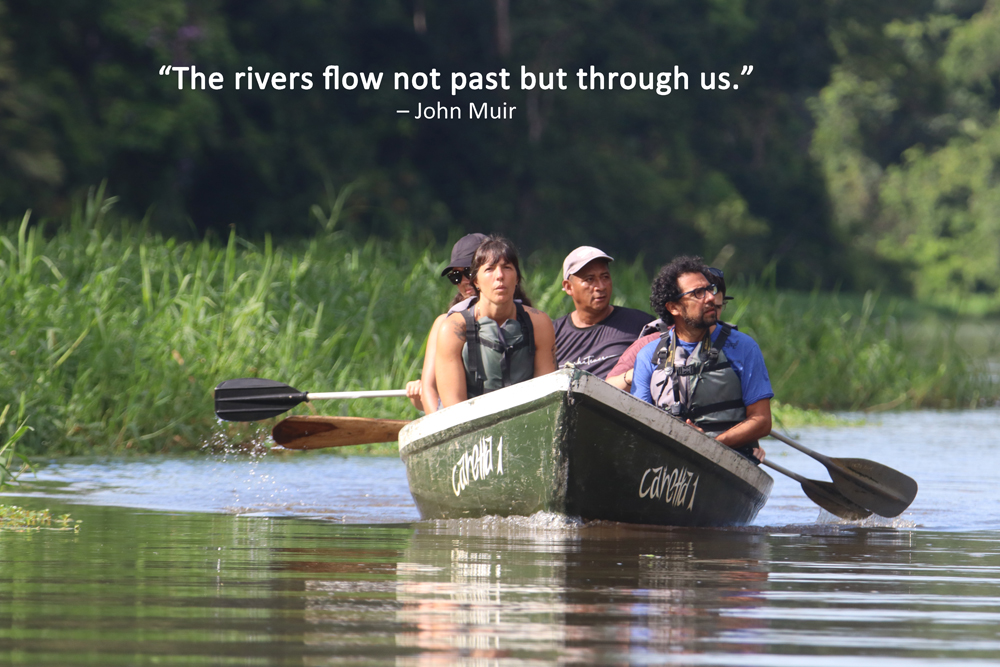
Rio Tortuguero, Tortuguero National Park, Limón, Costa Rica, September 9, 2025, persons unknown. I photographed from another boat that I was on from my lodge, also exploring the river.
¡Pura Vida!
My Latest Public Healthcare Adventure
I now wear hearing aids – a very high quality, made in Denmark. My ENT (with free public healthcare) who is monitoring my head and neck for any possible resurgence of that cancer removed in 2021, also now takes good care of my ears, nose and throat, his specialty. 🙂 When I told him that I could not hear much, if anything, with my left ear, he gave me a hearing test that showed it was sure enough not functioning well and in the process learned that even my right ear was not functioning as good as it could. Radiation Therapy could have possibly caused this, “but don’t worry, we’ll fix it!”
This week I started wearing a hearing aid in each ear, adjusted to fit my needs through the audiologist’s laptop computer. (Everything is computer-related now!) I even have the option of getting the software for my cell phone so I can adjust the volume, etc. myself on my own electronically. I decided to wait a little while before I jump into that technology. 🙂 I seem to stay overwhelmed by technology every day.
The public health hospitals don’t now have audiologists, so they pay a private practice audiologist right here in Atenas to order the hearing aids, fit them to my particular needs (each ear separately). For now I will be seeing him once a month until everything is working smoothly for my hearing and then as often as needed, plus I have his personal phone number I can call any time. And none of this has (or will ever) cost me a penny, thanks to the forward thinking government of Costa Rica.
And I really like the Tico young man who is my audiologist, Leiner Rodriquez, who tried to explain away his German first name as something his mother just liked at that time! 🙂 I look forward to working with him to hear better! It seems like every day I have another reason to be glad that I moved to Cost Rica. 🙂
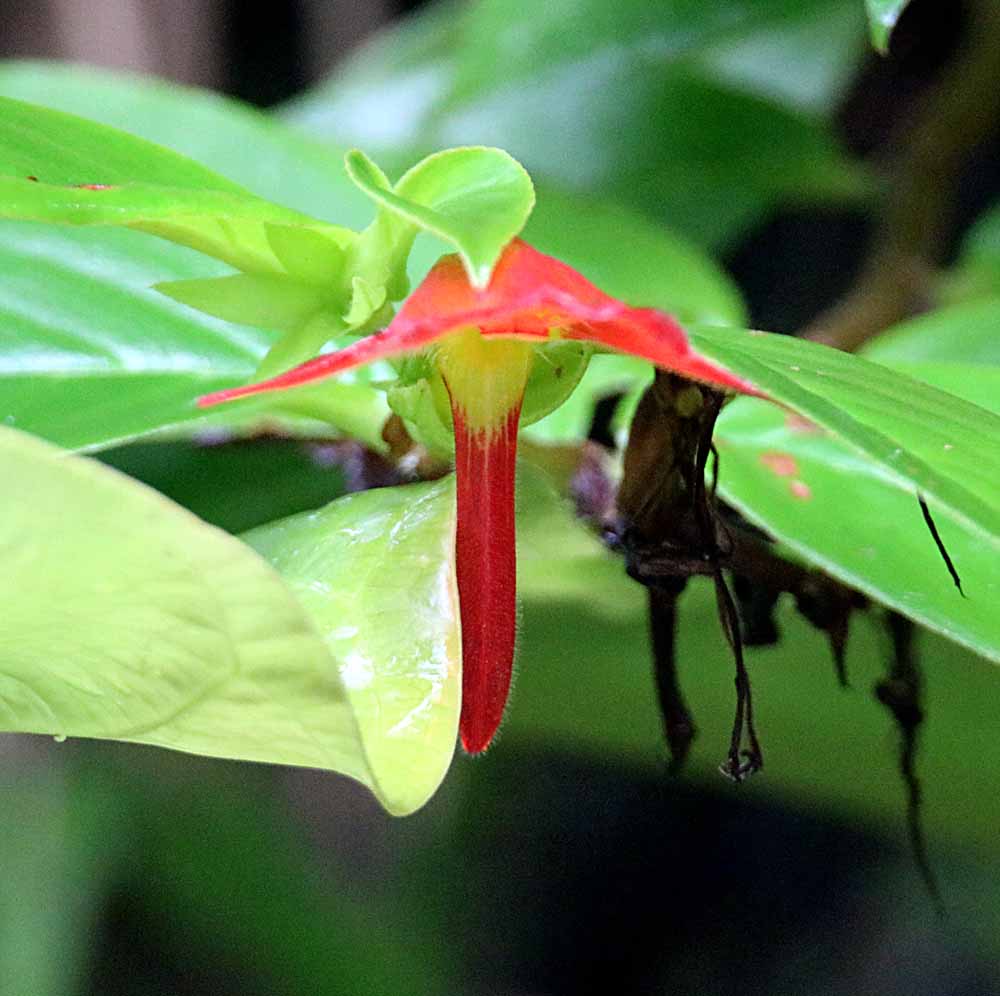
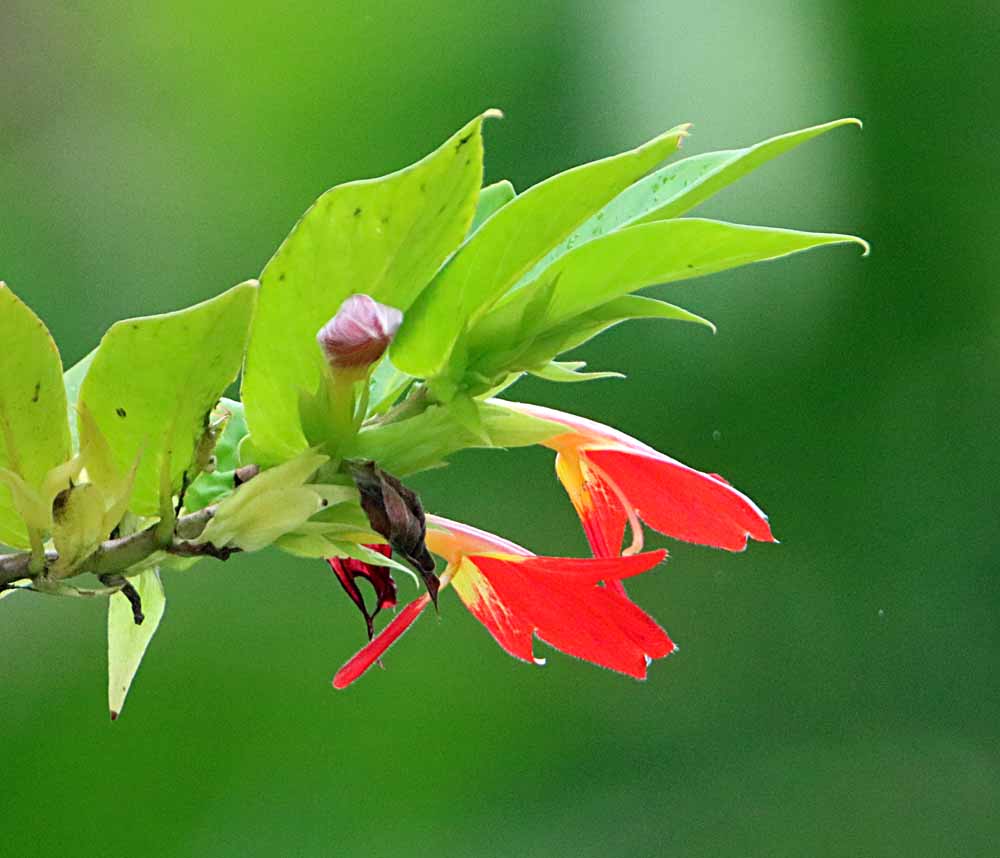
As my last post from the Tortuguero Adventure, I’m introducing just one of several unusual flowers at Tortuga Lodge & Gardens which help them live up to the “gardens” part of their name. The iNaturalist AI is “confident” that the flowers in both of these photos are in the Genus Columnea (linked to Wikipedia taxonomy article) or you can see other examples in Costa Rica that have been submitted with that genus, including some with specific species, on iNaturalistCR-Genus-Columnea. And as the first “suggestion” species on both these similar but different photos, they give the species name Columnea nicaraguensis. (linked to photos of that species on iNaturalist Costa Rica). And that is most likely the correct species of these two photos even though they seem a little different.
Columnea nicaraguensis, Tortuga Lodge & Gardens, Tortuguero National Park, Limón, Costa RicaColumnea nicaraguensis, Tortuga Lodge & Gardens, Tortuguero National Park, Limón, Costa Rica
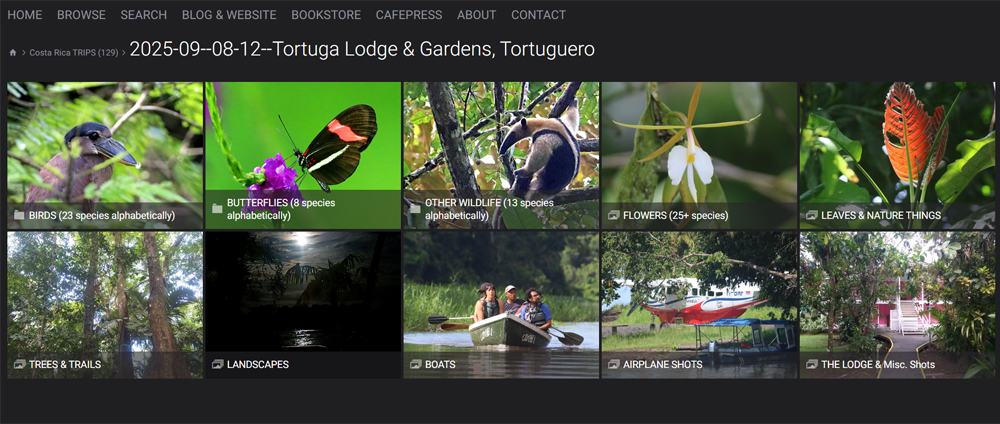
Be sure to check out the FLOWERS gallery in the Trip Gallery and notice other interesting flowers like the Peacock Flower, Night-scented Orchid and Pheasant’s Tail! 🙂
¡Pura Vida!
Tomorrow it is back to photos from my garden and for about a week, shots made in early September that I held for now. 🙂
Photo made by Charlie Doggett on a Samsung J8 Cellphone during dinner in the restaurant of Tortuga Lodge & Gardens, Tortuguero National Park, Limón, Costa Rica, September 8, 2025.
For the last two weeks I’ve shared photos made on my 4-night trip to “The Amazon of Costa Rica,” Tortuguero National Park. And that was only the “tip of the iceberg” of the many photos made. See them all in the above gallery! Having this kind of nature adventures is why I chose to live out my retirement in Costa Rica and it has already surpassed my hopes and dreams and though I have to slow down some, the adventures continue! Sometimes in my little backyard garden! 🙂
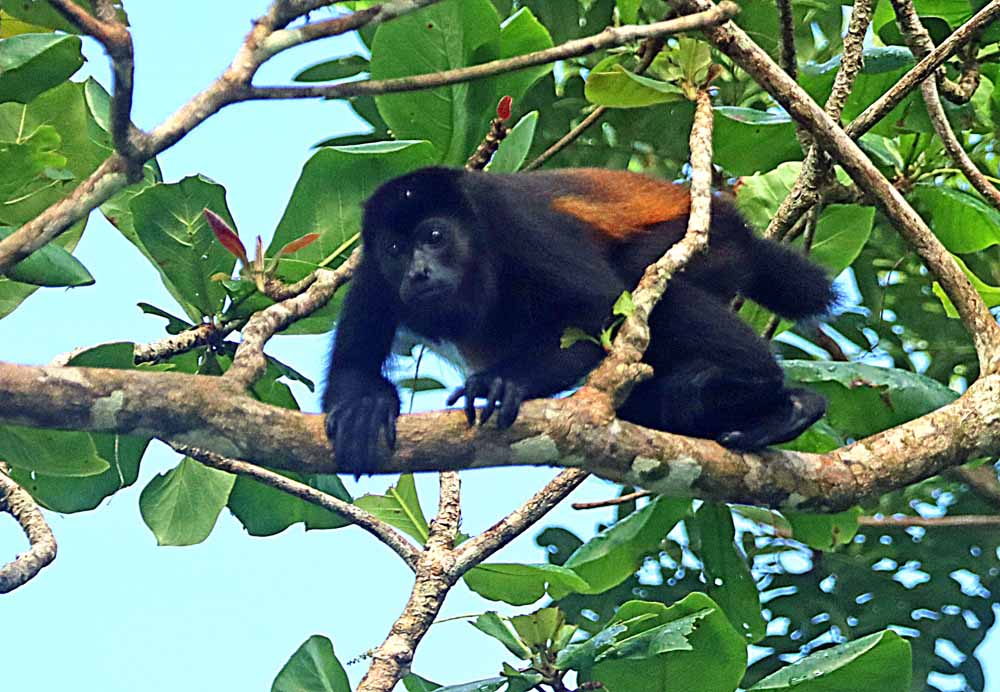
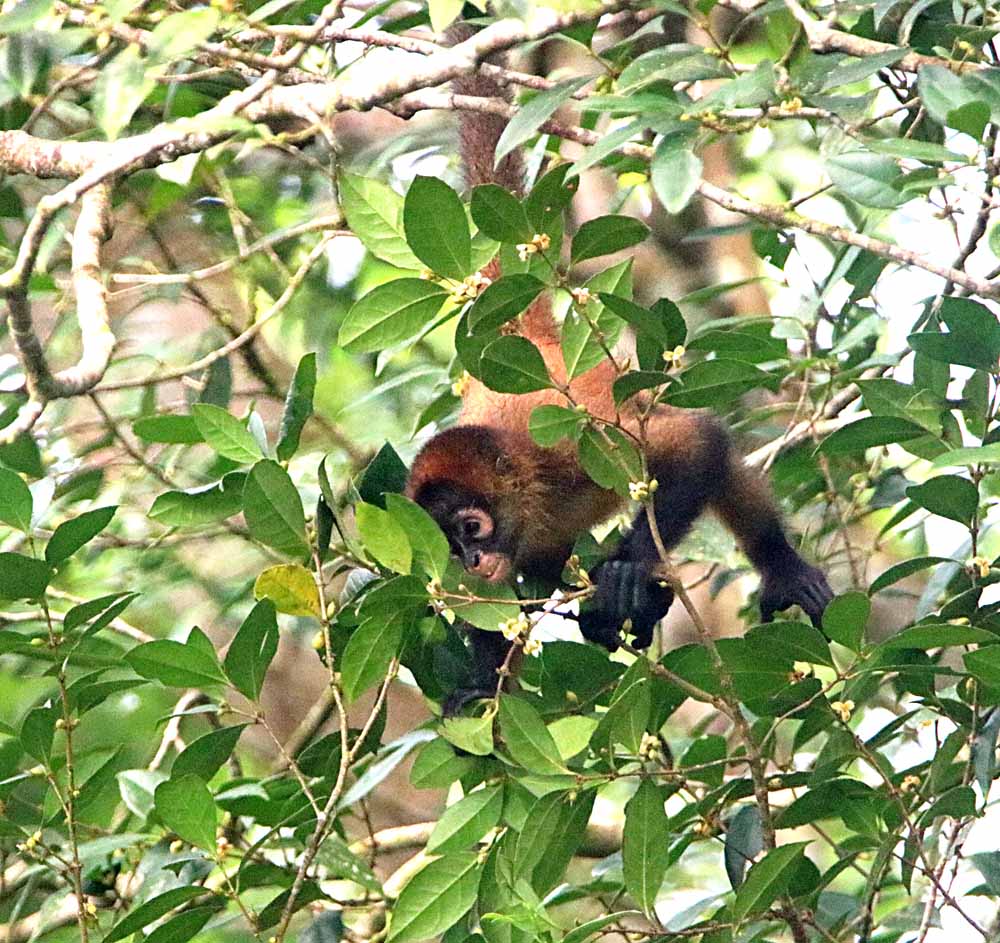
out of the 3 that live in Tortuguero were photographed on my trip there more than a week ago now. I always see monkeys in Tortuguero, both at the lodges and on the boat trips or forest trail hikes like I did on the Jaguar Trail this trip. Here’s just 2 shots, one each of a Mantled Howler Monkey and a Central American Spider Monkey. My Trip Gallery is now finished, so you can now see several shots of each species there:
And oh yes, the third monkey usually seen in Tortuguero is the White-faced Capuchin Monkey (linked to my species gallery) but I did not see one this time, which is unusual. They are the most aggressive of the three and will steal food from your bags, etc.
Here’s one shot each of the Howler and Spider monkeys from this trip . . .
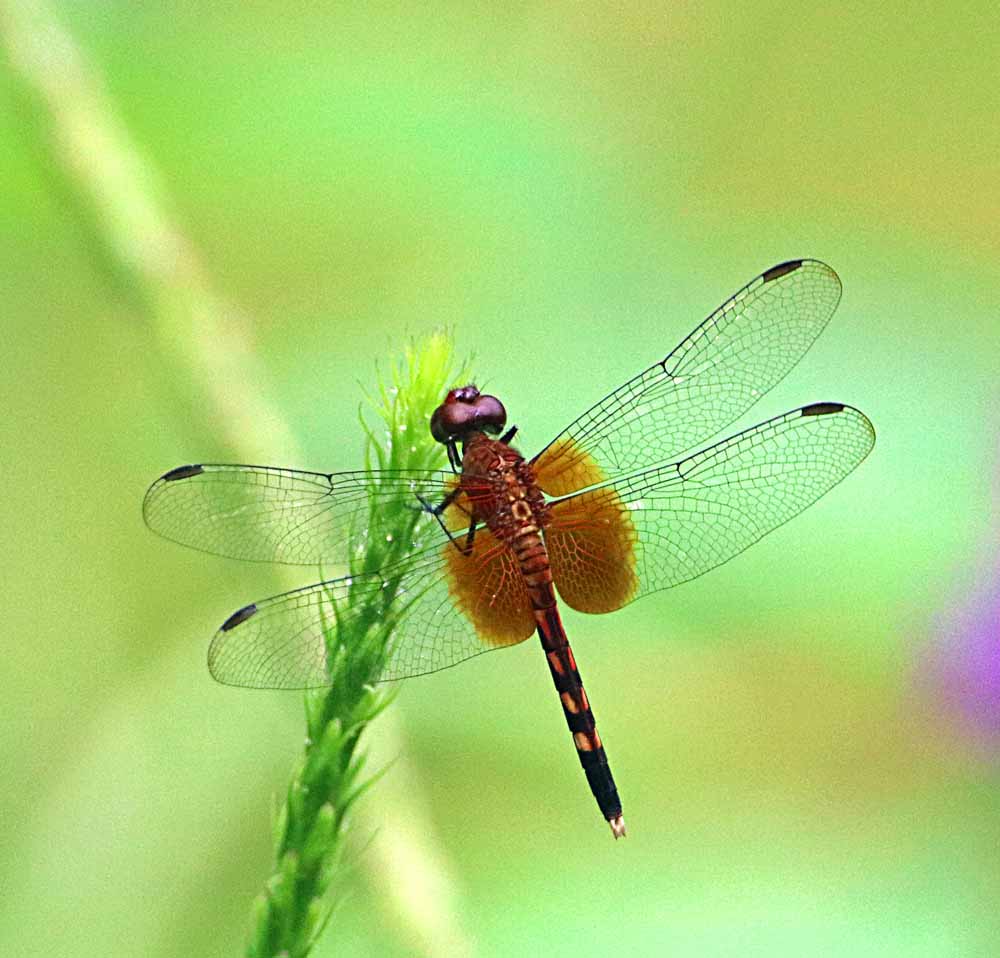
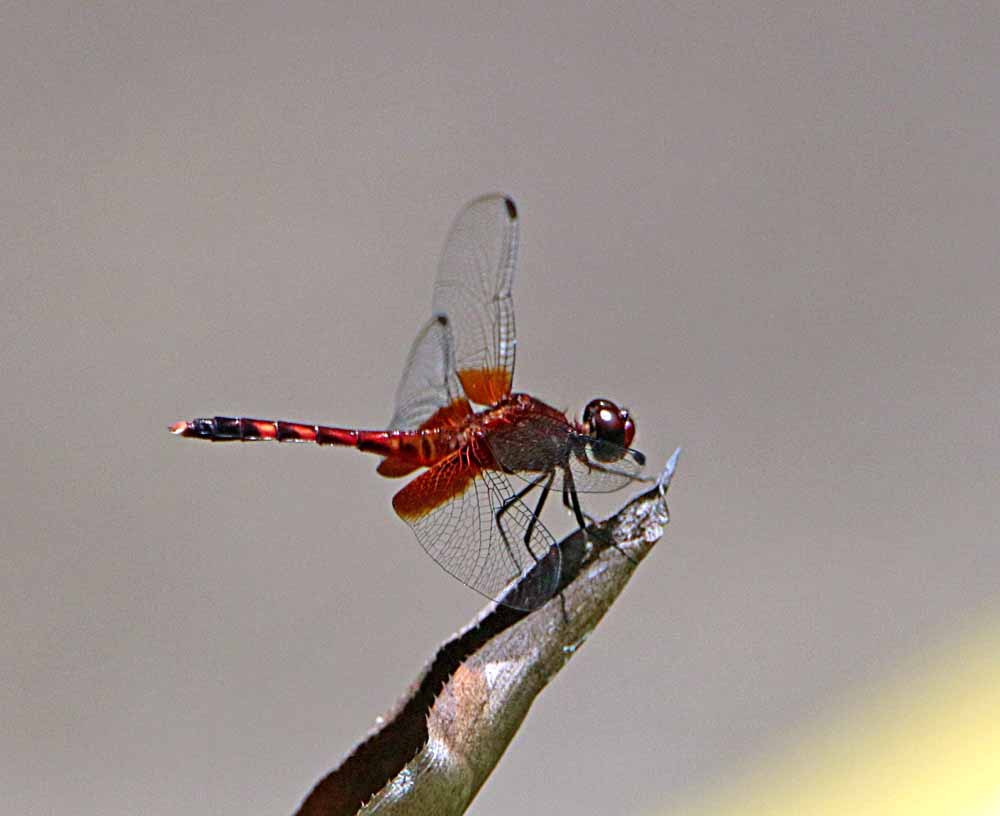
The most frequently seen dragonfly at Tortuguero this year was the Red-mantled Dragonlet – Erythrodiplex fervida (my gallery link). I saw them at both the Tortuga Lodge and on the Jaguar Trail in the park and in my gallery are sightings at Manquenque Ecolodge, Hotel Banana Azul, and Gandoca Manzanillo Wildlife Refuge; all on the Caribbean Slope! Here’s three shots made this month in Tortuguero . . .
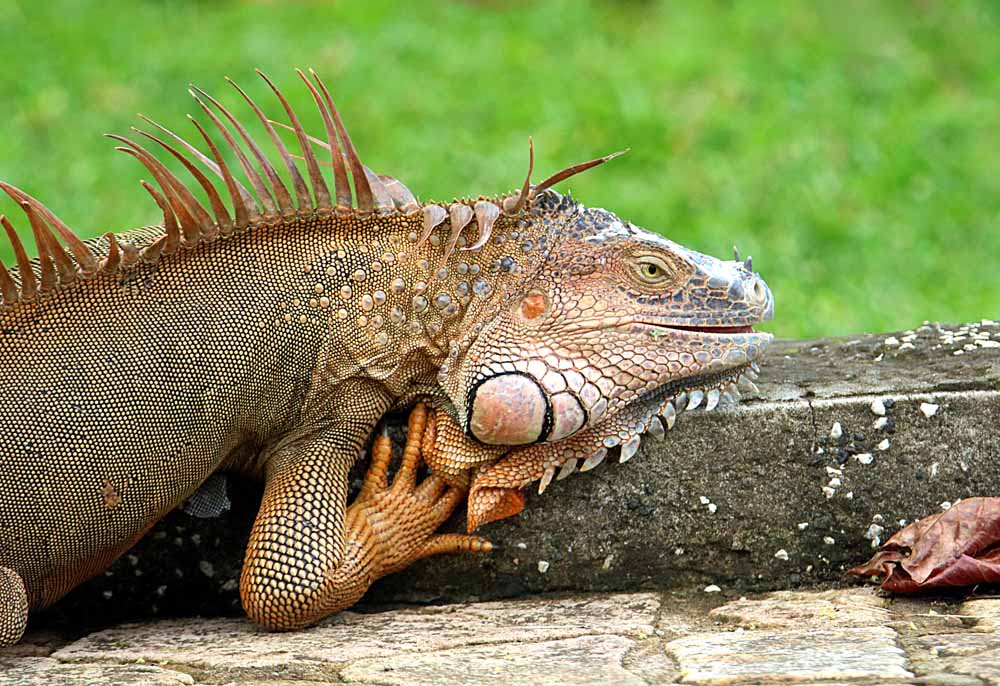
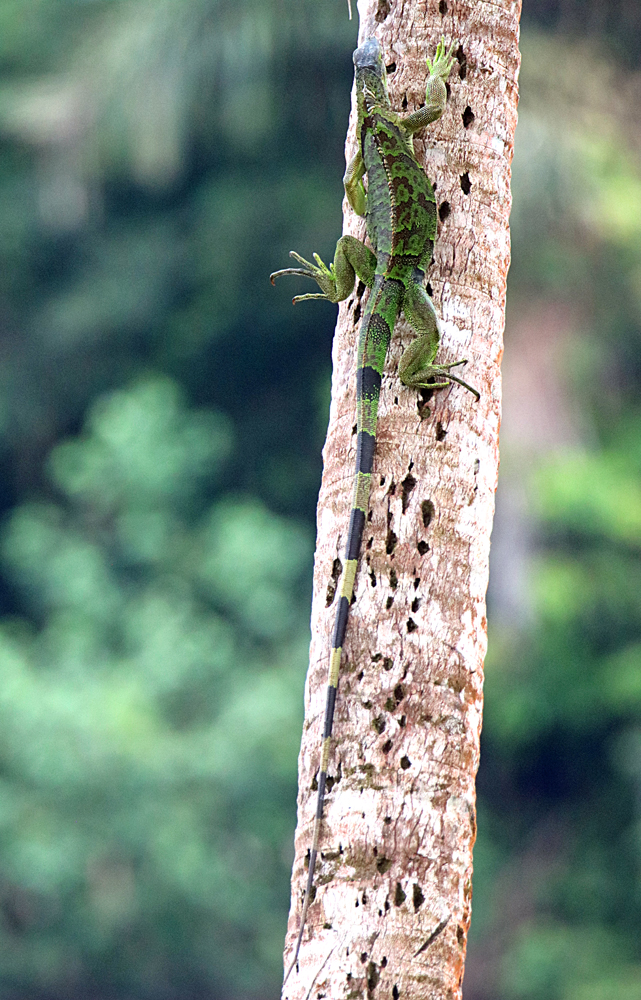
If there is one animal that you are guaranteed of seeing many of in Tortuguero, it might be the Green Iguana! And remember the differences in the two iguanas here: the Black Spiny-tailed lives only on the Pacific Slope & Coast while the Green can live anywhere but is more predominant on the Caribbean Slope. One photo for the email version and then a gallery of 6 different looks of the Green Iguana (my gallery link).
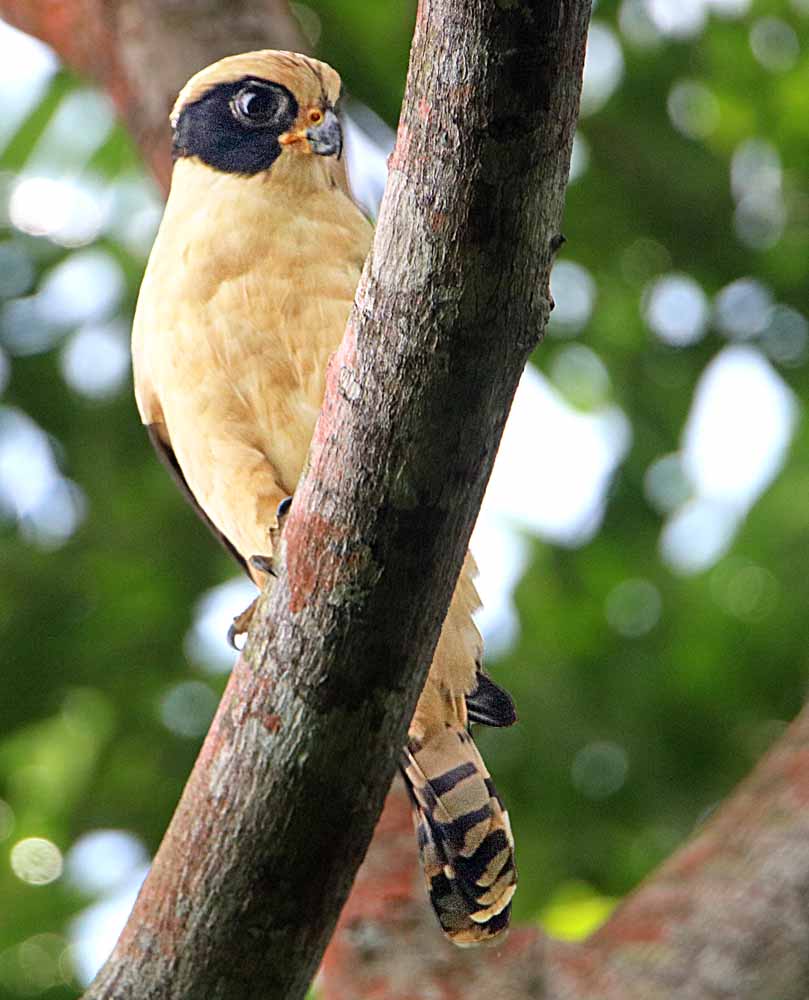
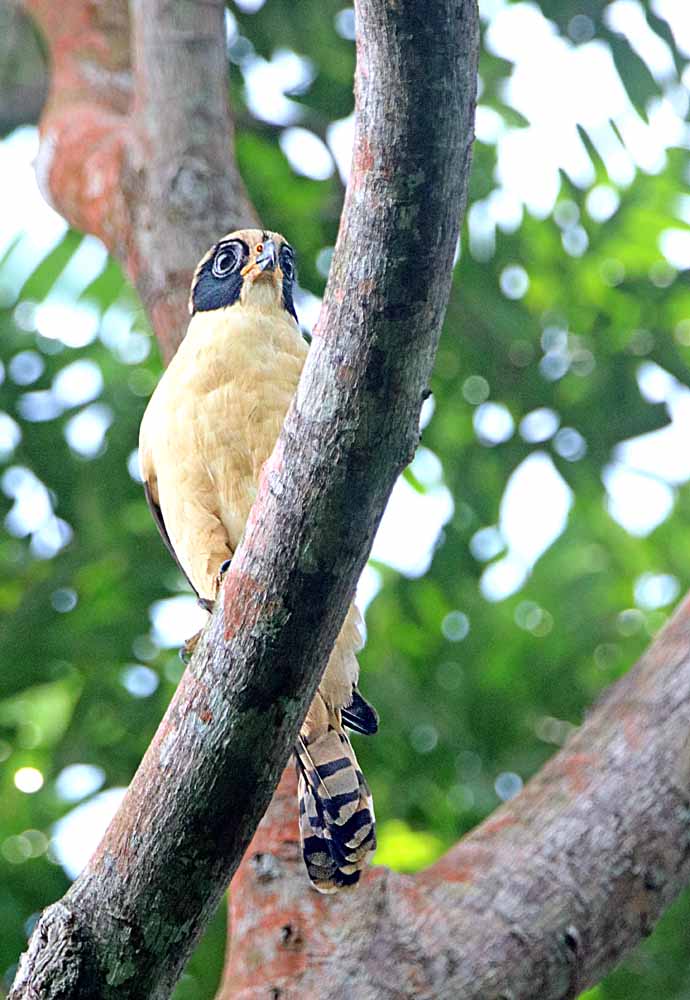
One of the several birds we saw on the Jaguar Trail in Tortuguero National Park was the Laughing Falcon, Herpetotheres cachinnans (linked to my gallery) or you can read more about him on ebird. Just 2 shots shared here (more in gallery) . . .
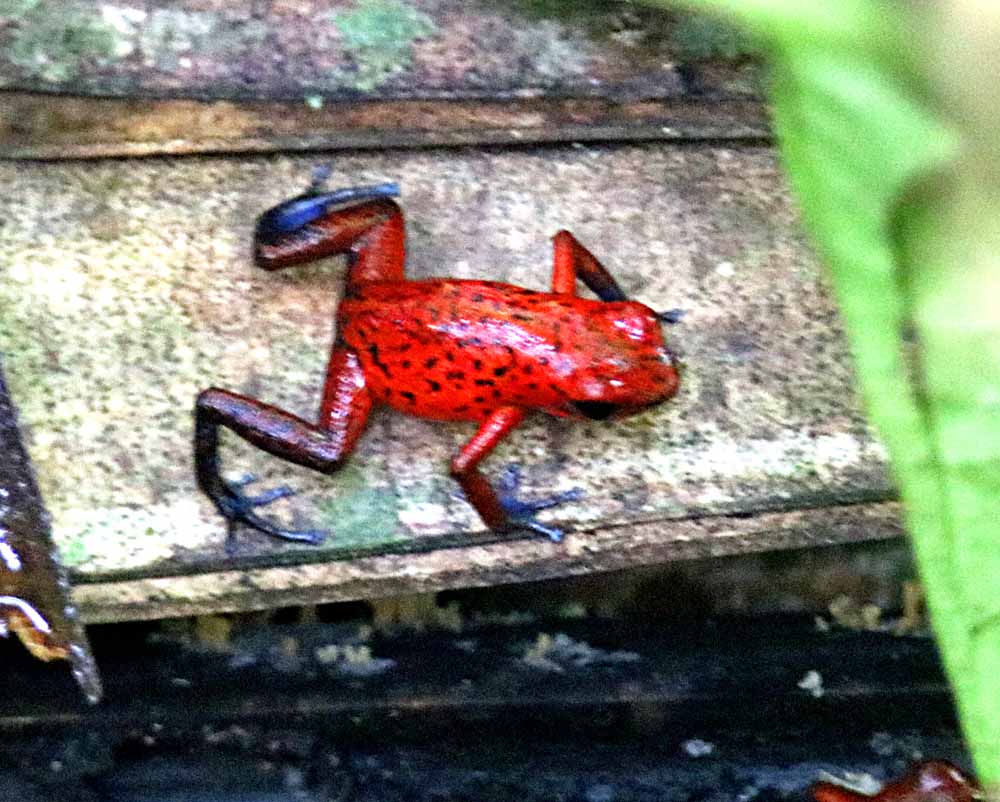
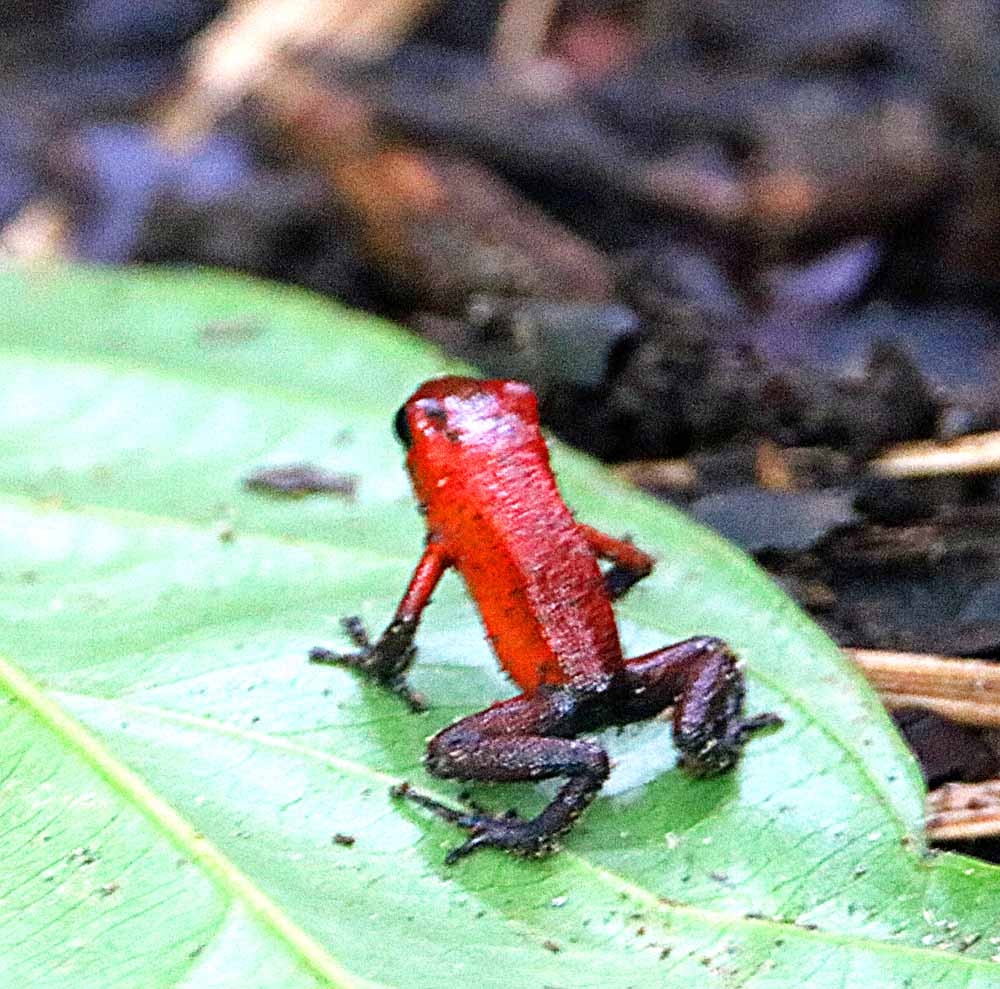
It is a type of Strawberry Poison Dart Frog, Oophaga pumilio (my gallery link) which is very popular with tourists and found in warm moist tropical forests on the Caribbean Slope and Coast of Costa Rica with a few overlapping into Nicaragua and similarly Panama, thus uniquely Costa Rican! 🙂 These two shots were made this past week in Tortuguero National Park, Limón; one on the grounds of Tortuga Lodge and one on the Jaguar Trail in the National Park.