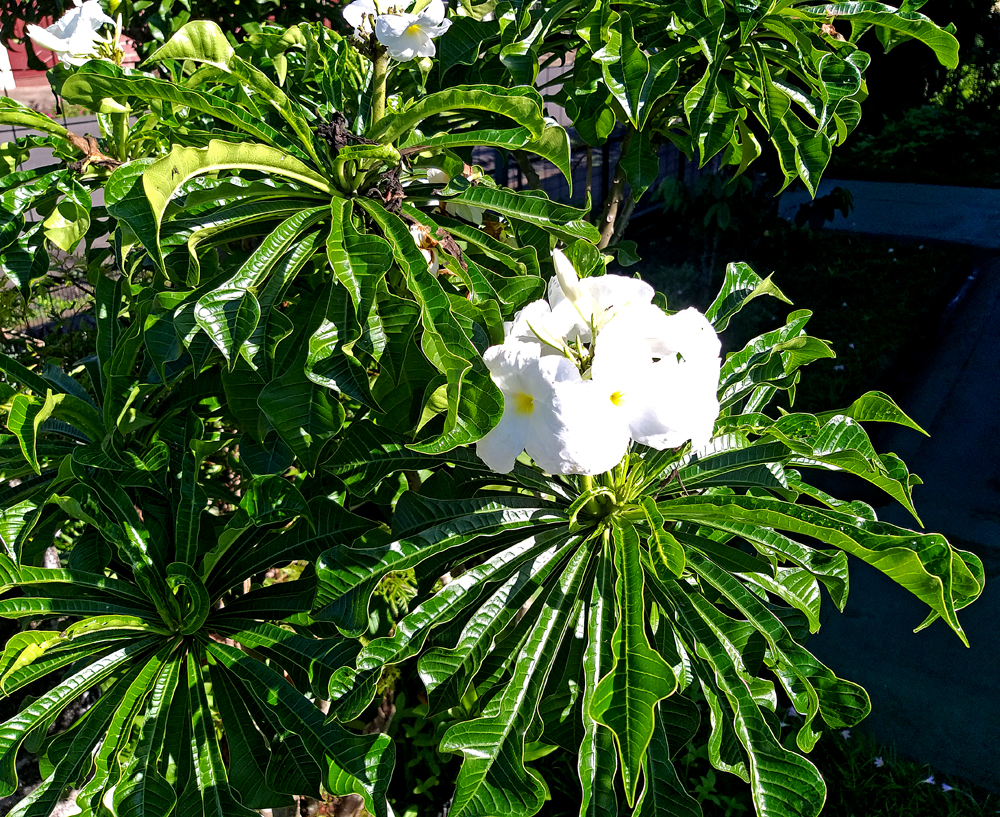
At least too bright for a good cellphone photo (glare), but the green leaves are nice! 🙂 I pass this house 3 to 6 times a week on my walks to and from town and the other day these white flowers that I believe are Plumeria or Frangipani were just beautiful! But hard to photograph. One of my many joys of living in the tropics is the abundance of beautiful flowers blooming here year around!
These might be Plumeria or Frangipani flowers, Atenas, Alajuela, Costa Rica.
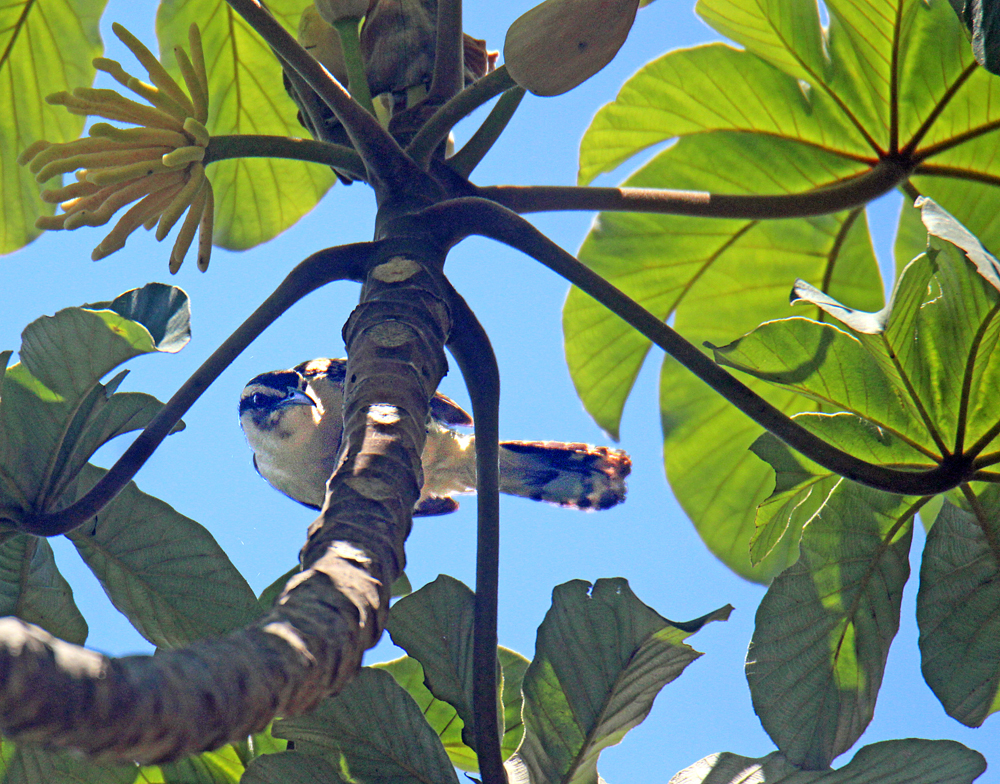
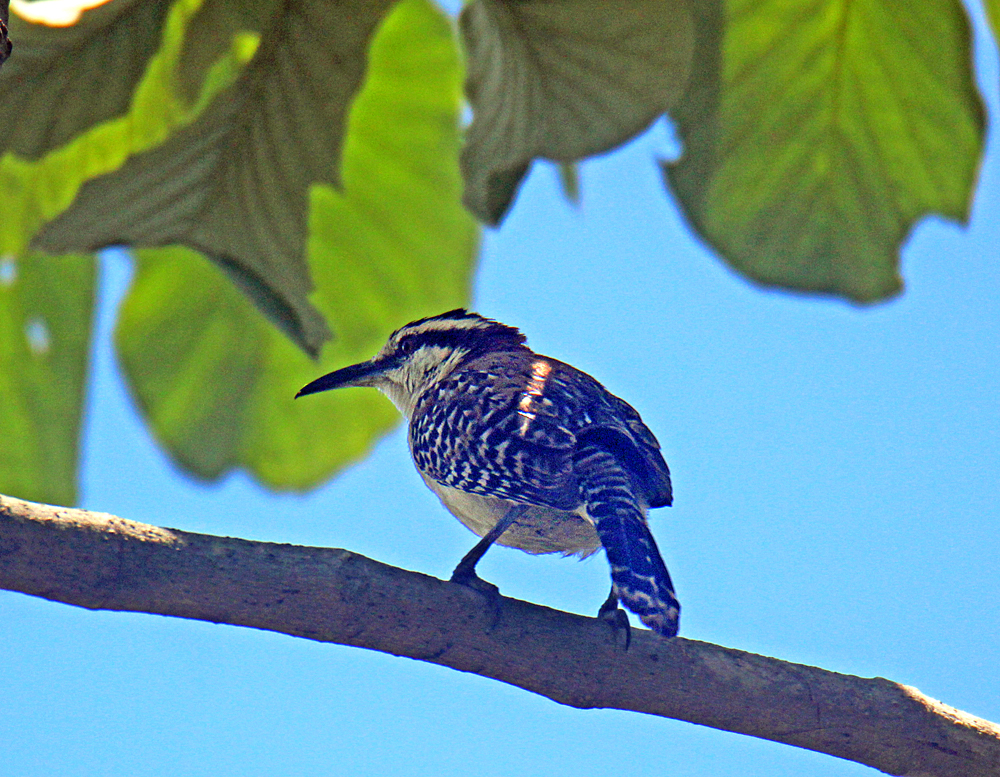
The Rufous-naped Wren (eBird description) is one of the most common birds in my garden (found only in Mexico & Central America), but they haven’t been showing themselves much lately for me to photograph. This one seemed to be playing hide-and-seek from me in the shadows of my Cecropia tree. 🙂 But I do hear them singing a lot along with the Clay-colored Thrush this time of year.
You can see better, earlier photos in my Rufous-naped Wren Gallery. 🙂 Here’s 3 shots from yesterday morning’s shadows . . .
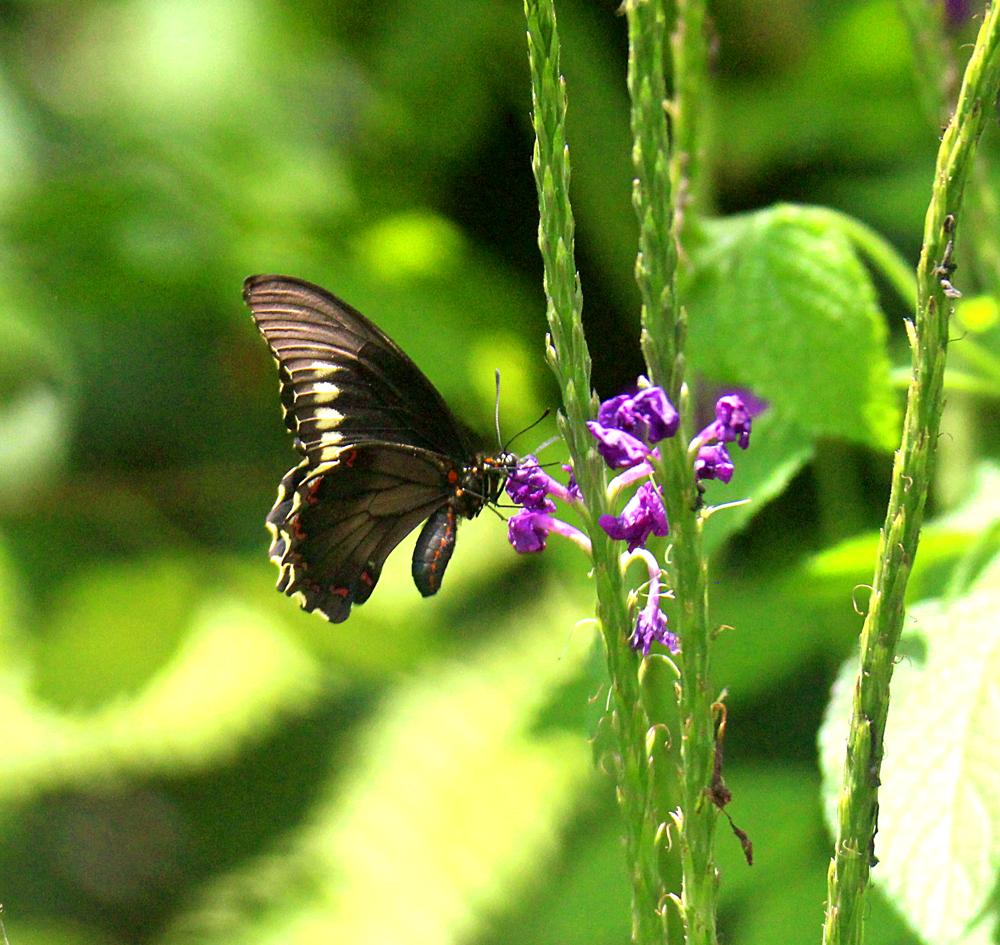
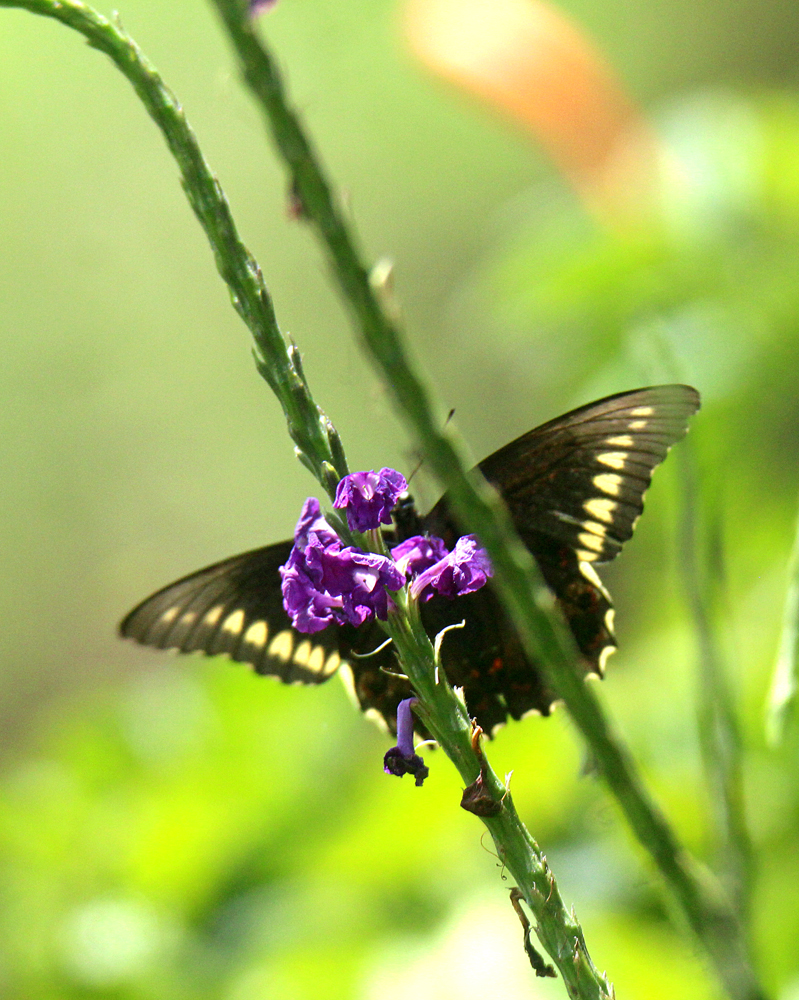
The Polydamas Swallowtail (Link to butterfliesandmoths.org) seems to be one of the most common in my garden and one of first showing up early this year! 🙂 I have 28 photos in my Polydamas Swallowtail Gallery, all made in my garden! 🙂
Polydamas Swallowtail, Atenas, Alajuela, Costa Rica
Unlike other butterflies here, I have no photos from my many visits to other locations in Costa Rica. These photos were made day before yesterday, May 6, which means it is early for a lot of butterflies, other than Yellows flitting about, and in past years butterflies have peaked at my house in June & July. I’m located in the western foothills of the Central Valley of Costa Rica. I have a trip north of here next week and hope for some different early butterflies there and then on my July trip is to the southwest of the country, maybe something new there, I hope! 🙂
Costa Rica has an incredible variety of butterflies as a part of more than 300,000 insect species, the most for any country it’s size. Part of that is due to our location as a “connecting bridge” of land between North and South America. The above butterfly website shows this particular Swallowtail appearing across the Southern U.S. and throughout Central America and the Caribbean Islands.
Polydamas Swallowtail, Atenas, Alajuela, Costa Rica
That is every plant in my garden and me too for photos! 🙂 I walked through my garden with camera looking for signs of sunlight on plants and here is my collection of 15 shots . . .
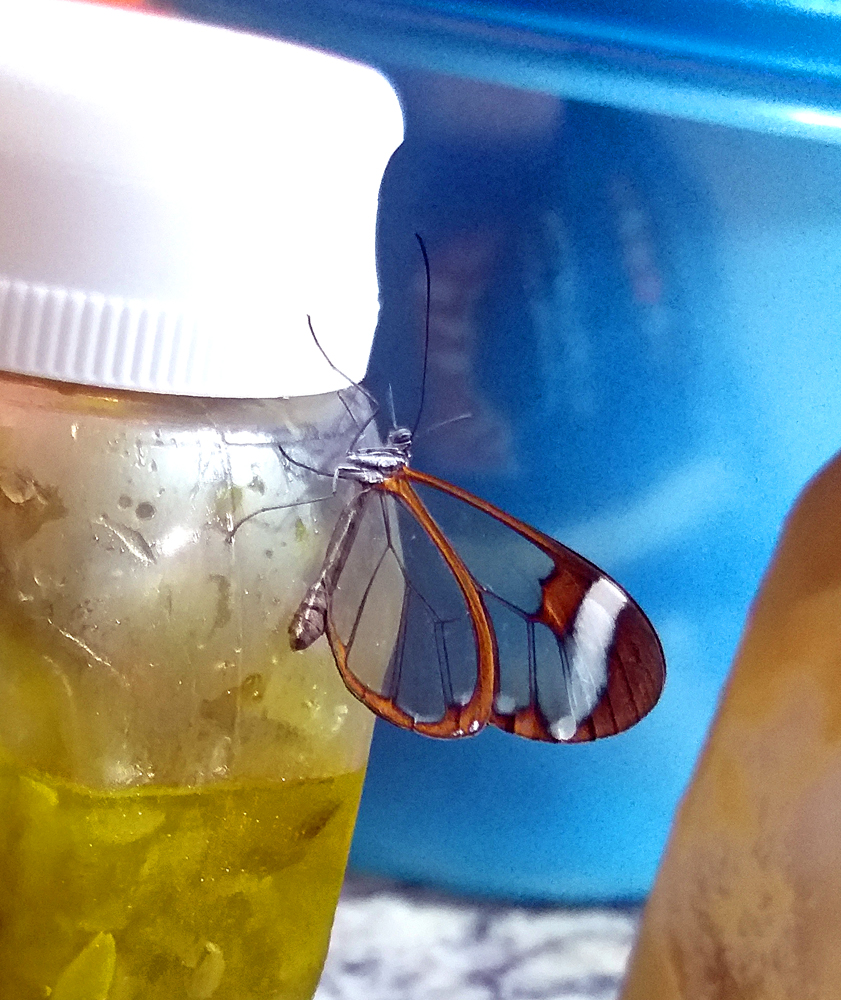
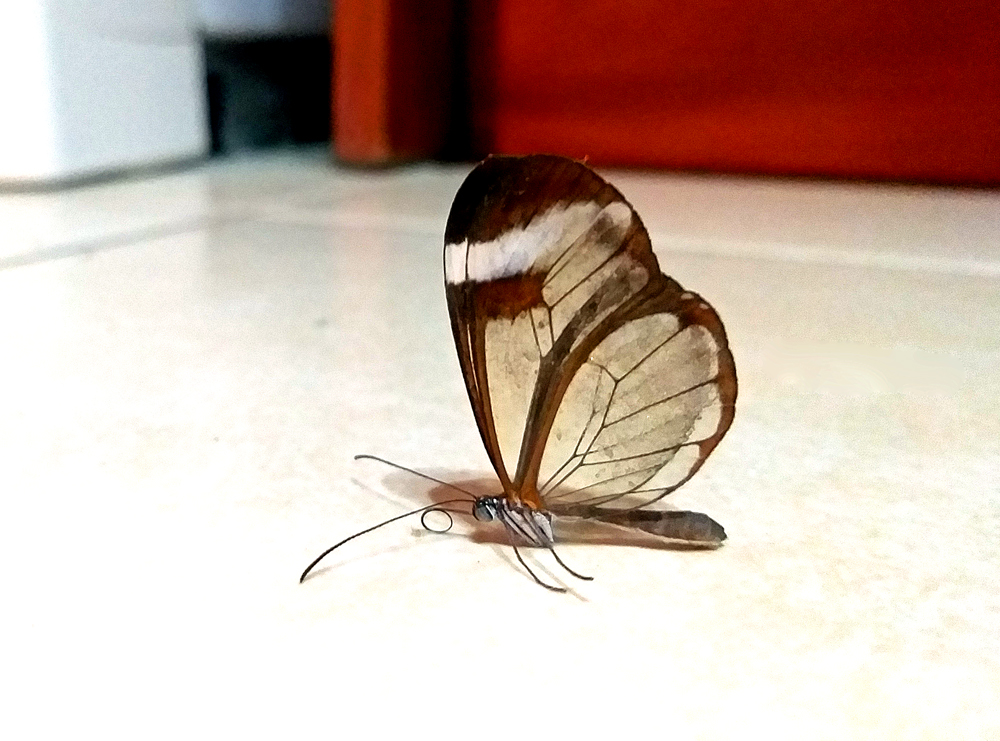
Lavinia Clearwing (Hypoleria lavinia) (link to Butterflies & Moths of North America site) or Fuzzy-spotted Ticlear in my book A Swift Guide to Butterflies of Mexico and Central America. This seems to be fairly rare or at least I’m not finding much about it online. This one appeared in my kitchen as I was preparing a ham sandwich, landing first on a bottle of relish then flying to the floor where he seems to be on his last leg, though when I I examine closely the one on the floor seems a little different – hmmm. Anyway, it’s another new butterfly for me! 🙂
Lavinia Clearwing, Hypoleria levinia, Atenas, Costa RicaLavinia Clearwing, Hypoleria levinia, Atenas, Costa Rica
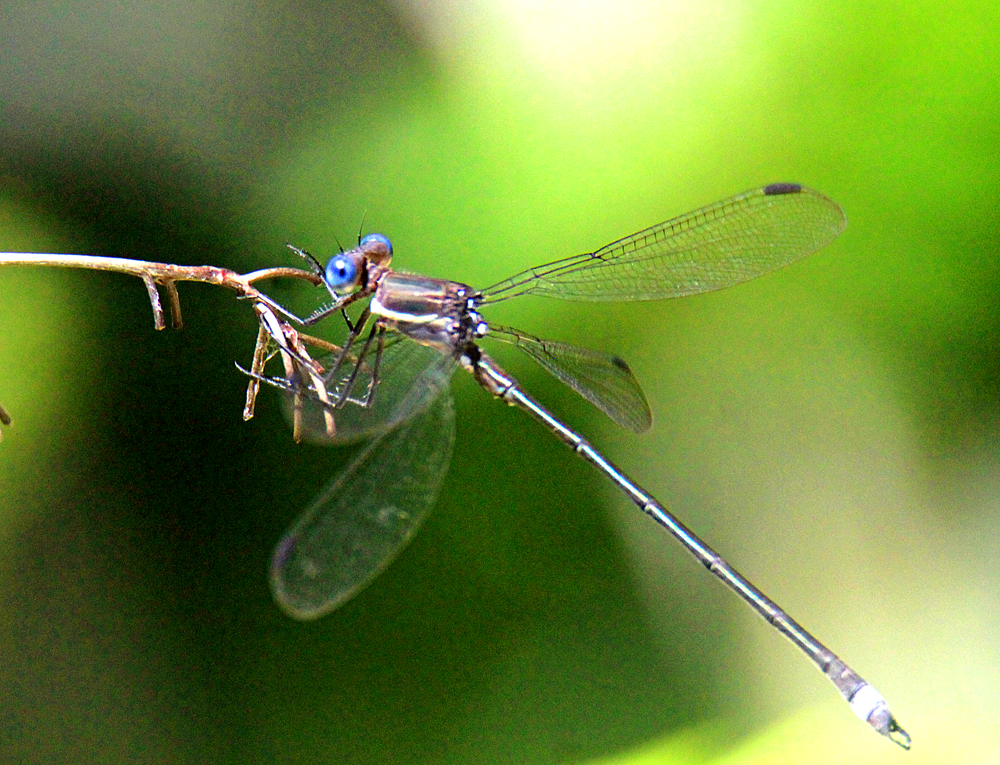
Here’s my first Damsel or Dragonfly photo this year though not the first seen. They are all hard for me to photograph and to identify, usually! But this time with my handy new book Dragonflies and Damselflies of Costa Ricaby Dennis Paulson and William Haber, I managed to narrow it down quicker than usual for me; obviously first to a Damselfly and then by the spreading wings that it is one of the subspecies called “Spreadwing” (most Damsels keep their wings straight by their side) and then with the book’s excellent photos and me having a photo with enough detail like the blue eyes and the brown thorax with white stripe I quickly determined that this is a “Plateau Spreadwing Damselfly” or “Lestes alacer” the technical name of this species found in Central America and parts of North America. I hope to expand my collection of Dragonflies & Damselflies which is already a pretty good start . . .
See my GALLERY: Dragonflies & Damselflies of CR (18+ species identified with many more not identified. Your ID help welcomed!) 🙂
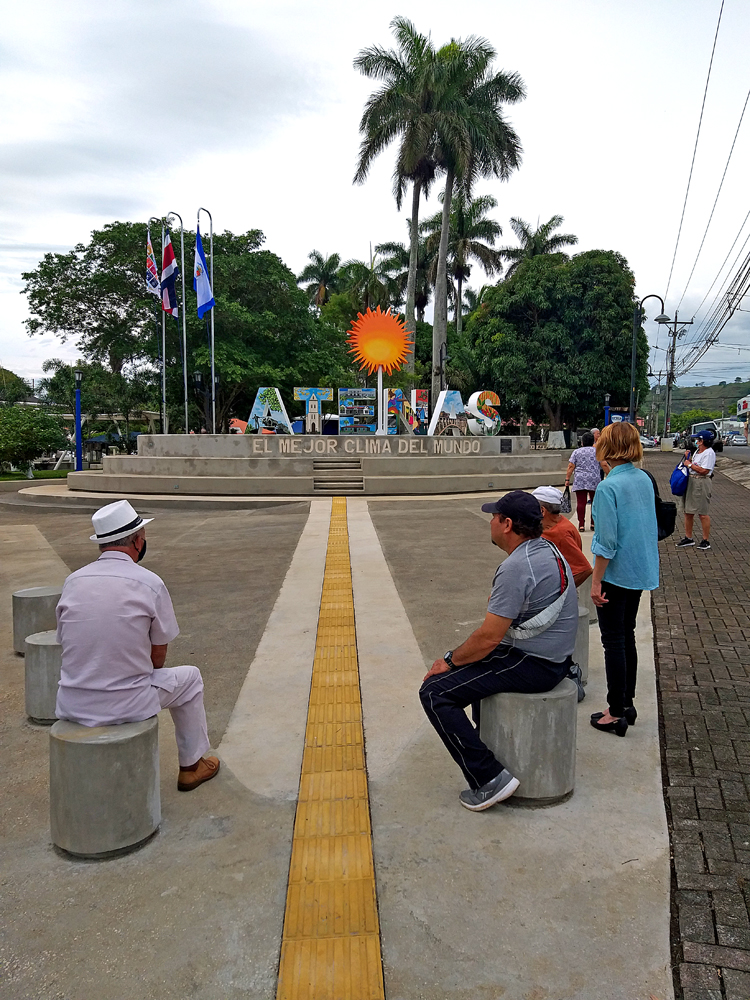
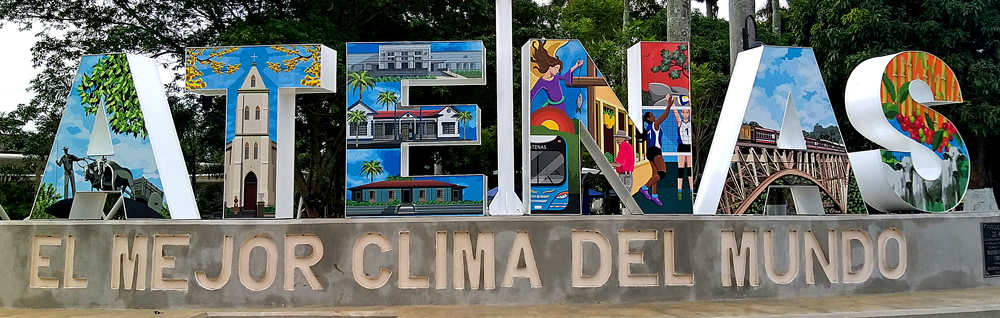
Sure enough, they finally uncovered the park sign last night at 7 pm in the rain without me! But I heard the fireworks go off right at 7 and knew that was the reason. They love to celebrate anything with fireworks here! 🙂
This morning on my way to my one breakfast out a week I detoured by the park for these 3 shots on my cellphone. I know the sun lights up at night and suspect the letters might, but won’t know until I go by there at night. I was not expecting the “little murals” on the letters since other parks in Costa Rica with their town name spelled out like this use solid colors like Alajuela’s red and Heredia’s also red. Thus Atenas is definitely unique in this way! 🙂
ATENAS murals depicting the coffee farming town.
I may describe the murals in more detail later, but in brief, the A: has our National Boyero Monument (Oxcart statue), T: the main Catholic church on the south side of Central Park, E: with three of several historic buildings, N: what appears to be lifestyle images, A: the historic and famous railroad bridge over Rio Grande and S: is their nod to the farmers with sugarcane, coffee and oxen.