I am not through sharing photos from this year’s trip to Banana Azul and haven’t even started on the photos from a morning hike in Gandoca-Manzanillo Wildlife Refuge (source of my most wildlife sightings this year), but with all the praise I’ve given Banana Azul over the years and what was an annual trip every September (the month with usually less rain), I need a “DISCLAIMER” to previous recommendations for this hotel and area and to explain why I will not continue annual trips here and may not even return to Banana Azul.
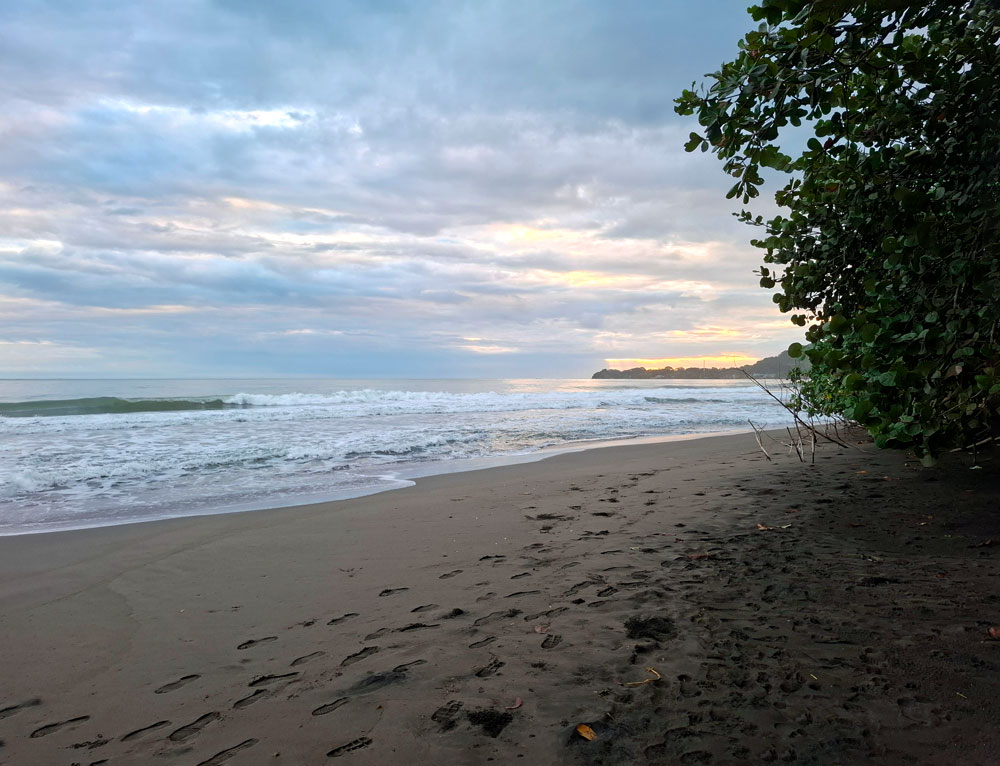
At places on the beaches there is barely a space for walking out of the water and in others no dry space at all! Playa Negra, Hotel Banana Azul, Puerto Viejo de Talamanca, Limón, Costa Rica. From a beach to a trail!
Read on for my explanation or reasons and to see more photos . . .
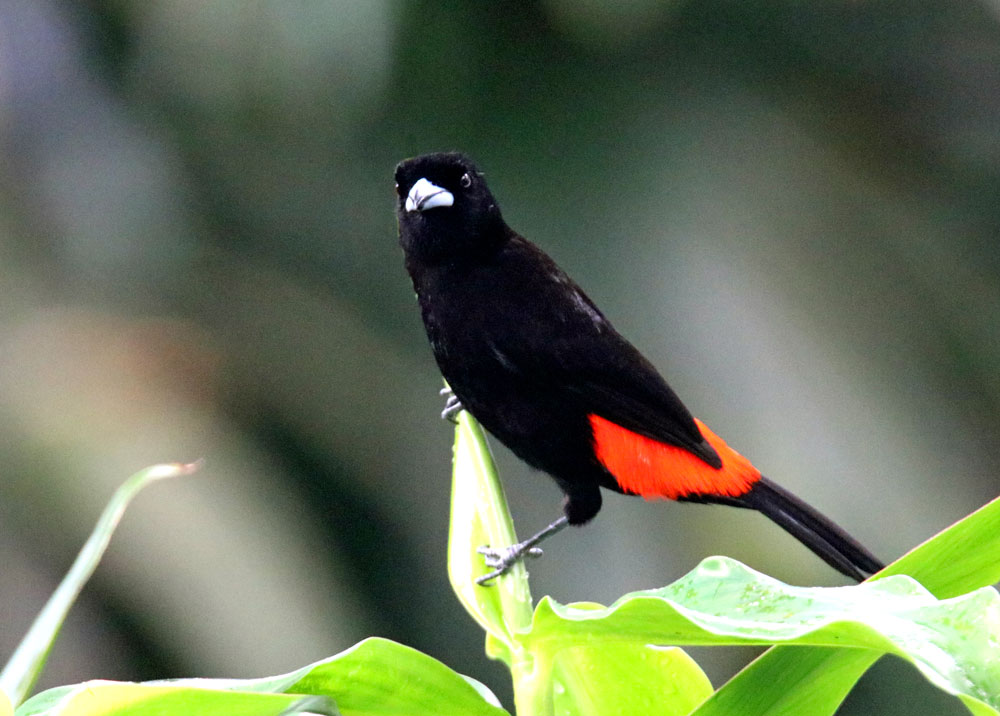
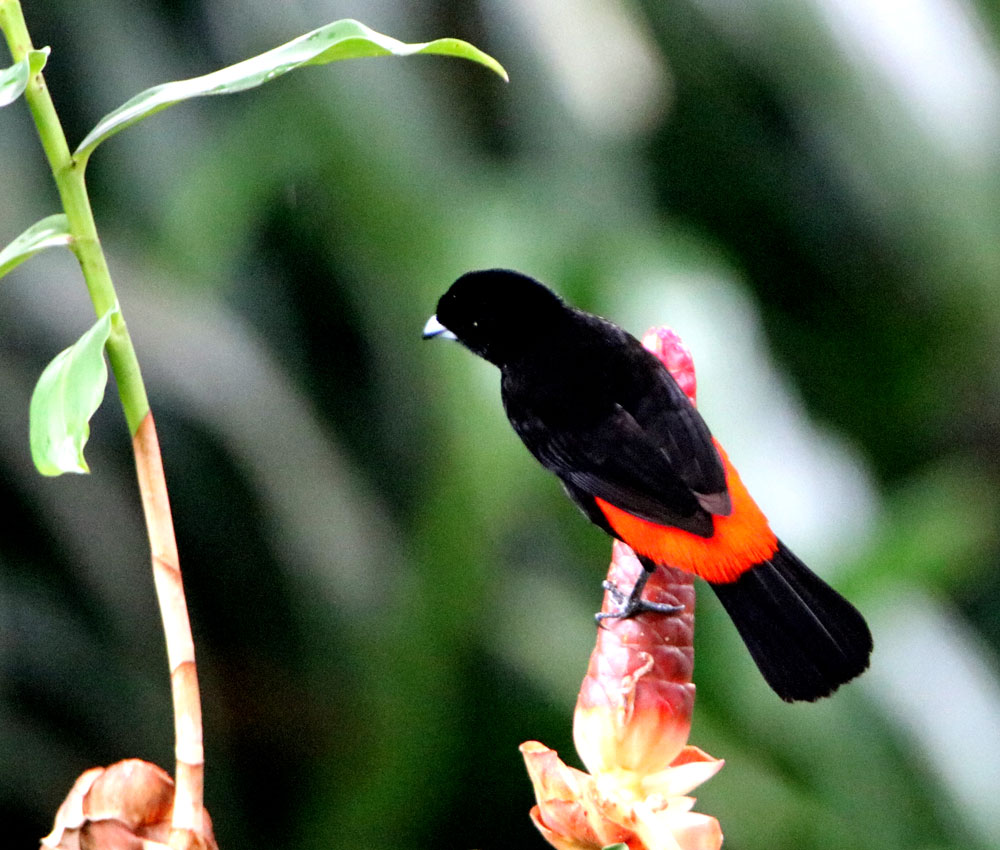
This one on the Caribbean side has an identical male as the Pacific side male with a slightly different female and they are thus considered different subspecies. I keep my photos separated in two galleries. For more of these from the Caribbean Slope, see Scarlet-rumped Tanager, Passerini’s (my gallery link) and yes, when I first came to Costa Rica these were call Passerini’s Tanager, while the ones on the Pacific side were called Cherrie’s Tanager. If you want to see if you can tell the difference in the two females, check out the other gallery: Scarlet-rumped Tanager, Cherrie’s (linked). And note that some sources say that the difference is seen only in the immature birds! 🙂 It is also interesting that some sources also say that the Cherrie’s is found only in Costa Rica and thus the scientific name includes the Latin “costaricensis.” 🙂 In my photos it seems that the Pacific side females are slightly darker in color with no other differences to me and I have never been where I could compare immature ones. These two photos are both male.
Scarlet-rumped Tanager, male, Hotel Banana Azul, Puerto Viejo, Limón, Costa Rica
It reminded me of the Tropical Screech Owl that often sings to me during the night hours from my Higueron Tree, singing me to sleep (never got a photo of it). The article also reminded me of how I prepared for works presented by the Nashville Symphony Orchestra (15 years ago) by going an hour early for a 30 minute discussion of what we were about to hear. It’s amazing how much more you hear and experience when you prepare to listen! 🙂 That was back when Giancarlo Guerrero (from Costa Rica) was the Music Director. But, back to the article whose author said in the last line . . .
Let’s answer the birds’ invitation, stepping outside to give them the simple gift of our attention. Listen. Wonder. Belong. ~David G. Haskell
Here’s one of several YouTube videos of the Tropical Screech Owl singing . . .
Or if really into it, you can listen to archived audio recordings and calls of the Tropical Screech Owl (Megascops choliba) through theXeno-canto Tropical Screech Owl Database, which features hundreds of field recordings.
Or read about them and see their distribution map on eBird. And thanks to Judith LaBelle for the article on listening to birds! 🙂
¡Pura Vida!
Listen. Wonder. Belong.
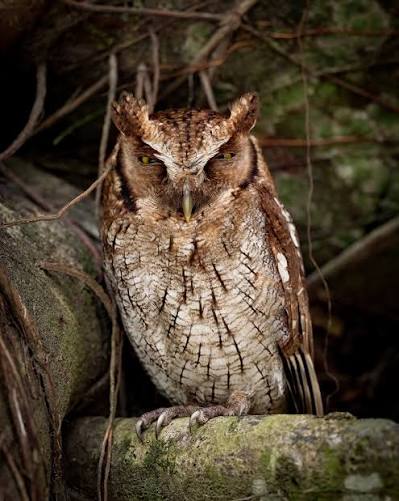
And the featured photo of a Tropical Screech Owl in Costa Rica was copied off the internet and not my photo. I am yet to photograph one. The one I hear singing at night is in the dark and I don’t have the equipment to photograph at night and when I got up and looked for him once, I never even saw him. BUT, I do have photos of 6 other owls here in Costa Rica that I photographed in daylight . . .
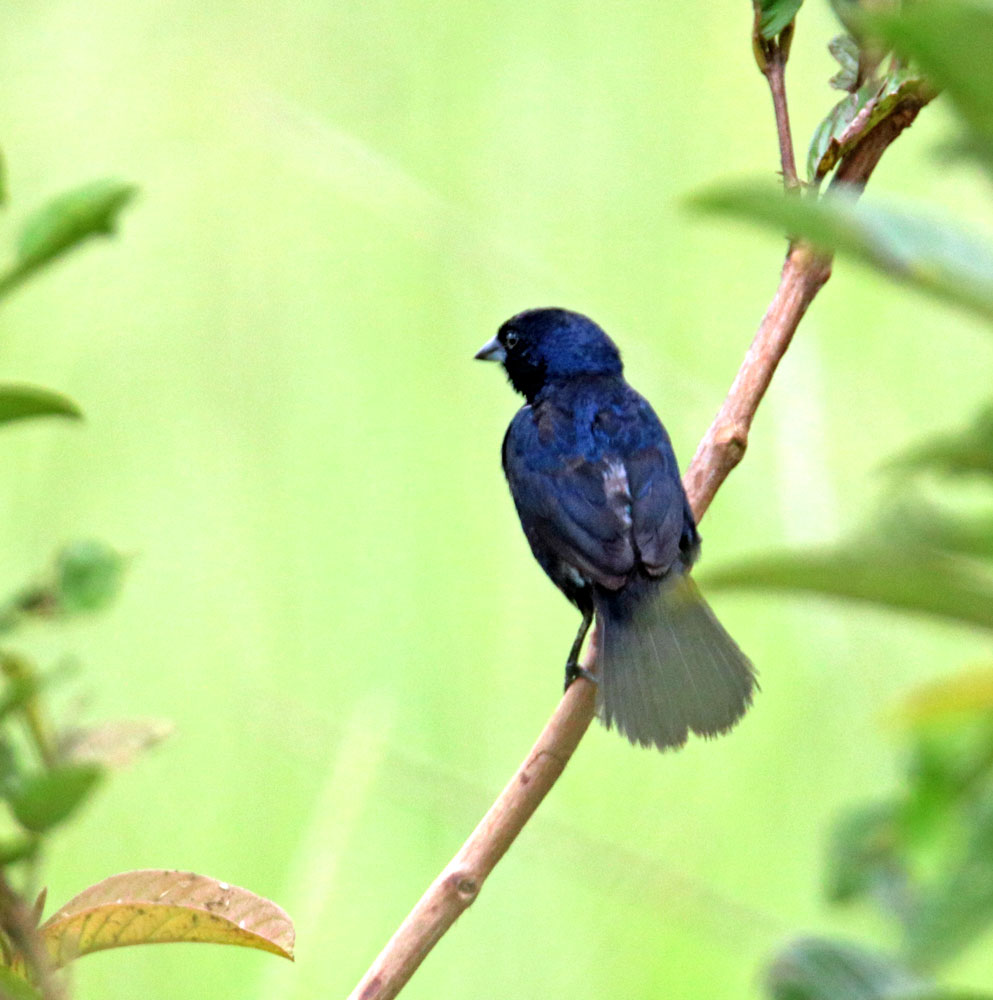
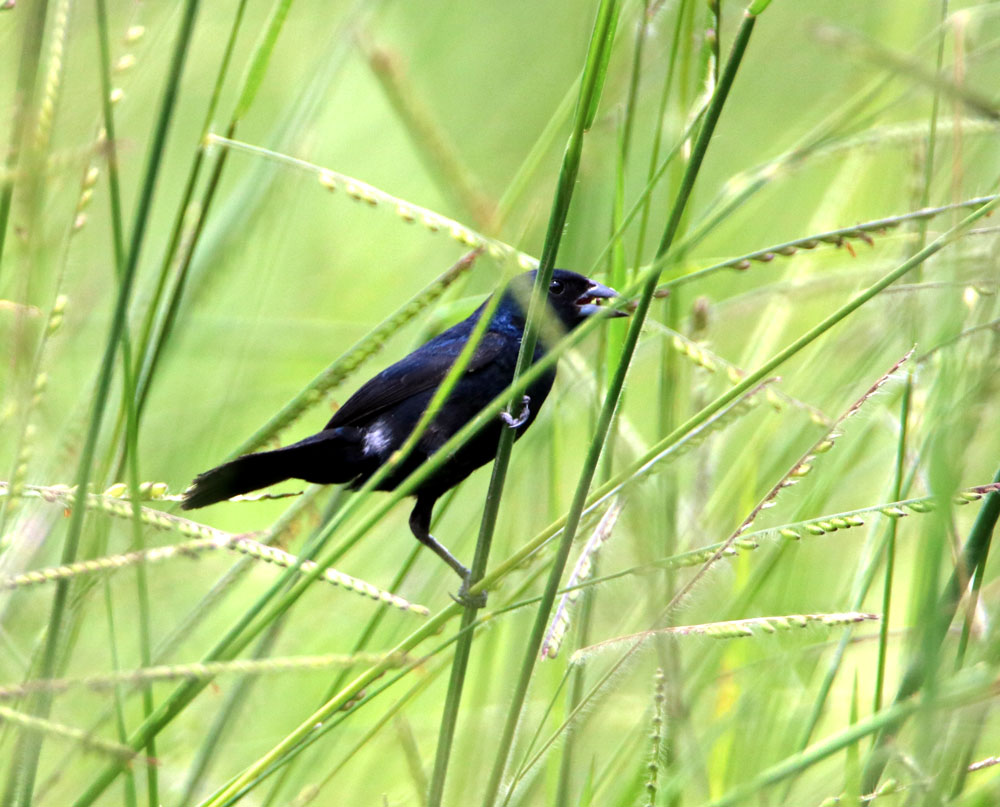
Another seed-eating bird found only in Central & South America, the Blue-black Grassquit(my gallery link) with the one above on a little bush or plant in the cow pasture across the street from me. This male was jumping straight up in the air from this bush about two feet or 60 centimeters as a courtship display, which I’m yet to catch an action shot of! 🙂 See more from there and from 6 other Costa Rica locations in my above-linked gallery. And/or read more about them and see their distribution map on eBird and a very good article on Wikipedia.
Most often seen in the grasses of a meadow or cow pasture as above, eating seeds, Blue-black Grassquit, Atenas, Alajuela, Costa Rica
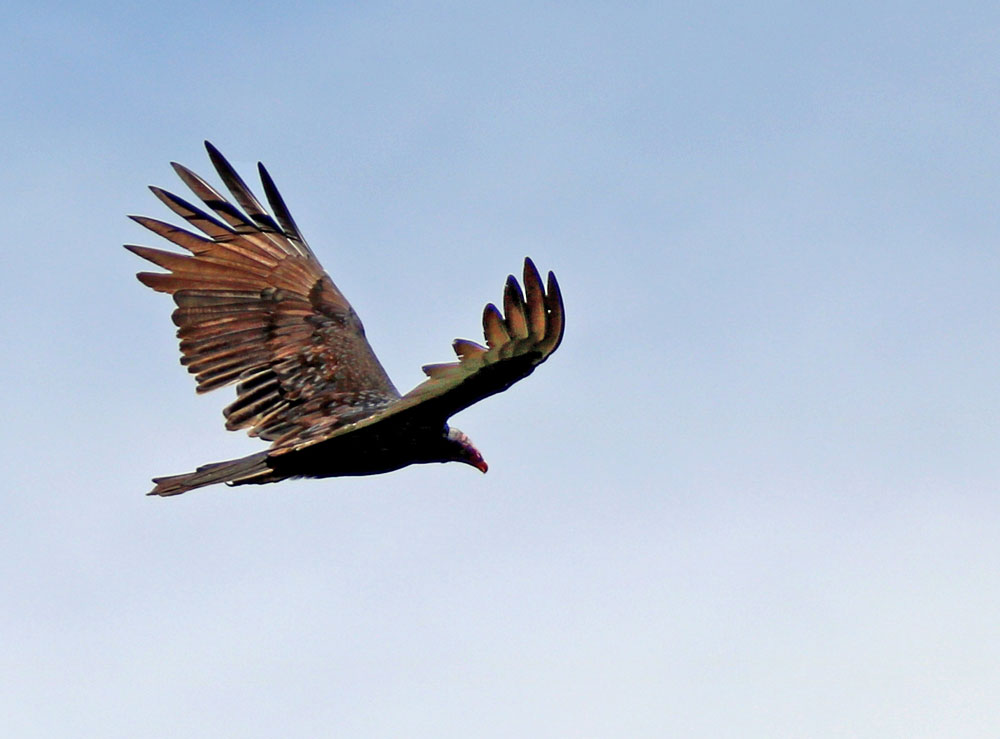
A common bird everywhere it seems, yet sometimes the silhouettes of them flying are impressive. See all kind of photos of this bird in my gallery Turkey Vulture (linked).
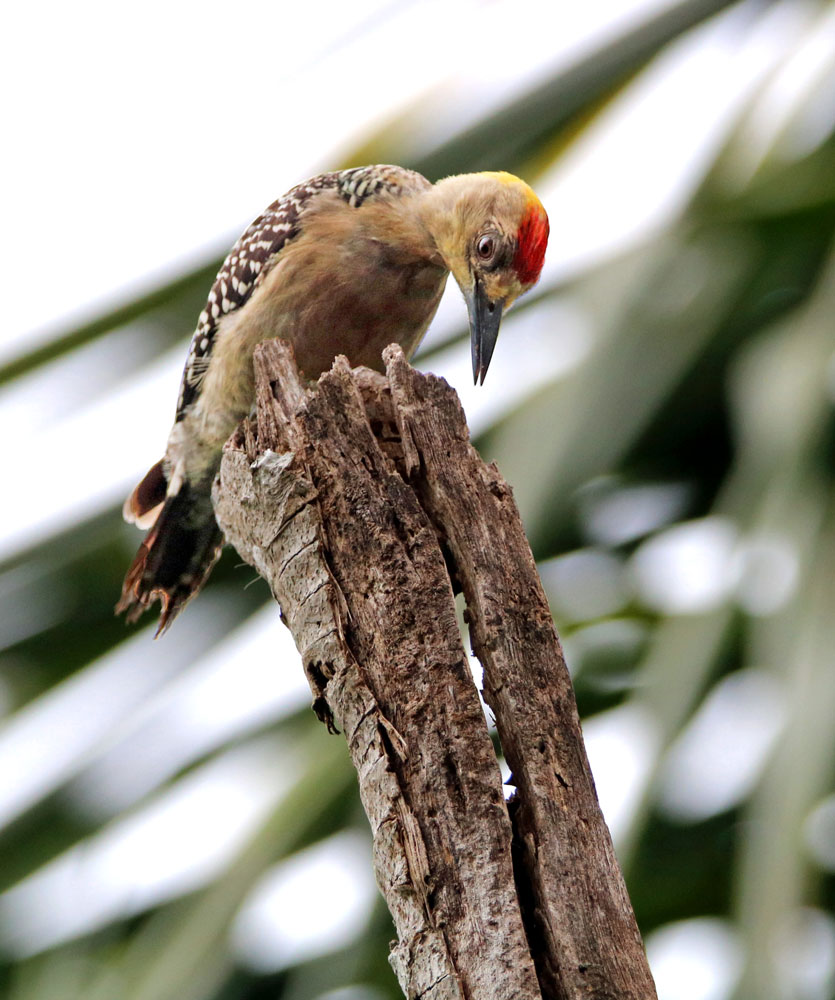
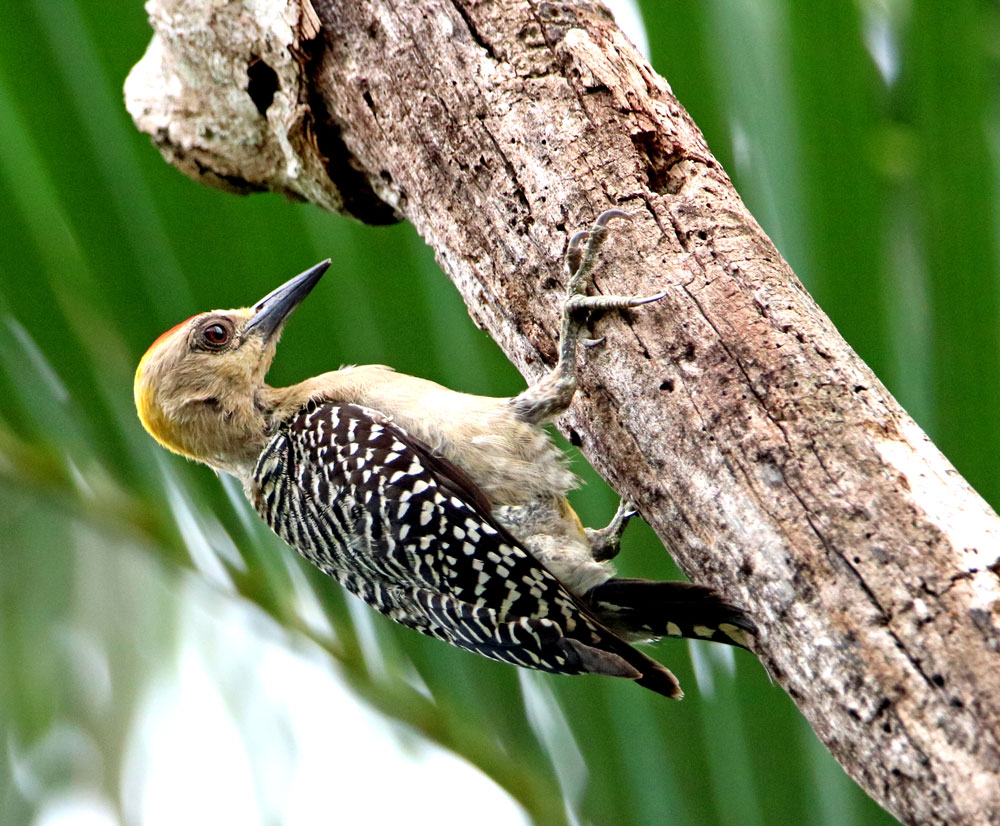
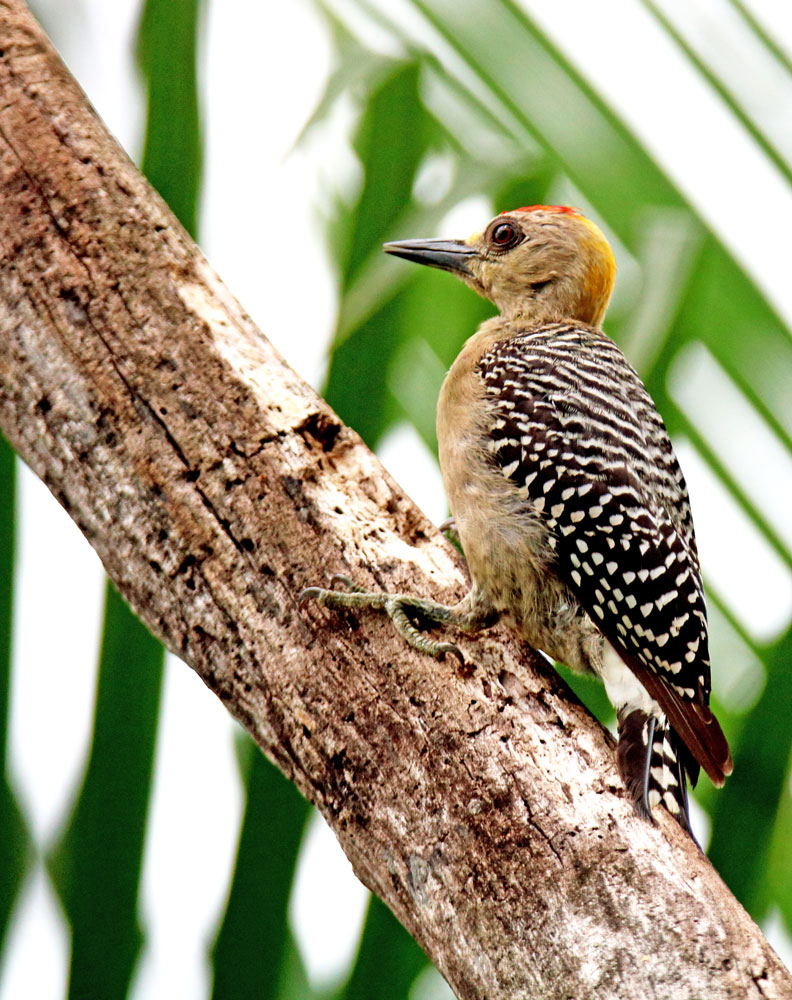
One of the two most common woodpeckers in my garden (Black-cheeked is the other one) and one of 10 total woodpecker species I’ve photographed in Costa Rica! You will find all 10 in my online gallery, with this observation included in the galleryHoffman’s Woodpecker (linked). This one looking for insects on a dead limb in neighbor’s yard is a male, known by the red spot on the top of his head, while the female has only that golden nape with no red. Otherwise they are identical. They are found only in Costa Rica and Nicaragua. Read more about them on eBird. So many fascinating birds here! 🙂
Hoffman’s Woodpecker, Atenas, Alajuela, Costa RicaHoffman’s Woodpecker, Atenas, Alajuela, Costa Rica
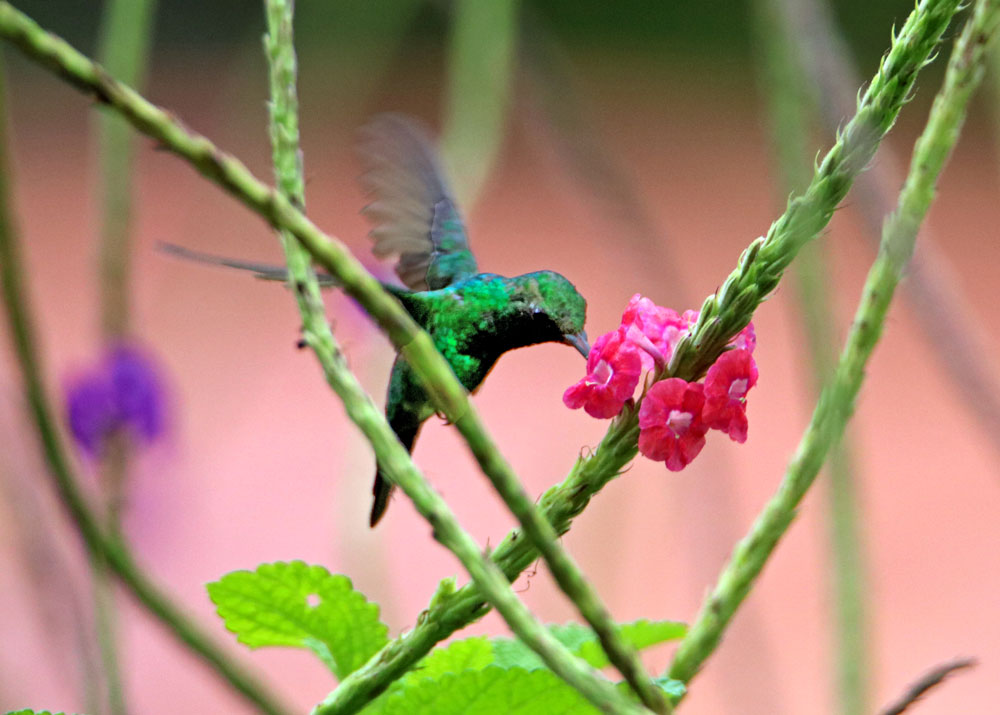
I almost had this one labeled as a Garden Emerald that can be found only in a few limited areas of Costa Rica and Panama, because the iNat AI said it was a Garden Emerald (very similar to Canivet’s), but the same day I posted it on iNaturalistCR, two serious birders corrected me because of both location and the length and shape of the tail. 🙂 So I corrected it there and in my gallery, not getting the “Lifer” that I thought I had! 🙂 Note that this is a male, all green, while the female has a white front and white eyebrow. You can see both in my gallery, Canivet’s Emerald.
My only other time to see this bird was in January of this year, also in my garden. eBird says they live from Mexico to Costa Rica but only in Northwest Costa Rica and I am in more of West Central Costa Rica. Maybe their habitat is expanding south! 🙂 Notice the big difference in the male and female, fairly typical of all Euphonias. See all my photos in the gallery Scrub Euphonia – Euphonia affinis (linked).
Scrub Euphonia, female, Atenas, Alajuela, Costa RicaScrub Euphonia, male, Atenas, Alajuela, Costa Rica
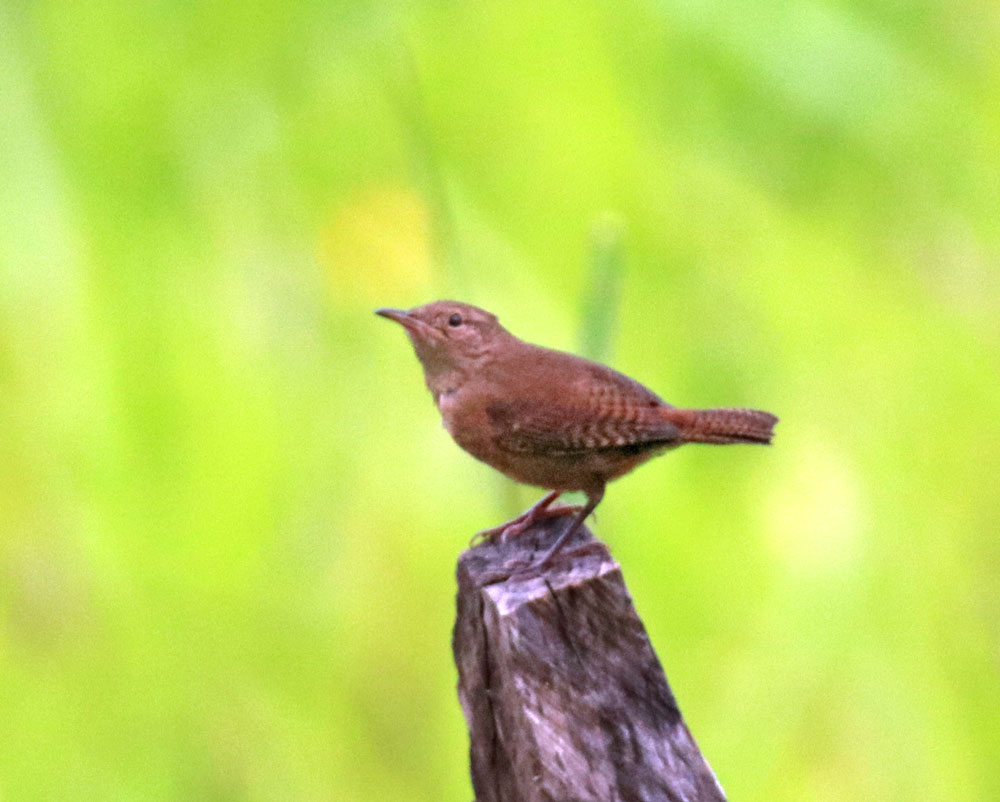
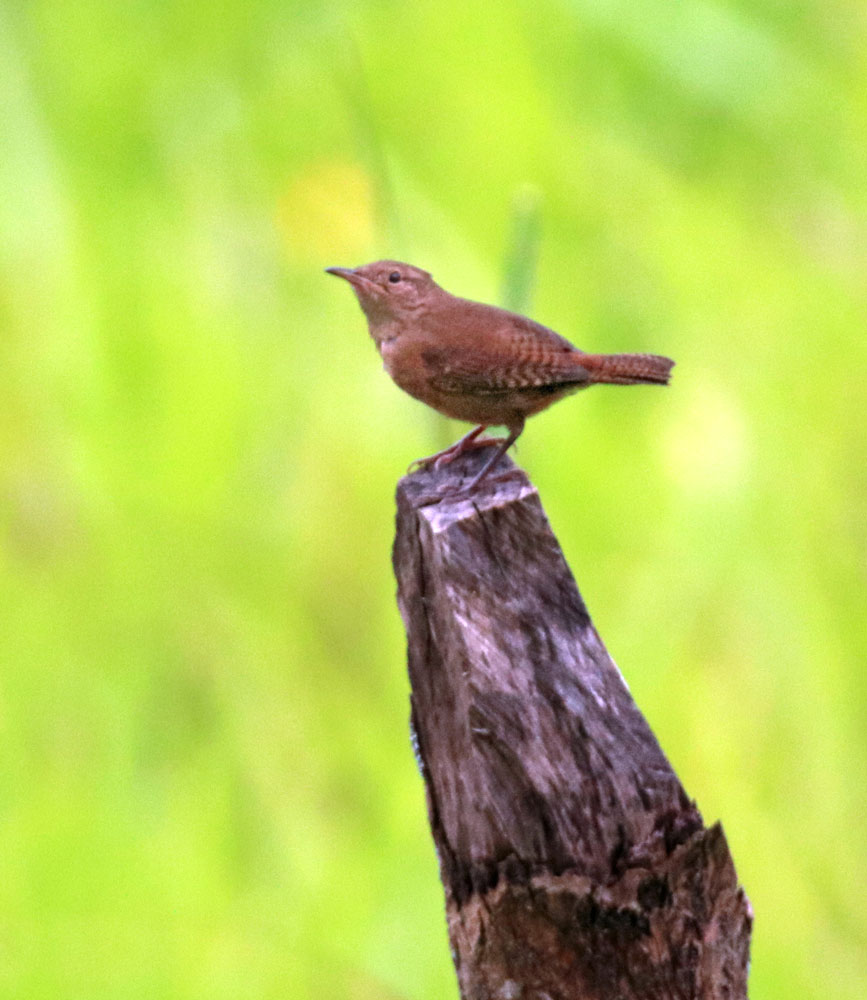
This Southern House Wren (my gallery link) looks pretty much like the Northern House Wren found in the United State to me, but they say there are many subspecies of both, as the scientists get into genetic details! 🙂 This one is found from Mexico south through all of Central America and most of South America. You can of course read about it on eBird or on iNaturalistCR.
Southern House Wren, Atenas, Alajuela, Costa Rica
¡Pura Vida!
Jetpack still hasn’t fixed whatever is keeping my posts from being emailed when scheduled ahead, so I have to publish them manually to get the emailed version and my mornings are usually pretty busy, thus, as today, it is noon before I got around to it.
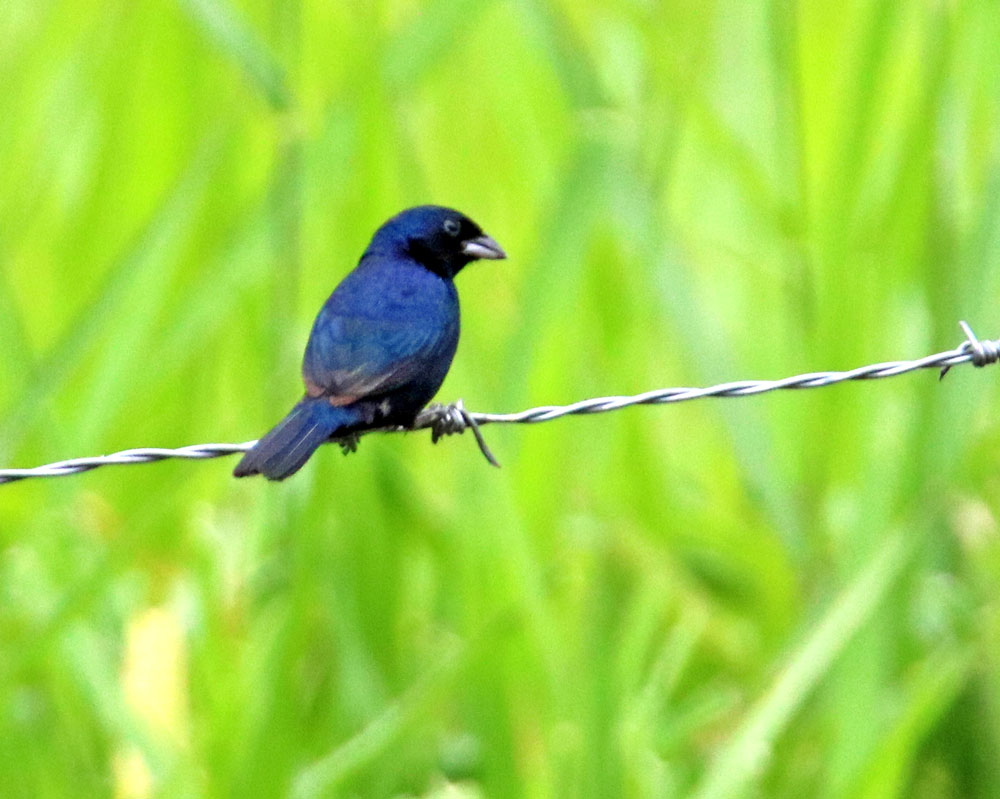
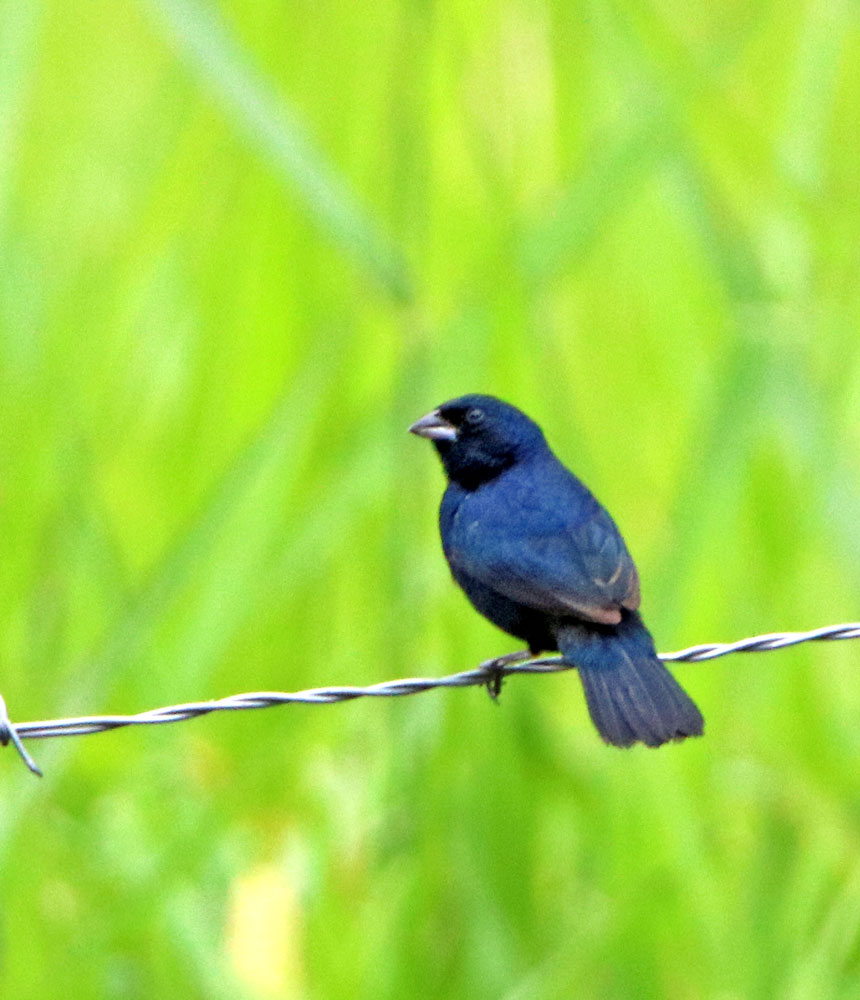
This is one of two or three different ” seed eater type” birds that I see around my house, especially in the cow pasture across the street where this one is. See more of my photos of this species in my gallery Blue-black Grassquit(linked) where the last two images were made on my first trip to Costa Rica in 2009. Or read about them on eBird or oniNaturalist.
Blue-black Grassquit, Roca Verde Cow Pasture, Atenas, Alajuela, Costa Rica
Shot was made from my terrace zooming in on the fence across the street. 🙂