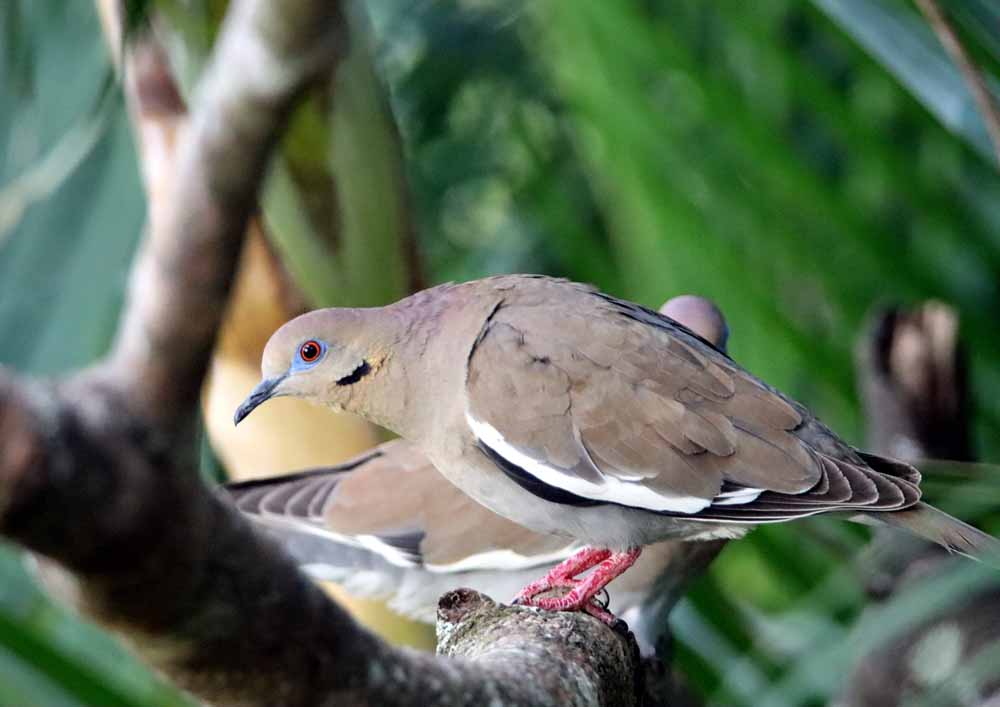
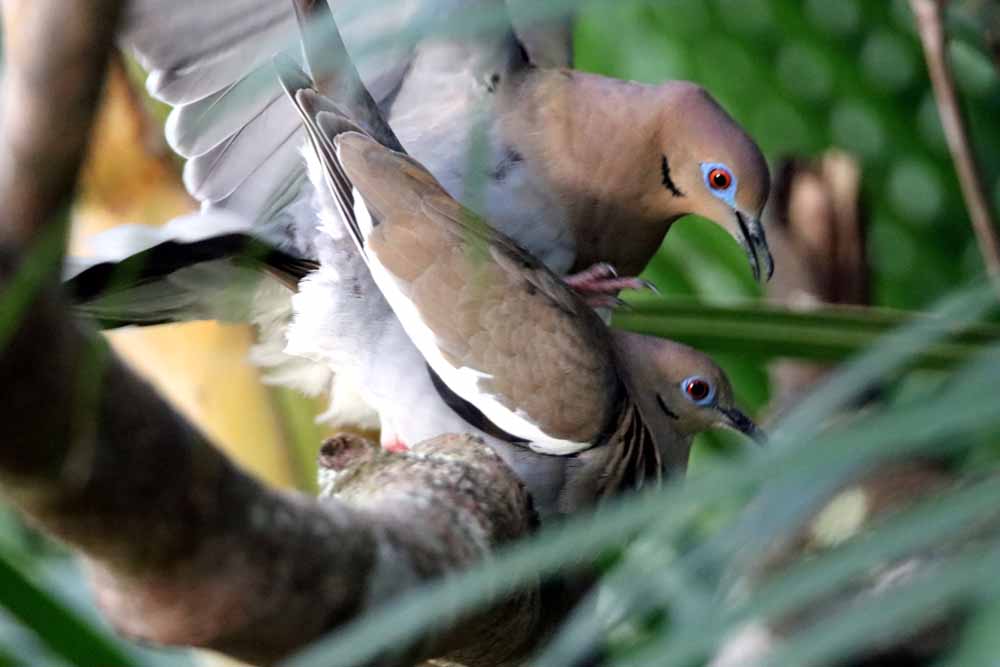
During this very windy time of the year (Jan-Mar) there simply are not many birds on my little hill, but in February I got photos of this pair of White-winged Doves (my gallery link) in the overlapping Nance Tree & Palms adjacent my terrace that I could photograph from my outdoor rocking chair. 🙂 This species is a little larger than some and seems to handle the wind okay, but others have simply disappeared to who knows where? And of course virtually no butterflies.
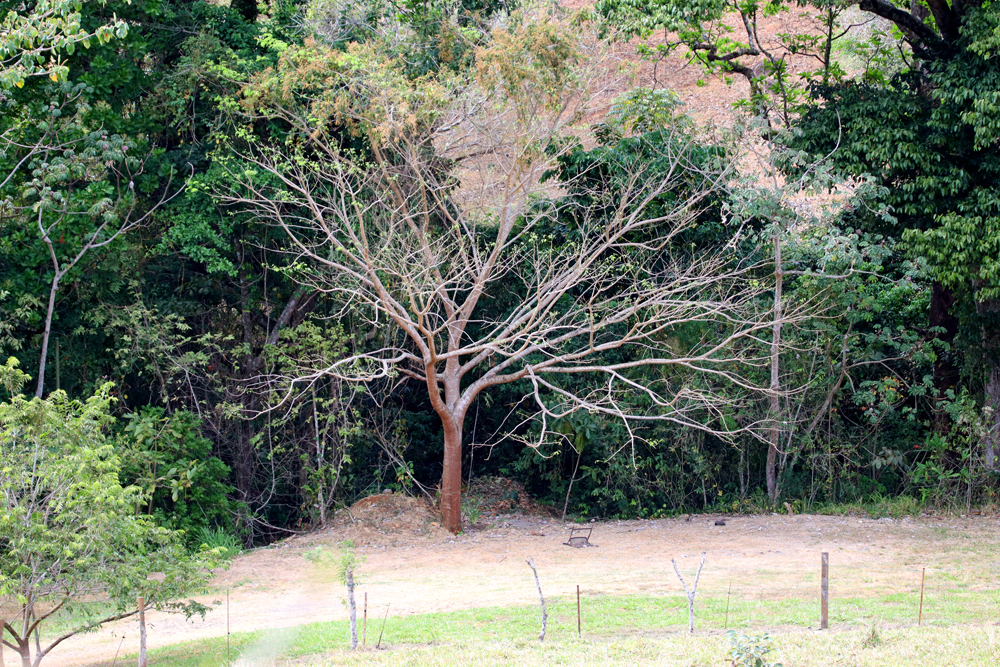
Unidentified, bare-branched TREE on high banks of the stream adjacent the cow pasture in Roca Verde, Atenas, Alajuela, Costa Rica, seen here from my terrace through a telephoto lens.
“No matter how beautiful architecture men can make, they will never create such a wonderful thing as a tree.” ~Pier Luigi Nervi
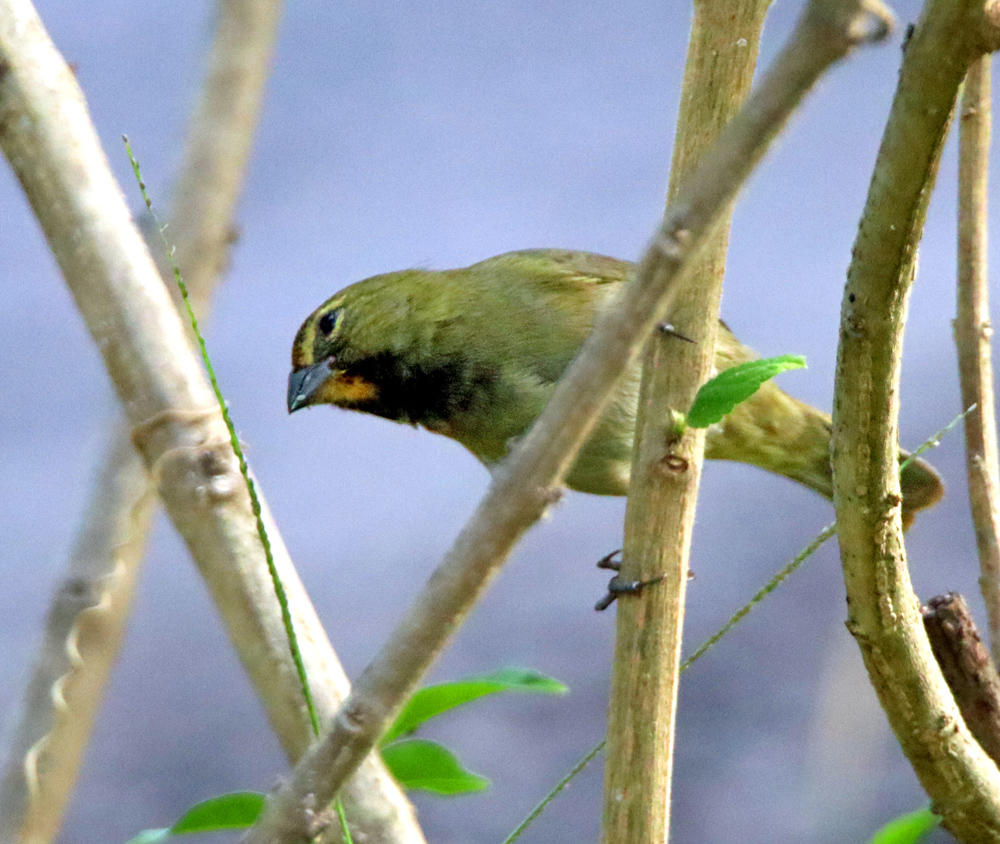
I usually see this species out in the cow pasture grass, but here he is in one of my Nance Trees! See more of this seedeater species in my gallery: Yellow-faced Grassquit – Tiaris olivaceus. Just one shot from this sighting in the middle of March . . .
Yellow-faced Grassquit, Atenas, Alajuela, Costa Rica
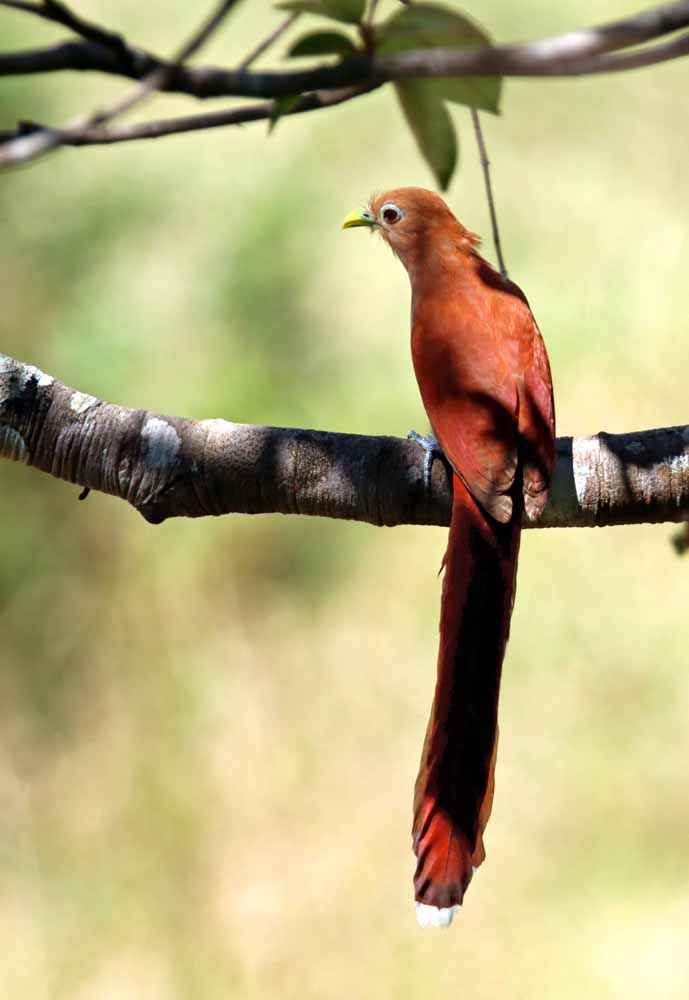
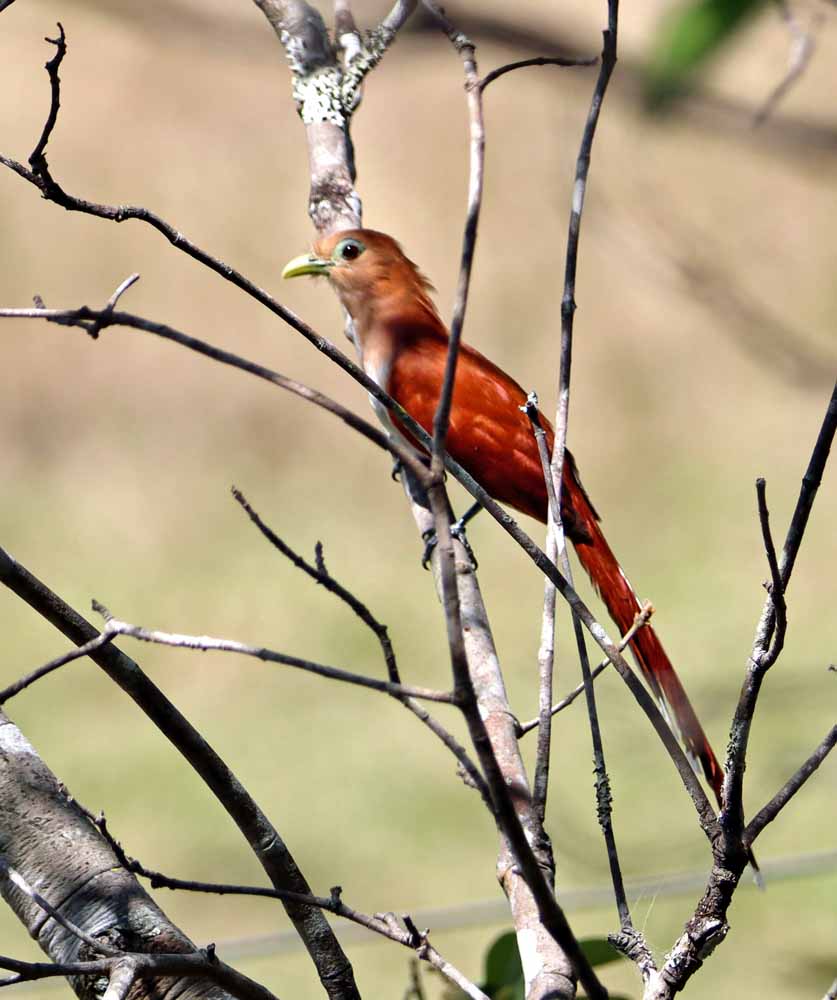
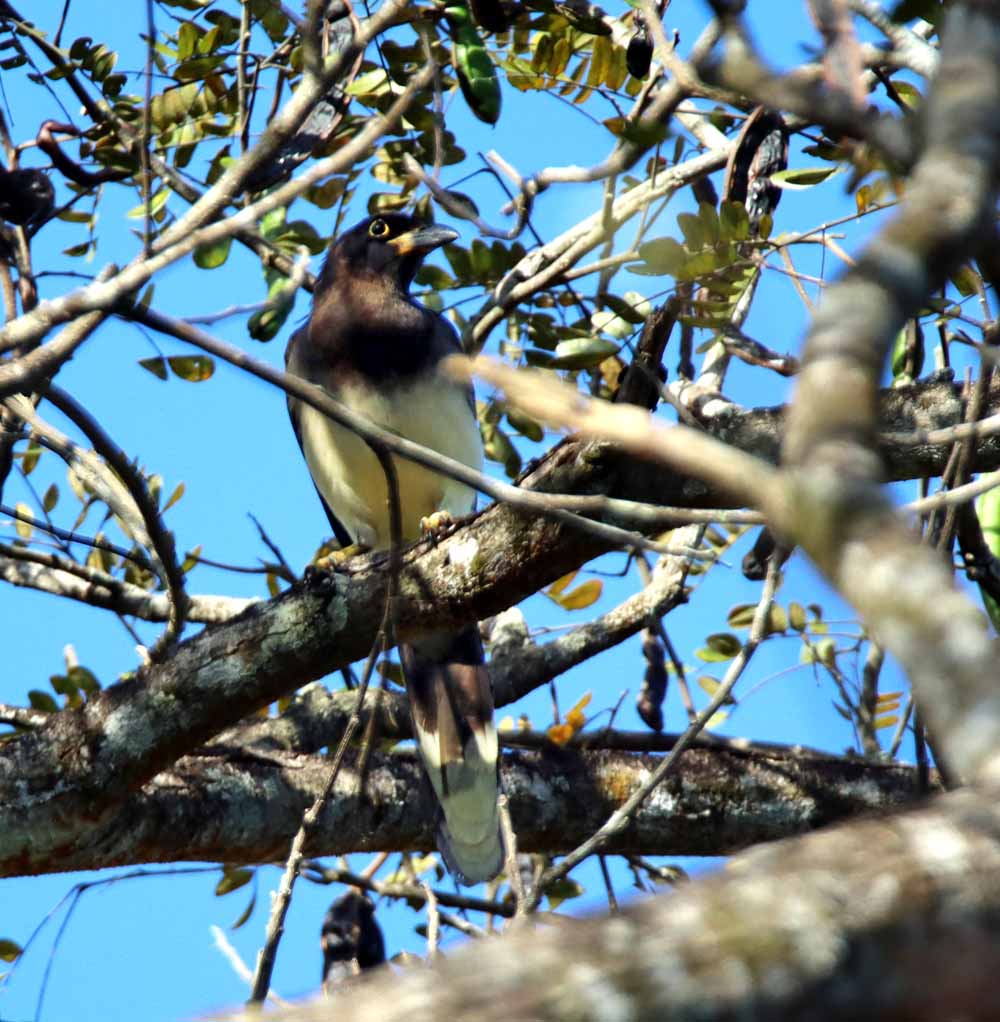
One of those semi-rare birds that I don’t see very often at home or on trips, though the most common of 8 different cuckoos in Costa Rica . This one was hiding in the shadows of a Nance Tree earlier in March, never showing the front of his/her bright B&W tail, thus no great photos like with the one that posed for me back in 2017. 🙂 But in nature photography you take what you get and try to make the best of it! 🙂 See my collection of Squirrel Cuckoos, the gallery! Just 3 shots here . . .
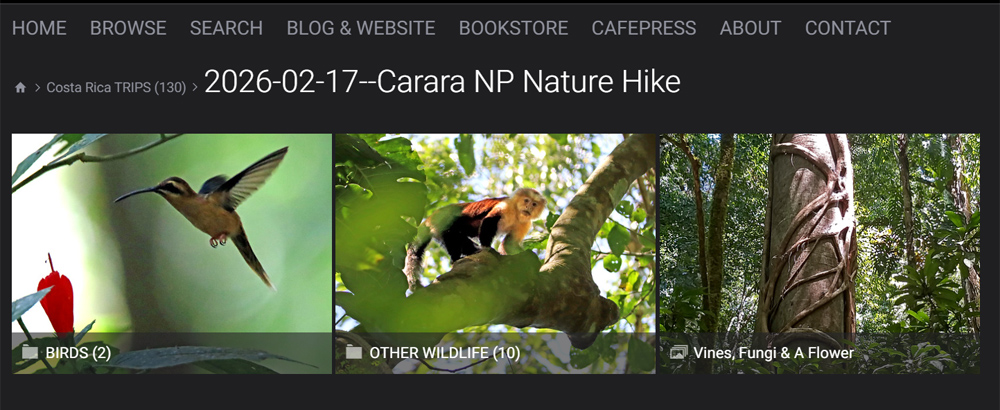
Because we went after the Rio Tarcoles trip, it was too late in day for many birds, I got only 2 species, but I did get 10 species of other wildlife including some interesting species like the Helmeted Iguana, stick moth caterpillar, etc. and one of my dark monkey shots is visible. Click the first page of gallery below to enter or if you prefer an address: https://charliedoggett.smugmug.com/TRIPS/Hiking-Carara-NP
CLICK ABOVE IMAGE to go to the gallery.
I earlier did a post on the Helmeted Iguana and one on the Stink Bug, two of the 10 “Other Wildlife” seen at Carara this time. See gallery.
And tomorrow I will hopefully have completed the gallery for our morning visit to Los Angeles Cloud Forest Reserve and Villa Blanca Cloud Forest Hotel.
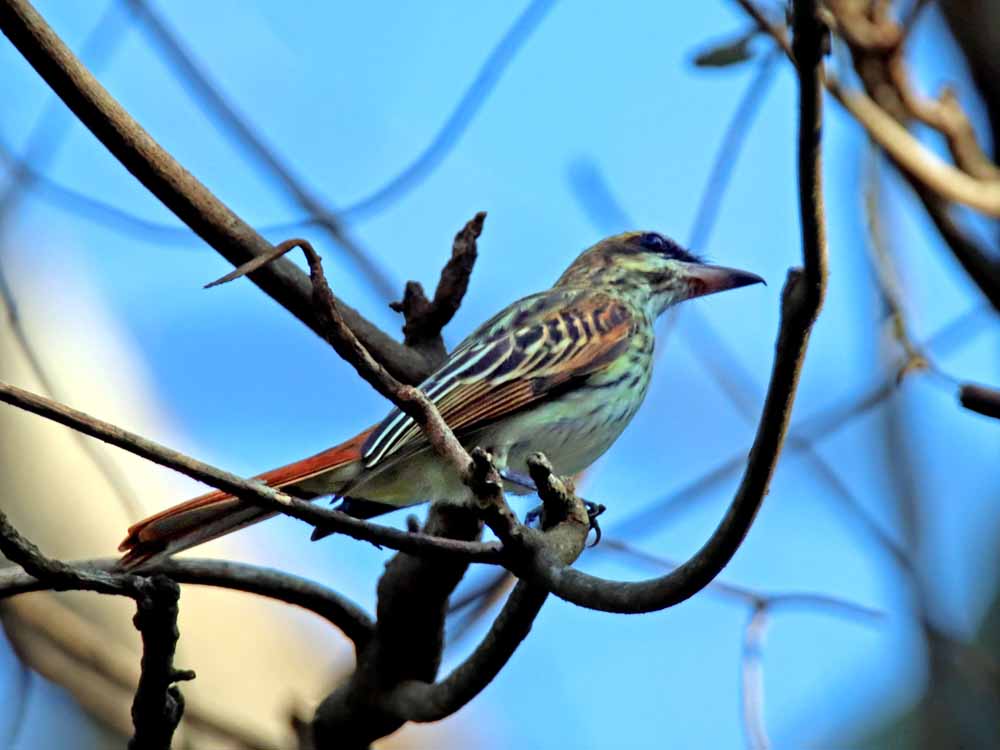
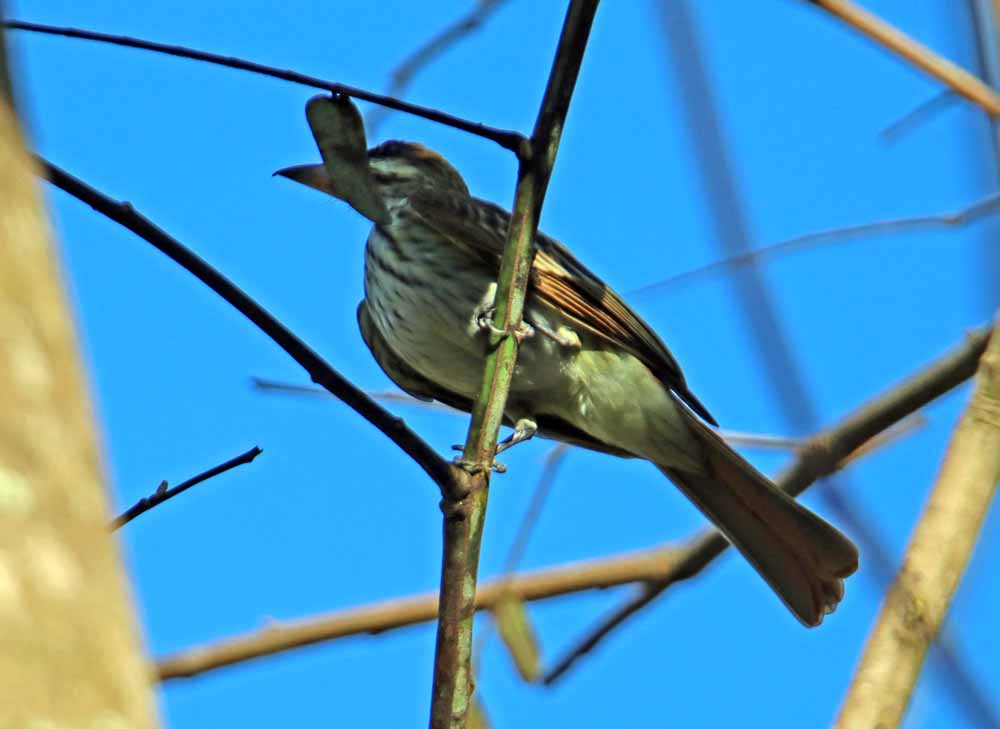
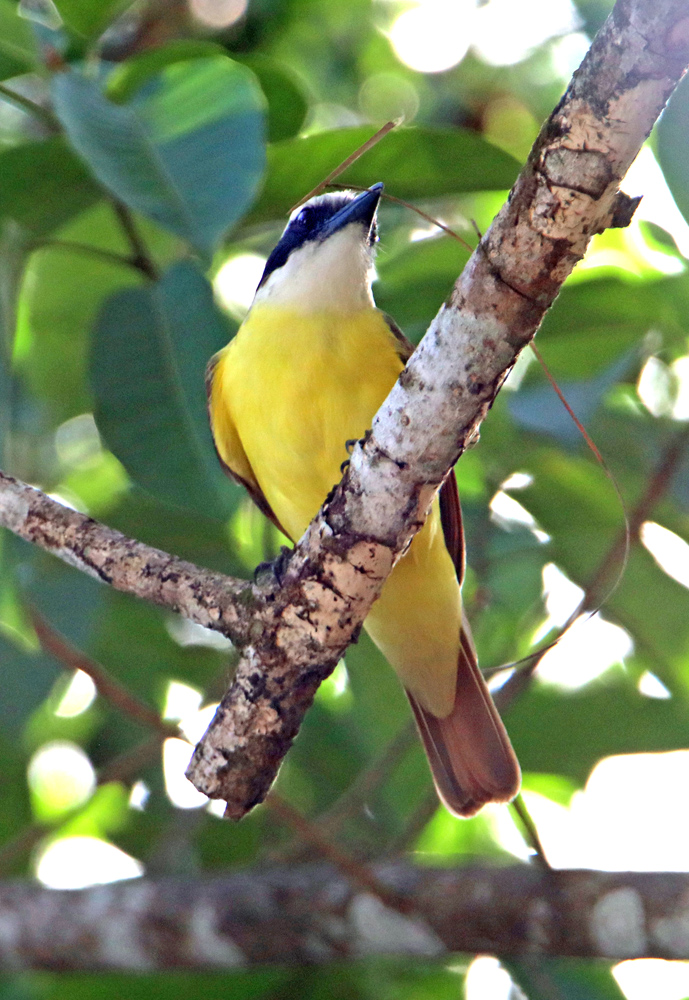
Another species seen on Rio Tarcoles that I don’t see regularly across Costa Rica is the Streaked Flycatcher (my gallery link) and it is very similar to the Sulphur-bellied Flycatcher, which I thought the second of these two photos was (as did Merlin), but after more research, I decided that they are both Streaked and learned that many Streaked have some yellow on their belly. My final decision of putting both photos in Streaked was based also on other markings besides the yellow coloration. And, as always, I may be wrong! 🙂 If so, then this is two species and my total on the river was 41! 🙂
Streaked Flycatcher, Rio Tarcoles, Puntarenas, Costa RicaStreaked Flycatcher (or maybe a Sulphur-bellied Flycatcher), Rio Tarcoles, Puntarenas, Costa Rica
They were together in the same group of trees near the boat dock which is another reason I put them in the same species, but it is not unheard of for two species to hunt together and they would be related, like maybe cousins? 🙂 But also, I found many examples online of Streaked with more yellow like this second photo. You decide. And both eBird & iNaturalist have “checkers” and “identifiers” who also may correct my IDs when submitted to each. 🙂
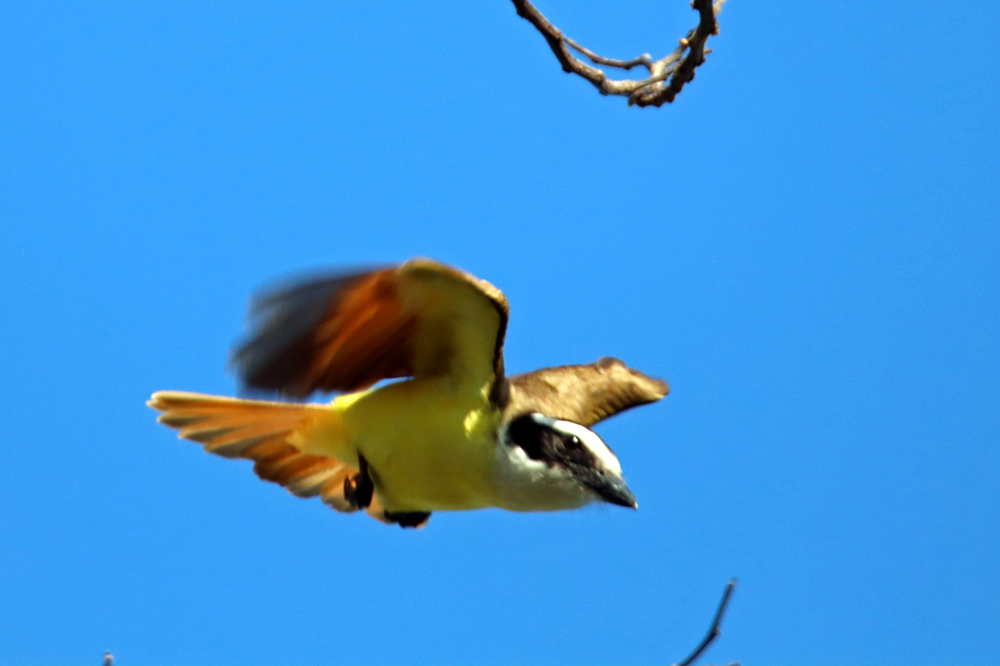
With forests lining much of the Rio Tarcoles, there are also a lot of “regular” birds like these Kiskadees (linked to my gallery). Just 2 shots in this post, one perched and one flying, with more in the gallery . . .
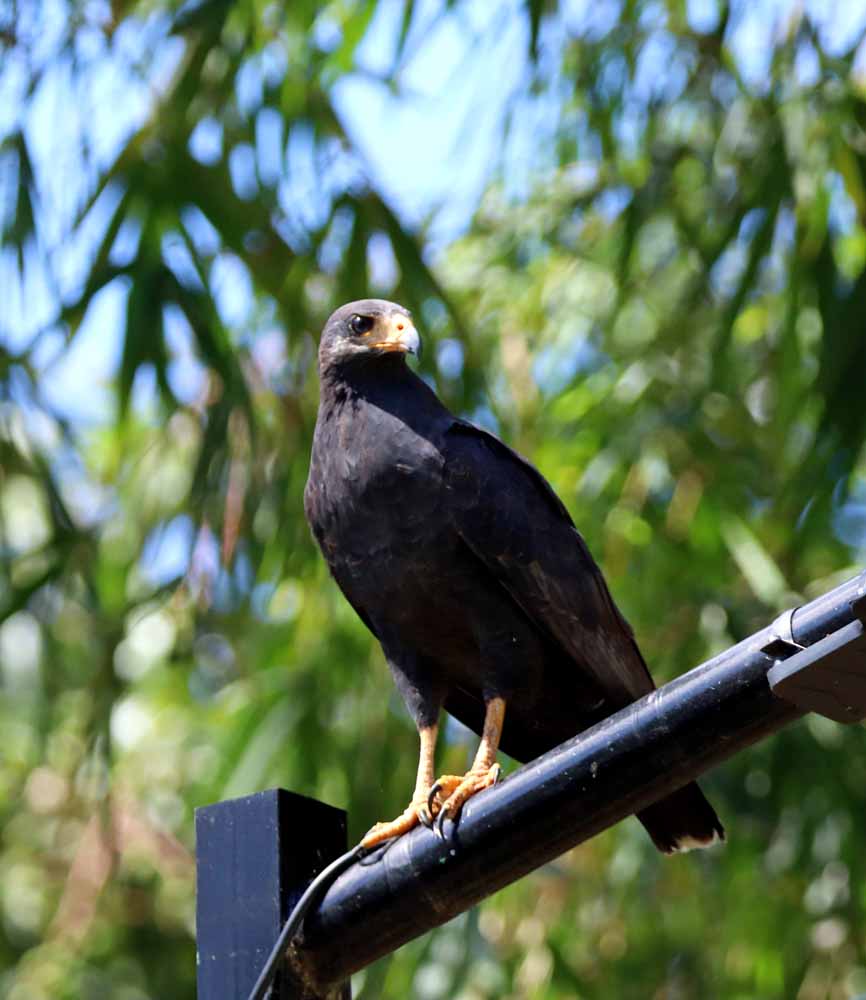
This is the most seen hawk of all for me, almost everywhere I go. See more of my photos in the gallery Common Black Hawk. Not super good photos this trip, but this one of him flying right above me (close) is kind of interesting! 🙂