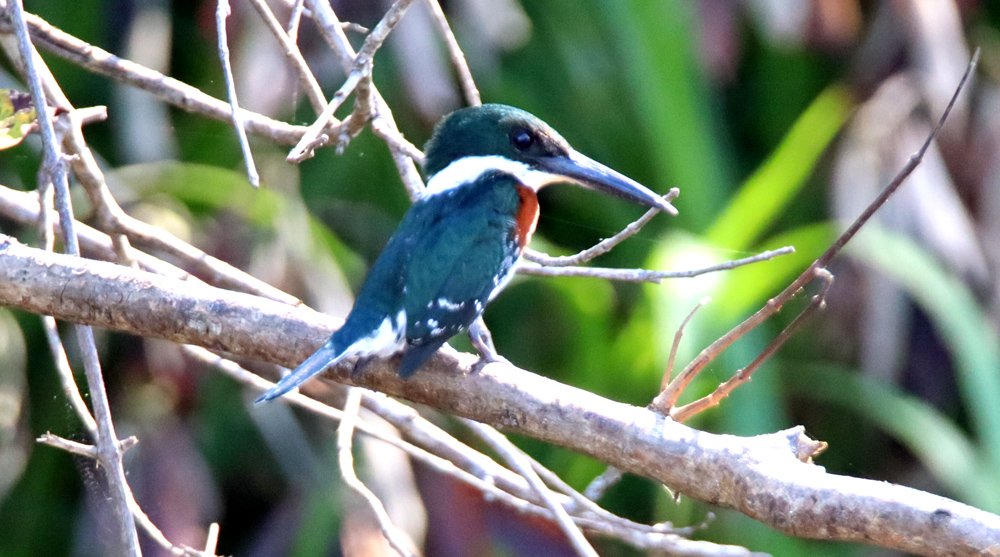
Similar to the Amazon but smaller with several markings different including white spots not on the Amazon. See more photos of this common Kingfisher on both slopes at Green Kingfisher Gallery.
¡Pura Vida!


charliedoggett.net
Similar to the Amazon but smaller with several markings different including white spots not on the Amazon. See more photos of this common Kingfisher on both slopes at Green Kingfisher Gallery.
¡Pura Vida!
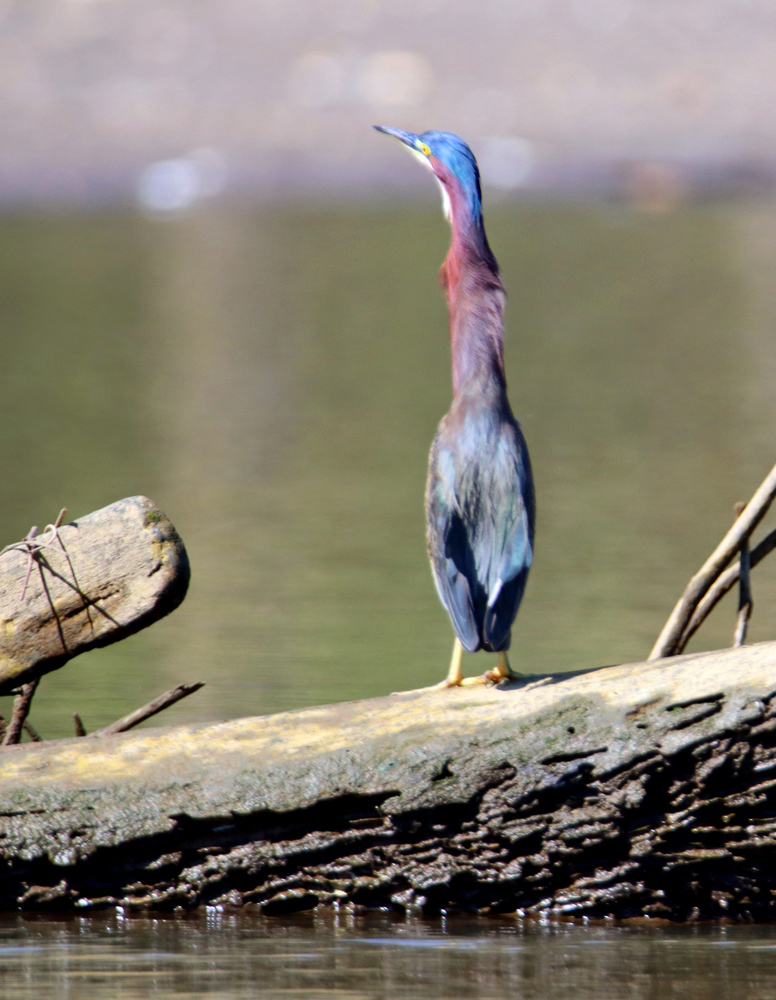
I have never seen a Green Heron with this long of a neck (or a neck stretched out this long) as most look “short and squatty.” But the coloring and everything else matched the Green Heron and eBird’s AI, Merlin, agreed! See my other photos from other times and places in my GALLERY: Green Heron. Just one photo here from when our boat floated past it on a floating log. The only one I saw close enough to photograph that day.
And here is how Google’s AI answered my question about this stretched neck:
“Green herons are about the size of crow, but they can extend their coiled S-shaped neck to a length equal to that of their body. This “rubber neck” helps them stretch out to catch prey, swallow large critters and position their head without moving the body.” ~Google AI
¡Pura Vida!
🙂
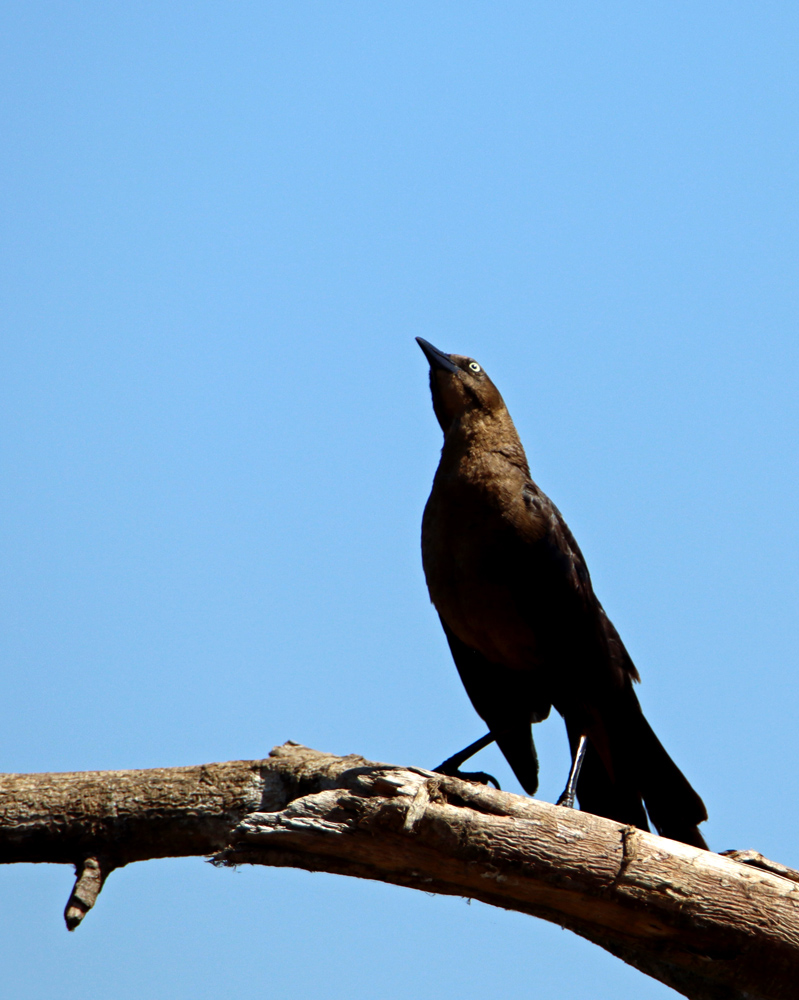
Usually more Grackles are seen on the Tarcoles than we did this time. I think this photo is of a male, always black and usually with a little blue or purple sheen, not seen in this photo. And the way the light hits this one, plus its shadows, it’s possibly a dark brown female. The females are just as handsome, with brown as their color and strutting less than the males. 🙂 Just this one photo. See more in my Great-tailed Grackle GALLERY.
¡Pura Vida!
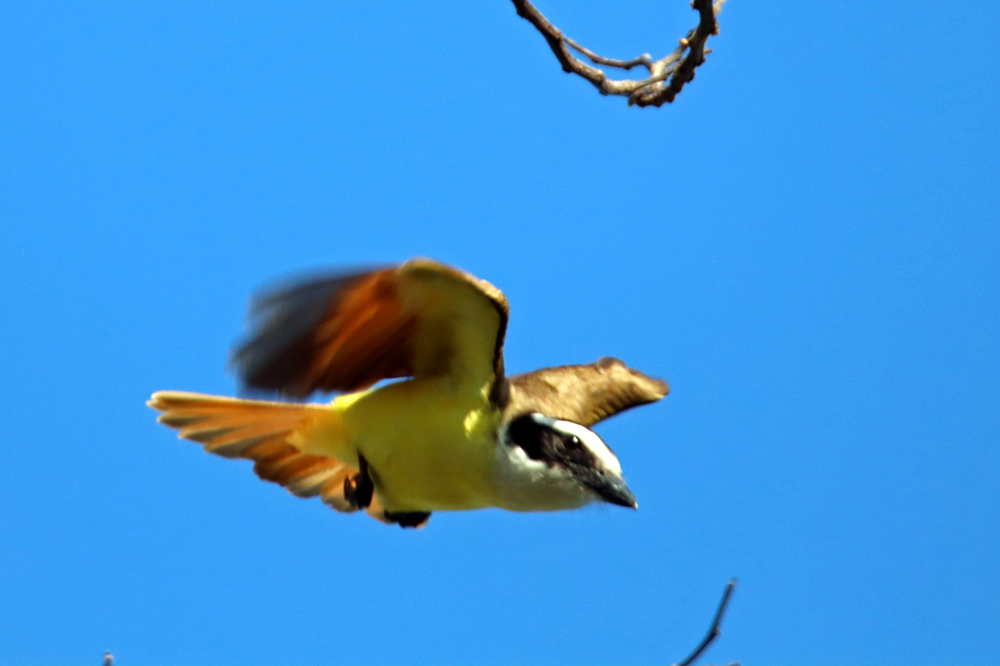
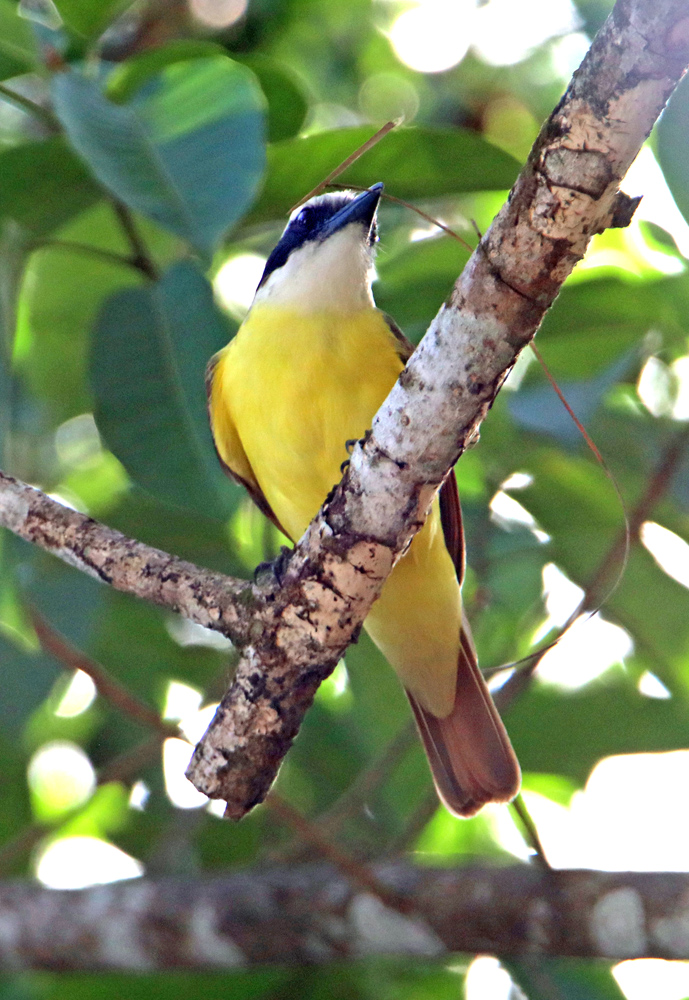
With forests lining much of the Rio Tarcoles, there are also a lot of “regular” birds like these Kiskadees (linked to my gallery). Just 2 shots in this post, one perched and one flying, with more in the gallery . . .
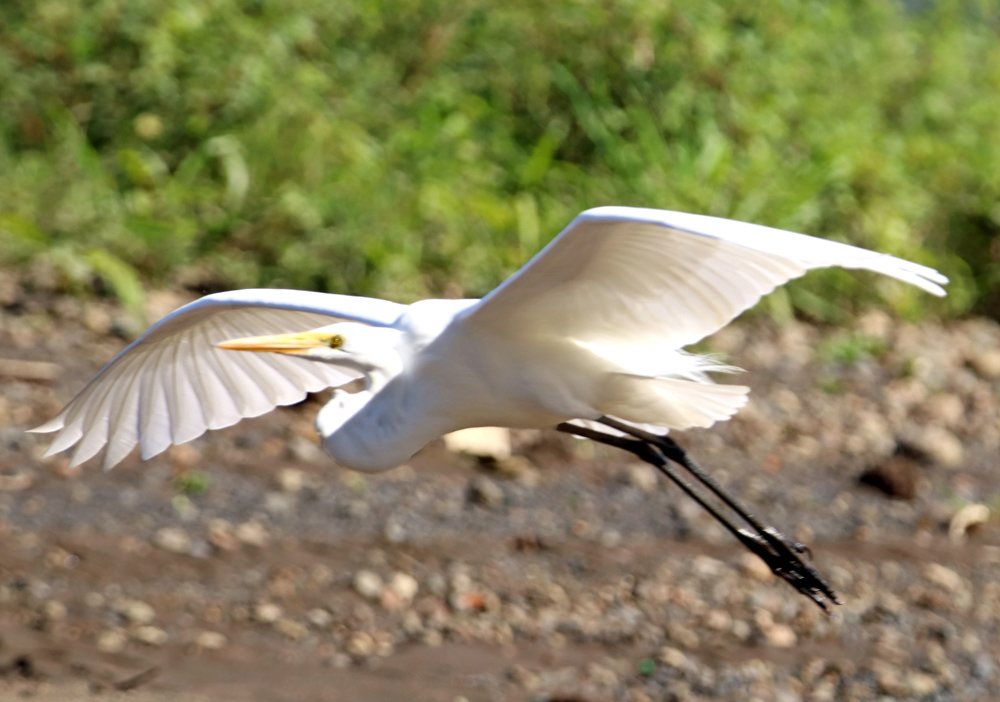
Always one of my favorite on the water as you can see in my Great Egret GALLERY.
Just on shot here. Go to the gallery for some of the several others made.
¡Pura Vida!
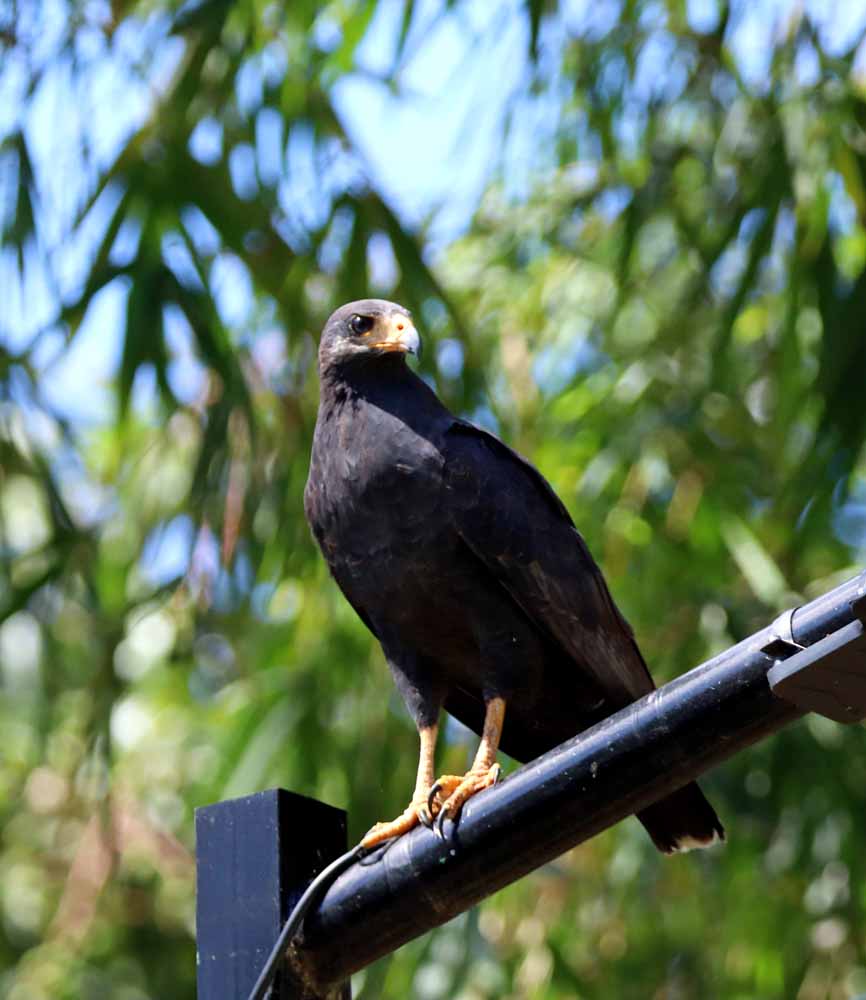
This is the most seen hawk of all for me, almost everywhere I go. See more of my photos in the gallery Common Black Hawk. Not super good photos this trip, but this one of him flying right above me (close) is kind of interesting! 🙂

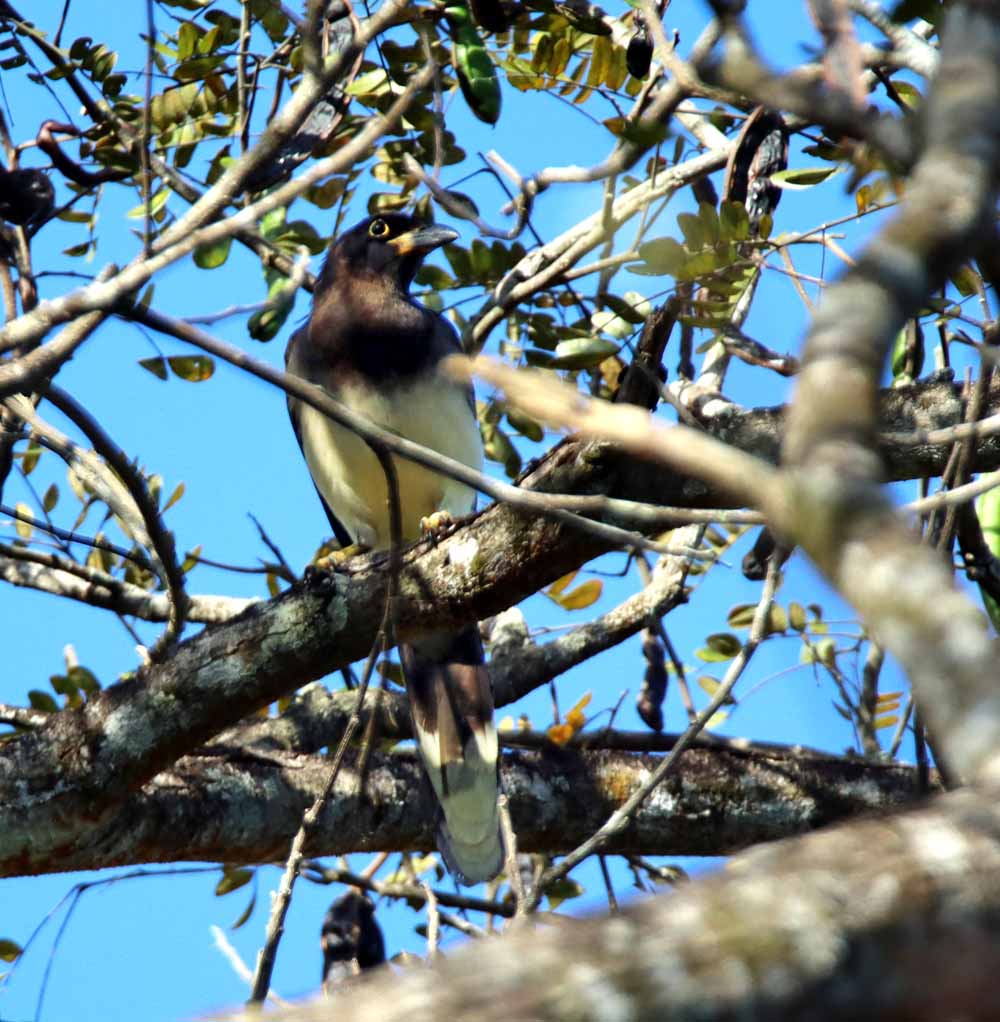
It’s been a couple of years since I’ve seen a Brown Jay (my gallery link), so I was glad to find these two near the dock for our boat tour.

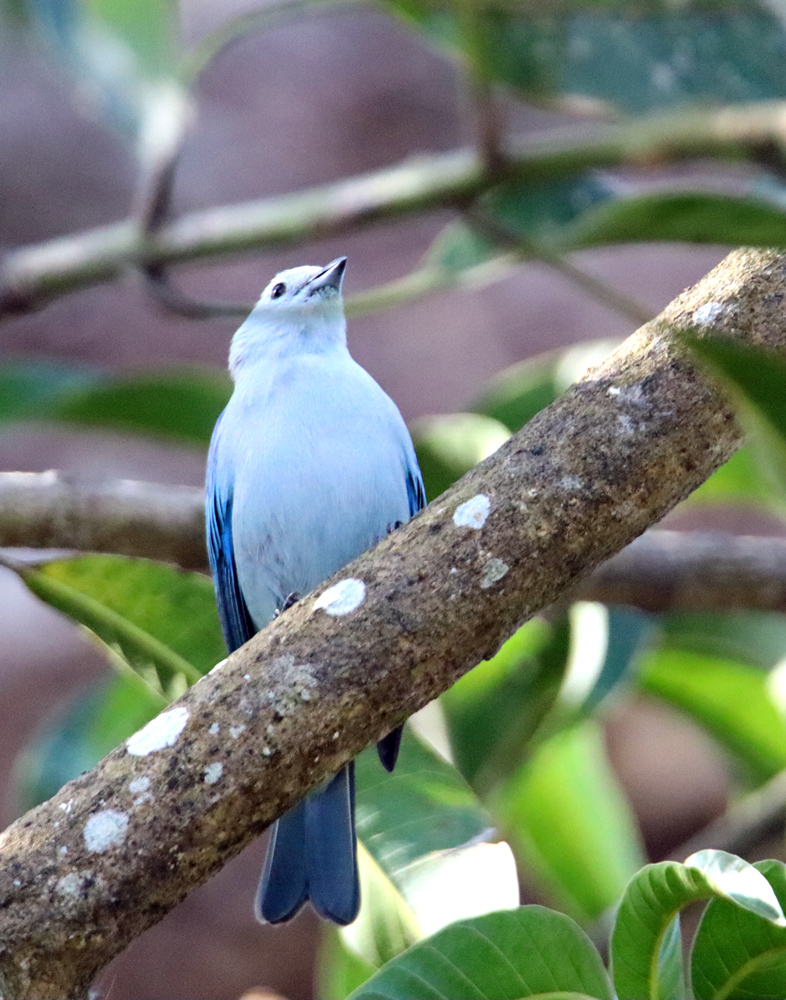
There are more than water birds on Rio Tarcoles with both shores lined with forests. And this is one of the more common Central & South American birds that even comes to my garden. See more in my gallery: Blue-gray Tanager.
¡Pura Vida!
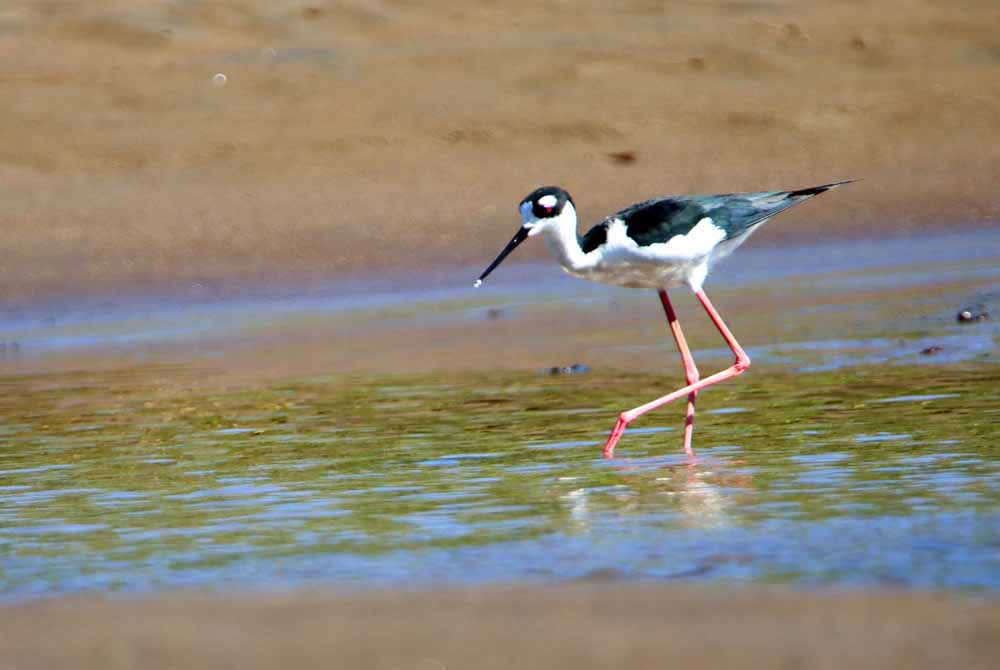
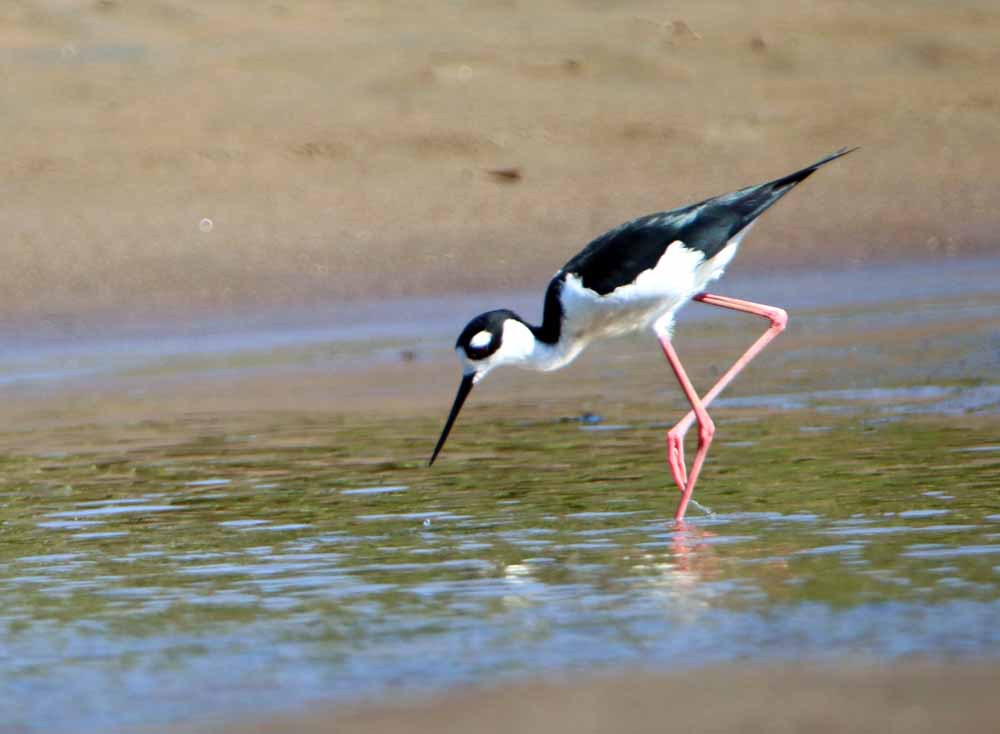
This unmistakable to identify, black & white shore bird, with unreal hot pink & very long legs, is found throughout the Americas and on both slopes of Costa Rica in both fresh & salt waters. See my photo collection of this unique bird in the linked gallery: Black-necked Stilt.
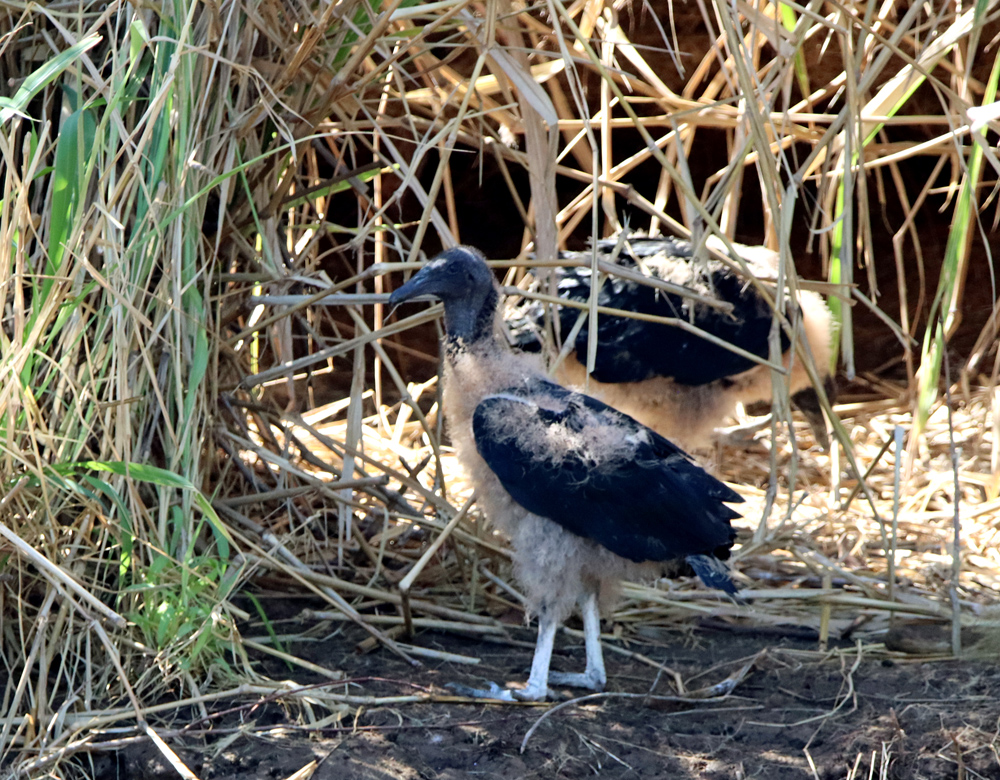
I’ve seen many black vultures over the years here but never before a juvenile. A family of at least 3 or maybe 4 children were on the ground in the grasses adjacent the river with no adult seen near them. I hesitate to call them babies, but still pretty young with some semi-downy feathers and unable to fly. I guess the nest is on the ground in those grasses, though it seems dangerous to me, even for the larger birds. So I asked Google and its AI said . . .
“Yes, black vultures commonly nest on the ground, usually in secluded areas like thickets, hollow logs, caves, or abandoned buildings. They do not build traditional nests, instead laying their eggs directly on the ground, soil, or debris.”
For a lot of photos of adult Black Vultures, see my gallery: Black Vulture
¡Pura Vida!