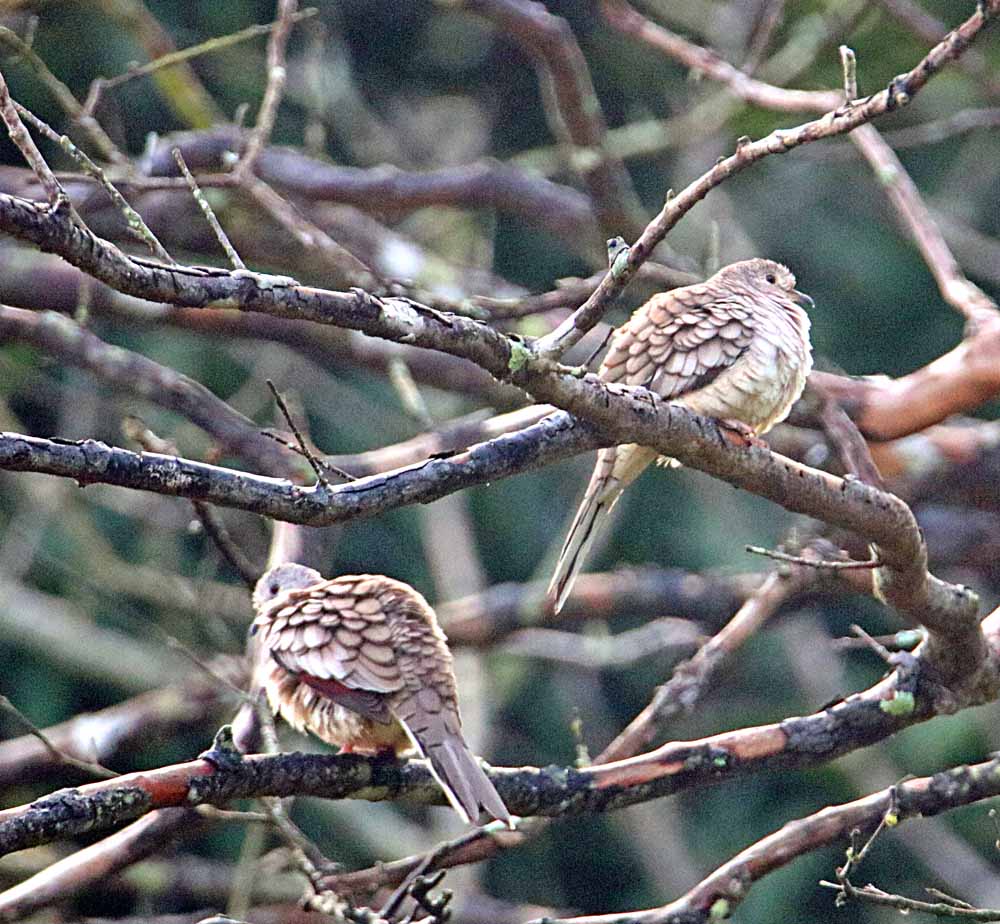
Inca Doves, Columbina inca (my gallery link) is one of several common doves in Costa Rica. Here’s a recent shot in my garden . . .

charliedoggett.net
Inca Doves, Columbina inca (my gallery link) is one of several common doves in Costa Rica. Here’s a recent shot in my garden . . .
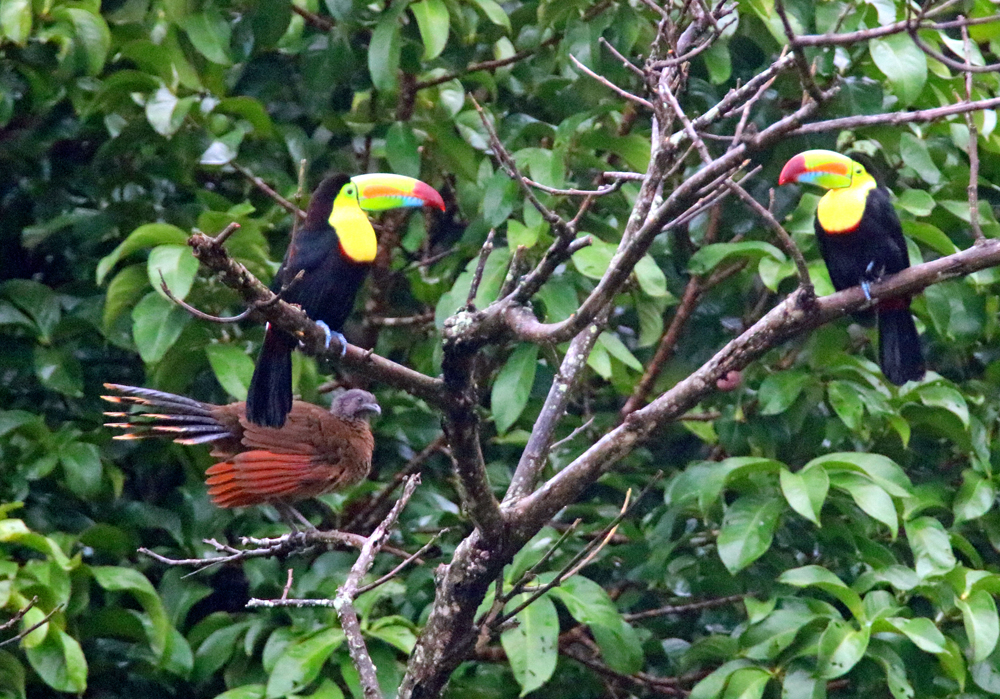
Well, in this case, two totally different “feathers” are flocking together or at least sharing the same tree in a neighbor’s yard on a hill above me. First time I have seen the Keel-billed Toucan and the Gray-headed Chachalaca sharing a perch tree. (Names are linked to my galleries of each species.)
My landlord “K” texted me to say he looked down (his house is above mine on the same hill) to tell me that there were two toucans in my Cecropia Tree. I went out with my camera and as I looked up the last one of the two flew off. But fortunately both flew up a different hill into someone else’s tree which they shared with a Gray-headed Chachalaca. 🙂
And thanks to my telephoto lens I managed to get this shot of friendly neighbors of different species about a hundred yards away! 🙂 Maybe it’s an object lesson for us humans! 🙂
¡Pura Vida!
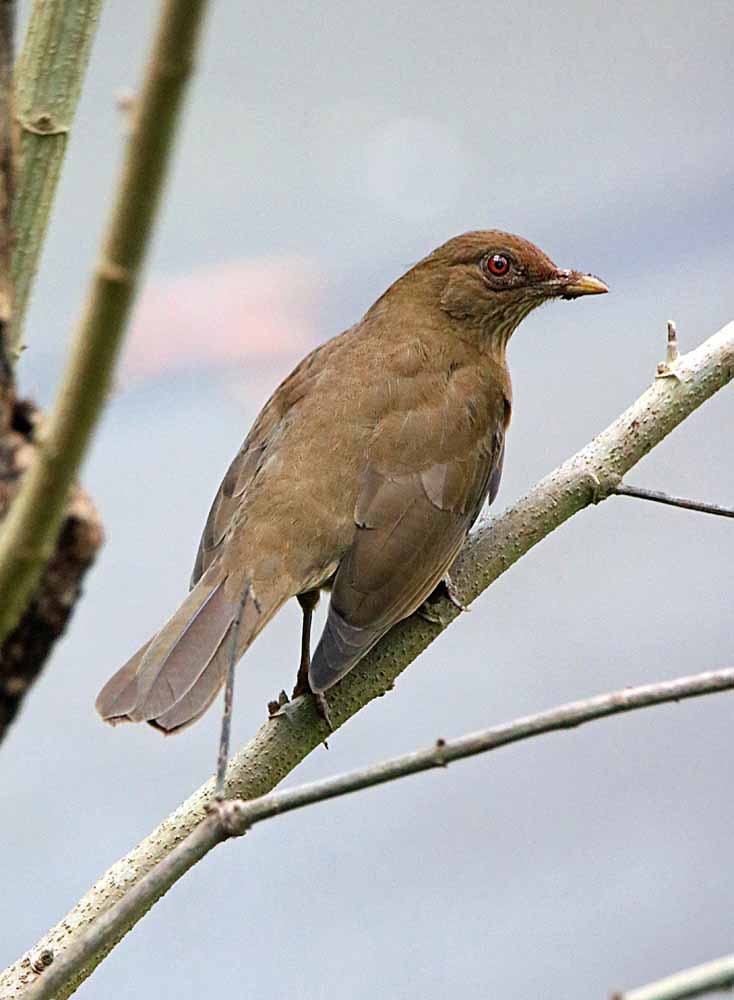
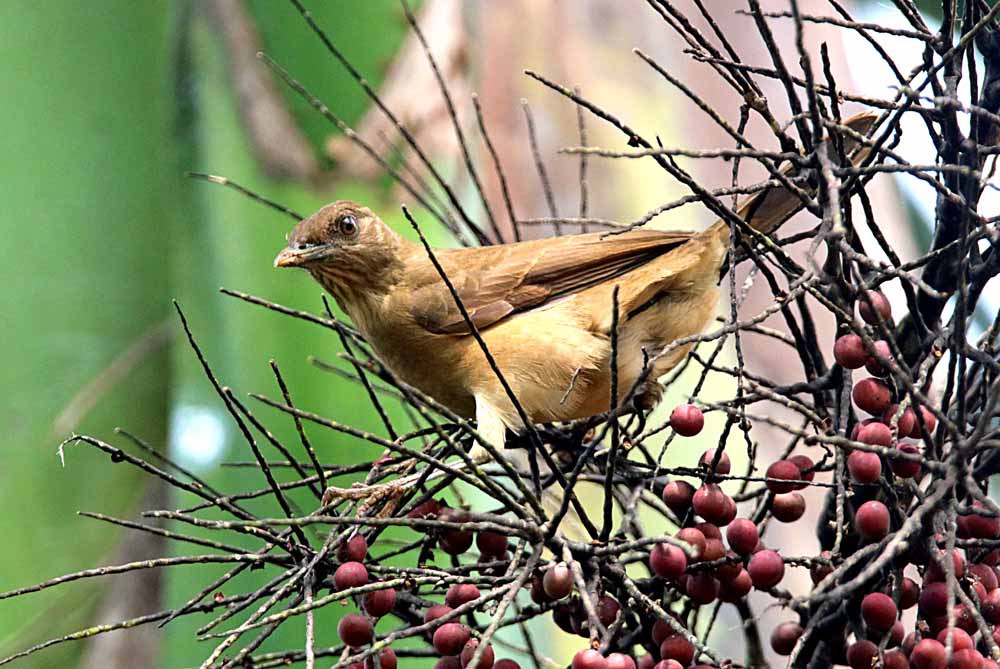
The national bird of Costa Rica is the Yigüirro or Clay-colored Thrush (linked to my gallery) and one of the most seen for me in my garden and most other places I visit in Costa Rica. A November shot . . .
¡Pura Vida!
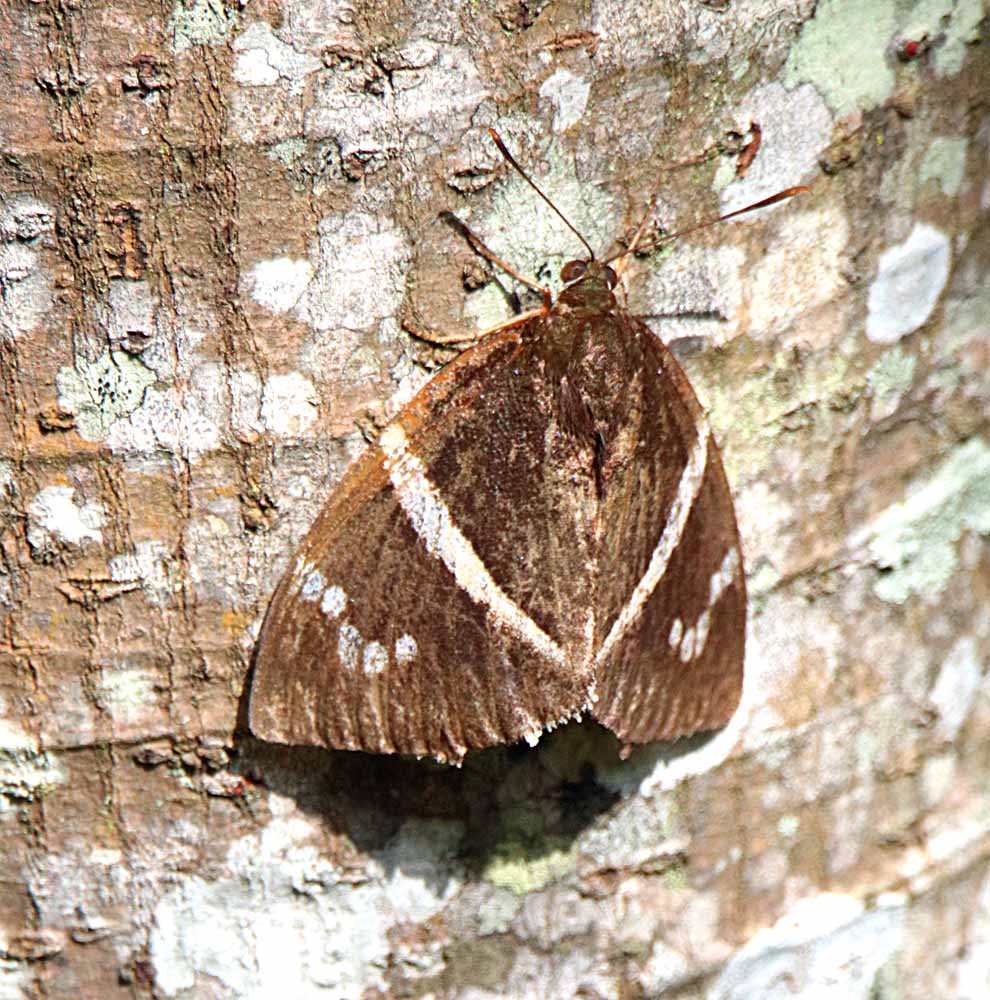
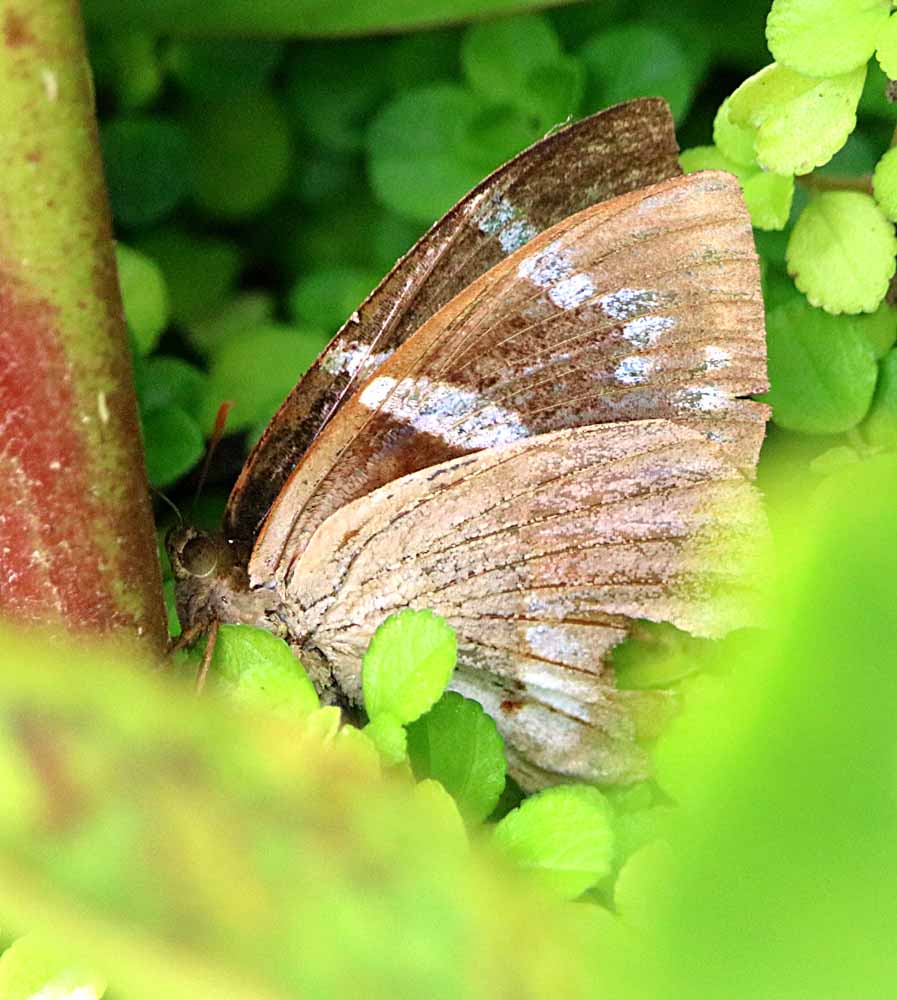
I’ve seen this large daytime moth several times in my garden & house and the only other place was at Esquinas Rainforest Lodge near Golfito on the Pacific Coast. The other day I saw two, one on my Cecropia Tree and another injured one hiding among plants in my garden. When not wanting to be seen, they are this plain beigey brown color with off-white spots and bars. But when they fly or lift their forward wings, the hindwings are a bright orange and white. You can see this from earlier sightings in my GALLERY: Giant Butterfly Moth, Castniomera atymnius (linked to the gallery). Just two shots here from this November sighting.
¡Pura Vida!
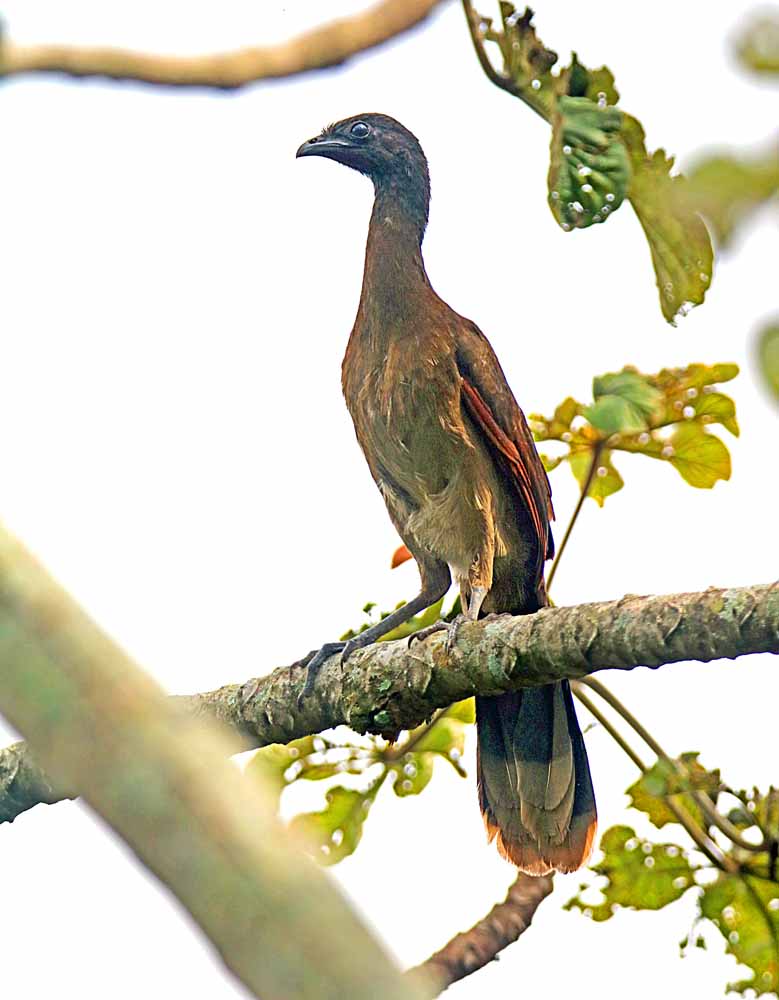
Regular noisy visitors all around my house that I haven’t been trying to photograph much recently. Interesting chicken-sized “chatterboxes.” 🙂 The Gray-headed Chachalaca, Ortalis cinereiceps (linked to my gallery). Here he is in my slowly dying Cecropia Tree that I will replace in another year or so.
¡Pura Vida!
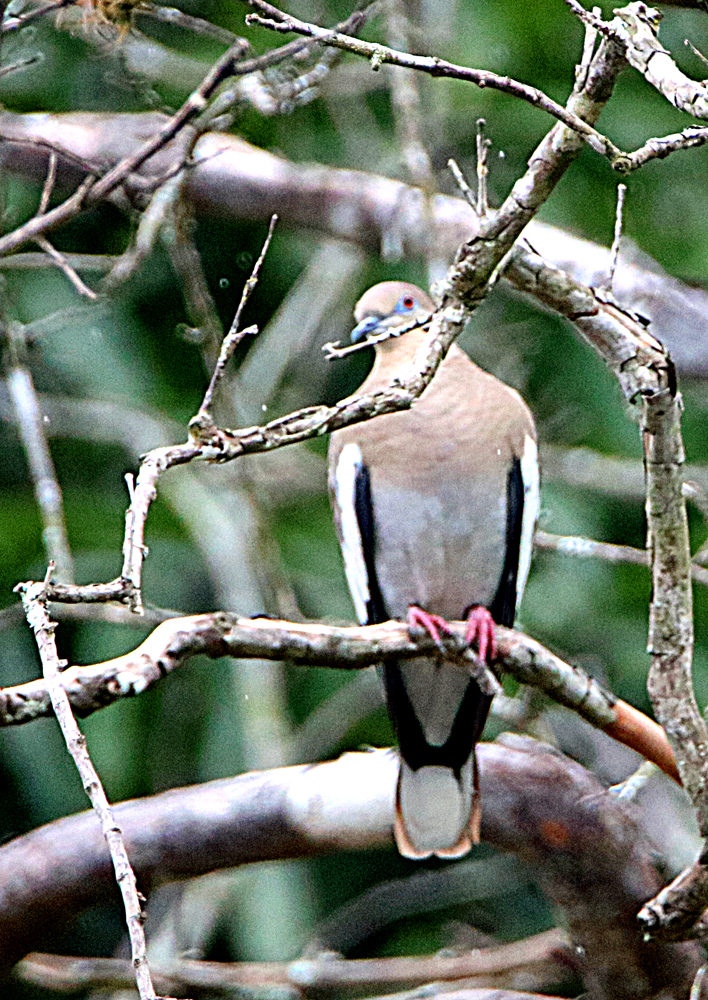
One of my “regulars” here is the White-winged Dove, Zenaida asiatica (my gallery link). They are found from the southern half of the United States on south as far as Columbia in South America.
And by the way, the morning I wrote this post (Wed), I had a young Kee-billed Toucan in my Cecropia Tree, the first I’ve seen for awhile, but I did not have my camera with me and as I pulled out my cell phone, he flew away. But hopefully I will start getting toucan photos again! 🙂
¡Pura Vida!
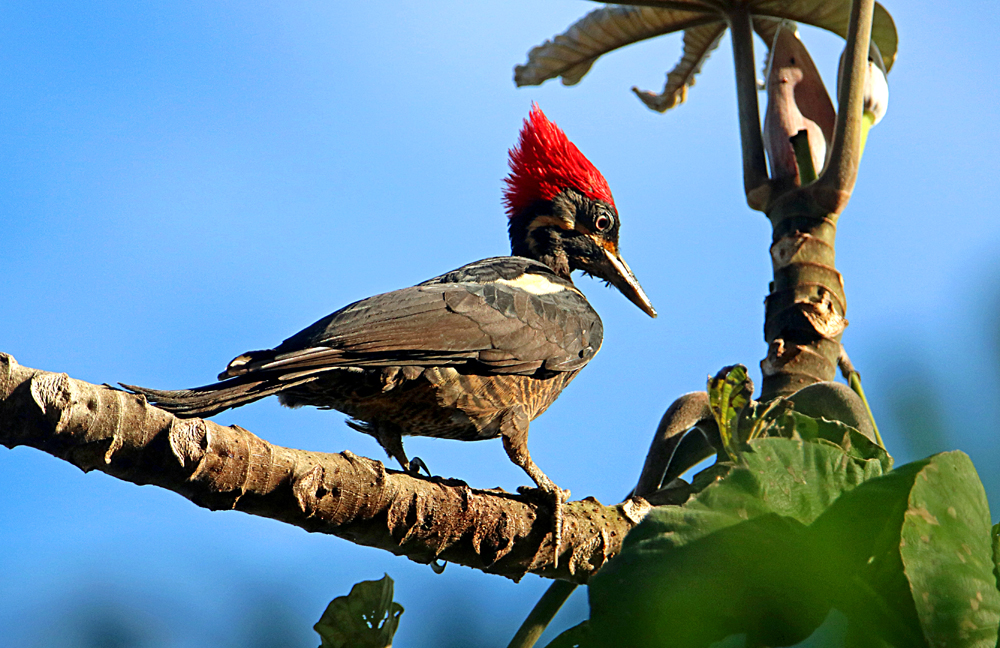
I always like this one better than the more common here Hoffman’s or Black-cheeked Woodpeckers. And maybe that is because this one reminds me more of Woody Woodpecker. 🙂 And Woody is special in many ways, one being that he was born the same year as me, 1940. 🙂 But enough of that! The Lineated Woodpecker, Dryocopus lineatus (linked to my gallery), is a tropical forest bird found in both the lowlands and foothills (where I live) of Central & South America. In my gallery you can see that I’ve photographed him on both slopes of Costa Rica in many locations. Read about him on eBird.
¡Pura Vida!
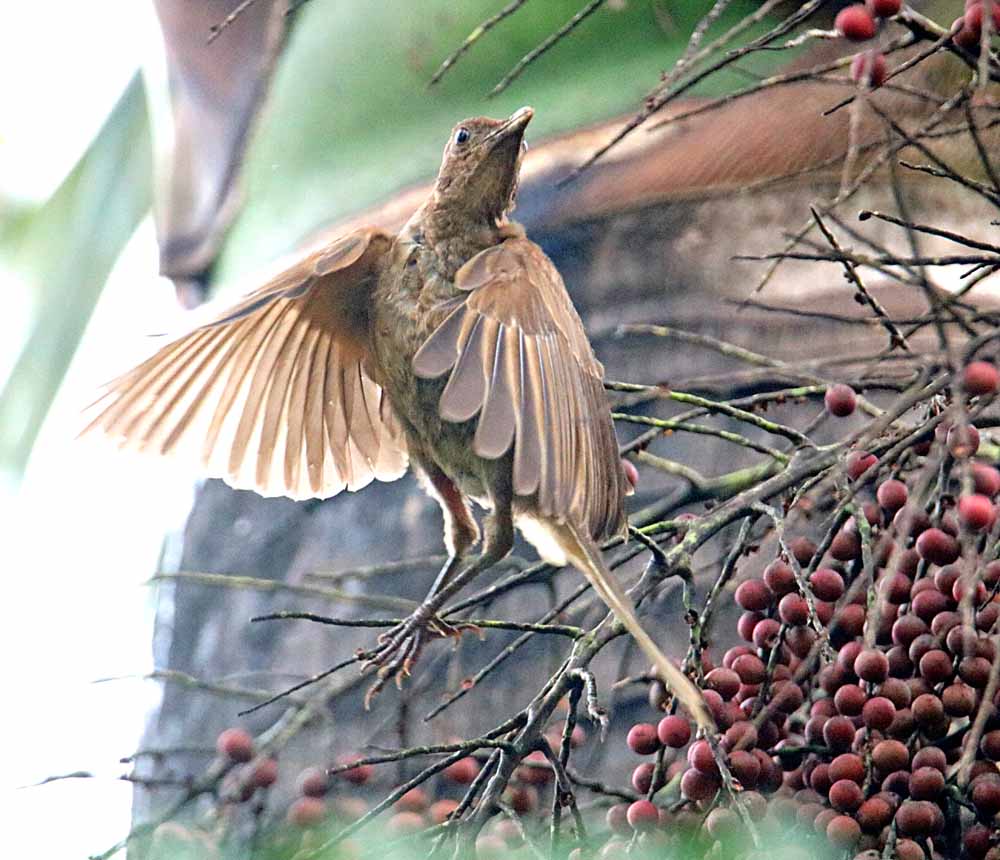
The national bird of Costa Rica was thought by the indigenous people to sing in the rainy season at the end of the dry season, late April or May. It is the Clay-colored Thrush, Turdus grayi (my gallery link) and is found from South Texas throughout Central America and in Columbia. There are always Yigüirros in my garden. Read about on eBird.
¡Pura Vida!
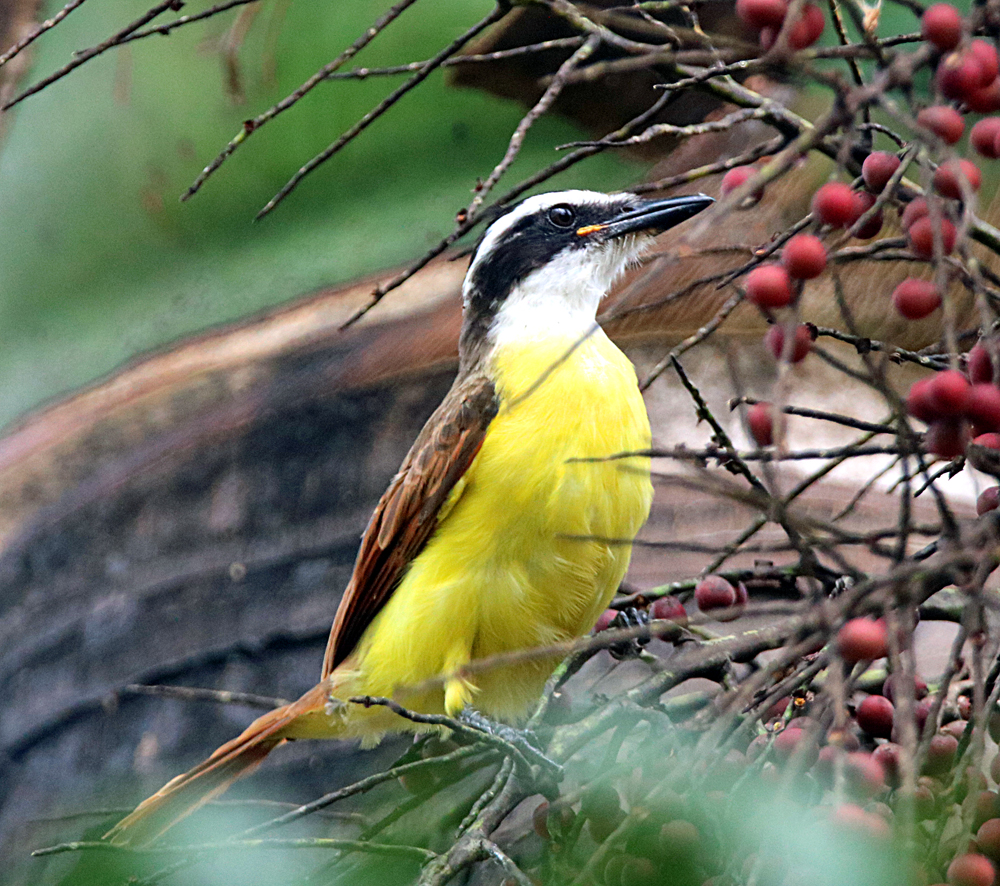
Another regular visitor in my garden is the Great Kiskadee, Pitangus sulphuratus (my gallery link) is another common bird throughout Central and South America. Read more about him on eBird.
¡Pura Vida!
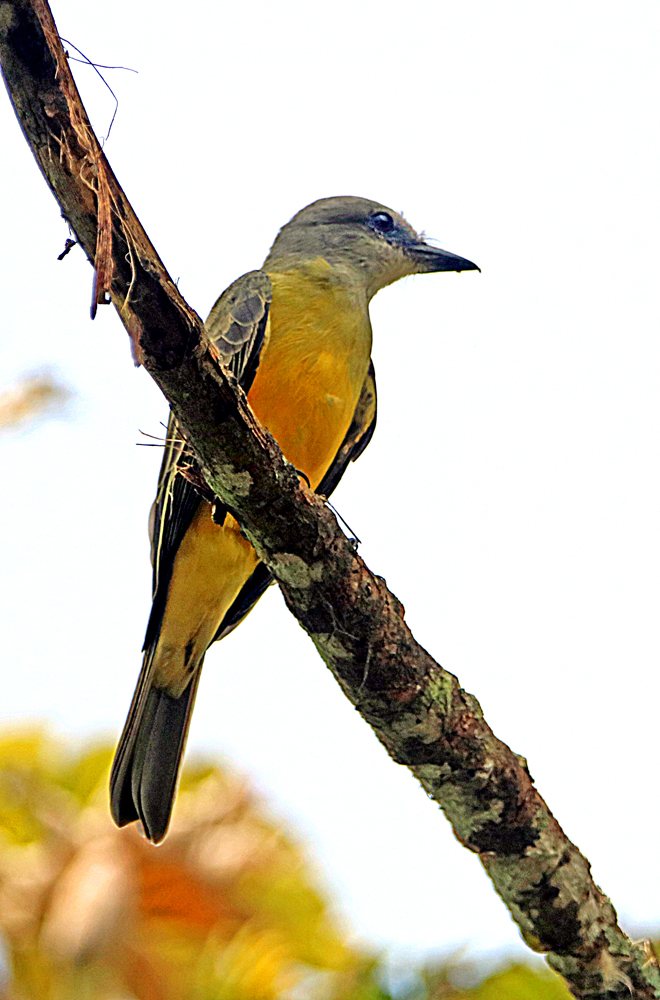
I do still see birds in my garden even though the butterflies greatly outnumber them! 🙂 And of the four I am sharing these next four days, this is the least-seen of them: Tropical Kingbird, Tyrannus melancholicus (linked to my gallery) and as always, you can read more about them on eBird. They are seen throughout Central America and most of South America and are sometimes known as one of the “telephone wire birds: or “fence birds,” as they like open areas and catch flying insects, including my beloved butterflies. 🙂
¡Pura Vida!