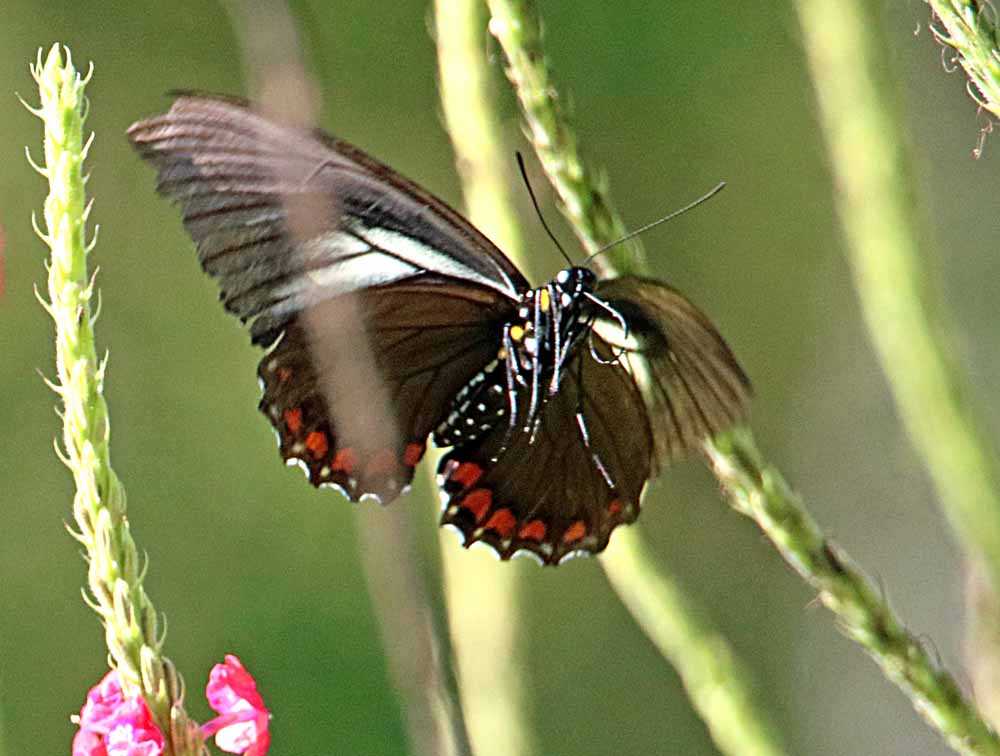
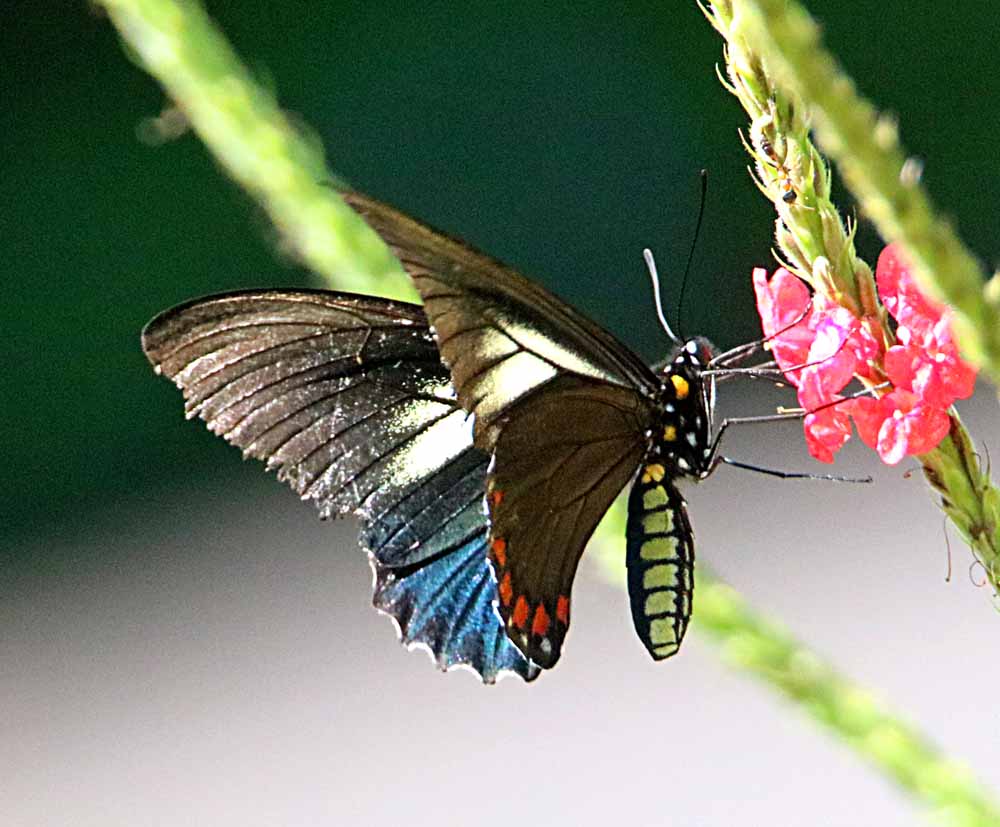
This is a new species for me and evidently not seen by many since it is not even listed on BAMONA and I am only the 4th person to report observing one on iNaturalist Costa Rica. And of course I think mine are the best photos! 🙂 The Crassus Swallowtail, Battus crassus is found from Costa Rica south to parts of Venezuela & Ecuador. The most photos are found on iNaturalist Ecuador, with 27 observations, while Panama has 5 and Venezuela 4 like us. See all 10 of my photos of this unique butterfly in my GALLERY: Crassus Swallowtail. Here’s just two of those shots . . .
Crassus Swallowtail, Atenas, Alajuela, Costa RicaCrassus Swallowtail, Atenas, Alajuela, Costa Rica
Below this email version photo is a gallery of 14 flower photos I made during the last 2 weeks of June. Yeah, I’m catching up on old photo blog posts written earlier. 🙂 Enjoy!
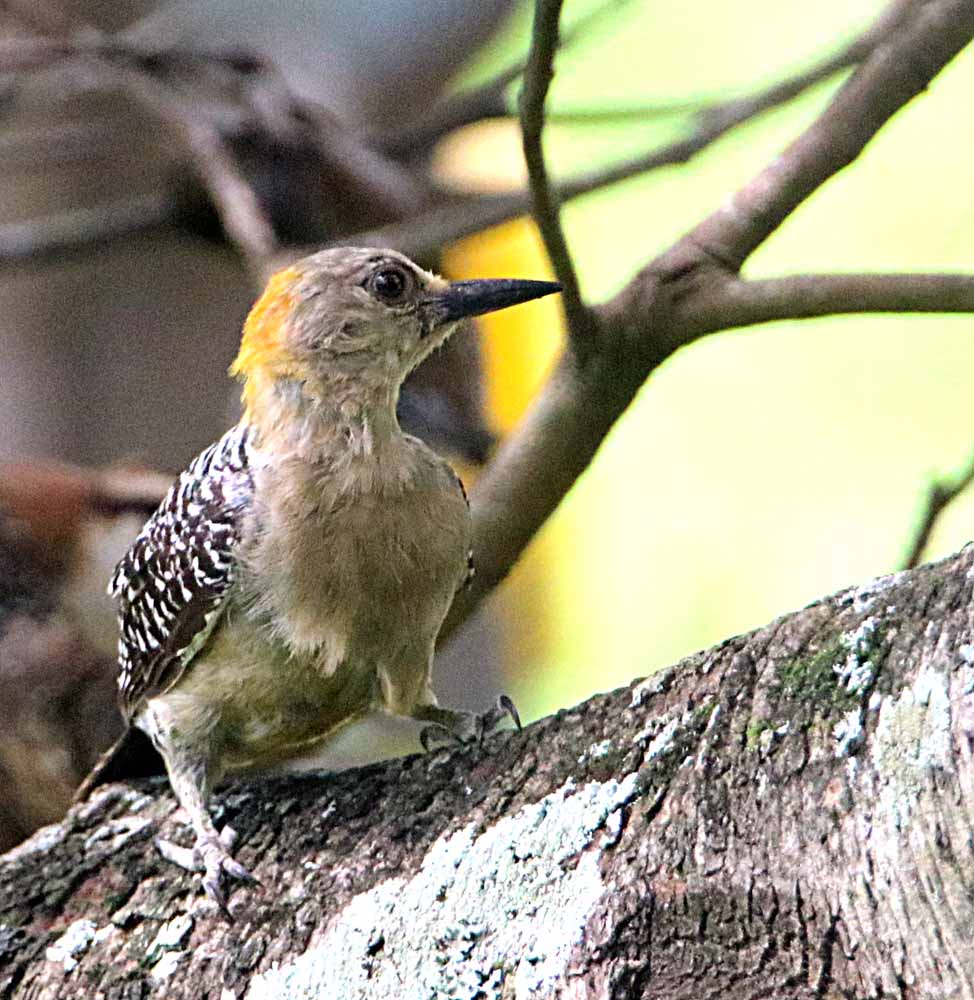
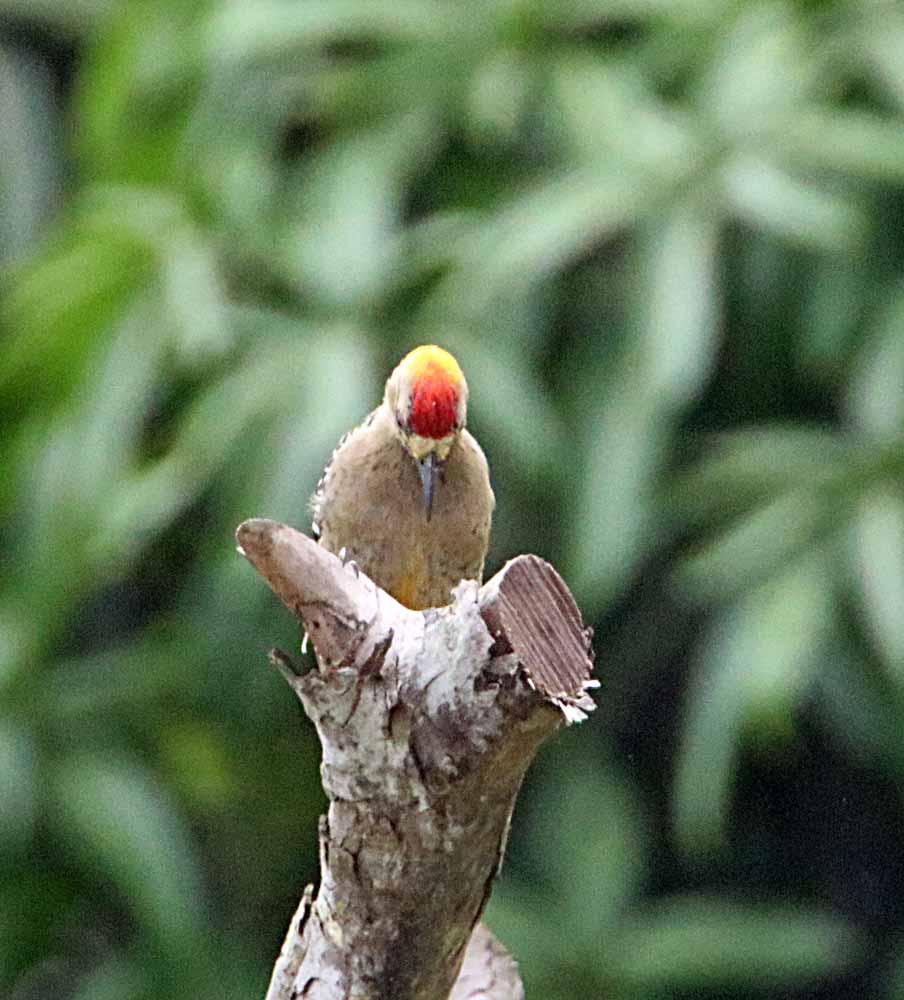
The most frequent woodpecker in my garden is the Hoffman’s Woodpecker, Melanerpes hoffmannii (my gallery link). Red spot on top of head is the male while both male & female have a golden nape. Below this photo for the email version is a gallery of 5 shots recently in my garden.
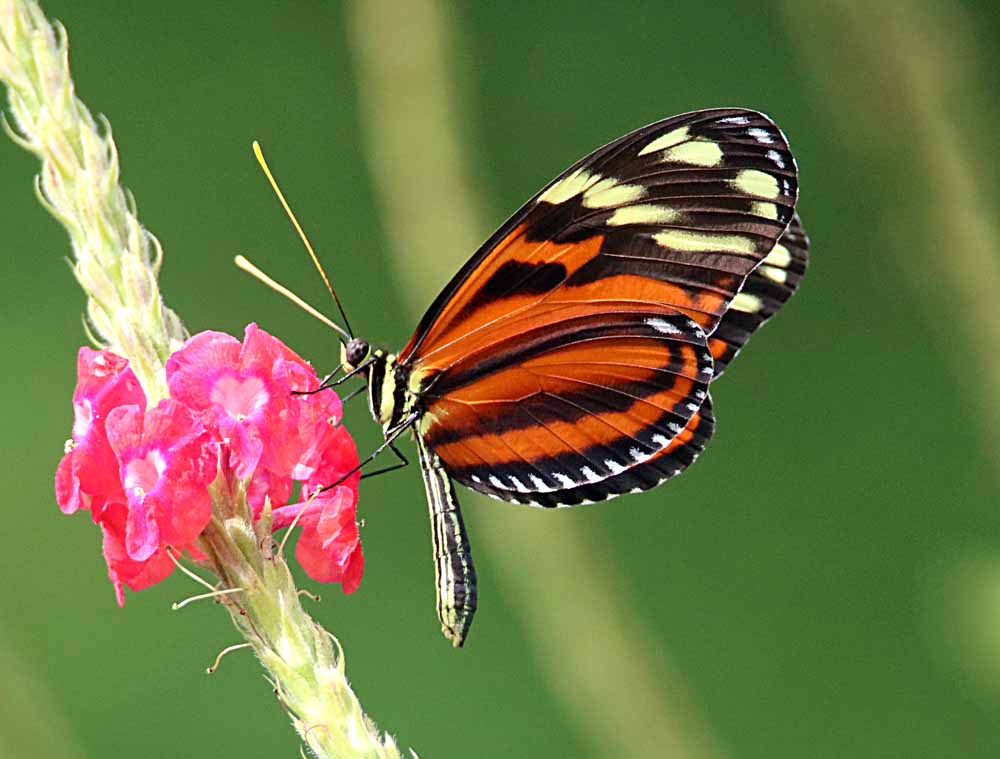
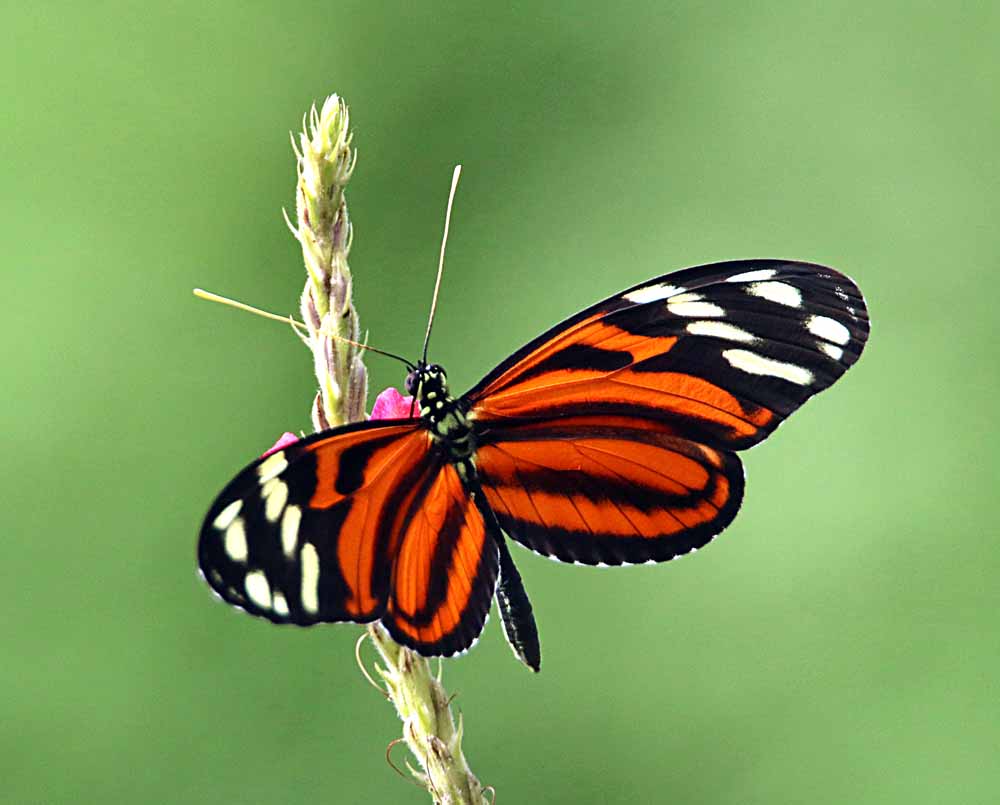
Or “Tiger-striped Longwing” as the 2 general common names with 6 different sub-species listed on iNaturalist. For this one from my garden I have not identified the sub-species yet, though in my gallery I have photos of the ssp. Clarescens which is endemic to Southwestern Costa Rica (Pacific Coast). See more images in my gallery Ismenius Tiger. Found only in Central American.
Ismenius Tiger, Atenas, Alajuela, Costa RicaIsmenius Tiger, Atenas, Alajuela, Costa Rica
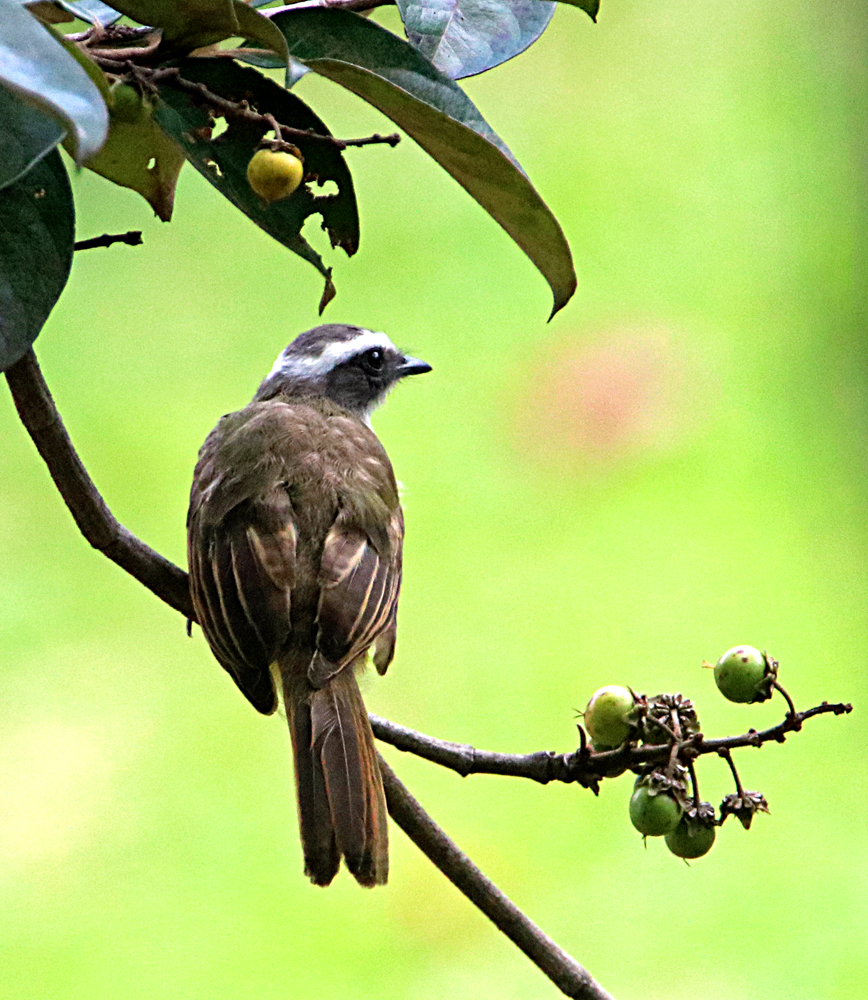
I’m seeing more of these this year, maybe more than the Great Kiskadee, which has always been the dominant flycatcher around my house.
The differences in those two, to help your IDs, is that (1) the Kiskadee is much larger than the Social, which of course would be easier to tell if they were side by side! 🙂 (2) The bill or beak is much larger and longer on the Kiskadee and after seeing a lot of both, that helps with ID and (3) though both have a white ring around their heads with a black center, the Kiskadee also has a bright yellow spot in the center of the black circle which the other flycatchers don’t have. And lastly, (4) though both have a bright yellow belly, this Social’s back is a duller brown while the Kiskadee’s is a brighter red-brown or what birders call “rufous.”
Then this Social Flycatcher can also be confused with the Boat-billed Flycatcher of about the same size (a tad larger maybe), but the big difference there is the larger, boat-shaped bill. But they too have the dull brown back, bright yellow breast and B&W head. Confusing? 🙂
Social Flycatcher, Atenas, Alajuela, Costa Rica
If you would like to compare these three similar flycatcher type birds, you can of course go to eBird or compare my photos of each in my galleries . . .
In my nearly 11 years here I’ve seen the Great Kiskadee the most, all over, with Social Flycatcher the second most seen and the Boat-billed the least seen. But that is not a scientific analysis of the populations! 🙂
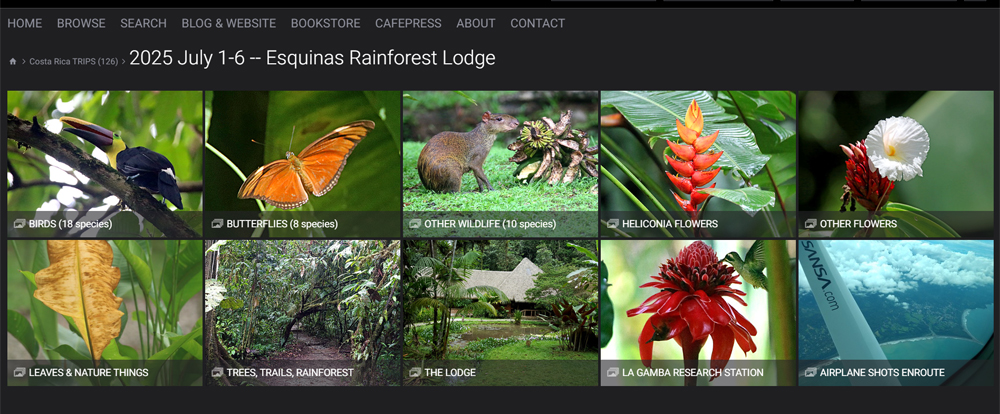
I consider these “Trip Galleries” the best of all my photo galleries where I put only the best photos from that experience. Then I link some of these photos to subject galleries such as a bird species gallery, etc. The trip galleries can also be of help if you plan a trip to one of these wonderful places I visit here in Costa Rica! 🙂
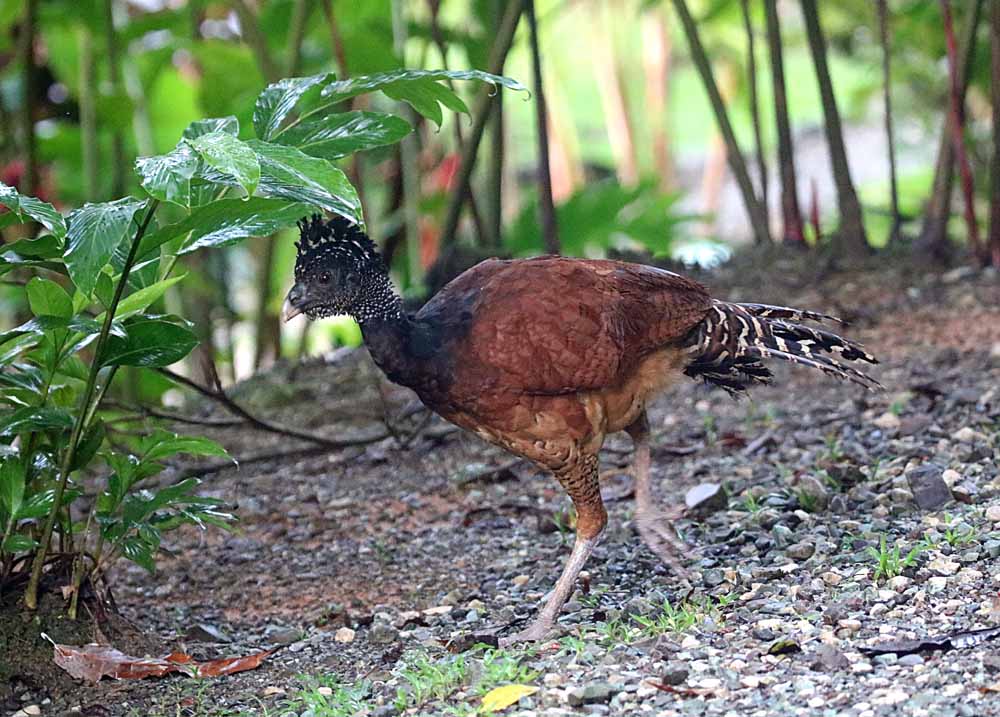
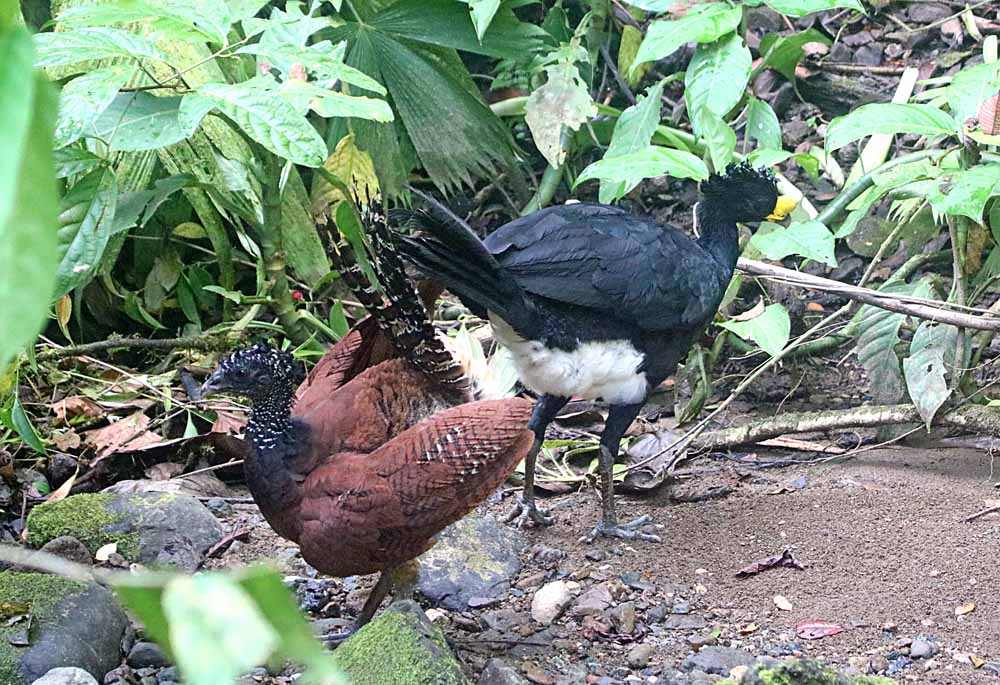
. . . at Esquinas Rainforest Lodge is surprisingly also one of the largest! (a little larger than toucans.) And maybe size does help with visibility, 🙂 plus the fact that the ones living there are used to people (all nature-lovers) and thus don’t run at the site of a dangerous human! 🙂
The Great Curassow, Crax rubra (eBird link) is a tropical pheasant-like bird found from eastern Mexico throughout Central America to the northwestern edges of Columbia and Ecuador. I see them in most of the protected forests and national parks I visit in Costa Rica. See some of my other photos in the Great Curassow Gallery. Just another of the many nature joys in Costa Rica! 🙂 And yes, they are similar to the Crested Guan (my gallery link) also here and about the same size, but with a bright red waddle. I heard guans on this trip but neither saw nor got photos. Both of these birds remind North Americans of Wild Turkeys, which we do not have here.
Great Curassow male & female, Esquinas Rainforest Lodge, Parque Nacional Piedras Blancas, Golfito, Costa Rica, on a stream bank behind the dining hall.
And a gallery of 5 shots . . . (click an image to enlarge)
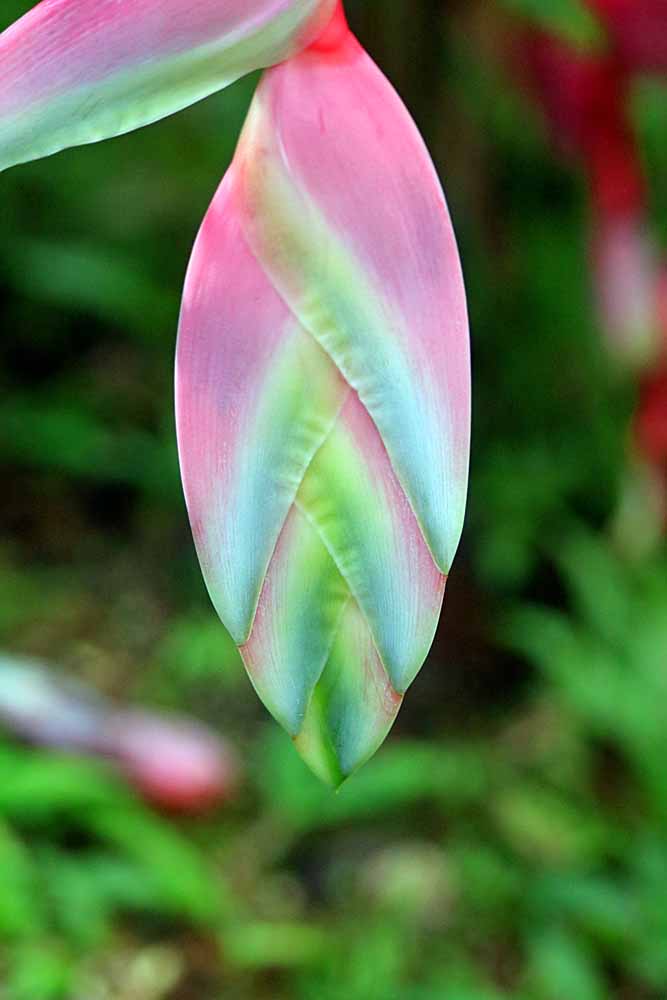
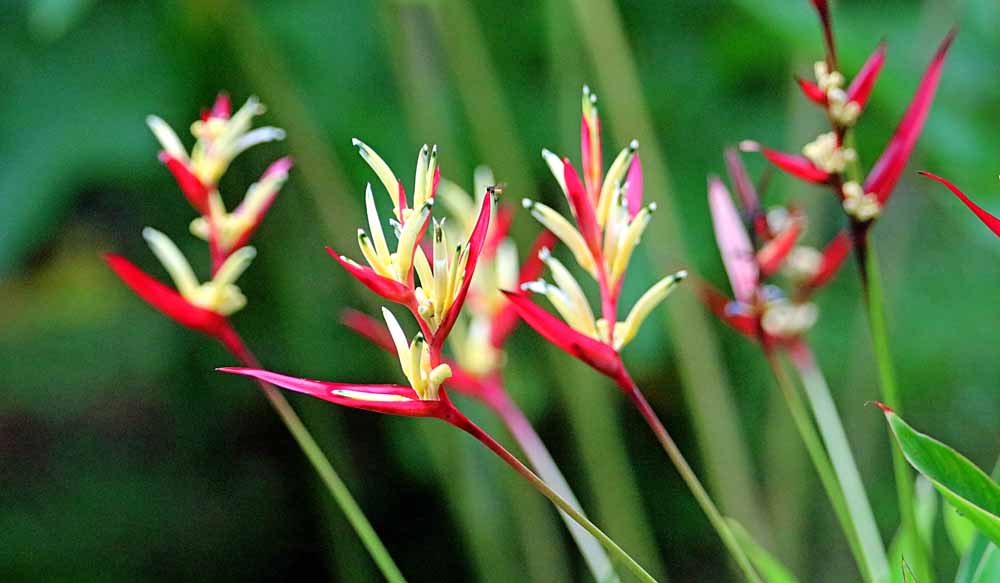
I love all of the tropical flowers, and among my favorites are the 35+ species of Heliconia flowers native to Costa Rica, and yes, they do grow in the wild, especially in rainforests or along rivers and other bodies of water. My cabin this week is surrounded by at least a dozen different species of Heliconia flowers. Below the one photo for the email version you will find a gallery of fourteen heliconia blooms from around my cabin. Happy Fourth of July! And yes, I’m having a great 85th birthday! And the rain is never a problem! That helps make all these beautiful flowers! 🙂
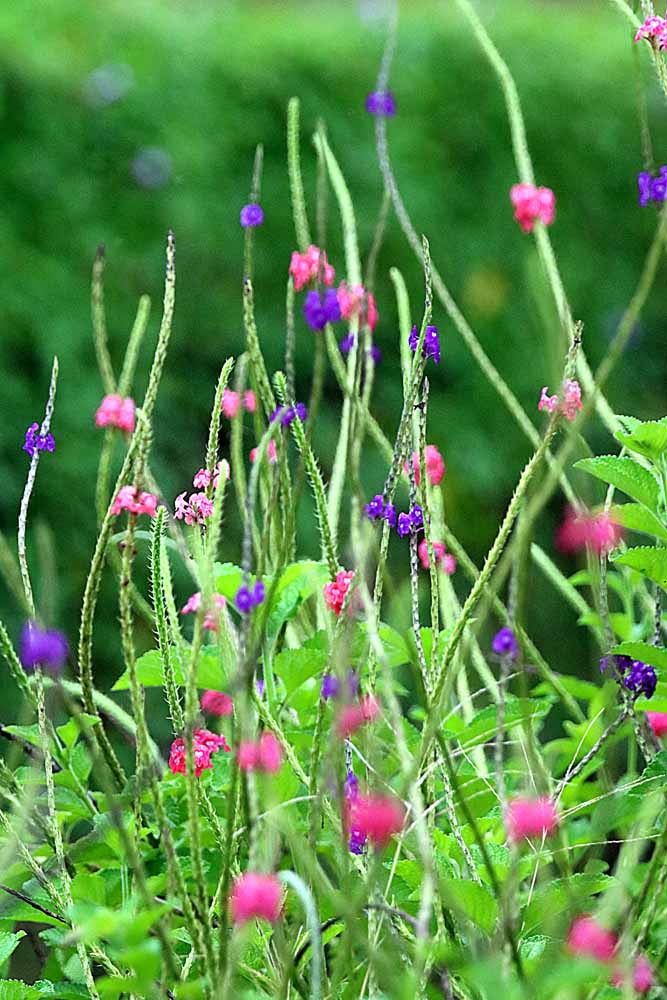
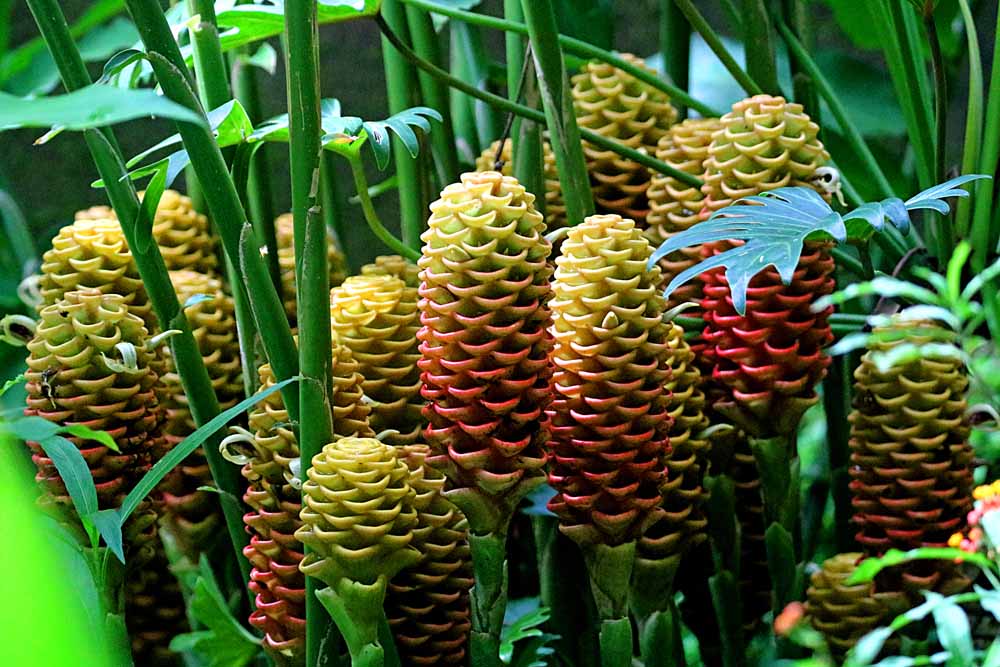
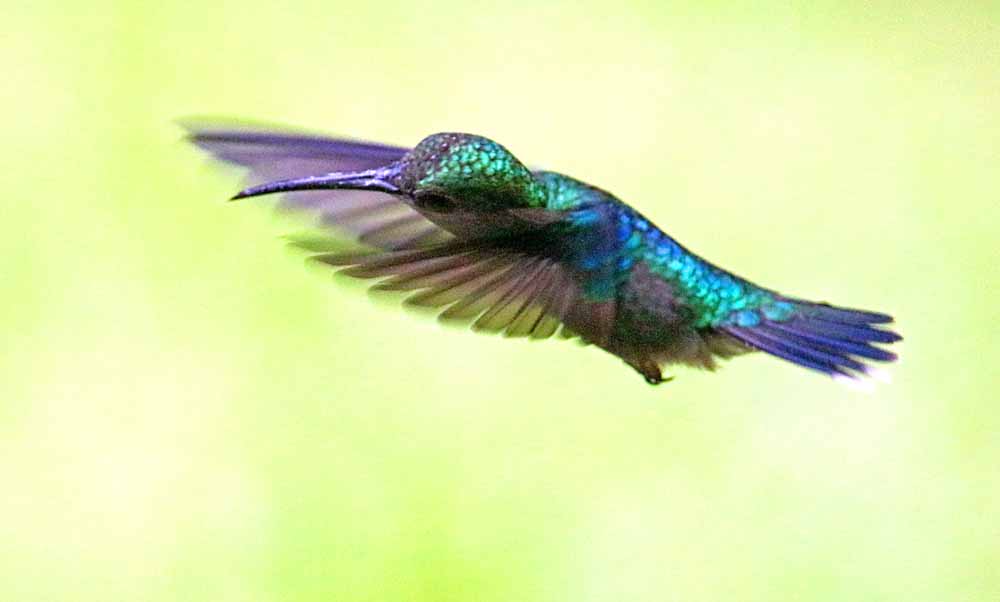
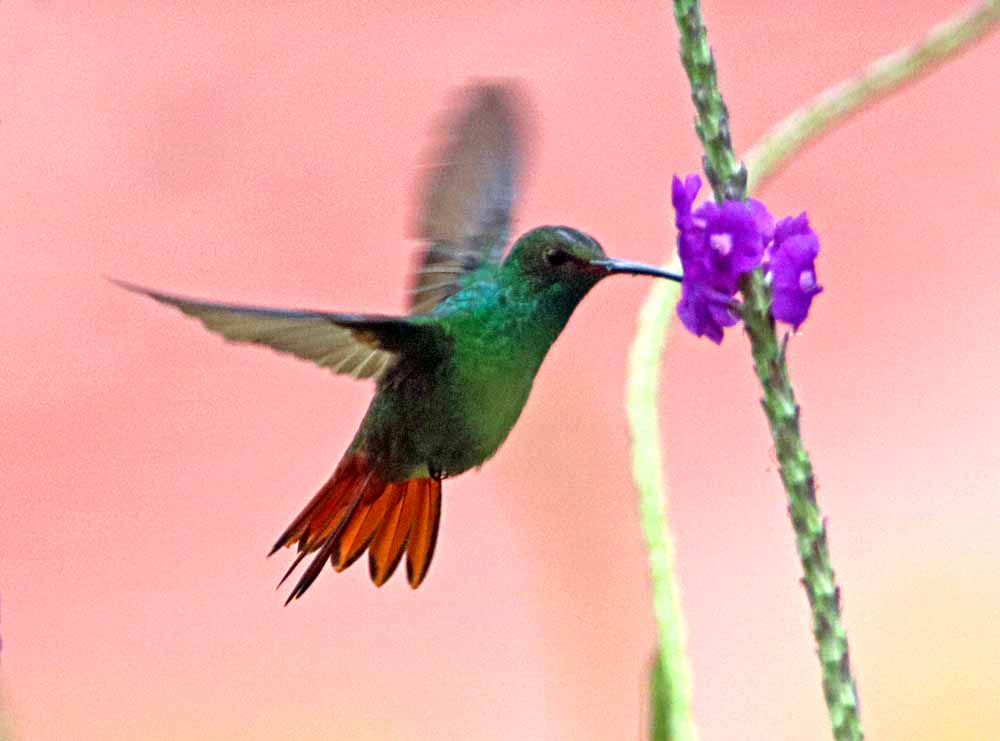
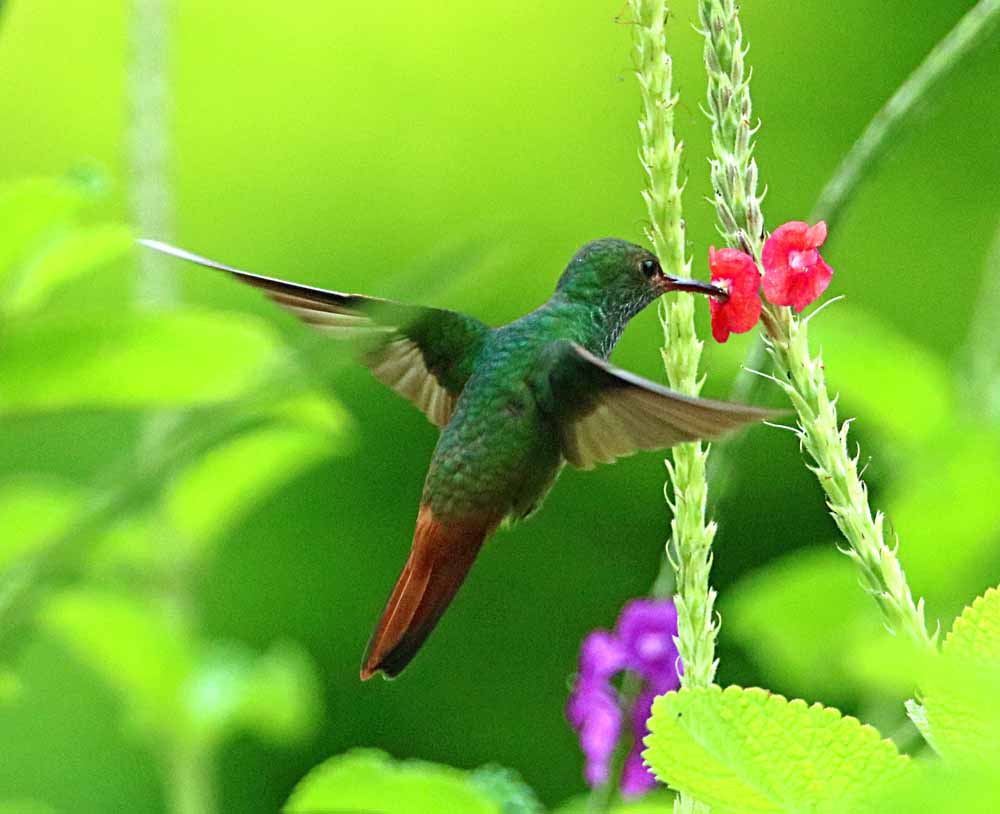
. . . is the most common hummingbird in gardens from southern Mexico to northwestern South America, says one website, meaning they are throughout Central America and I see at almost every lodge I visit. Plus, hands down he’s the most common bird in my garden! 🙂 In June I was photographing them a lot and chose my 12 favorite shots from June for a gallery in the online version of this post (below this one photo for the email version). The software for my chosen blog template doesn’t support galleries in the emailed version. Plus, if you’d like to see more photos of this active and colorful bird, I’ve added these 12 shots to the 130 already in my GALLERY: Rufous-tailed Hummingbird, Amazilia tzacatl (linked to the gallery). There you can see my favorite shots of one feeding on a Bird of Paradise Flower at Arenal Observatory Lodge and several shots over the years of one feeding on my Torch Ginger flowers, as the most colorful meal here! 🙂 While the most common flower everywhere for them is the “Porterweed” in these photos. 🙂