
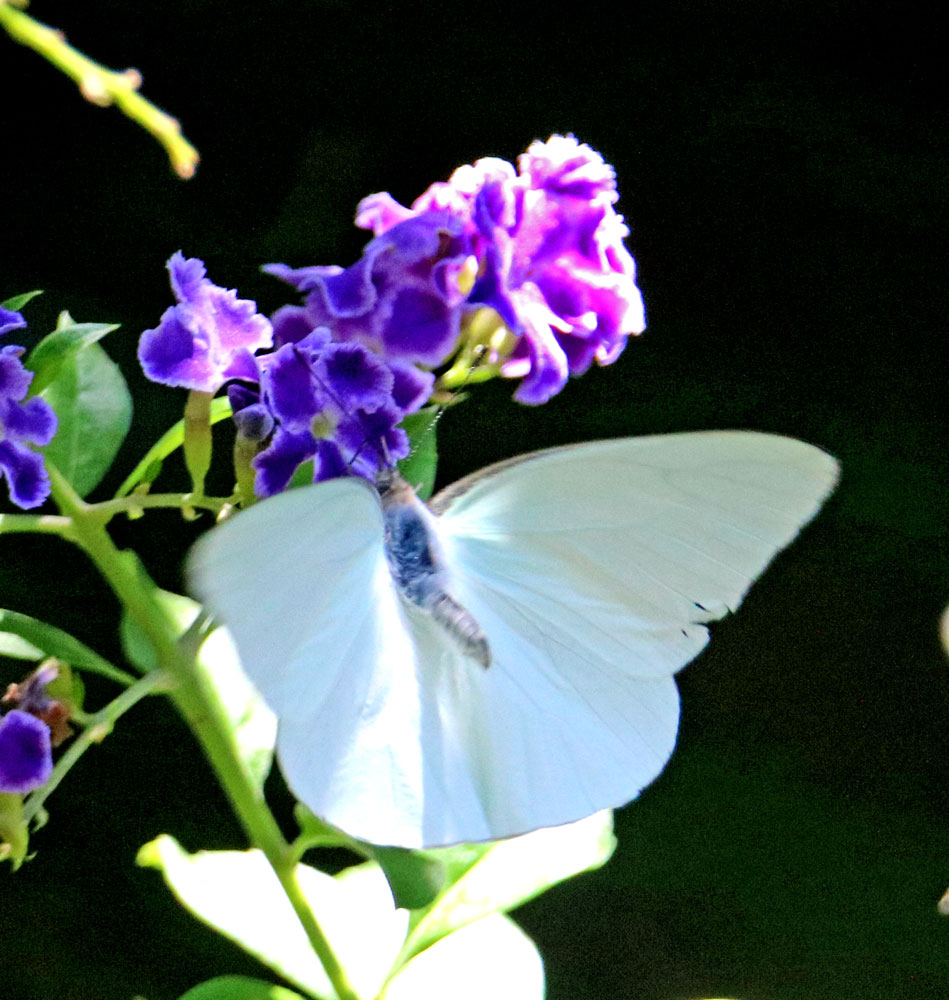
Florida White

Found in many more places than the U.S. state of Florida, this butterfly is throughout tropical America from Brazil north to the Florida peninsula and South Texas including the Caribbean islands and all of Central America. I see him frequently in my garden as you can see in my gallery Florida White (linked). In the gallery, the ones with large swatches of dark brown (black) trim are females in the wet season only.
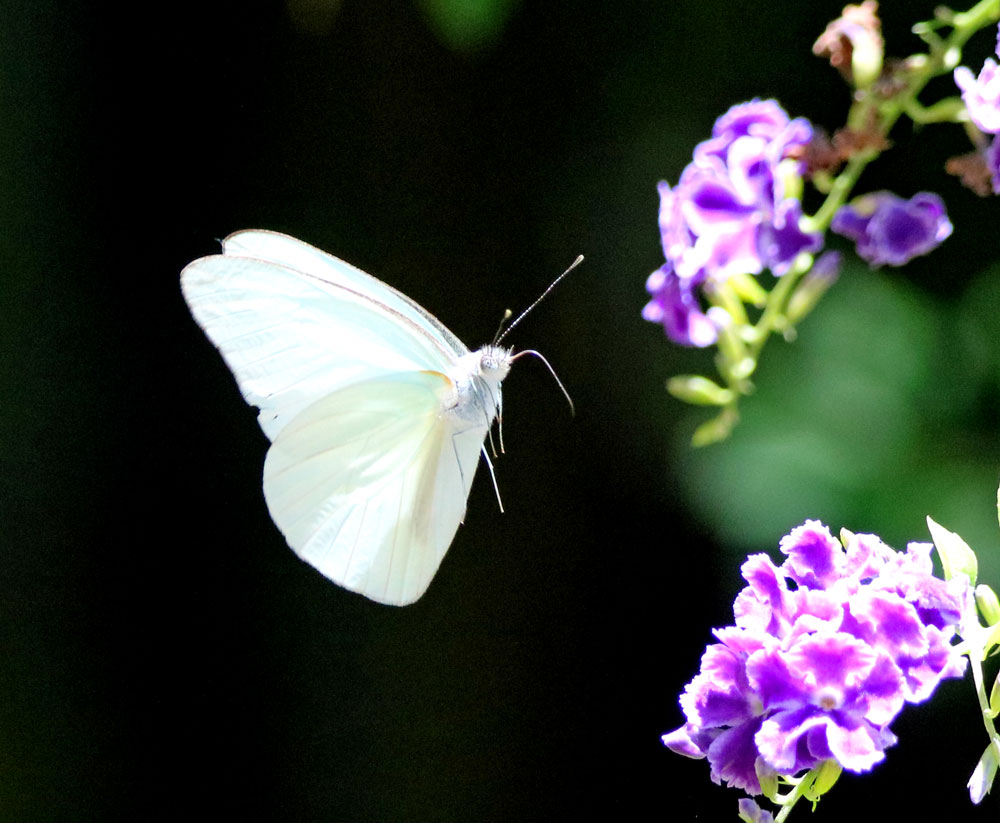
Florida White, my garden, Atenas, Alajuela, Costa Rica

¡Pura Vida!

Florida “Blizzard?”

From Google: “In coastal Florida often tell modern “nature stories” about the massive, sudden irruptions or migrations of these butterflies. During peak population explosions, millions of Florida Whites hatch simultaneously. Residents describe looking out their windows and thinking they are seeing a “beachside blizzard” or “flying white ashes” blowing down the highway. It creates an ethereal, temporary winter wonderland in a tropical climate. [1]” Click that footnote “1” for a video of that “blizzard.” 🙂

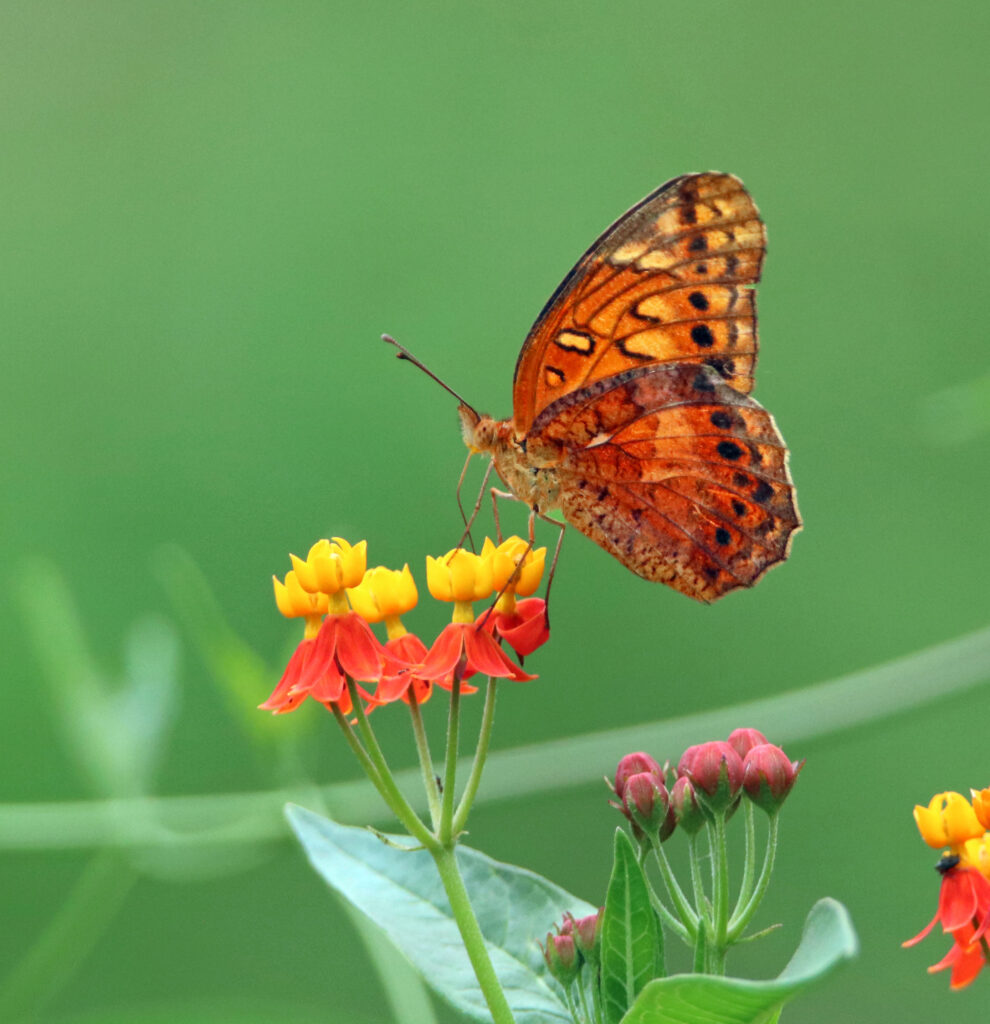
Melwhite on Milkweed

Is it a contrast or a harmony of colors? Either way, I like these photos of the Common Melwhite (my gallery link) on the Tropical Milkweed flowers (NaturalistaCR link).

Common Melwhite butterfly on a Tropical Milkweed flower, Atenas, Alajuela, Costa Rica

¡Pura Vida!

How do I get that mottled green background? (Someone asked.) Simply by using my 600mm lens from a distance of 6 feet or more. The long lens automatically puts my focus point in focus and everything else blurry. In this case, my “jungle-like” garden is mostly greens with only occasional flowers, thus the mottled green background. When I shoot up, with the sky as background (often with birds), the background can be anything from bright blue to gray to white, depending on the weather, and more rarely golds to oranges. I’ve tried a close-up lens for both flowers and insects and it just doesn’t work for me (for multiple reasons). 🙂

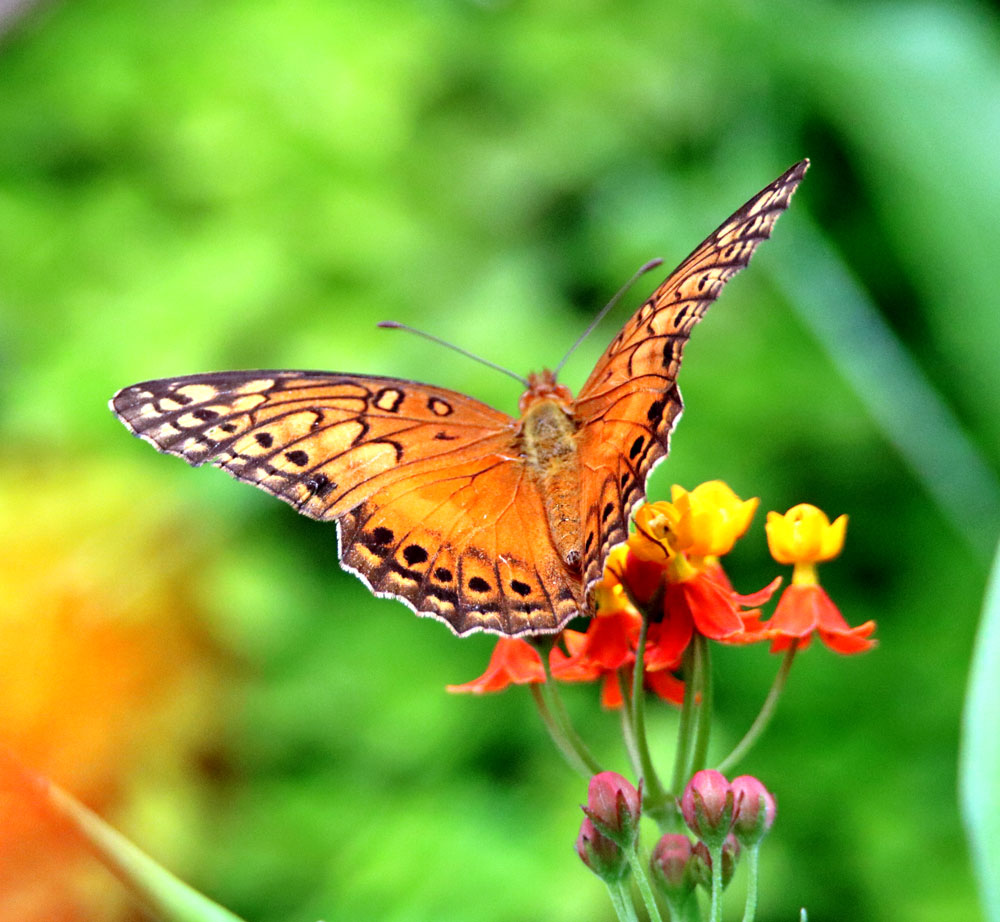
Mexican Fritillary

This colorful orange butterfly lives throughout Mexico and Central America, the West Indies and a few strays along the Southwestern U.S. border. See more photos in my gallery: Mexican Fritillary (linked). A bit of interesting indigenous history that includes this butterfly from Google Search:

The “Flower World” (Xochitl): In early Classic Teotihuacan and Postclassic Aztec culture, orange butterflies symbolized fire, rebirth, and a floral spiritual paradise. [1, 2] ~Google (Click the two footnote numbers for more information from their sources.)

Mexican Fritillary, Atenas, Alajuela, Costa Rica

¡Pura Vida!

Listen. Wonder. Belong.

A local friend just shared a free online article titled “The Voices of Birds and the Language of Belonging” by David G. Haskell (linked) that is partly technical and partly inspirational.

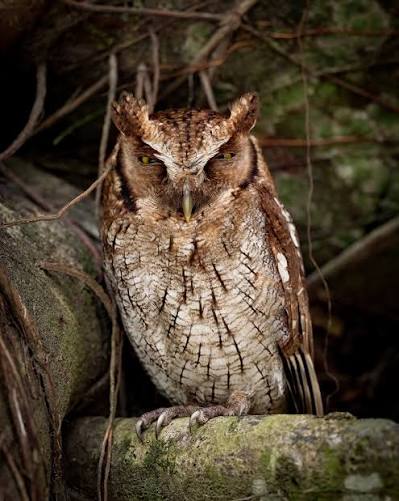
It reminded me of the Tropical Screech Owl that often sings to me during the night hours from my Higueron Tree, singing me to sleep (never got a photo of it). The article also reminded me of how I prepared for works presented by the Nashville Symphony Orchestra (15 years ago) by going an hour early for a 30 minute discussion of what we were about to hear. It’s amazing how much more you hear and experience when you prepare to listen! 🙂 That was back when Giancarlo Guerrero (from Costa Rica) was the Music Director. But, back to the article whose author said in the last line . . .

Let’s answer the birds’ invitation, stepping outside to give them the simple gift of our attention. Listen. Wonder. Belong. ~David G. Haskell

Here’s one of several YouTube videos of the Tropical Screech Owl singing . . .

Or if really into it, you can listen to archived audio recordings and calls of the Tropical Screech Owl (Megascops choliba) through the Xeno-canto Tropical Screech Owl Database, which features hundreds of field recordings.

Or read about them and see their distribution map on eBird. And thanks to Judith LaBelle for the article on listening to birds! 🙂

¡Pura Vida!

Listen. Wonder. Belong.

And the featured photo of a Tropical Screech Owl in Costa Rica was copied off the internet and not my photo. I am yet to photograph one. The one I hear singing at night is in the dark and I don’t have the equipment to photograph at night and when I got up and looked for him once, I never even saw him. BUT, I do have photos of 6 other owls here in Costa Rica that I photographed in daylight . . .

And my favorite is probably that last one, the Ferruginous Pygmy-Owl, though I like them all! 🙂

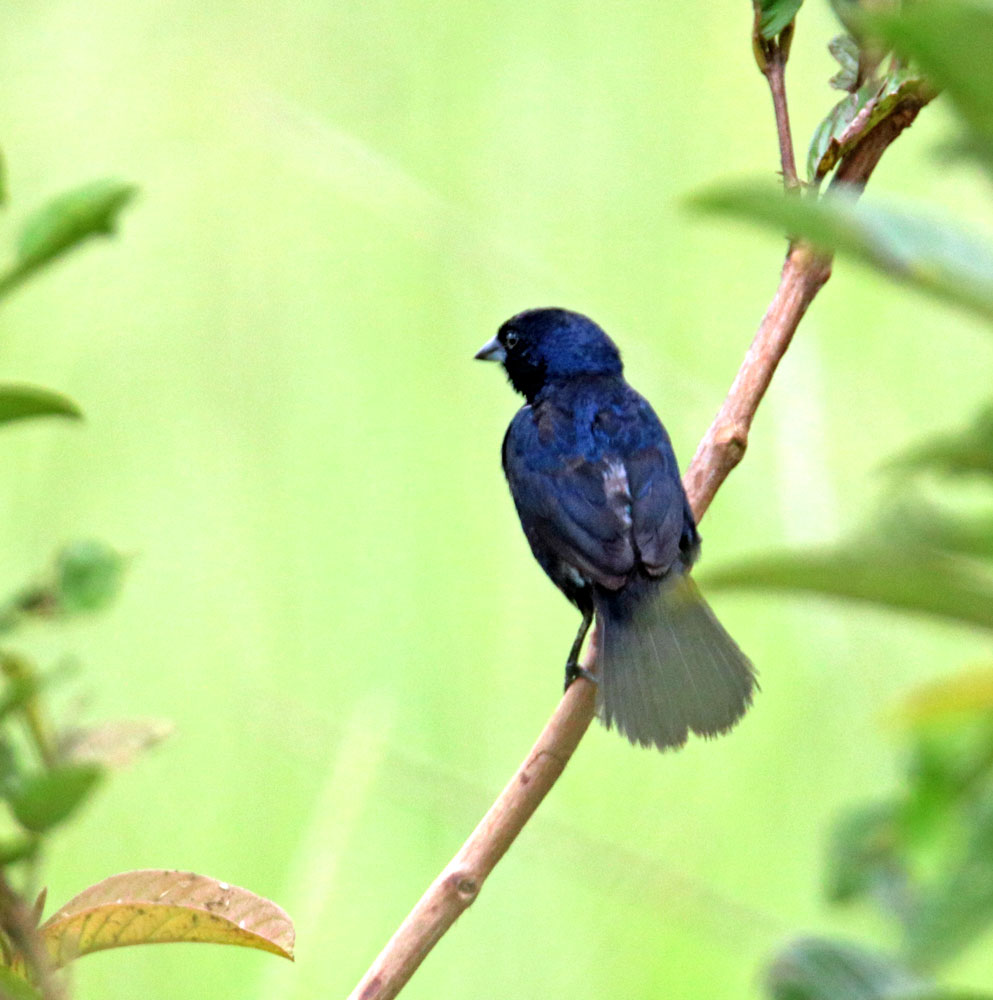
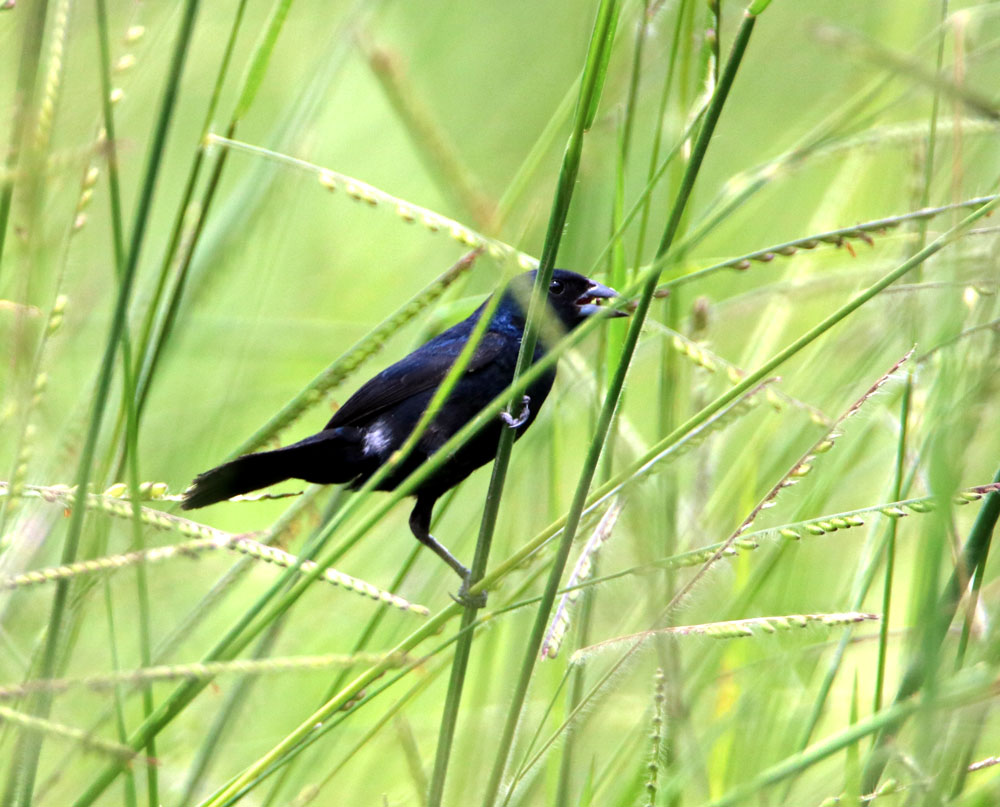
Blue-black Grassquit

Another seed-eating bird found only in Central & South America, the Blue-black Grassquit (my gallery link) with the one above on a little bush or plant in the cow pasture across the street from me. This male was jumping straight up in the air from this bush about two feet or 60 centimeters as a courtship display, which I’m yet to catch an action shot of! 🙂 See more from there and from 6 other Costa Rica locations in my above-linked gallery. And/or read more about them and see their distribution map on eBird and a very good article on Wikipedia.

Most often seen in the grasses of a meadow or cow pasture as above, eating seeds, Blue-black Grassquit, Atenas, Alajuela, Costa Rica

¡Pura Vida!

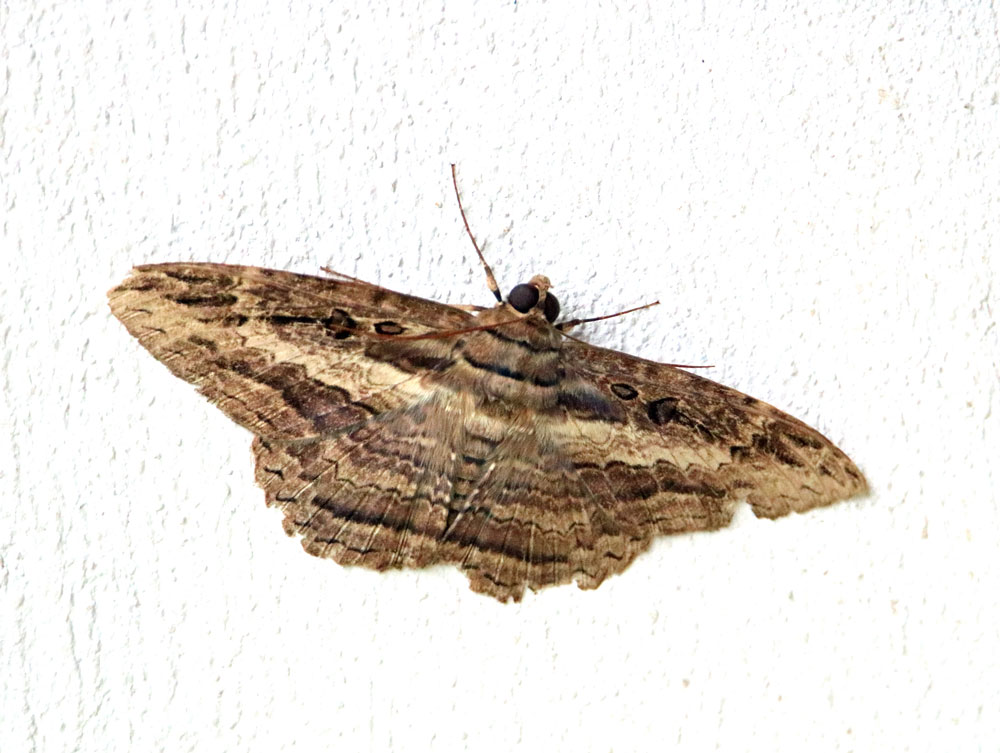
Feigeria buteo Moth

A new one this week, in the family of Erebid Moths (my gallery link), similar to the Black Witch Moth I see a lot of here. The Feigeria buteo (my gallery link). It’s always nice to find a new species for my collections! 🙂

Feigeria buteo Moth, Atenas, Alajuela, Costa Rica

¡Pura Vida!

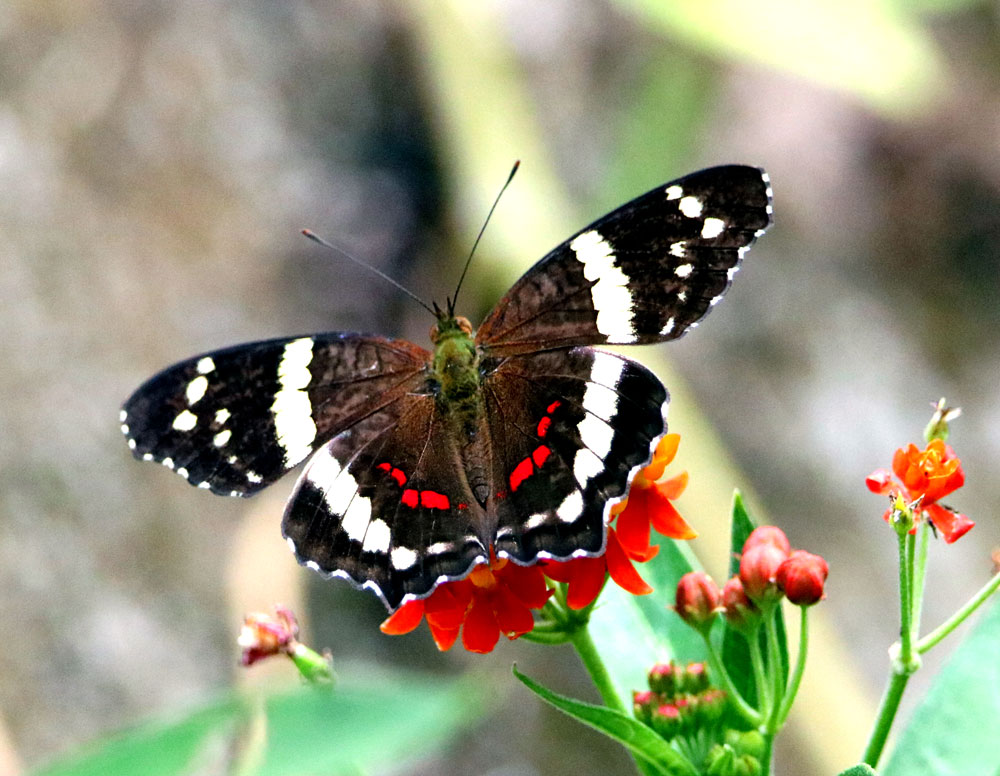
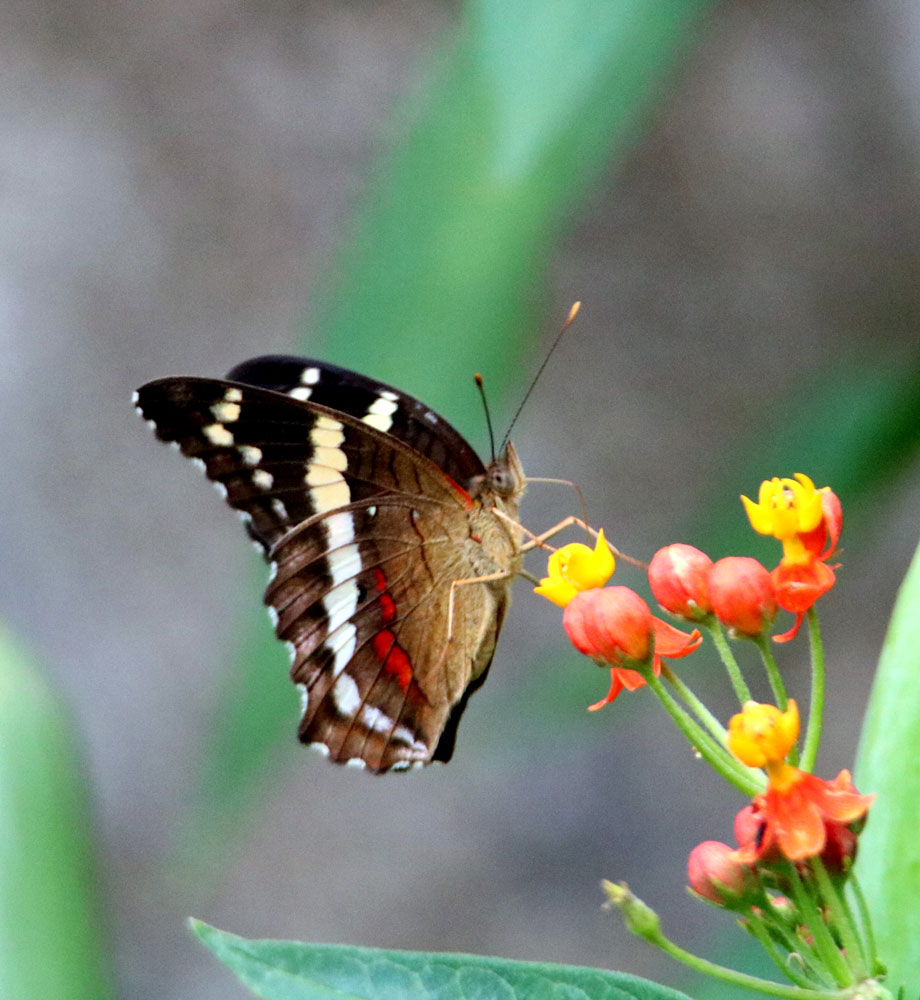
Banded Peacock

Still one of my most-seen butterflies that also continues to appeal to me, the Banded Peacock Butterfly (my gallery link), found all over Costa Rica as well as the rest of Central America, Mexico and the southern edges of Texas.

Banded Peacock, Atenas, Alajuela, Costa Rica

¡Pura Vida!

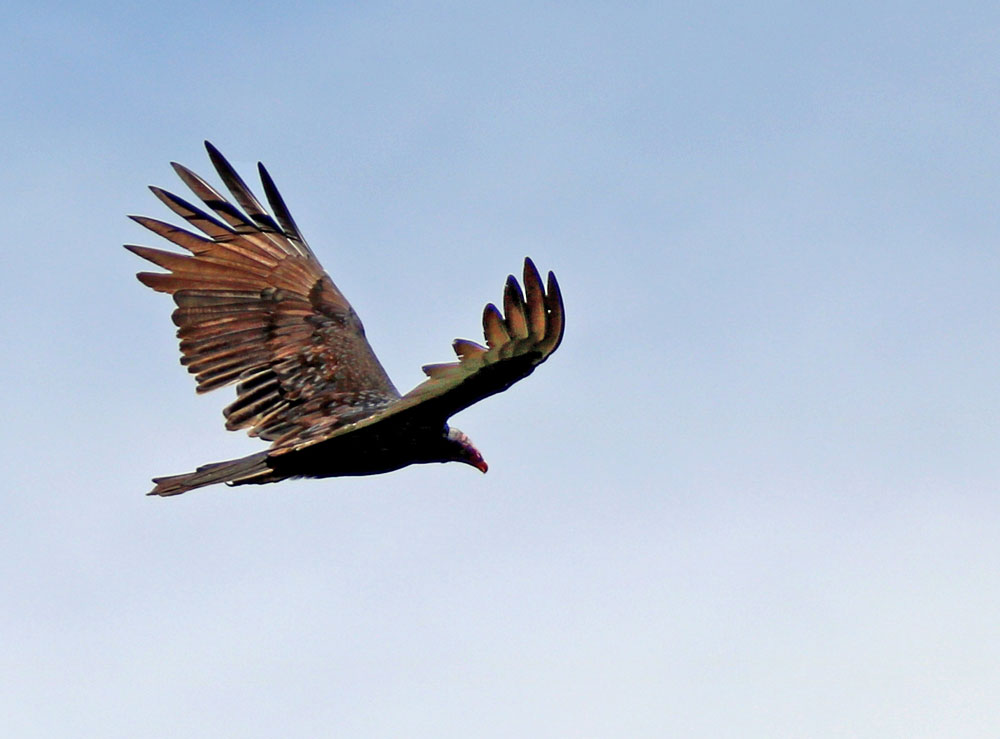
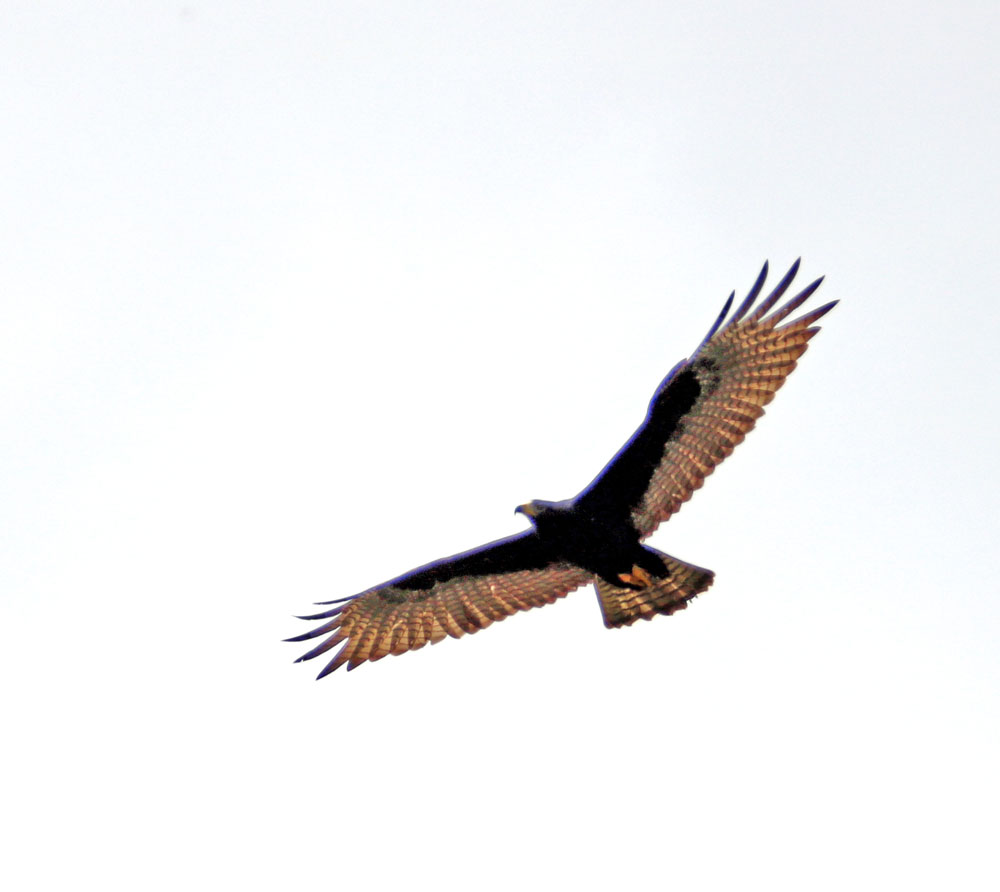
Turkey Vulture Silhouettes

A common bird everywhere it seems, yet sometimes the silhouettes of them flying are impressive. See all kind of photos of this bird in my gallery Turkey Vulture (linked).

Turkey Vulture, Atenas, Alajuela, Costa Rica

¡Pura Vida!

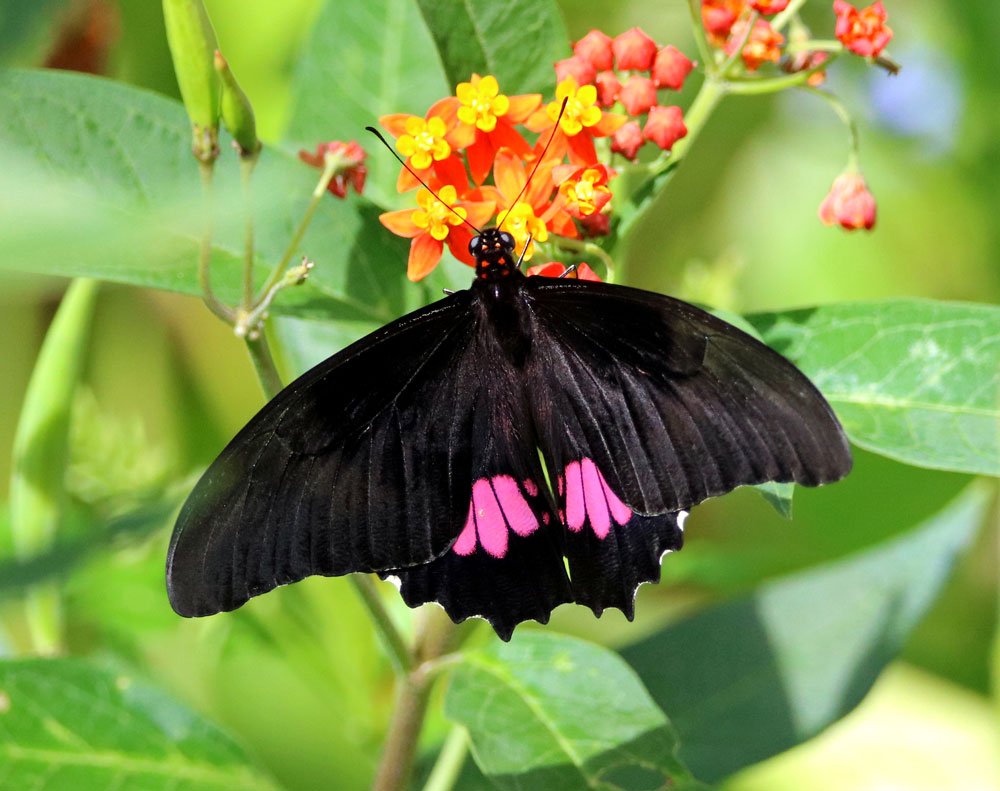
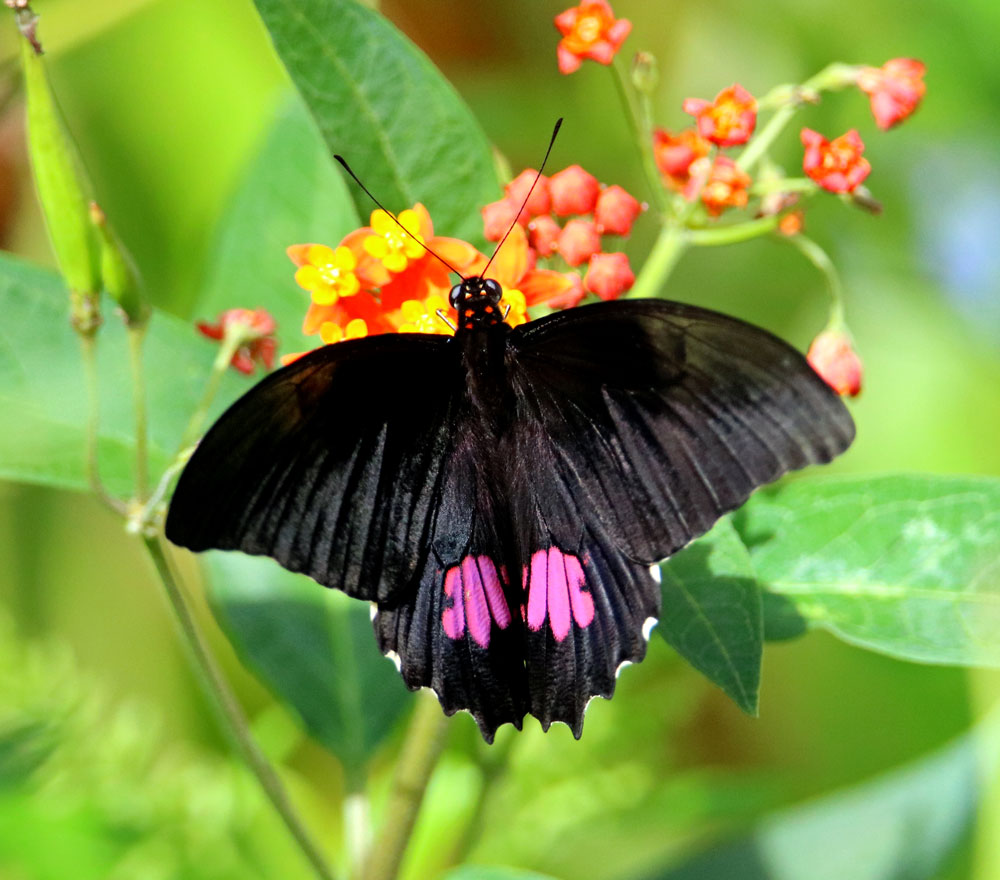
Ruby-spotted Swallowtail

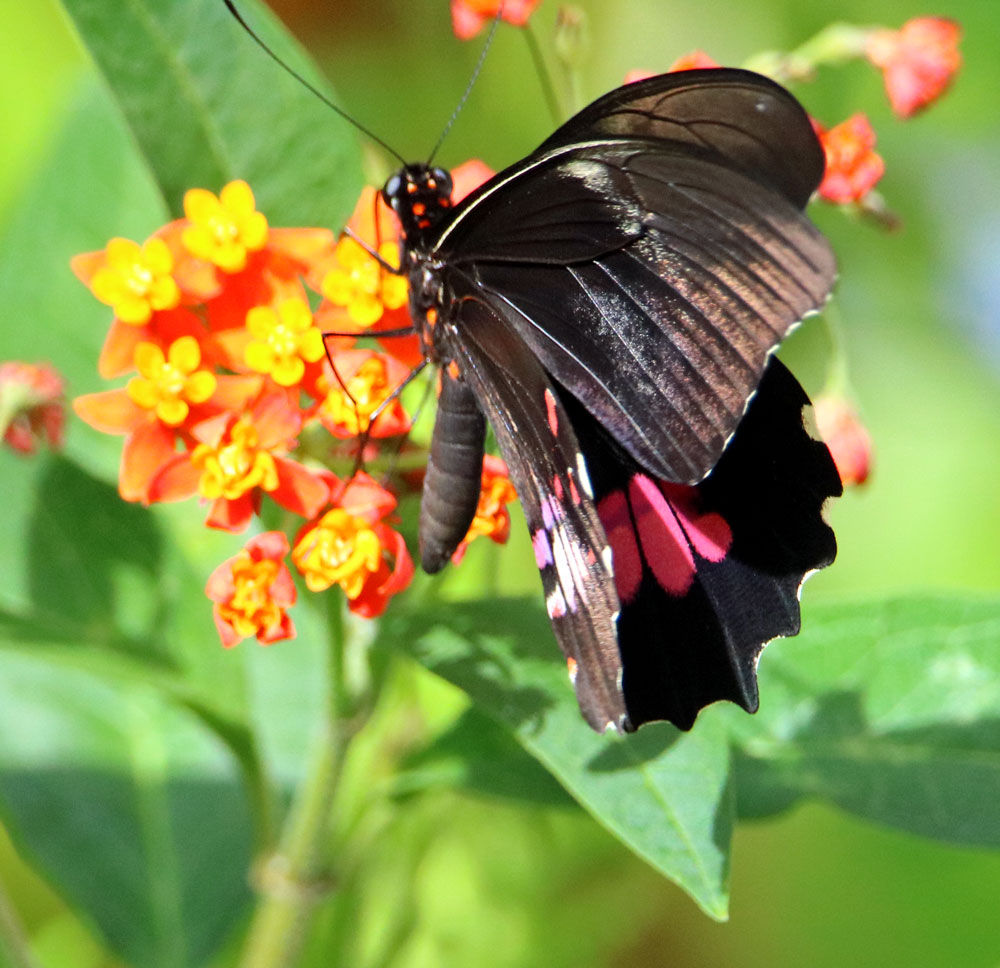
The Ruby-spotted Swallowtail (my gallery link) is found from Southern Texas south to Argentina and yes, it reminds me of several Cattlehearts, especially the Pink-spotted, but this is in a different subfamily from Cattlehearts. This is my second observation to not have white spots on the top of the forward wings, which is normal even if in a minority as you can see in my gallery or other online butterfly sites. But, you will see from the only partial side view this one ever gave me that he does have white spots on the underneath side of all wings. 🙂 Another exception in nature and I think that the all black top makes for a handsome butterfly!

A semi-side view shows white spots on the underneath side of both forward and hind wings.
Ruby-spotted Swallowtail, Atenas, Alajuela, Costa Rica

¡Pura Vida!

Milkweed Flowers

Have you noticed how many of my butterfly shots are on the Milkweeds now? 🙂 It is second only to Porterweed attracting the larger butterflies like this and the only flower Monarchs will come to. Tiny butterflies prefer tiny flowers. 🙂 I can’t believe that this is my first year to plant Milkweed! A great butterfly attractor! I recommend it!

Thank You! — For Reading My Blog!

JetPack just informed me that during August 2026 my blog & website had Nine Thousand Views! 9,000! I don’t know who all of you are, but thank you for reading and enjoying Costa Rica’s nature with me! ~Charlie

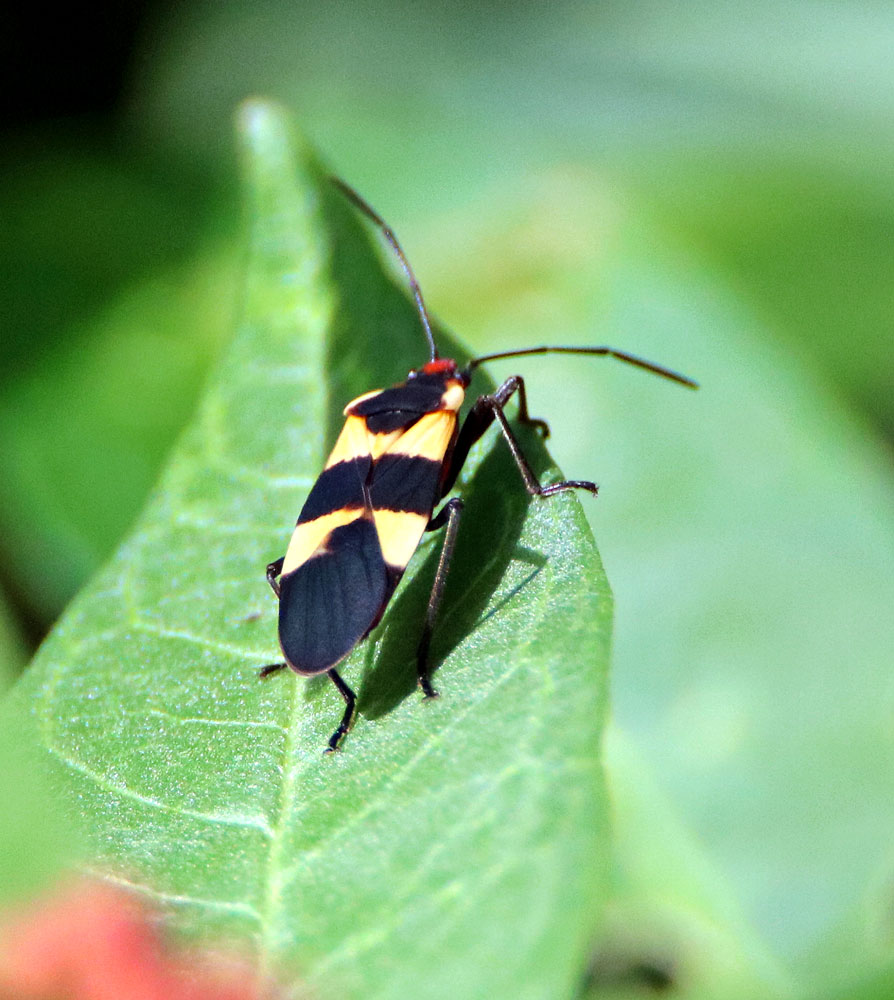
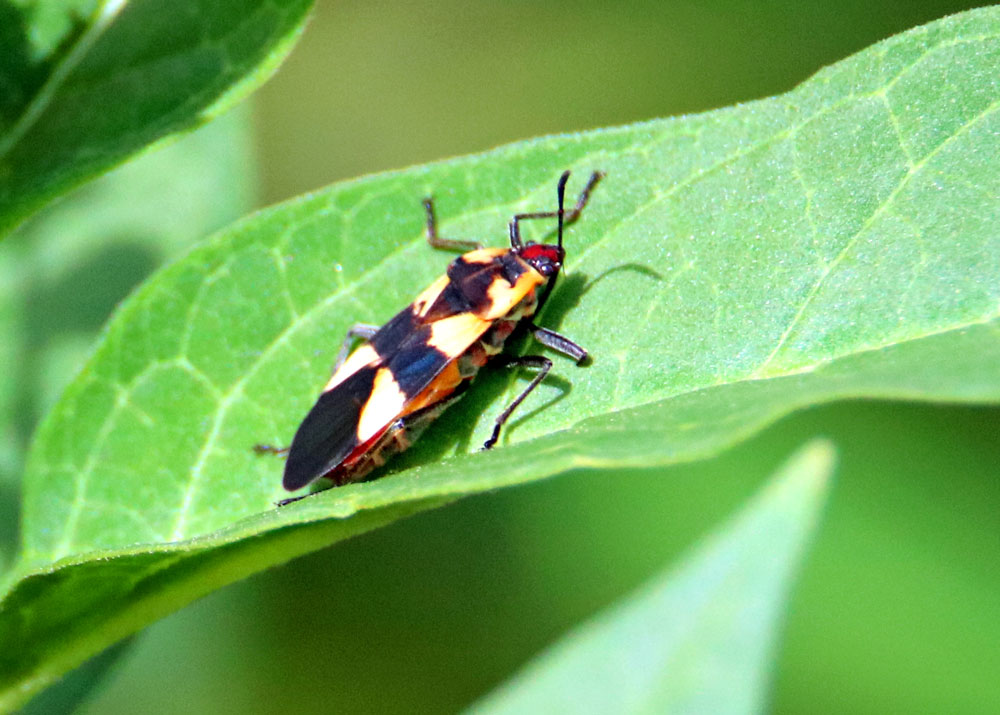
Caribbean Milkweed Bug

In addition to caterpillars, I’ve now had two Caribbean Milkweed Bugs (my gallery link) on my Milkweed flowers. There are several versions of this insect including a different subspecies in North America (Oncopeltus fasciatus) while the one here is Oncopeltus cingulifer. They do not harm the plant nor the caterpillars or butterflies if around. 🙂

GoogleAI says: “They use straw-like mouthparts to feed primarily on milkweed seeds and sap. By consuming milkweed, they store cardiac glycosides in their bodies, making them poisonous or unpalatable to predators like birds. They are mostly harmless to the plant and do not attack monarch butterfly eggs or caterpillars, meaning chemical control is rarely needed.”

One of my plants is seeding profusely, so maybe they were after the tiny seeds! 🙂

The smaller of the two on one of my Milkweeds. The Feature Photo is the larger one. This one may be a juvenile or in some species the female is smaller. I don’t know.

¡Pura Vida!