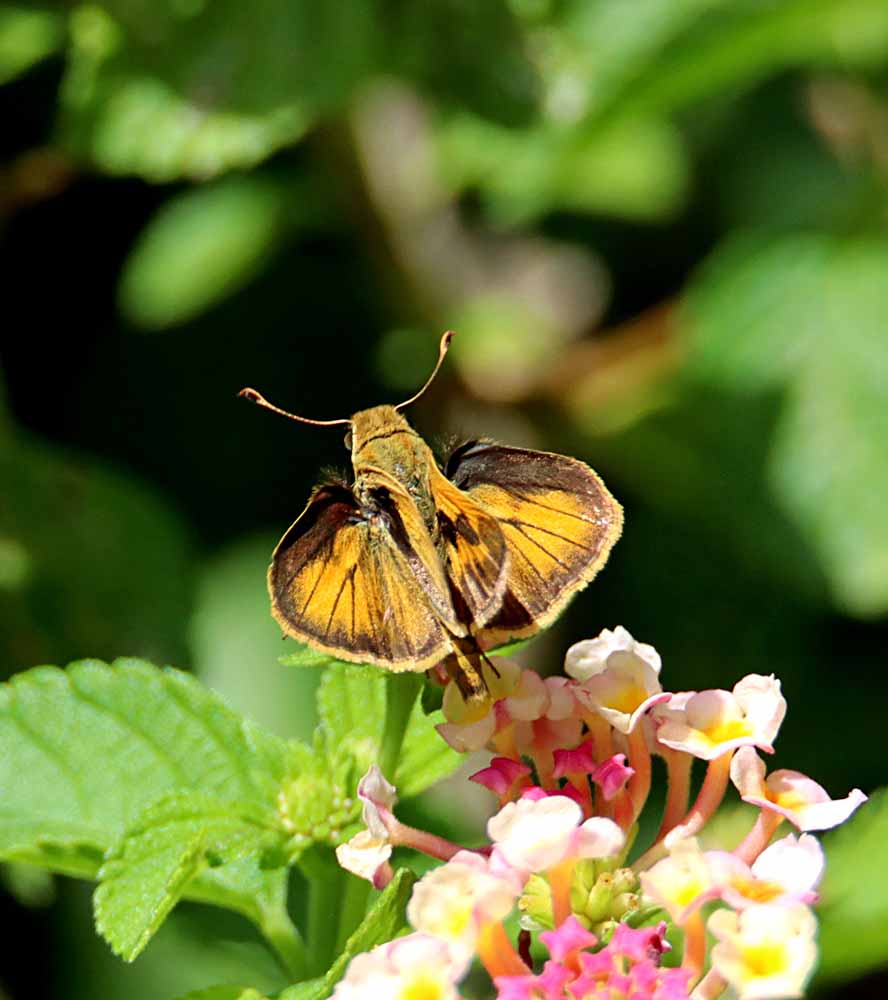
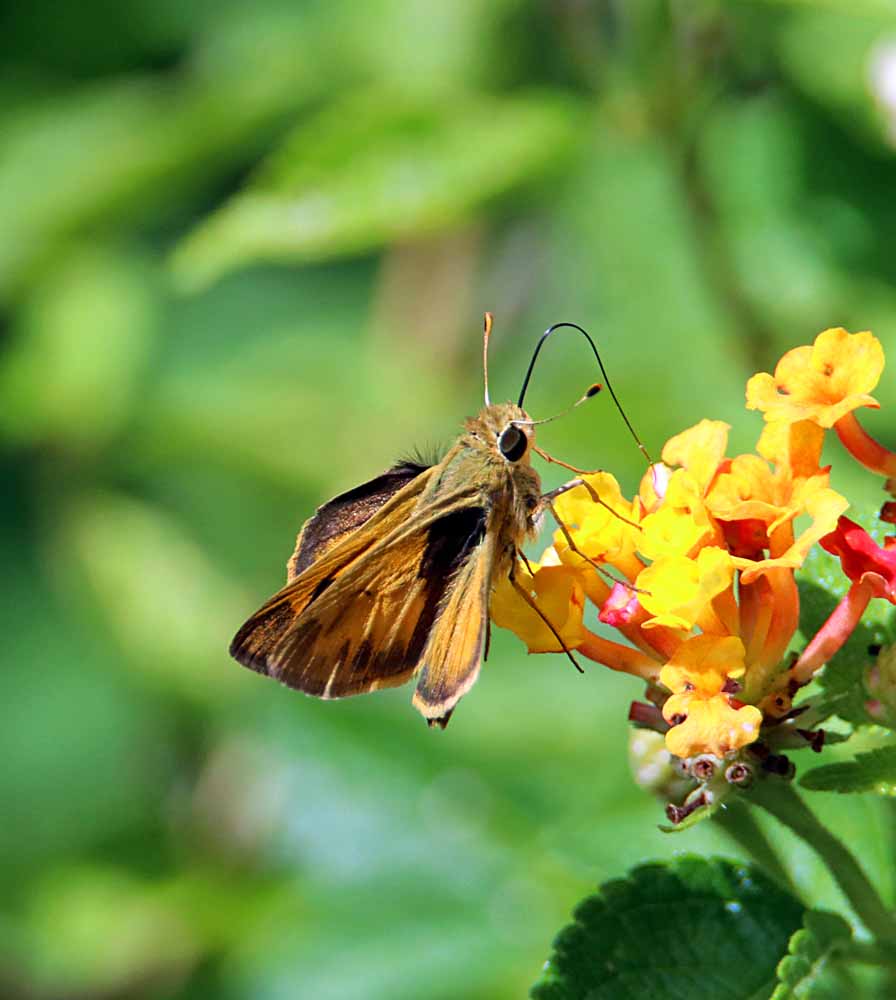
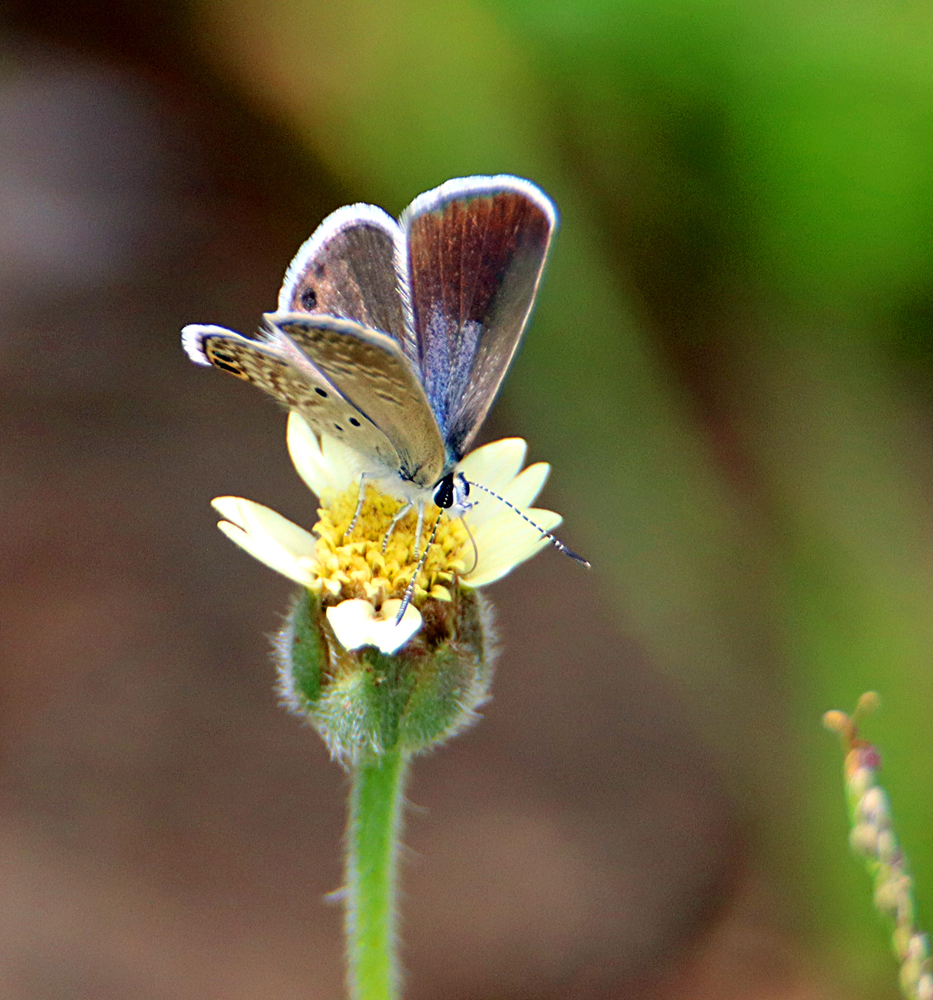
Though that sounds like me over the last few days and in the coming days, it is actually the name of a butterfly, Whirlabout, Polites vibex, and here are two photos of one recently in my garden.
Whirlabout, Atenas, Costa RicaWhirlabout, Atenas, Costa Rica.
And what have I been so busy about? Well, several things . . .
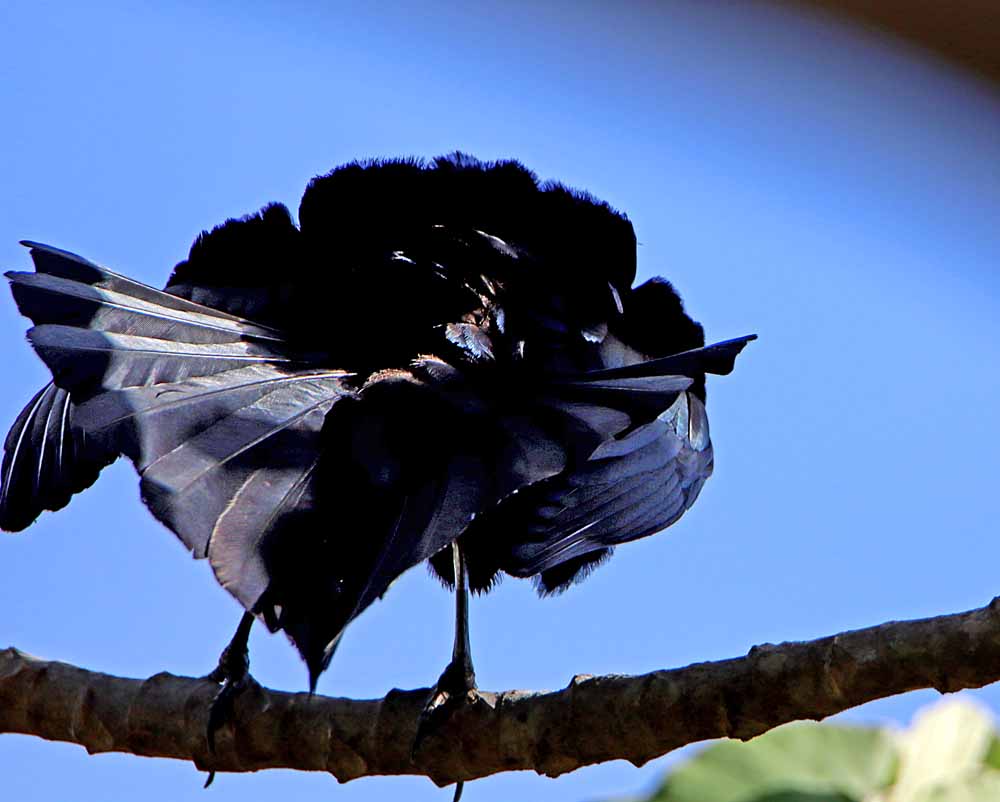
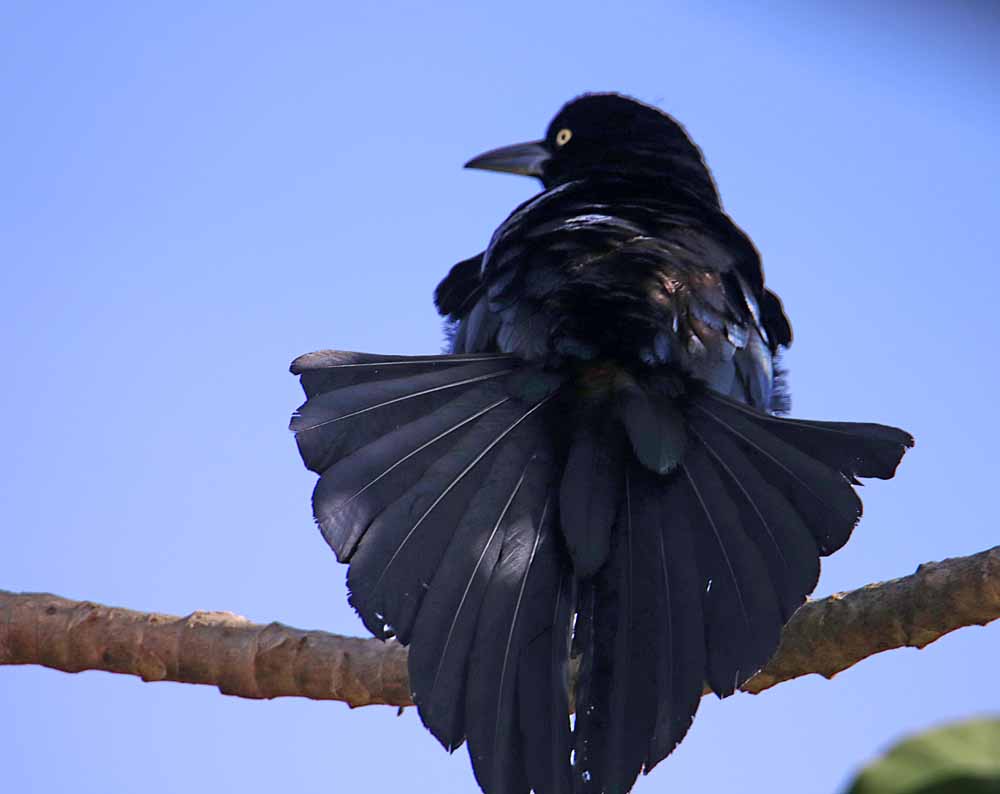
Before I left on my recent Maquenque trip I caught a few shots of this male Great-tailed Grackle fluffing his tail in my Guarumo or Cecropia Tree. I thought it kind of funny, interesting and almost like art! 🙂 Here’s just 3 shots at different stages of his fluff! 🙂
Great-tailed Grackle fluffing his tail, Atenas, Costa Rica.
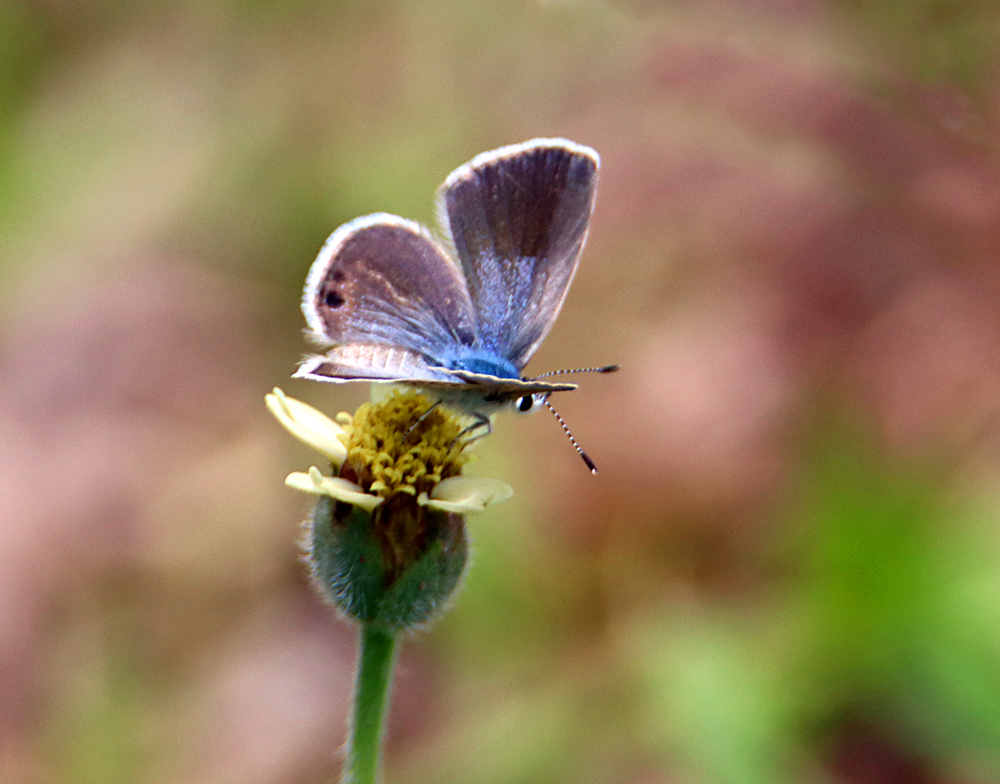
This is my third time to photograph a Ceraunus Blue, Hemiargus ceraunus, including one other time in my home garden and one at Hotel Banana Azul in the Caribbean. You can see those other photos in the Ceraunus Blue GALLERY and other people’s photos from all over the Americas at butterfliesandmoths.org. This is one of those tiny, fingernail-sized butterflies and seems to be fairly common in North and Central America. Here’s my three different views of this one last Thursday in my garden . . .
Ceraunus Blue, Hemiargus ceraunus, Atenas, Costa Rica
A view of our tranquil little farm town from a hill in my neighborhood.Plants up the driveway from my house that said “resurrection” to me.One of the most joyful flowers in my garden, to me, the Flame Vine or Triquitraque here,
PERSONAL NOTE: Tonight I will be at one of my favorite nature lodges, Maquenque Ecolodge in Boca Tapada on the Nicaragua border from which you can expect weeks of nature photos and maybe one tonight! 🙂
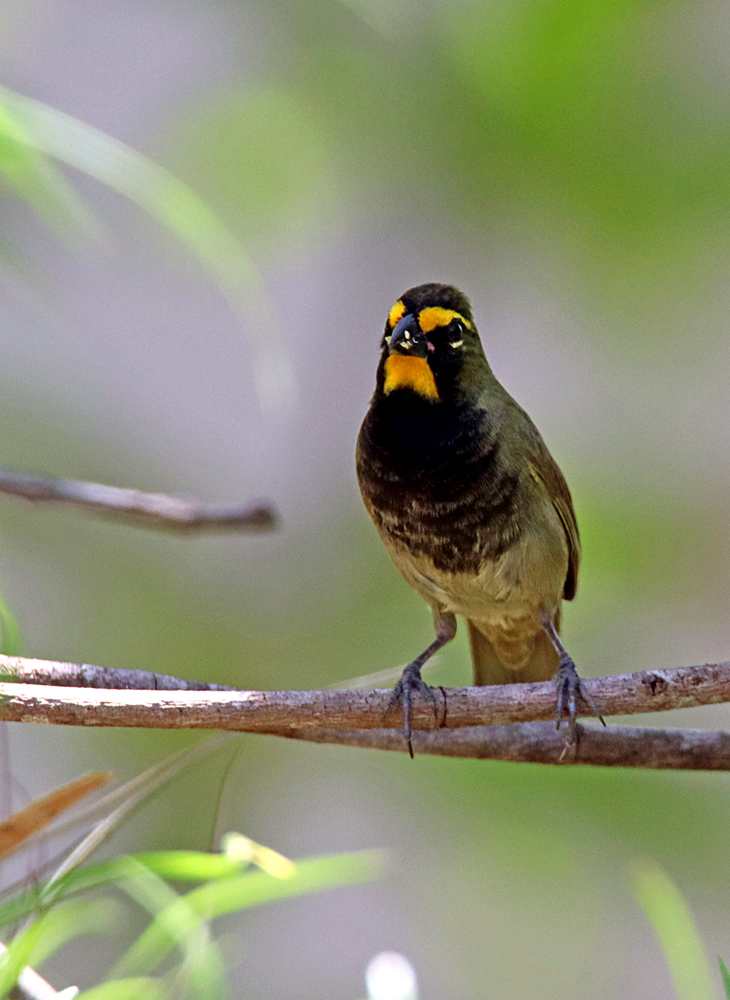
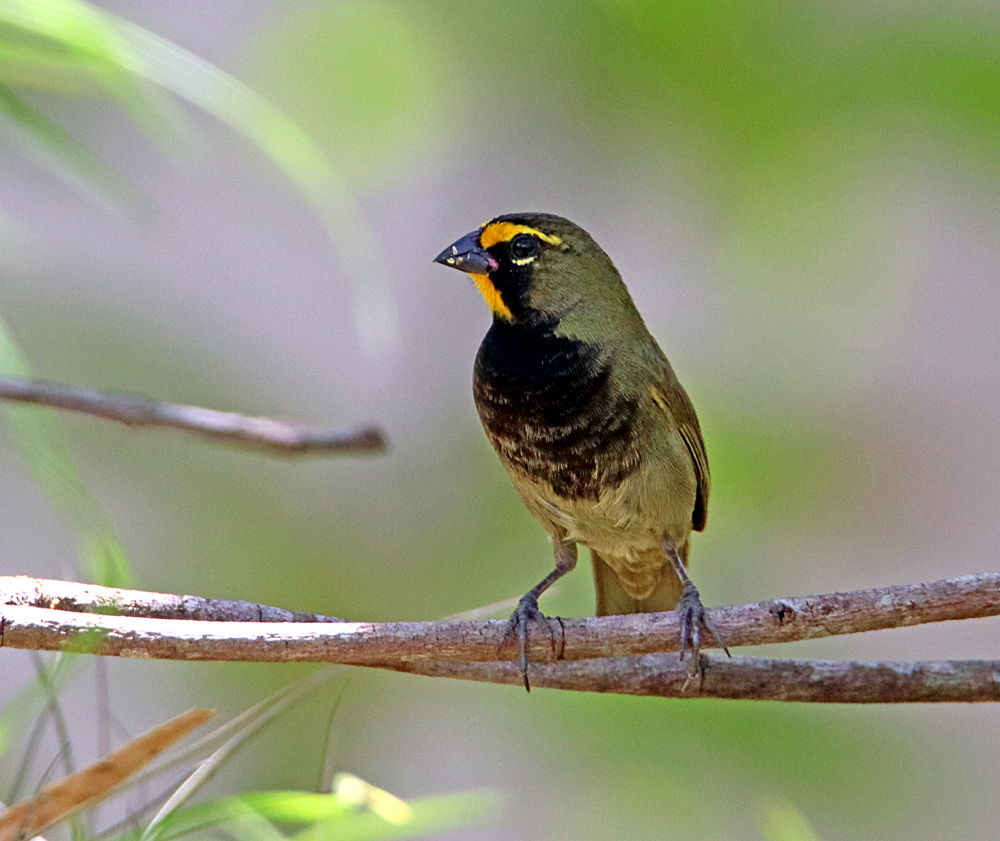
This common resident bird is found literally all over Costa Rica at most levels and this is my 4th time to see one in my Atenas neighborhood, with all other photos here in trees, bushes or on a fence, though their feeding is in the grasses! I have seen one across the street in the cow pasture grasses but without a photo! 🙂 I did get photos of him in the grasses of a meadow in Curi-Cancha Reserve, Monteverde and I’ve also seen one at Celeste Mountain Lodge at Tenorio Volcano NP. See my other photos in the Yellow-faced Grassquit GALLERY. And you can read about them on eBird. He’s a resident, tropical, non-migrating bird found throughout Central America, the Caribbean Islands and the northern fringes of South America. Here’s 3 shots of this male in one of my Nance Trees . . .
Yellow-faced Grassquit, Atenas, Alajuela, Costa Rica
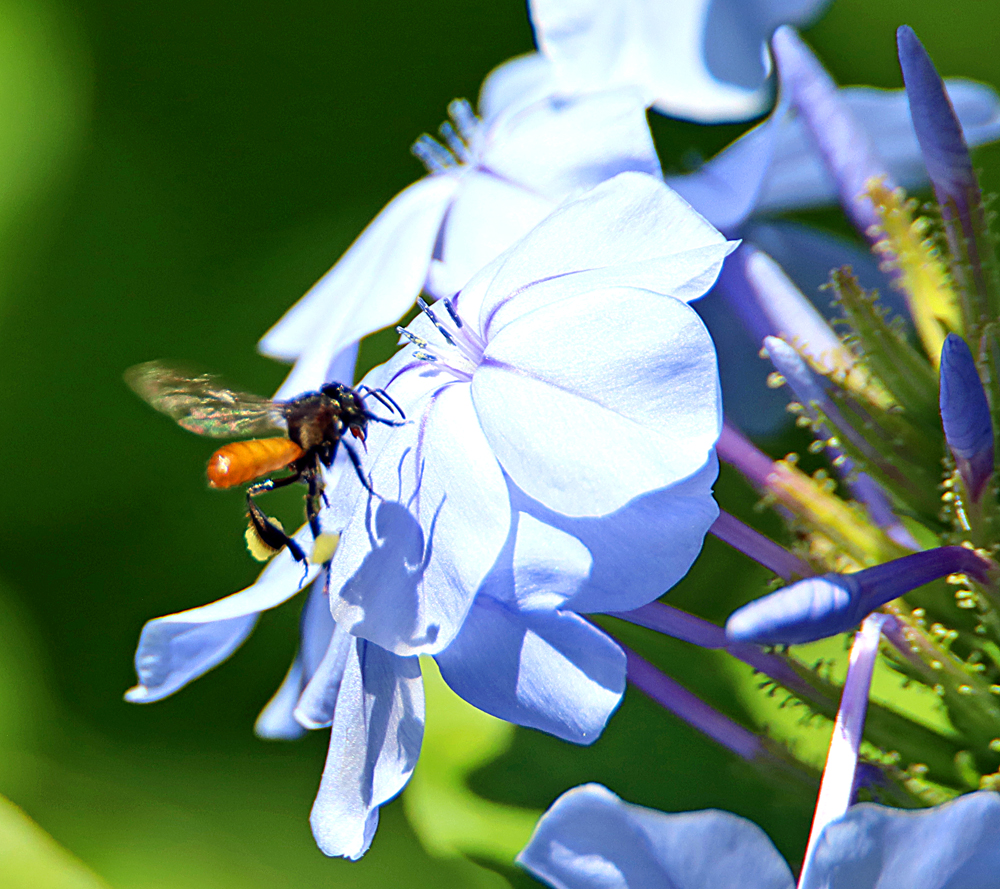
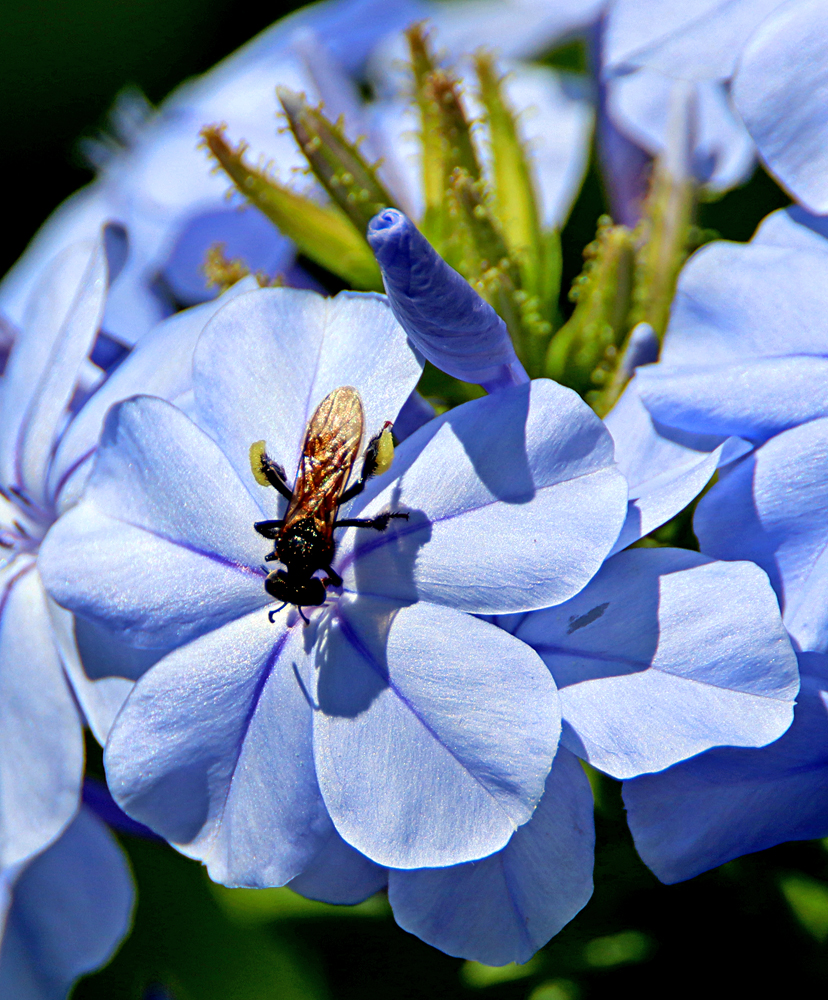
There are thousands of different species of insects in Costa Rica and I have no idea what this one is that I caught the other day in my garden on a Plumbago flower (Most insects don’t land on it because it is sticky and they can get stuck!). AND he appears to have little yellow shin pads or knee pads. Hmmm? Every day in Costa Rica nature there is a new discovery! 🙂
Unidentified Insect, Atenas, Costa RicaUnidentified Insect, Atenas, Costa Rica
I will put him in my Unidentified Insects GALLERY where there are 34 species now with some much more colorful and interesting. Please contact me if you can identify any of them!
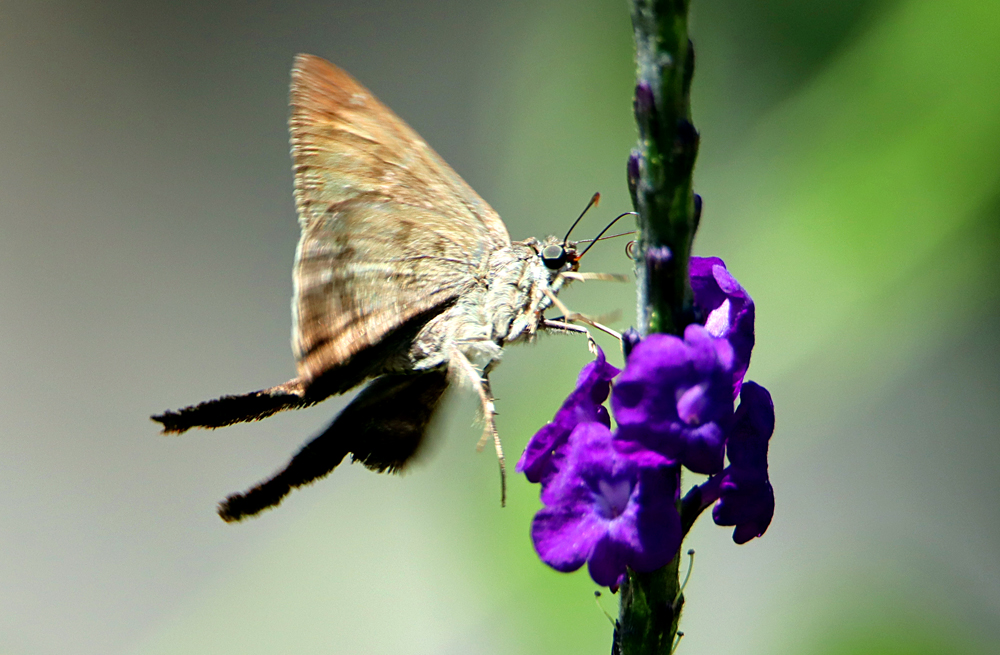
It is still windy here into April which is unusual and it plays havoc with the butterflies, meaning that I am still seeing or photographing few. But this Brown Longtail, Urbanus procne, along with some of the other Skippers and a few tiny ones on the ground are all I see right now and less frequently a Yellow high in the air, seemingly riding the currents of the wind and never landing where I can photograph. This one I got the day before yesterday in my garden on a Porterweed in a brief lull of the wind.
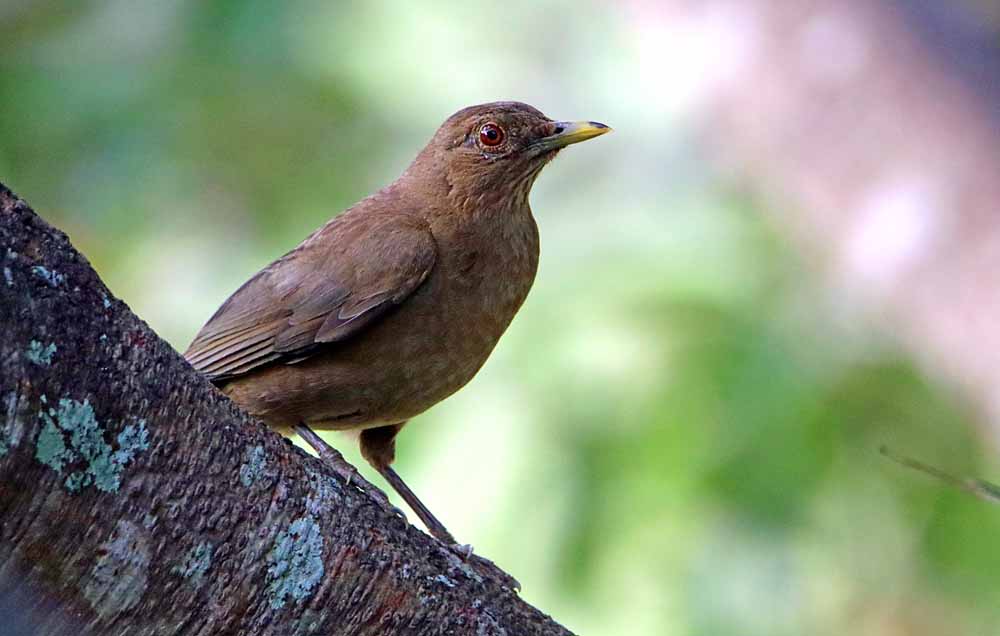
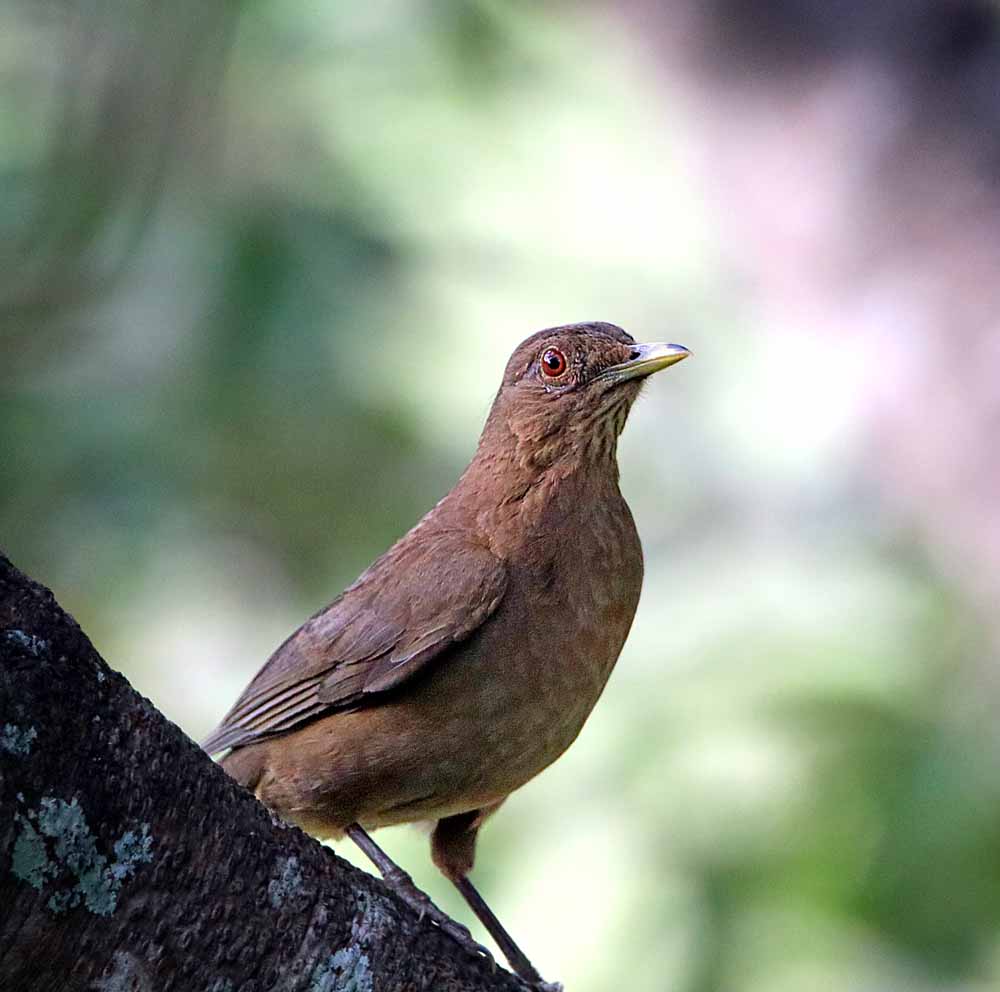
The most frequently heard song in my garden in April is always the melodic song of the Clay-colored Thrush, called Yigüirro in Costa Rican Spanish. Local tradition is that he is singing in the rainy season, begging God for rain and thus he usually goes near the top of trees to sing and why my photos seldom show him singing. It sounds like he is trying really hard to do a good job and loud! As locals say, “singing his heart out!” You can hear one recording on eBird, click the “Listen” Button.
But they do come down to the lower limbs occasionally for my photos, 🙂 with these two shots from two different days. Usually we have a light start of rain the middle of April scattered over several days with the “real” rain beginning in earnest in May when we can have a shower or more every afternoon through November.
This year we had the unusual experience of 4 days of showers in March! Climate change! I live in the “Central Valley” which would not be considered a “rainforest” like both coasts and their corresponding “slopes” where it rains year around and occasionally all day. I like visiting the rainforests but the Central Valley is better for daily living. 🙂
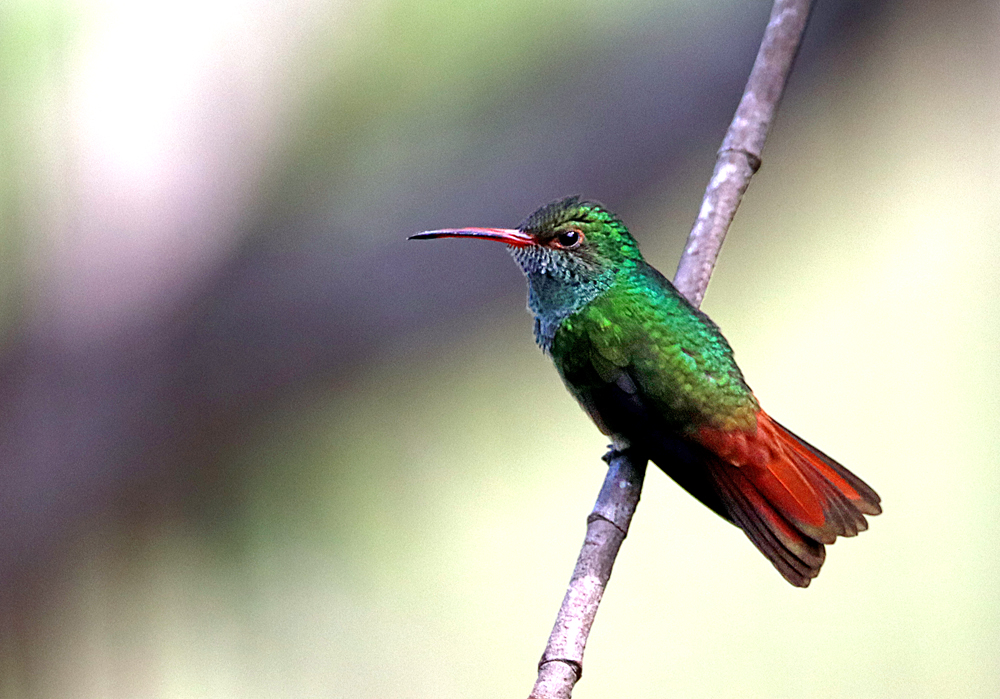
This one Rufous-tailed Hummingbird appears to be the only one living in my gardens right now and occasionally he almost poses for a photo. I have not been putting out the Hummingbird feeder for a long time now because these Rufous-tailed Hummingbirds are very territorial and he chases any others off. But after next week’s trip I will have nearly 3 months of no travel and may try the feeder again, not to necessarily feed this guy but hope it attracts other hummingbirds. We will see! 🙂
Right now they depend on flowers alone for food! I guess that is more natural! 🙂 But in the past I had a lot more than this!
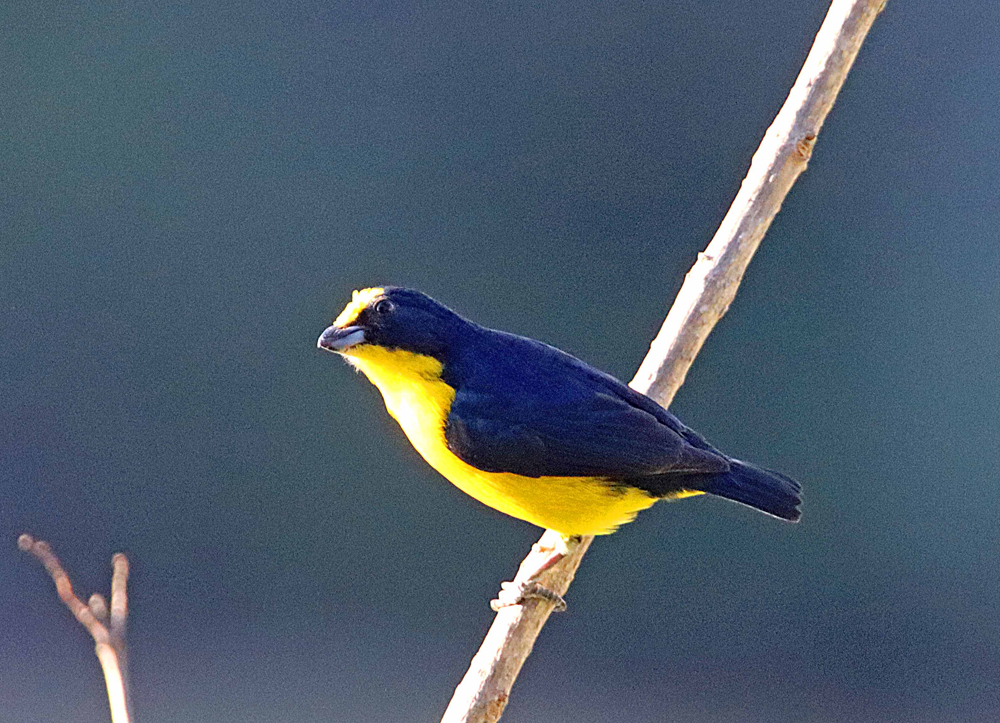
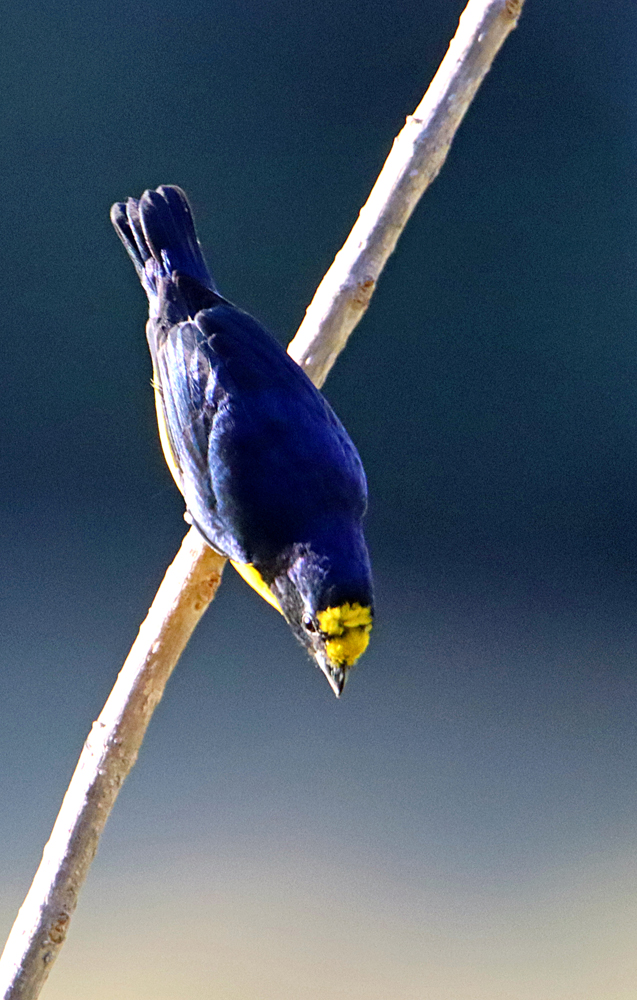
This small bright blue & yellow bird landed for 30 seconds or so in my Yellow Bell Tree Wednesday and I managed to get a few shots before he left. He is the male Spot-crowned Euphonia (eBird link), endemic to Costa Rica and the northern fringes of Panama, only on the Pacific Slopes, and just my third time to photograph one! First time in my garden! 🙂 My other places were at Esquinas Rainforest lodge at Piedras Blancas NP north of Golfito and at Hacienda Guachipelin, Rincón de la Vieja NP in Guanacaste near Liberia. I go back to Esquinas in July for my 83rd birthday and expect to see them again! 🙂
One of my all-time favorite bird photos was of a female Spot-crowned Euphonia eating a berry at Esquinas Lodge! See that and the other shots in my Spot-Crowned Euphonia Gallery! Now here’s 3 shots from my garden Wednesday . . .
Spot-crowned Euphonia, male, Atenas, Costa Rica
Above he’s looking down, next looking up and the third looking right into the camera before flying off! 🙂